

The building appears to have been used for sittings of the Native Land Court from its inception. Taupō's role as a judicial centre predated the arrival of the Armed Constabulary, with the Resident Magistrate, William Mair, having a house at Tapuaeharuru by 1866. An earlier magistrate for the Taupō area, George Law, had been appointed in 1862 but based his operations at Oruanui. A courthouse was evidently constructed by 1871 in a similar position to the original location of the present structure, between the redoubt and Lake Taupō, which may have been later re-used as an officers' mess. The Armed Constabulary had a close relationship with the workings of the court, with two of the commanding officers at Tapuaeharuru, Lieutenant-Colonel J.M. Roberts and Major D. Scannell, holding appointments as magistrates. The garrison also supplied orderlies for the Native Land Court, and clerks and attendants for the fortnightly Resident Magistrates Court.
A newspaper account of the hall's opening on 11th April 1881 indicates that its use as a courthouse took precedence over other functions. A theatrical premiere at that time was delayed until a sitting of the Native Land Court was complete, with the judge occupying the stage. The building's first entertainment included a comedy 'The Illustrious Stranger', a farce 'Caught by the Cuff', and a burlesque 'Villikins and Dinah'. The building may have had other functions as in 1887 part of it was referred to as the Armed Constabulary reading room.
Members of the Armed Constabulary erected the building, with William Strew constructing the proscenium and Robert Ross carving an elaborate fireplace that was located in a rear room. Strew and Ross were later responsible for the Rickett's public hall in the township in 1908, as well as the Terraces Hotel in Taupō and Tongariro Hotel at Tokaanu. Strew served in the Armed Constabulary from 1874 to 1886, while Ross was a carpenter who had joined up in 1872. The timber used in the building is believed to have come from the Opepe area, where most of the wood for the Armed Constabulary structures of the 1870s was derived. The building initially consisted of a hall with four windows on either side, and incorporated a one metre high stage with wings. The existing lean-to, or a precursor, may have been built at the same time as the stage is described as having two rooms to the rear. One of these was equipped with Ross' fireplace, which may have acted as a judge's chamber. The other room - or both - could have been used as temporary changing rooms during theatrical performances.
A significant event is considered to have taken place inside the building on 21 September 1887, when a court sitting made orders for lands to be awarded to Te Heuheu Tukino IV (Horonuku), paramount chief of Ngāti Tūwharetoa, 'for the purpose of conveying some to the Crown as a gift for a park'. This land incorporated the sacred mountains of Tongariro, Ngaruahoe and part of Ruapehu, which formed the nucleus of Tongariro National Park, the first national park in New Zealand. It is unclear whether the formal transfer of the deeds from Te Heuheu to the Crown on 23 September also took place in the building. There are, however, suggestions that the latter may have taken place elsewhere in Tapuaeharuru.
The building appears to have been converted for more permanent use as a courthouse in late 1887, two years after the withdrawal of the Armed Constabulary from the settlement. Alterations were mooted earlier in the year and carried out by December 1887 at a cost of £65 by C. Zimmerman. These are likely to have included building or modifying the lean-to at the rear of the building, perhaps including alterations to the fireplace and chimney. Further modifications were undertaken the following year when the chimney was probably repaired after its partial collapse. The building continued in use for some public events including concerts and religious services, and is also said to have contained two cells associated with its function as a twice-yearly Magistrate's Court. Changes made in 1905-1906 are believed to have included converting the stage area into a separate room, and broadly coincided with a shift of public functions to Rickett's Hall.
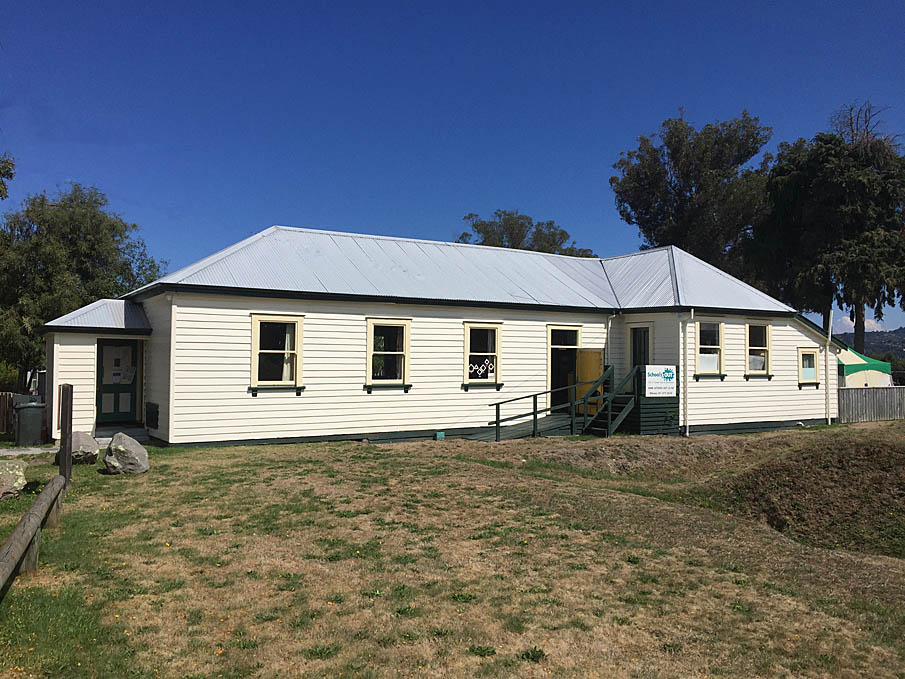
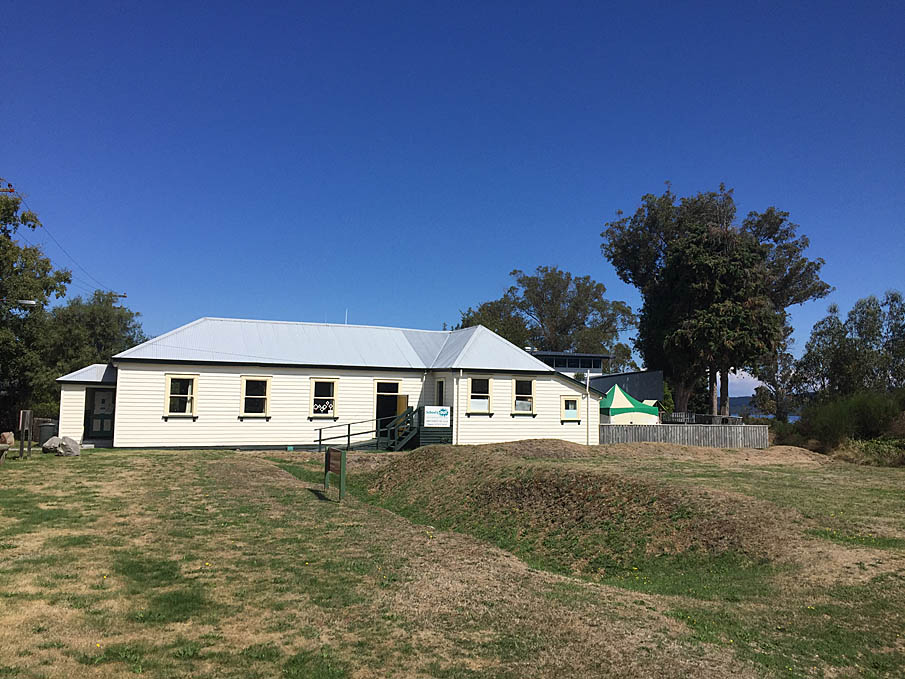
The court continued to carry out its business inside the building until 1962, when a new courthouse was built. The former Courthouse was subsequently moved a short distance to its present location in 1964 after the New Zealand Historic Places Trust was granted control of its use. The structure was employed as a base for the Taupo-Nui-A-Tia Maori Youth Club until 1989, during which time repairs to the roof and internal alterations were made. It has since been used as a kōhanga reo, a function that it continues to fulfil to the present day. The building was transferred to Tūwharetoa in March 2019 as part of a Treaty settlement.
List Entry Information
Status
Listed
List Entry Status
Historic Place Category 2
Access
Private/No Public Access
List Number
941
Date Entered
2nd April 2004
Date of Effect
2nd April 2004
City/District Council
Taupo District
Region
Waikato Region
Extent of List Entry
Registration includes the building, its fixtures and fittings and land beneath its footprint on part Historic Reserve Gazette 1983 p.19
Legal description
Pt Sec 5 and Sec 8 Blk XXXVI Town of Taupo, Historic Reserve NZ Gazette 1983, p.17, (RT SA27B/312), South Auckland Land District
Status
Listed
List Entry Status
Historic Place Category 2
Access
Private/No Public Access
List Number
941
Date Entered
2nd April 2004
Date of Effect
2nd April 2004
City/District Council
Taupo District
Region
Waikato Region
Extent of List Entry
Registration includes the building, its fixtures and fittings and land beneath its footprint on part Historic Reserve Gazette 1983 p.19
Legal description
Pt Sec 5 and Sec 8 Blk XXXVI Town of Taupo, Historic Reserve NZ Gazette 1983, p.17, (RT SA27B/312), South Auckland Land District
Why is this place significant?
Cultural Significance
The building is socially significant for its association with public gatherings, matters of importance to the community (including legal issues) and, more recently, its employment as a youth club and kohanga reo for the Maori community.
Historic Significance
Historical Significance or Value It has historical value for its association with the Armed Constabulary in New Zealand, and the early administration of the colony's judicial system in the central North Island. It is particularly significant for its connection with the gifting of land that became the nucleus of Tongariro National Park, the first national park in New Zealand.
Physical Significance
The former Courthouse is architecturally significant as a surviving courthouse that was also designed and built to accommodate alternative uses, including theatrical performances. The building is technologically significant for its incorporation of surviving Varley-type insulators.
Why is this place Category 1 / Category 2?
Detail Of Assessed Criteria
The former Courthouse can be assigned Category II status. It reflects important aspects of New Zealand history, including the spread of the colonial judicial system into the central North Island and the deployment of the Armed Constabulary in the late nineteenth century. It is also associated with events and persons of importance in New Zealand history, notably Te Heuheu Tukino IV (Horonuku) - paramount chief of Ngati Tuwharetoa - and his gifting of the nucleus of Tongariro National Park to the Crown. The building has the potential to provide significant knowledge of New Zealand history due to its extremely well-preserved fabric and associated documentary archive, which may illuminate aspects of judicial activity, the use of Armed Constabulary labour in the creation of public buildings, and entertainment in an early town environment. The building has been closely associated with the local community for most of its lifetime, and has been occupied and looked after by groups linked to the Maori community for much of the last 40 years. Located on a historical reserve that incorporates the remains of Tapuaeharuru redoubt, the building has strong potential for public education about the origins of the township at Taupo. The building can be considered to have a significant design, reflecting the multiple purposes that buildings on the colonial frontier were frequently required to incorporate, and including unusual features such as a scissor-braced roof. The structure dates to an early period of Taupo's colonial history and forms part of a significant historical and cultural landscape, incorporating the adjacent remains of Tapuaeharuru redoubt.
Why is this place significant?
Cultural Significance
The building is socially significant for its association with public gatherings, matters of importance to the community (including legal issues) and, more recently, its employment as a youth club and kohanga reo for the Maori community.
Historic Significance
Historical Significance or Value It has historical value for its association with the Armed Constabulary in New Zealand, and the early administration of the colony's judicial system in the central North Island. It is particularly significant for its connection with the gifting of land that became the nucleus of Tongariro National Park, the first national park in New Zealand.
Physical Significance
The former Courthouse is architecturally significant as a surviving courthouse that was also designed and built to accommodate alternative uses, including theatrical performances. The building is technologically significant for its incorporation of surviving Varley-type insulators.
Why is this place Category 1 / Category 2?
Detail Of Assessed Criteria
The former Courthouse can be assigned Category II status. It reflects important aspects of New Zealand history, including the spread of the colonial judicial system into the central North Island and the deployment of the Armed Constabulary in the late nineteenth century. It is also associated with events and persons of importance in New Zealand history, notably Te Heuheu Tukino IV (Horonuku) - paramount chief of Ngati Tuwharetoa - and his gifting of the nucleus of Tongariro National Park to the Crown. The building has the potential to provide significant knowledge of New Zealand history due to its extremely well-preserved fabric and associated documentary archive, which may illuminate aspects of judicial activity, the use of Armed Constabulary labour in the creation of public buildings, and entertainment in an early town environment. The building has been closely associated with the local community for most of its lifetime, and has been occupied and looked after by groups linked to the Maori community for much of the last 40 years. Located on a historical reserve that incorporates the remains of Tapuaeharuru redoubt, the building has strong potential for public education about the origins of the township at Taupo. The building can be considered to have a significant design, reflecting the multiple purposes that buildings on the colonial frontier were frequently required to incorporate, and including unusual features such as a scissor-braced roof. The structure dates to an early period of Taupo's colonial history and forms part of a significant historical and cultural landscape, incorporating the adjacent remains of Tapuaeharuru redoubt.
Construction Professional
Name
Armed Constabulary
Type
Architect
Biography
No biography is currently available for this construction professional
Name
Armed Constabulary
Type
Builder
Biography
No biography is currently available for this construction professional
Construction Details
Start Year
1881
Type
Original Construction
Start Year
1887
Type
Modification
Description
Lean-to modified or built.
Start Year
1888
Type
Other
Description
Chimney repaired.
Start Year
1905
Finish Year
1906
Type
Modification
Description
Internal alterations, including partitioning of stage area.
Start Year
1964
Type
Relocation
Description
Relocation to current site.
Start Year
1968
Type
Modification
Description
Internal modifications, including creation of kitchen.
Start Year
1988
startYearCirca
Type
Other
Description
Replacement of corrugated iron roof.
Construction Materials
Timber, with corrugated iron roof and concrete piles.
Construction Professional
Name
Armed Constabulary
Type
Architect
Biography
No biography is currently available for this construction professional
Name
Armed Constabulary
Type
Builder
Biography
No biography is currently available for this construction professional
Construction Details
Start Year
1881
Type
Original Construction
Start Year
1887
Type
Modification
Description
Lean-to modified or built.
Start Year
1888
Type
Other
Description
Chimney repaired.
Start Year
1905
Finish Year
1906
Type
Modification
Description
Internal alterations, including partitioning of stage area.
Start Year
1964
Type
Relocation
Description
Relocation to current site.
Start Year
1968
Type
Modification
Description
Internal modifications, including creation of kitchen.
Start Year
1988
startYearCirca
Type
Other
Description
Replacement of corrugated iron roof.
Construction Materials
Timber, with corrugated iron roof and concrete piles.
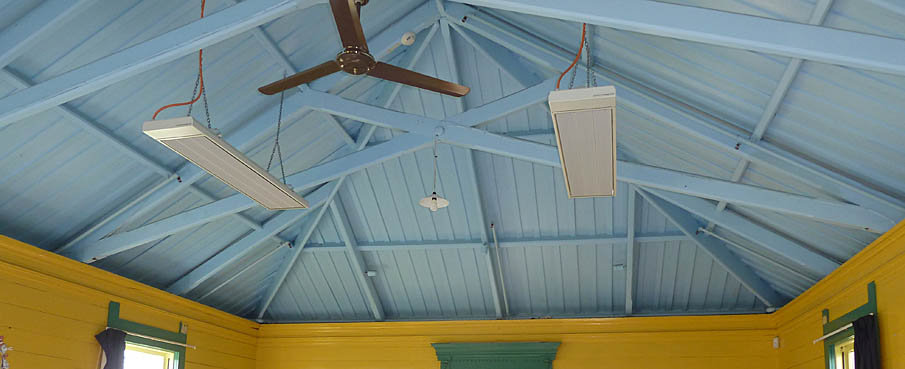
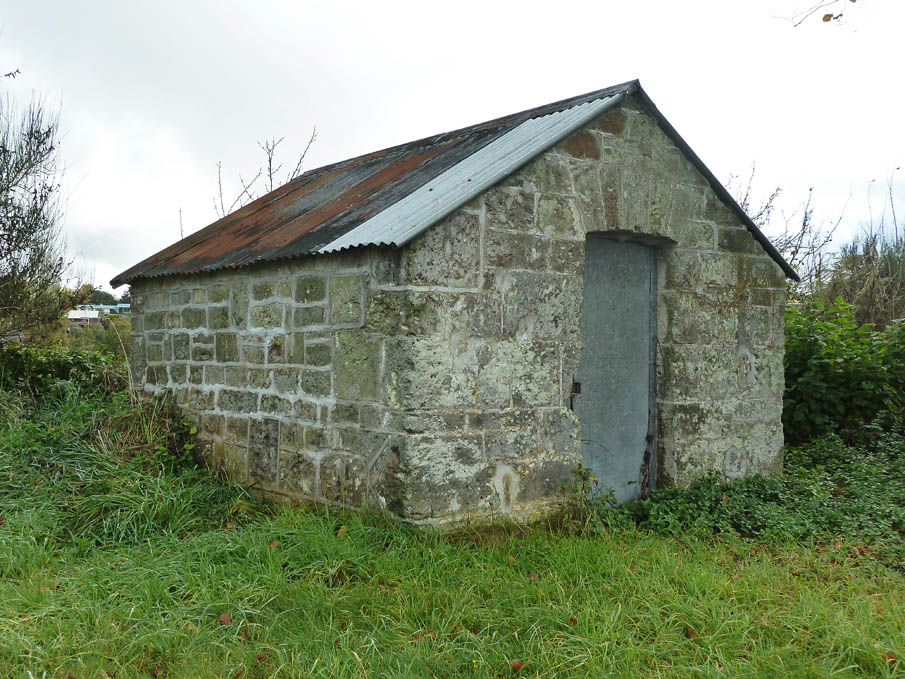
The former Courthouse is located immediately to the south of the earthwork remains of the Armed Constabulary redoubt at Taupo. The building sits on a flat, low bluff overlooking the Waikato River. It is set back from the bluff edge, having been moved to its site in the early 1960s from a previous location a short distance to the south. Both the building and the redoubt lie in a historic reserve that was transferred to Tuwharetoa as part of a Treaty Settlement in 2019. The redoubt consists of an earthwork bank and ditch, enclosing a stone magazine, exotic trees and other historic features. The former Courthouse is broadly of symmetrical Georgian appearance, and is single-storey in height. It is T-shaped in plan, and is orientated with its main axis approximately west-east (see plan in Appendix 4). The main body of the structure measures approximately 14 m. long x 7 m. wide, while the T-end has dimensions of approximately 8 m. long x 12 m. across. The main walls of the building are 3.40m high from base to eaves. The internal layout incorporates a large hall in the main body of the structure with a raised stage at its western end. A storage room and kitchen lie on either side of the stage, and there are two rooms separated by a central passage in a lean-to further to the west. The latter are currently used as combined toilets and shower rooms, while the building also includes a small porch at its eastern end. The main access to the hall is currently via the porch or two doors on either side of the building, which have been recently created from former windows. There are separate entrances to the kitchen and to the central passage in the lean-to at the rear. Constructed almost entirely in timber, the building is externally clad with horizontal weatherboards. These are attached to a timber frame whose earliest parts incorporate pitsawn studs with mortice and tenon joints. Internally, the walls of both the hall and porch are lined with tongue and grooved totara, with horizontal boards above a wainscot of vertical planks. The ceilings are also sarked. The high quality of the hall interior is emphasised by an ornate door surround at its eastern end, heavily moulded cornices, and chamfered timbers in its unusual scissor-braced roof. The stage at the western end of the hall is original, bearing nail patterns in its floor showing the position of stage wings, since removed. Its proscenium arch contains carved capitals at either end and is crowned by a spiked orb, which is believed to symbolise the British judicial system. At the eastern end of the hall there are Varley-type insulators attached to the ceiling timbers, which once relayed telegraphic messages from the courthouse. These are believed to be unusual survivors in a courthouse setting. The lean-to at the rear of the building is considered to have been modified or erected after the construction of the main hall, and is currently gib-lined. Both of the rooms in the lean-to contain blocked doorways leading to the original stage wings, while an associated fireplace in the southern room was removed in the 1960s. The hipped roof of the building is clad with corrugated iron, from which a pumice stone chimney associated with the removed fireplace protrudes. Most of the building sits on concrete piles, although the porch has a concrete floor. The remainder of the floors are timber.
The former Courthouse is located immediately to the south of the earthwork remains of the Armed Constabulary redoubt at Taupo. The building sits on a flat, low bluff overlooking the Waikato River. It is set back from the bluff edge, having been moved to its site in the early 1960s from a previous location a short distance to the south. Both the building and the redoubt lie in a historic reserve that was transferred to Tuwharetoa as part of a Treaty Settlement in 2019. The redoubt consists of an earthwork bank and ditch, enclosing a stone magazine, exotic trees and other historic features. The former Courthouse is broadly of symmetrical Georgian appearance, and is single-storey in height. It is T-shaped in plan, and is orientated with its main axis approximately west-east (see plan in Appendix 4). The main body of the structure measures approximately 14 m. long x 7 m. wide, while the T-end has dimensions of approximately 8 m. long x 12 m. across. The main walls of the building are 3.40m high from base to eaves. The internal layout incorporates a large hall in the main body of the structure with a raised stage at its western end. A storage room and kitchen lie on either side of the stage, and there are two rooms separated by a central passage in a lean-to further to the west. The latter are currently used as combined toilets and shower rooms, while the building also includes a small porch at its eastern end. The main access to the hall is currently via the porch or two doors on either side of the building, which have been recently created from former windows. There are separate entrances to the kitchen and to the central passage in the lean-to at the rear. Constructed almost entirely in timber, the building is externally clad with horizontal weatherboards. These are attached to a timber frame whose earliest parts incorporate pitsawn studs with mortice and tenon joints. Internally, the walls of both the hall and porch are lined with tongue and grooved totara, with horizontal boards above a wainscot of vertical planks. The ceilings are also sarked. The high quality of the hall interior is emphasised by an ornate door surround at its eastern end, heavily moulded cornices, and chamfered timbers in its unusual scissor-braced roof. The stage at the western end of the hall is original, bearing nail patterns in its floor showing the position of stage wings, since removed. Its proscenium arch contains carved capitals at either end and is crowned by a spiked orb, which is believed to symbolise the British judicial system. At the eastern end of the hall there are Varley-type insulators attached to the ceiling timbers, which once relayed telegraphic messages from the courthouse. These are believed to be unusual survivors in a courthouse setting. The lean-to at the rear of the building is considered to have been modified or erected after the construction of the main hall, and is currently gib-lined. Both of the rooms in the lean-to contain blocked doorways leading to the original stage wings, while an associated fireplace in the southern room was removed in the 1960s. The hipped roof of the building is clad with corrugated iron, from which a pumice stone chimney associated with the removed fireplace protrudes. Most of the building sits on concrete piles, although the porch has a concrete floor. The remainder of the floors are timber.
Historical and Associated Iwi / Hapū / Whānau
Completion Date
8th September 2004
Report Written By
Martin Jones
Information Sources
Cooper, 1989
B. Cooper, The Remotest Interior: A history of Taupo' Moana Press, Tauranga, New Zealand, 1989.
Hosking, 1962
Trevor Hosking, 'The Taupo Armed Constabulary Hall showing Stages of Additions and Alterations 1870-1910 to Present', Measured Drawing, 16 September 1962, NZHPT, Wellington.
Historic Places in New Zealand
Historic Places in New Zealand
Other Information
A fully referenced version of this report is available from the NZHPT Northern Region Office Please note that entry on the New Zealand Heritage List/Rarangi Korero identifies only the heritage values of the property concerned, and should not be construed as advice on the state of the property, or as a comment of its soundness or safety, including in regard to earthquake risk, safety in the event of fire, or insanitary conditions.
Historical and Associated Iwi / Hapū / Whānau
Completion Date
8th September 2004
Report Written By
Martin Jones
Information Sources
Cooper, 1989
B. Cooper, The Remotest Interior: A history of Taupo' Moana Press, Tauranga, New Zealand, 1989.
Hosking, 1962
Trevor Hosking, 'The Taupo Armed Constabulary Hall showing Stages of Additions and Alterations 1870-1910 to Present', Measured Drawing, 16 September 1962, NZHPT, Wellington.
Historic Places in New Zealand
Historic Places in New Zealand
Other Information
A fully referenced version of this report is available from the NZHPT Northern Region Office Please note that entry on the New Zealand Heritage List/Rarangi Korero identifies only the heritage values of the property concerned, and should not be construed as advice on the state of the property, or as a comment of its soundness or safety, including in regard to earthquake risk, safety in the event of fire, or insanitary conditions.
Current Usages
Uses: Education
Specific Usage: Education - other
Former Usages
General Usage: Civic Facilities
Specific Usage: Club rooms/building
General Usage: Civic Facilities
Specific Usage: Hall, Concert
General Usage: Law Enforcement
Specific Usage: Courthouse
General Usage: Maori
Specific Usage: Kōhanga Reo
Themes
Of Significance to Maori
Current Usages
Uses: Education
Specific Usage: Education - other
Former Usages
General Usage: Civic Facilities
Specific Usage: Club rooms/building
General Usage: Civic Facilities
Specific Usage: Hall, Concert
General Usage: Law Enforcement
Specific Usage: Courthouse
General Usage: Maori
Specific Usage: Kōhanga Reo
Themes
Of Significance to Maori
Location
Sign up to hear more
Get the latest heritage news, features and events delivered
straight to your inbox.
