Initially functioning as a combined courthouse and hall for the use of the Armed Constabulary, the building was originally erected in 1881 at a short distance from the Armed Constabulary redoubt in Taupo (initially known as Tapuaeharuru). The redoubt had been established in 1870 to guard an important crossing of the Waikato River at its outflow from Lake Taupō. Both the redoubt and courthouse were located on the opposite bank of the river to the Ngāti Tūwharetoa pā at Nukuhau, reported in the mid 1860s as being one of only two pa around the lake not to support the Kingite movement of King Poōatau. The courthouse/hall was built a few years after Tapuaeaharuru redoubt had become the regional headquarters of the Armed Constabulary and the colonial township had been laid out, both in 1877. The structure is believed to have been the last major building in the township erected by the Armed Constabulary, who were withdrawn from the settlement in January1885 and disbanded in favour of a civil police force the following year.
The building appears to have been used for sittings of the Native Land Court from its inception. Taupō's role as a judicial centre predated the arrival of the Armed Constabulary, with the Resident Magistrate, William Mair, having a house at Tapuaeharuru by 1866. An earlier magistrate for the Taupō area, George Law, had been appointed in 1862 but based his operations at Oruanui. A courthouse was evidently constructed by 1871 in a similar position to the original location of the present structure, between the redoubt and Lake Taupō, which may have been later re-used as an officers' mess. The Armed Constabulary had a close relationship with the workings of the court, with two of the commanding officers at Tapuaeharuru, Lieutenant-Colonel J.M. Roberts and Major D. Scannell, holding appointments as magistrates. The garrison also supplied orderlies for the Native Land Court, and clerks and attendants for the fortnightly Resident Magistrates Court.
A newspaper account of the hall's opening on 11th April 1881 indicates that its use as a courthouse took precedence over other functions. A theatrical premiere at that time was delayed until a sitting of the Native Land Court was complete, with the judge occupying the stage. The building's first entertainment included a comedy 'The Illustrious Stranger', a farce 'Caught by the Cuff', and a burlesque 'Villikins and Dinah'. The building may have had other functions as in 1887 part of it was referred to as the Armed Constabulary reading room.
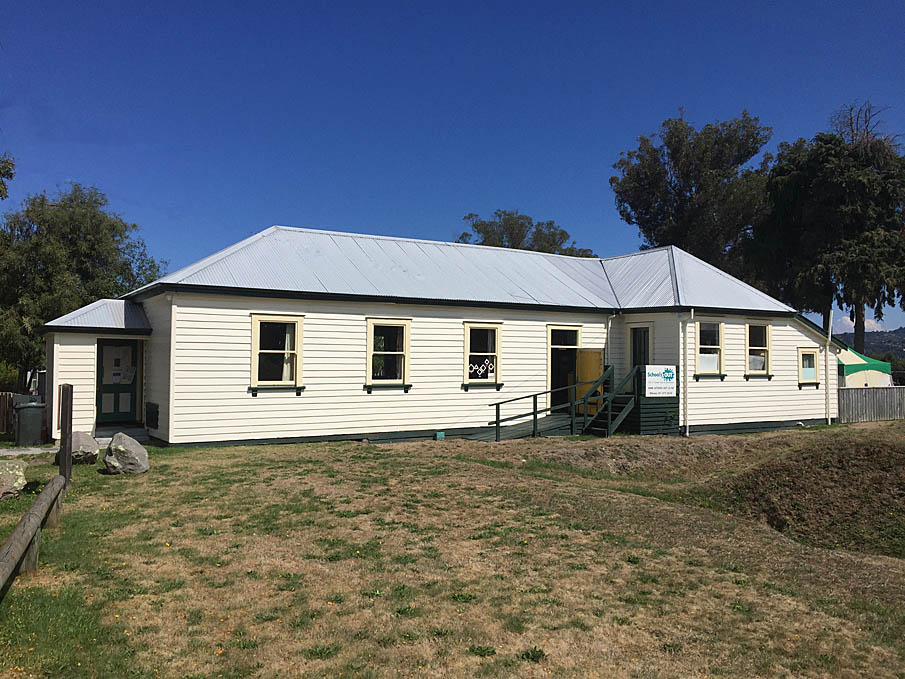
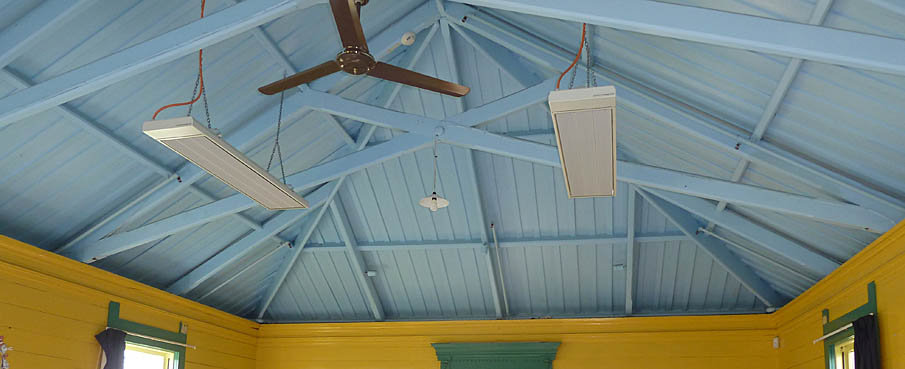
Members of the Armed Constabulary erected the building, with William Strew constructing the proscenium and Robert Ross carving an elaborate fireplace that was located in a rear room. Strew and Ross were later responsible for the Rickett's public hall in the township in 1908, as well as the Terraces Hotel in Taupō and Tongariro Hotel at Tokaanu. Strew served in the Armed Constabulary from 1874 to 1886, while Ross was a carpenter who had joined up in 1872. The timber used in the building is believed to have come from the Opepe area, where most of the wood for the Armed Constabulary structures of the 1870s was derived. The building initially consisted of a hall with four windows on either side, and incorporated a one metre high stage with wings. The existing lean-to, or a precursor, may have been built at the same time as the stage is described as having two rooms to the rear. One of these was equipped with Ross' fireplace, which may have acted as a judge's chamber. The other room - or both - could have been used as temporary changing rooms during theatrical performances.
A significant event is considered to have taken place inside the building on 21 September 1887, when a court sitting made orders for lands to be awarded to Te Heuheu Tukino IV (Horonuku), paramount chief of Ngāti Tūwharetoa, 'for the purpose of conveying some to the Crown as a gift for a park'. This land incorporated the sacred mountains of Tongariro, Ngaruahoe and part of Ruapehu, which formed the nucleus of Tongariro National Park, the first national park in New Zealand. It is unclear whether the formal transfer of the deeds from Te Heuheu to the Crown on 23 September also took place in the building. There are, however, suggestions that the latter may have taken place elsewhere in Tapuaeharuru.
The building appears to have been converted for more permanent use as a courthouse in late 1887, two years after the withdrawal of the Armed Constabulary from the settlement. Alterations were mooted earlier in the year and carried out by December 1887 at a cost of £65 by C. Zimmerman. These are likely to have included building or modifying the lean-to at the rear of the building, perhaps including alterations to the fireplace and chimney. Further modifications were undertaken the following year when the chimney was probably repaired after its partial collapse. The building continued in use for some public events including concerts and religious services, and is also said to have contained two cells associated with its function as a twice-yearly Magistrate's Court. Changes made in 1905-1906 are believed to have included converting the stage area into a separate room, and broadly coincided with a shift of public functions to Rickett's Hall.
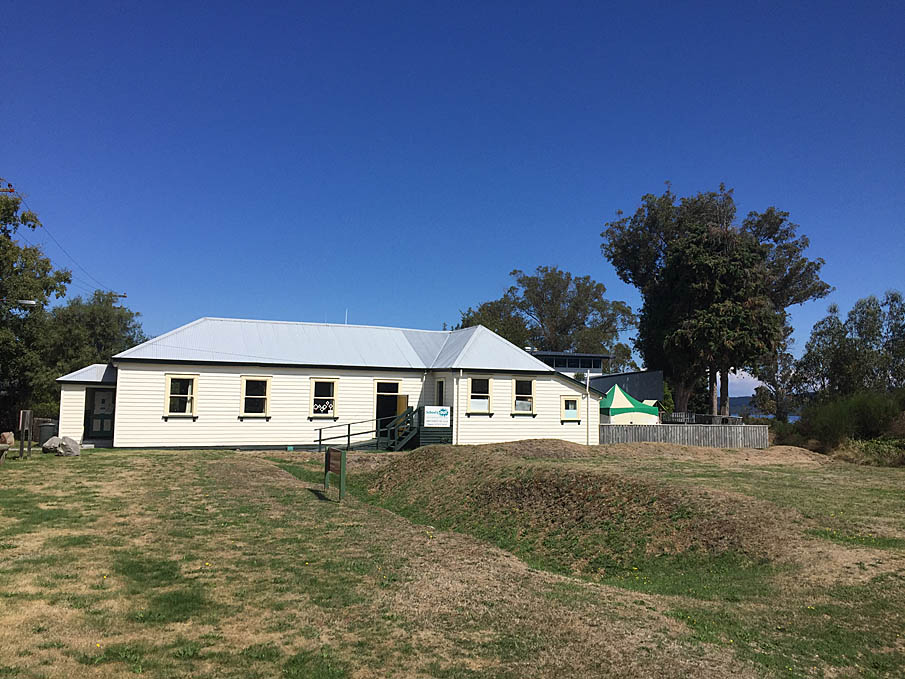
The court continued to carry out its business inside the building until 1962, when a new courthouse was built. The former Courthouse was subsequently moved a short distance to its present location in 1964 after the New Zealand Historic Places Trust was granted control of its use. The structure was employed as a base for the Taupo-Nui-A-Tia Maori Youth Club until 1989, during which time repairs to the roof and internal alterations were made. It has since been used as a kōhanga reo, a function that it continues to fulfil to the present day. The building was transferred to Tūwharetoa in March 2019 as part of a Treaty settlement.
The building appears to have been used for sittings of the Native Land Court from its inception. Taupō's role as a judicial centre predated the arrival of the Armed Constabulary, with the Resident Magistrate, William Mair, having a house at Tapuaeharuru by 1866. An earlier magistrate for the Taupō area, George Law, had been appointed in 1862 but based his operations at Oruanui. A courthouse was evidently constructed by 1871 in a similar position to the original location of the present structure, between the redoubt and Lake Taupō, which may have been later re-used as an officers' mess. The Armed Constabulary had a close relationship with the workings of the court, with two of the commanding officers at Tapuaeharuru, Lieutenant-Colonel J.M. Roberts and Major D. Scannell, holding appointments as magistrates. The garrison also supplied orderlies for the Native Land Court, and clerks and attendants for the fortnightly Resident Magistrates Court.
A newspaper account of the hall's opening on 11th April 1881 indicates that its use as a courthouse took precedence over other functions. A theatrical premiere at that time was delayed until a sitting of the Native Land Court was complete, with the judge occupying the stage. The building's first entertainment included a comedy 'The Illustrious Stranger', a farce 'Caught by the Cuff', and a burlesque 'Villikins and Dinah'. The building may have had other functions as in 1887 part of it was referred to as the Armed Constabulary reading room.
Members of the Armed Constabulary erected the building, with William Strew constructing the proscenium and Robert Ross carving an elaborate fireplace that was located in a rear room. Strew and Ross were later responsible for the Rickett's public hall in the township in 1908, as well as the Terraces Hotel in Taupō and Tongariro Hotel at Tokaanu. Strew served in the Armed Constabulary from 1874 to 1886, while Ross was a carpenter who had joined up in 1872. The timber used in the building is believed to have come from the Opepe area, where most of the wood for the Armed Constabulary structures of the 1870s was derived. The building initially consisted of a hall with four windows on either side, and incorporated a one metre high stage with wings. The existing lean-to, or a precursor, may have been built at the same time as the stage is described as having two rooms to the rear. One of these was equipped with Ross' fireplace, which may have acted as a judge's chamber. The other room - or both - could have been used as temporary changing rooms during theatrical performances.
A significant event is considered to have taken place inside the building on 21 September 1887, when a court sitting made orders for lands to be awarded to Te Heuheu Tukino IV (Horonuku), paramount chief of Ngāti Tūwharetoa, 'for the purpose of conveying some to the Crown as a gift for a park'. This land incorporated the sacred mountains of Tongariro, Ngaruahoe and part of Ruapehu, which formed the nucleus of Tongariro National Park, the first national park in New Zealand. It is unclear whether the formal transfer of the deeds from Te Heuheu to the Crown on 23 September also took place in the building. There are, however, suggestions that the latter may have taken place elsewhere in Tapuaeharuru.
The building appears to have been converted for more permanent use as a courthouse in late 1887, two years after the withdrawal of the Armed Constabulary from the settlement. Alterations were mooted earlier in the year and carried out by December 1887 at a cost of £65 by C. Zimmerman. These are likely to have included building or modifying the lean-to at the rear of the building, perhaps including alterations to the fireplace and chimney. Further modifications were undertaken the following year when the chimney was probably repaired after its partial collapse. The building continued in use for some public events including concerts and religious services, and is also said to have contained two cells associated with its function as a twice-yearly Magistrate's Court. Changes made in 1905-1906 are believed to have included converting the stage area into a separate room, and broadly coincided with a shift of public functions to Rickett's Hall.
The court continued to carry out its business inside the building until 1962, when a new courthouse was built. The former Courthouse was subsequently moved a short distance to its present location in 1964 after the New Zealand Historic Places Trust was granted control of its use. The structure was employed as a base for the Taupo-Nui-A-Tia Maori Youth Club until 1989, during which time repairs to the roof and internal alterations were made. It has since been used as a kōhanga reo, a function that it continues to fulfil to the present day. The building was transferred to Tūwharetoa in March 2019 as part of a Treaty settlement.