The Whanganui River is the major feature of the namesake region and city. Early Maori recognised the river’s potential as a food source and main transport route into the central North Island. The river valley also provided fertile flats for cultivation and, as a result, Te Ati Haunui-a-Paparangi hapu created settlements along the river and into its hinterland. Ngaa Rauru Kiitahi occupied a pa site known as ‘Nukuiro’, that was formerly in the current Wanganui Collegiate School campus.
It was for similar reasons that the area caught the attention of the New Zealand Company when they were planning an auxiliary to their first settlement in Wellington. The initial purchase of the Whanganui block progressed in 1839 between the Company and a small group of chiefs from outside of the large tract of agreed land. Because it was a pre-Treaty of Waitangi purchase, the Government was obligated to later investigate the transaction. This process began in 1843 and the New Zealand Company’s purchase was largely considered invalid. However, the sale of the land near the mouth of the river, which eventually became Whanganui, was deemed legal, despite opposition from local Maori that led to a series of skirmishes.
In 1847, the ‘skirmish’ known as the ‘Battle of St John’s Wood’ occurred very near to the site that would become the Wanganui Collegiate School. In May of that year, 700 Ngati Haua-te-rangi warriors, led by Hemi Topine Te Mamaku (?-1887), blockaded the town of Whanganui. A result of disputed land purchases and sovereignty issues, the catalyst for the blockade appears to have been the hanging of four Maori for the killing of a settler family in April 1847. Governor Grey bolstered the military presence to approximately 800 British soldiers behind the town’s defences, who were supported by Maori from Putiki and the town’s residents. On 19 July the two sides finally met at St John’s Wood. The battle resulted in the deaths of three Maori and two British troops and a total of 21 wounded. Despite not being a decisive victory for either side, a truce was sought and on 23 July, Te Mamuku and his men ended the blockade and returned home. The following year, in 1848, the Whanganui block’s sale became official.
The development of the town was closely linked to its port, which was established only a few years after the New Zealand Company ventured into the area. In 1855 Whanganui became a Port of Entry and a significant trading centre. By this time, the town and farming district’s population had consolidated, numbering nearly 700 people. During this period, the town again became known as Wanganui, revoking the New Zealand Company name, Petre.
The early years of Wanganui Collegiate School
Whanganui was still in its infancy when Wanganui Collegiate School was established in 1854. It is one of the oldest secondary schools in New Zealand, second only to Christ’s College in Christchurch (1851), which both remain the country’s only endowment schools. The current location is the school’s second campus; initially it was based on Victoria Avenue and called the Native Industrial School, and then the Wanganui Endowed School. These names reflect the terms of the Industrial School Estate grant which stated the land’s purpose was to enable ‘the education of children of our subjects of all races and of children of poor and destitute persons.’
The term endowment school comes from the fact that land was granted to Anglican Bishop of New Zealand Augustus George Selwyn (1809-1878) to generate income that would ensure this continued to happen. Therefore, the current Wanganui Collegiate School site has been associated with the school its entire history, being part of a grant by Governor Sir George Grey (1812-1898) in 1852. While much of the land surrounding the current campus has been subdivided and built upon, the northern part of the campus near Glasgow Street (Pt Wanganui Industrial School Reserve) is a relatively unmodified part of the original estate, which may retain subsurface archaeological features from earlier times.
From its Victoria Avenue campus, the school developed slowly. By the twentieth century it had become ‘the New Zealand counterpart of an English public school.’ However, in the early 1870s there were only around 30 students, including a few girls. The school became a single-sex boys’ institution in 1878 and girls did not attend Wanganui Collegiate School again until 1991. It was in the 1880s, under Headmaster Reverend Bache Wright Harvey (1835-1888), that the school began shaping itself along the lines of the English public school model. Harvey was a distinguished Cambridge mathematics graduate and came to New Zealand in the 1860s, with his first position being Vicar of Westport. While some considered this more elitist form of school contrary to the terms of the grant, others, including Governor Grey, felt it permissible to have paying students. The name Wanganui Collegiate School dates from 1882 during Harvey’s tenure.
From the late nineteenth century until 1901, when the public District High School was established, the local option for parents who could afford the fees was to send boys to Wanganui Collegiate School, or their girls to Wanganui Girls’ College. At this time there were 25 secondary schools in New Zealand, and of the 2800 pupils, 1800 were boys. The roll at Wanganui Collegiate School averaged around 200 pupils in the same period. Christ’s College and Wanganui Collegiate School were exempt from the provisions of the 1903 Secondary School’s Act, the two Anglican schools becoming private institutions that were supported by public endowments. It is recorded that at this time both schools had a strong boarding component and drew students from all over New Zealand.
Creating the new campus
Wanganui Collegiate School, as it is recognisable today, was the result of early twentieth century events. The school faced an uncertain time in 1906 during an Education Trust Commission inquiry to determine whether the conditions of the original grant were being adhered to. The Commission’s recommendations led the Board of Trustees to propose shifting the school’s campus to Liverpool Street, despite this being on the outskirts of Whanganui’s residential area at the time.
In late 1908, prominent architectural firm Atkins and Bacon was appointed to design the majority of the new campus’ buildings. The decision to use this firm, instead of the diocesan architect Frederick de Jersey Clere (1856-1952), is said to have been based on partner Roger Francis Bacon’s (d.1959) previous experience practicing in London. Alfred Atkins (1850-1919) was well established locally when Bacon became a partner in his practice in 1907; both were based in Wellington at the time of the Collegiate commission. Atkins had designed several prominent Whanganui buildings including its first public museum in 1893, Wanganui Hospital completed in 1897 and the Ward Observatory in 1903.
Arthur G. Bignell (1861-1944), Board Chairman, has been singled out as a driving force behind the successful transition to the new campus. Bignell, a former Whanganui Mayor (1904-06) advocated for local businesses to undertake the design and building work. Himself a notable local building contractor, Bignell showed considerable understanding and business acumen throughout the tendering process and directed the Board towards those with specific experience, like Bacon.
The Board received Supreme Court permission to borrow up to £35,000 to build and furnish the school buildings. Subsequently, loans of £50,000 were also approved. With plans in hand and funds secured, preparatory site work began in 1908, with the foundation stone being laid by Governor Lord Plunket in 1909. In late 1909, it was publicised that Nicholas Meuli was the successful tenderer for what would be ‘the finest and most up-to-date school in Australasia.’
The building contract was for six separate two-storey school and accommodation buildings. This included Big School:
‘…containing an assembly hall as large as any of the churches in Wanganui, with class-rooms adjoining. This, the main structure, will be a most striking edifice, with every modern convenience, including a large library.’
By Easter 1911, this building was substantively complete with the campus official opening ceremony, by Governor Lord Islington (1866-1936), taking place there. Many of the other buildings were not finished at this time, but the opening was held early to coincide with the annual reunion of former students. A few buildings from the first campus were relocated, for example the former Big School became a gymnasium, and an old headmaster’s residence became a sanatorium for a time. Classes did not begin until the end of May 1911.
The development of Wanganui Collegiate School
Wanganui Collegiate School has an august history, with many well-known New Zealanders being educated there. Many past students have distinguished themselves nationally and internationally in a variety of fields, such as academia, politics, the military, and in sport. Some examples include David Kirk, the former All Black captain and Rhodes Scholar, and Lord Cooke of Thorndon, who served on the judicial committee of the Privy Council.
The hub of the school life for these distinguished alumni, as well as thousands of other past students and staff, was Big School. Initially provision for classrooms and administrative activities was made in the Big School building; its large central hall was also the location for school assemblies and performances. However, as the school became settled into business at the new campus other facilities were gradually added to ease the demand on Big School.
In the late nineteenth and early twentieth centuries, Wanganui Collegiate School was the largest boarding school in New Zealand. When the new campus was opened the House system quickly became the ‘most significant feature of school life.’ This is not surprising considering the majority of students were boarders. For example, in 1925, there were 222 boarders and 31 day students. It has been noted that boarders, in particular, tended to identify strongly with the school. After all, it was the place where they spent the majority of their time. While day boys could go home to their families, the Wanganui Collegiate School campus became a substitute for the family home. The boarding experience left ‘an indelible impression upon the minds of those who spent their adolescence in the close company of one hundred or more of their peers.’
The initial Houses were Selwyn, Hadfield, and Grey, named after the important early Anglican clergymen, and the Governor. These buildings were constructed next to each other, featuring adjoining courtyard areas that had small ablutions blocks. It was noted in the mid-twentieth century that these played a part in student hierarchies within the Houses, with junior students relegated to using these external facilities. The construction of the fourth House, Harvey, named after the early Headmaster, was delayed until 1920 because of financial considerations. Once again Atkins and Bacon’s practice, which was now Atkins Bacon and Mitchell because Cyril Mitchell had joined as a partner, were on board to design the building and Meuli was the builder. During this period a day boy’s facility and music room, as well as Chaplain’s and Steward’s residences were also built. Harvey House was opened in 1920. However, fluctuating rolls in the 1920s and 1930s saw it closed and reopened on several occasions. Indeed, because of this Harvey House was described as ‘the barometer of the school’s fortunes.’
Loyalty to one’s House, and competition with rival ones, were important aspects of boarders’ lives and a definite sense of identity and community arose which day boys felt removed from. However, this did not deter day students. In 1914, the day boys had their own Master, and eventually day boy Houses were set up as a means of trying to include the students in this integral aspect of school life. Numbers of day students dramatically increased in the late twentieth century which required more facilities. One of these Houses was named after Governor-General Arthur Porritt, who opened it in 1971. Porritt received his secondary school education at Wanganui Collegiate School from 1914. Later he not only represented New Zealand in the sporting arena, but also became a Rhodes Scholar, before being appointed our first New Zealand born Governor-General.
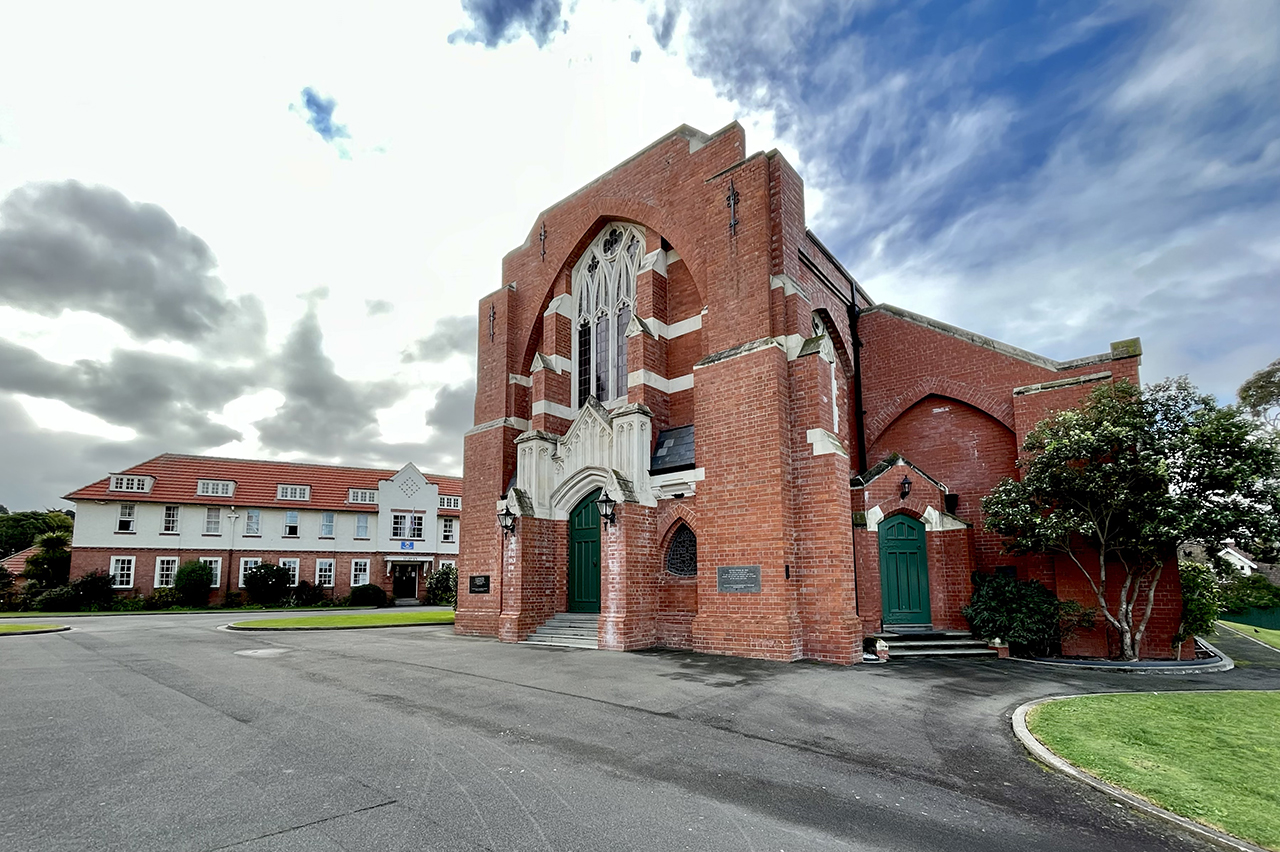
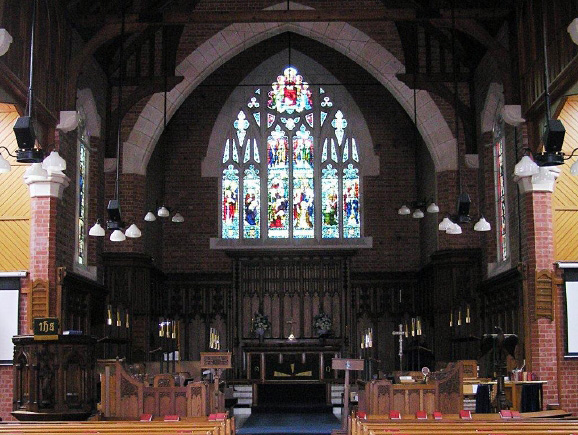
As an Anglican institution, a chapel was of course part of the original concept for the campus. Its construction was prompted by the retirement of ‘one of the most inspirational and influential early headmasters,’ Walter Empson (1856-1934). Empson suggested that if there was to be a testimony to his time at the school he would appreciate it taking the form of a chapel. Therefore, the chapel differed from the other original buildings because it was paid for through Old Boys subscriptions, and they appointed their own architect, William Gray Young (1885-1962). This project came early in the career of Gray Young, who was on his way to becoming a well-known Wellington architect. Again, Meuli was awarded the building contract along with John Jones. The building was dedicated in Easter 1912, the first anniversary of the opening of the new campus and the laying of its own foundation stone.
By the late twentieth century, students of different Christian denominations, as well as from other religious groups, were attending Wanganui Collegiate School. However, as a traditionally important aspect of the school’s activities, these students were still expected to attend chapel. Because of growth in student numbers, by this time the chapel’s capacity was too small and earthquake strengthening was also an issue. Therefore, the building was extended in the 1980s, a project also paid for through Old Boys’ fundraising efforts. The enlarged chapel was dedicated in September 1986.
Cultural activities, such as music and drama, were fostered at the school. Aside from the teaching that occurred in the music room, there was generally a strong tradition of choral and all school singing, particularly at chapel, which continues today. Performing arts at the school was given a boost in 1984 when a new auditorium was completed, named in His Royal Highness Prince Edward’s honour. He had been Selwyn House’s Tutor for two terms between 1982 and 1983 and was visited there by Prince Charles and Princess Diana during their 1983 tour. The auditorium had substantially better acoustic qualities than Big School’s hall, and was a more appropriate size for the, by now, enlarged school population. Later the Foundation Music School was added to this building. The school also hosts concerts and public events at the auditorium and chapel, and the long-standing relationship that the New Zealand Opera School, held at Godwin House every January, has with the school strengthens its cultural ties with the community.
An essential part of the English public school model was an emphasis on morale and school community-building sporting and cadet experiences. School historian Andrew Sangster noted that in the new campus’ early period someone browsing the school’s magazine, Collegian, could be forgiven ‘for believing that the school’s main care was for sports.’ Rugby, cricket, and rowing have traditionally been very important at the school, although many different field sports were available, and there were swimming, tennis, and hockey facilities developed. All Blacks Jimmy Hunter and David Kirk, Silver Fern netballer Joline Henry, and gold-medallist rower Rebecca Scown are all alumni of the school.
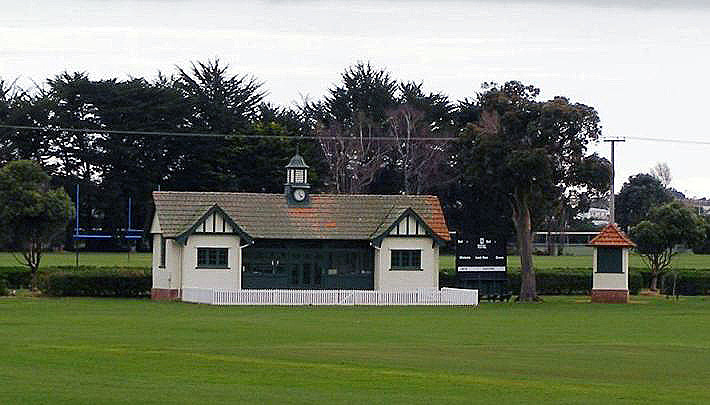
The value of sports to students can be gauged by the fact that the playing fields at the new campus were twice the size that were planned, primarily because students volunteered during holidays to level the grounds. They are also said to have laboured to create the cricket ground (the memorial Pavilion was built later in 1917), swimming pool, bicycle sheds and other minor buildings. In the mid-twentieth century, a new gymnasium, as well as other amenities, was seen as one way of retaining day student levels in light of anticipated competition from a new local public school, Wanganui High School. Indeed, it was from this period that day students began to grow substantially in number. That gymnasium was superseded by the Izard Sports Centre in 1994. The centre was funded by a significant contribution from Old Boy Richard Izard and the school’s extended community also fundraised, buying bricks engraved with donor names which were used in the building’s construction.
Significant changes took place at Wanganui Collegiate School in the late 1960s, with one commentator describing it as possibly ‘the most dramatic private school expansion that is now underway.’ The need to increase capacity was already apparent in the 1950s. With the school roll at a record level in 1956 an entrance exam was introduced as a way to manage the growing waiting list. This demand reflects a general post-war trend in New Zealand in placing greater importance on a full secondary school education. This has been linked to the growth of urban areas and, correspondingly, the professional workforce which required higher qualifications.
The need to expand the school was also driven by baby boomer children reaching secondary school age by the 1960s, further increasing demand for places at Wanganui Collegiate School. In 1960 the roll was 342, considerably more than when the Liverpool Street campus was first created. This pressure on the school’s facilities motivated additions such as a new dining hall, junior boarders’ house (Empson House) and science block, as well as the renovation of many existing buildings. Auxiliary functions located in Big School were also accommodated elsewhere as part of the programme, in order for Big School to become specifically a classroom block. As such, the library was moved into the original dining hall. By 1976, these building projects enabled the school’s roll to increase to 545 students.
By the late 1980s, there was a noticeable drop in the numbers of boarders. This was a worldwide phenomenon not exclusive to Wanganui Collegiate School. The economic effects of the 1987 share market crash on groups from which the school traditionally drew its students, the farming and business communities, worsened the situation for the school. This decline does not seem to have been compensated for with increases in day boy numbers. Therefore, a concerted effort was made to promote the school, but the school fees and the single-sex character were inhibitive. Opening the school up to accepting female pupils (initially only senior students) began in earnest in 1989. Godwin House was built to accommodate female boarders in 1990 and the next year Wanganui Collegiate School received its first female students in over a century.
However, this was not the end of the troubled times at the school. Consolidation was needed, and one measure was to dissolve the day boy Houses and redistribute these students into the boarders Houses. As such, Marris and Porritt House was converted into a technology teaching block in 1999. Despite being testing times for the Board of Trustees in 2003, the atmosphere within the school was said to be positive and the roll began to recover. Because of the continued maintenance of existing assets and new building projects the school environment was described as ‘unsurpassed in New Zealand.’
The debate about whether Wanganui Collegiate School should integrate into the state school system began to gather momentum in the 1970s. This has periodically been a concern of the Board of Trustees in all of the subsequent decades, mostly as a potential remedy for financial woes. However, it was only in late 2009 that the school formally applied to the Ministry of Education for integration. In early November 2012, this was achieved following a ‘difficult and drawn out process.’