DonateMembershipVisit Heritage
  • Tūrangawaewae
    Places
  • Tira Māori
    Māori Heritage
  • Poutairangahia
    Archaeology
  • Rauemi
    Resources
  • Mō Tātou
    About Us
  • New Zealand Heritage List
  • Nominate and submit
  • Explore the List
  • National Historic Landmarks
  • Plaques
  • Rainbow List Project
  • Lost heritage
  • Visit Heritage
  • Our properties
  • Turnbull House Project
  • Collections
  • Shop
  • Tohu Whenua
  • Tira Māori
  • Conserving Māori heritage
  • Marae built heritage
  • Māori heritage on the List
  • Hinemihi—Te Hokinga Mai
  • What is archaeology?
  • Is there a site on my property?
  • What are my legal requirements?
  • Affecting an archaeological site
  • Declaring an archaeological site
  • Archaeology FAQs
  • Archaeology Digital Library
  • Archaeology guidelines and templates
  • Resources
  • Funding
  • Publications
  • Sustainable management guides
  • Disaster recovery
  • Podcasts & digital resources
  • Education Hub
  • Conservation plans
  • About
  • Board
  • Māori Heritage Council
  • Senior Staff
  • Offices
  • Contact us
  • Careers
  • Covenants
  • Fast-track
  • Corporate documents
  • Currently consulting on
  • Our submissions
  • News
  • Covid-19 response
Quick links
Rārangi Kōrero | The List
Explore the List
National Historic Landmarks
Ngā Manawhenua o Aotearoa me ōna Kōrero Tūturu
Quick links
Tapuwae
A Vision for Places of Māori Heritage
Funding for Māori Heritage
Resources
Quick links
Archaeological Authority Portal
Applying for an archaeological authority
Archaeology FAQs
Browse the most frequently asked questions about archaeological authorities and the archaeological process.
Quick links
Quick links
Contact us
Offices
DonateMembershipVisit Heritage
  • Tūrangawaewae
    Places
  • Tira Māori
    Māori Heritage
  • Poutairangahia
    Archaeology
  • Rauemi
    Resources
  • Mō Tātou
    About Us
  • New Zealand Heritage List
  • Nominate and submit
  • Explore the List
  • National Historic Landmarks
  • Plaques
  • Rainbow List Project
  • Lost heritage
  • Visit Heritage
  • Our properties
  • Turnbull House Project
  • Collections
  • Shop
  • Tohu Whenua
  • Tira Māori
  • Conserving Māori heritage
  • Marae built heritage
  • Māori heritage on the List
  • Hinemihi—Te Hokinga Mai
  • What is archaeology?
  • Is there a site on my property?
  • What are my legal requirements?
  • Affecting an archaeological site
  • Declaring an archaeological site
  • Archaeology FAQs
  • Archaeology Digital Library
  • Archaeology guidelines and templates
  • Resources
  • Funding
  • Publications
  • Sustainable management guides
  • Disaster recovery
  • Podcasts & digital resources
  • Education Hub
  • Conservation plans
  • About
  • Board
  • Māori Heritage Council
  • Senior Staff
  • Offices
  • Contact us
  • Careers
  • Covenants
  • Fast-track
  • Corporate documents
  • Currently consulting on
  • Our submissions
  • News
  • Covid-19 response
Quick links
Rārangi Kōrero | The List
Explore the List
National Historic Landmarks
Ngā Manawhenua o Aotearoa me ōna Kōrero Tūturu
Quick links
Tapuwae
A Vision for Places of Māori Heritage
Funding for Māori Heritage
Resources
Quick links
Archaeological Authority Portal
Applying for an archaeological authority
Archaeology FAQs
Browse the most frequently asked questions about archaeological authorities and the archaeological process.
Quick links
Quick links
Contact us
Offices
  • Places
  • Nominate and submit
  • National Historic Landmarks
  • Places
  • Nominate and submit
  • National Historic Landmarks
  • Tira Māori
  • Conserving Māori heritage
  • Marae built heritage
  • Tira Māori
  • Conserving Māori heritage
  • Marae built heritage
  • Archaeological authorities
  • Archaeology Digital Library
  • Archaeological authorities
  • Archaeology Digital Library
  • All resources
  • Publications
  • Funding
  • All resources
  • Publications
  • Funding
  • FAQs
  • FAQs
Follow us on:
Places
  • Places
  • Nominate and submit
  • National Historic Landmarks
Tira Māori
  • Tira Māori
  • Conserving Māori heritage
  • Marae built heritage
Archaeology
  • Archaeological authorities
  • Archaeology Digital Library
Resources
  • All resources
  • Publications
  • Funding
FAQs
  • FAQs
Follow us on
HomePrivacyTerms and conditionsAbout this site
© Heritage New Zealand Pouhere Taonga 2026.
 
Royal New Zealand Air Force (RNZAF) Institute Building (Former)

Hudson Bay Road, Hobsonville Point, AUCKLAND

Private

Historic Place Category 2

List No. 9710

Quick links:
List GalleryLocationDetails
Constructed in late 1939, the Royal New Zealand Air Force (RNZAF) Institute Building (Former) was the main social facility at the Hobsonville Airbase during and following the Second World War (1939-1945). Erected at the recently expanded Hobsonville Airbase in 1939 this building is associated with the changing requirements of the Air Force after it was established separately to the New Zealand Armed Forces. The Institute was used frequently as part of the functioning airbase and reflects the importance of social facilities on a military base. The building is an example of the social facilities specifically designed for the RNZAF at a time of expansion for the organisation and is one of a number of buildings on the former base which have been retained for community use in the redevelopment of Hobsonville Point.

The Hobsonville Peninsula is significant to the Kawerau a Maki iwi, having been explored and occupied since early human arrival in New Zealand. The site of the Institute Building (Former) at Hobsonville Point formed part of the Waipareira Block, acquired by the Crown in 1853. In 1863 the land was obtained as part of Allotment 12 by David Bruce, a Presbyterian Minister in Auckland. After subdivision the next owner was Henry Clark, a son of Rice Owen Clark who had been the first European settler to move to the Hobsonville area. The area was known for its clay soils which led to the establishment of potteries and brickworks around the southern side of the peninsula.

In 1925 Henry Clark’s farm was purchased by the government for a land and sea base for the newly established New Zealand Permanent Air Force branch within the Armed Forces. The area was quickly developed and was further expanded in 1936 after a reorganisation of the Air Force, which established the Royal New Zealand Air Force as a separate branch of the military. With the threat of war in Europe the Institute was built to provide for the expanding use of the air base to provide social and entertainment facilities for the airmen and women who lived and worked on the base.

Small additions were made to the building following construction to make the building more practical to use. The Institute was continually used by the Air Force for social entertainment through the end of operational use of the air base in 1962 until the permanent closure of the base in the 2000s. The Institute was renamed the Sunderland Lounge and is available to the community for events as a local hall.
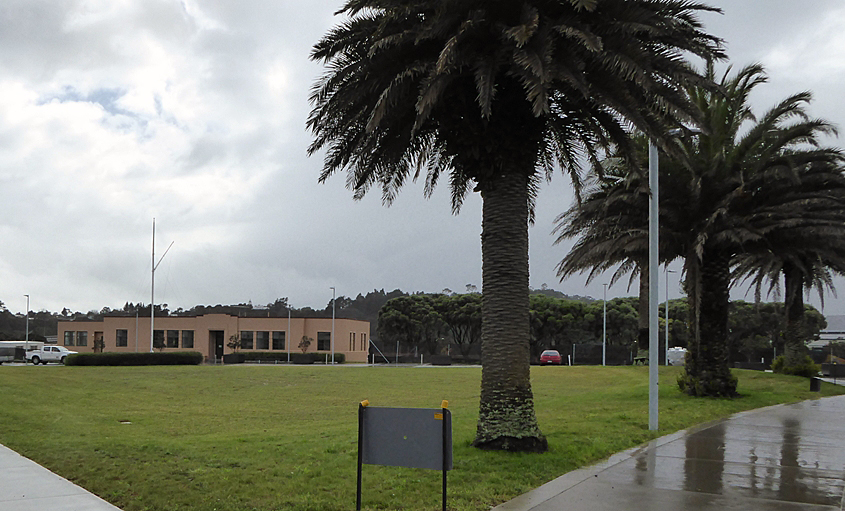
Royal New Zealand Air Force (RNZAF) Institute Building (Former), Hobsonville Point, Auckland | Martin Jones | 26/09/2016 | Heritage New Zealand
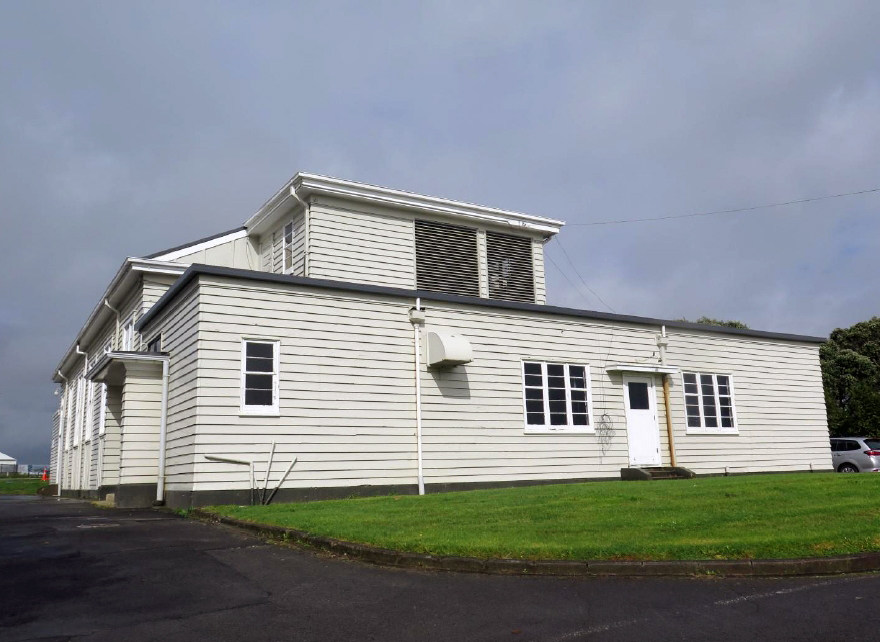
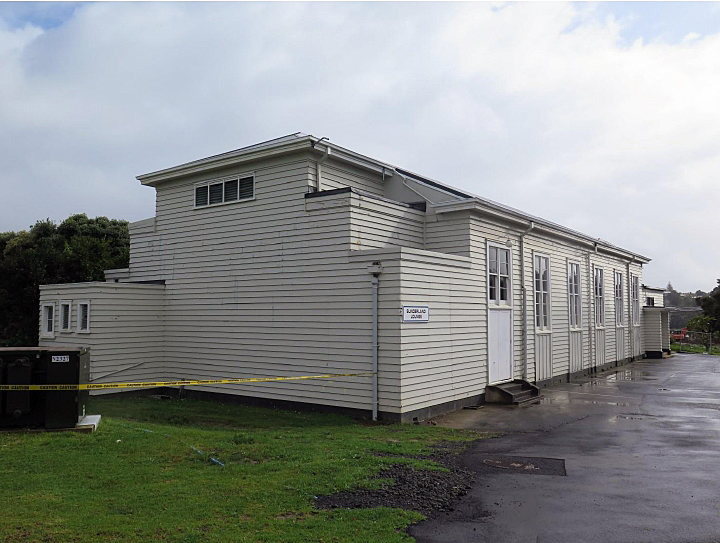
Royal New Zealand Air Force (RNZAF) Institute Building (Former), Hobsonville Point, Auckland. South and East elevations showing main hall and toilet addition | Martin Jones | 26/09/2016 | Heritage New Zealand
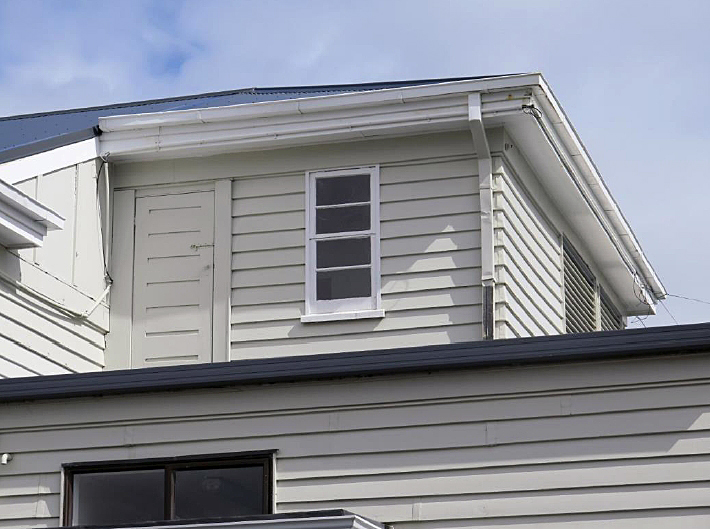
Royal New Zealand Air Force (RNZAF) Institute Building (Former), Hobsonville Point, Auckland. Projection room from east side showing entry and vents | Martin Jones | 26/09/2016 | Heritage New Zealand
Royal New Zealand Air Force (RNZAF) Institute Building (Former), Hobsonville Point, Auckland | Martin Jones | 26/09/2016 | Heritage New Zealand
Royal New Zealand Air Force (RNZAF) Institute Building (Former), Hobsonville Point, Auckland. South and East elevations showing main hall and toilet addition | Martin Jones | 26/09/2016 | Heritage New Zealand
Royal New Zealand Air Force (RNZAF) Institute Building (Former), Hobsonville Point, Auckland. Projection room from east side showing entry and vents | Martin Jones | 26/09/2016 | Heritage New Zealand

List Entry Information

Overview

Status
Listed

List Entry Status
Historic Place Category 2

Access
Private/No Public Access

List Number
9710

Date Entered
23rd February 2017

Date of Effect
15th March 2017

City/District Council
Auckland Council

Region
Auckland Council

Extent of List Entry

Extent includes the land described as Sec 3 SO 490900 (RT 759967, NZ Gazette 2016-ln6007), North Auckland Land District and the building known as the Royal New Zealand Air Force (RNZAF) Institute Building (Former) thereon. (Refer to map in Appendix 1 of the List entry report for further information).

Legal description

Sec 3 SO 490900 (RT 759967, NZ Gazette 2016-ln6007), North Auckland Land District

Detailed List Entry
Significance

Historic Significance

Historical Significance or Value This place reflects the requirements of a developing air base in New Zealand through the provision of social facilities for those who worked there around the time of the Second World War. It has significance as part of the only land and sea air base in New Zealand and may be the only surviving Air Force [military] social facility from this period. It has particular historical significance for its close connections with military service and social and recreational activities of the thousands of men and women who served at Hobsonville.

Detail Of Assessed Criteria

(a) The extent to which the place reflects important or representative aspects of New Zealand history The provision of social facilities was an integral part of an operative airbase and the Hobsonville RNZAF Institute building may be the sole remaining Air Force Institute designed for this purpose, constructed in preparation for the Second World War. The building was built as part of the redevelopment of the base from 1936 and was continually used for the same purpose until the closure of the base in the 2000s, with only minor changes to the structure. It reflects the importance of social facilities as a part of the lives of airmen and women in New Zealand. (b) The association of the place with events, persons, or ideas of importance in New Zealand history The RNZAF Institute Building (Former) is associated with New Zealand’s response to the Second World War and with the development of the Royal New Zealand Air Force, an organisation of considerable importance in our history. The building was constructed as part of the 1936 expansion of the Air Force’s facilities following the establishment of the RNZAF as a separate branch of the military. As part of the Armed Forces, the RNZAF has made significant contributions domestically and internationally. (k) The extent to which the place forms part of a wider historical and cultural area. The RNZAF Institute Building (Former) forms part of a collection of buildings that were constructed for the Air Force base between 1925 and 1940, and are still present at their original locations. The buildings demonstrate different aspects of the variety of functions of a working airbase. The buildings include the RNZAF Headquarters Building (not listed), Catalina Barracks (not listed), Catalina Hangar (not listed), Sunderland Avenue houses (not listed), Marlborough Crescent Houses and Oval (not listed), and the Mill House (not listed). These buildings have been identified as part of the residential development of the area and are being retained.

Construction Professional

Name

Simpson, John R.

Type

Builder

Biography

No biography is currently available for this construction professional

Name

Messrs. G. Windsor Allen Ltd

Type

Builder

Biography

No biography is currently available for this construction professional

Name

Mair, John Thomas

Type

Architect

Biography

John Thomas Mair (1876-1959) was born in Invercargill and began his career with the New Zealand Railways on the staff of the Office Engineer, George Troup. In 1906 he travelled to the United States of America where he studied architecture at the University of Pennsylvania. He then worked in the office of George B. Post in New York before travelling to England where he was admitted as an Associate of the Royal Institute of British Architects. He became a Fellow in 1940. On his return to New Zealand he entered private practice, one of his first buildings being the Presbyterian First Church, Invercargill (1915), a prominent building of Romanesque character. He then practised in Wellington, carrying out largely domestic commissions. In 1918 he was appointed Inspector of Military Hospitals by the Defence Department, and in 1920 he became architect to the Department of Education. Following the retirement of John Campbell in 1922, Mair was appointed Government Architect, a position which he held until his retirement in 1942. During this period he was responsible for a variety of buildings, including the Courthouse, Hamilton, the Post Office in High Street, Christchurch, Government Life Office and the Departmental Building, both in Wellington, and the Jean Batten Building, Auckland. Such buildings show a departure from tradition, with the emphasis on function, structure and volume as opposed to a stylistic treatment of the building fabric. A Fellow of the New Zealand Institute of Architects, Mair was made a Life Member in 1942. His son John Lindsay Mair also practised as an architect.

Construction Details

Start Year

1939

Finish Year

1940

Type

Original Construction

Description

Constructed by John R. Simpson under the guidance of John T. Mair, Government Architect, Public Works Department

Start Year

1940

Finish Year

1940

Type

Addition

Description

West elevation ladies lavatories addition constructed by Messrs. G. Windsor Allen Ltd, Mt Roskill.

Start Year

1940

Finish Year

1940

Type

Modification

Description

Post office posting slots, mailbox facilities and telephone box construction alterations under the guidance of John T. Mair.

Construction Materials

Timber with corrugated steel

Historical Narrative

Early history of the site The Hobsonville Peninsula is of significance to Te Kawerau a Maki who occupied the site before European arrival. The area has numerous middens around the coastline which was used for its access to the Waitemata Harbour and sources of food. There were major inlets and water sources which were important to the iwi/hapū that occupied the area during fishing and food gathering expeditions. The lands were suitable for the planting of kumara. Across the harbour channels, to the east and north were the permanent kāinga and pā. The Crown purchased the peninsula from Tairua and Tinana of Ngāti Whatua in 1853. The RNZAF Institute Building is situated within the former RNZAF Air Base on Hobsonville Point. The site formed part of Allotment 12 Waipareira Parish for which the Crown grant was issued to David Bruce. Bruce was a Presbyterian minister associated with St Andrews Church on Alten Road, the first Presbyterian Church established in Auckland. In 1891 he subdivided Allotment 12 and the majority of the lots were purchased by two sons of Rice Owen Clark, the founder of the Clark pottery south of Allotment 12 at Limeburners Bay. Rice Owen Clark and his family were the first settlers to move to Hobsonville in 1853. In 1895 Lots 1-6 DP 961 were owned by Henry Clark and Lots 8-13 DP 961 were owned by Rice Owen Clark Junior, expanding the family’s land holding at Hobsonville. Henry Clark farmed his land until 1925 when the lots were purchased by the government for a land and sea base for the newly established New Zealand Permanent Air Force. RNZAF The Royal New Zealand Air Force (RNZAF) was first established as the New Zealand Permanent Air Force in 1923 as a branch within the military. An air force base was established at Wigram in 1923 and in 1925 the Hobsonville site was chosen for a land and sea base as it was very flat and had frontage onto the Waitemata Harbour. The water access at Hobsonville enabled the NZPAF to use seaplanes intended for naval cooperation. By August 1928 construction was well underway at Hobsonville with a jetty, slipway, hangars, garages, offices and cottages in place by the following year. With the onset of the Great Depression in the early 1930s, government spending was curtailed including on military installations. The NZPAF was renamed the Royal New Zealand Air Force (RNZAF) in 1934 following assent from the King. In 1936 it was increasingly evident that a war was imminent and improvements and developments in aircrafts led the government to commission the Cochrane Report to advise on organisational changes to update the Air Force. Following this report, the RNZAF was re-established as a separate branch of the military. Cochrane also recommended an expansion of the air force facilities around the country. New bases were constructed at Whenuapai and Ohakea and later at Woodbourne, and the facilities at Wigram and Hobsonville were greatly expanded. Hobsonville’s status was changed to an exclusive military base and it became a Repair and Equipment Depot and Seaplane base. In 1936, to accommodate the required changes to the air base, the government purchased multiple lots to the east of the established air base. This land was owned by Rice Owen Clark Junior until his death when it passed to his widow who subdivided and sold the lots to William McGarvey. Most of the lots were owned by McGarvey at the time of the governments purchase with a few being owned by local businessmen such as James Walter Sinton. With the expansion of the base a new building program was embarked on that included the Institute Building to provide for the social life of the airmen who lived and worked at the base. Royal New Zealand Airforce (RNZAF) Institute Building By definition, an Air Force base is a ‘self-contained community’ which has accommodation for work and domestic purposes, its own power and water reticulation, and recreation facilities. Recreational facilities were, and remain, an integral part of base life, allowing personnel and their families the opportunity to relax and unwind. As the base cinema, the Institute Building at Hobsonville was the first dedicated amenity building on the base and it was called the Institute in the tradition of the British military recreation facilities which were also named Institutes. While the base was being made war-ready, buildings seen to be essential were prioritised due to the ensuing lack of materials and manpower. The Institute had been identified as an essential building by the government as the lack of social facilities was found to be a contributing factor in the high numbers of men taking their discharge from Hobsonville in the 1930s. The Hobsonville Institute Building was designed by Government Architect John Mair and constructed from the same plans as were used for a similar social building at Wigram Airbase (now demolished). It was smaller than the one at Wigram as it was missing one bay. It was also reversed and reoriented for the Auckland site. Institute Buildings are also understood to have been constructed at Woodbourne, Te Rapa, Ohakea and Whenuapai. The Institute Building at Woodbourne fell into disrepair and was replaced by the Delta Lounge in 1996. The Te Rapa base closed in 1992 and the site was cleared as part of The Base shopping centre redevelopment. The Institutes at Ohakea and Whenuapai were part of larger buildings which provided for multiple aspects of life on base. Construction of the Hobsonville Institute building did not start until after the declaration of war in Europe. The successful tender by of £7629 John R Simpson was accepted in September 1939 and the work was reported to have been completed by March 1940. The Institute Building included a hall of 3,300 square feet (306m2) of floor space, a stage, a projection box for the theatre, a canteen, attendant’s quarters, a hairdresser and a shop. The Hobsonville base was used extensively for the construction and testing of military aircraft during the war. The Institute was one of the primary locations for social events on the base during this period. Regular newsreel films were shown in the Institute Building in addition to a wide variety of popular films starring such screen icons as Humphrey Bogart, Merle Oberon and Laurence Olivier. Dances and concerts were regularly held there during the time the base was operational. The most memorable concert was by famed British actor, playwright and composer of popular songs - Noel Coward, who was touring the world entertaining Allied troops. After the original construction of the RNZAF Institute Building, it was found that the provision for ladies’ toilets was not sufficient and impractical for regular use. In 1940 lavatory additions were built on the southern elevation of the building adjoining the dressing rooms. The contract price of Messrs. G. Windsor Allen Limited, Mt. Roskill was £108. Post office facilities were also constructed for personnel at this time and included posting slots, mailbox facilities and a telephone box. This work was overseen by John Mair, Government Architect. The Institute Building was able to accommodate about 140 seated at tables, 200 seated in 'lecture' format, or up to 300 standing for drinks. In 1961 a fan was installed in the projection room of the Institute Building cinema to remove carbon dust generated by the films; and a hand basin and plumbing was installed for the Barber’s Shop. The Institute was also re-roofed and the hipped roof was extended to cover part of the surrounding annex which was originally constructed with a flat roof. This resulted in the windows on the western side of the building to be enclosed by the roof. By 1962 the Hobsonville base was being used less by the air force as the replacement aircraft that were being purchased were land based and water access was no longer a requirement, although a respite came with the purchase of Iroquois and Sioux helicopters. The Institute Building (Former) continued to be used throughout this time. In 2000 the Government announced that Hobsonville was no longer required for defence needs and would progressively be closed. The helicopters were sent to Ohakea, and Hobsonville ceased to be an operational base. The Institute Building, renamed Sunderland Lounge after the seaplanes based at Hobsonville in the 1940s and 1950s, was re-purposed as a community hall available for one-off events and regular bookings. By 2005, the majority of the land had been transferred to Housing New Zealand with a wholly-owned subsidiary, the Hobsonville Land Company being established to develop the former base for residential purposes. In 2014 the Institute Building and the nearby Headquarters Building were selected to be transferred to council for community purposes for the new development and in 2016 the land parcel was surveyed off and vested in Auckland Council.

Physical Description

Current Description Context RNZAF Institute Building (Former) is located at Hobsonville Point, Auckland. Hobsonville Point lies in the north west of Auckland beside the Upper Harbour Highway and is being redeveloped as a residential suburb. It retains some of the original buildings from the RNZAF base and some earlier buildings related to the clay works in the area. Other buildings in the immediate area include the RNZAF Headquarters Building (Former) to the west of the Institute, the Catalina Barracks, Catalina Hangar, Sunderland Avenue houses, Marlborough Crescent houses and Oval, and the Mill House. Recorded archaeological sites at Hobsonville Point include middens around the coastline. The Site The RNZAF Institute Building (Former) site is generally rectangular in plan, and lies on the north side of Hudson Bay Road. It contains a substantial timber building in the centre of the lot with a concrete path leading from the door on the west side to a neighbouring car park. The building is surrounded by grass on the northern, southern and western side of the building with a concrete access way running along the eastern side. Exterior The Institute is a timber framed utilitarian building with weatherboard cladding. The building consists of a rectangular double height hall with a single height annex around the north and west sides of the hall. The 1940 toilet block extends from the south side of the building and the projection room is located above the northern section of the annex on the roof. A corrugated steel hipped roof covers the majority of the building, including the hall and the western section of the annex and the projection room. The northern section of the annex, surrounding the projection room, and the 1940 toilet block have flat roofs. The eastern elevation has a concrete driveway running alongside leading to the adjacent carpark and is the main elevation viewable from the road. It has a number of high windows and two sets of doors. The northern entrance is within a porch which leads into the kitchen. Above the porch is a doorway to the projection room, which is only accessible from the roof. The southern elevation has a stepped solid gable and the western elevation is largely obscured by a number of plants and trees planted around the pathway which leads to the foyer entrance. The ramp entrance to the building is accessible from this side, starting from the northern end and leading to a second entrance to the north of the foyer. The hipped roof of the annex encloses the original windows on the western side of the hall. The northern elevation has three windows as well as a door and there is evidence the positions of the window has been altered since the construction of the building. The 1961 vents on the projection room are located on this side on the wall above the annex. Interior The Institute is comprised of a number of rooms including a foyer, three bathrooms, a bar, a kitchen, a supper room, storage rooms, the main hall, and a projection room. The foyer is located halfway along the annex on the west side of the building and leads to the main hall. The two larger bathrooms are on the south side of the foyer in the annex. The main hall is the largest room in the Institute and has a large parquet dance floor in the centre of the room with carpeted areas on either side. There is an open partition along the west side of the hall allowing for movement of patrons during events where the dance floor is in use. The ceiling has been lowered to different heights and now covers the windows enclosed by the roof on the west side. On the east side the high windows extend from the dado to the lowered ceiling and still retain the original fittings. The room can be partitioned to create smaller spaces for use. The 1940 toilet block opens off the southwest corner of the hall. The tiled bar counter opens off the main hall, with a second bar counter opening to the supper room. The supper room is located in the north end of the hall in the annex beside the kitchen. A service window opens from the kitchen to the main hall and a similar service window opens to the supper room. The projection room is not accessible internally with the only entrance being from the roof.

Reference

Completion Date

1st February 2017

Report Written By

Alexandra Foster

Information Sources

Ross, 1955

J M S Ross, Royal New Zealand Air Force, War History Branch, Department of Internal Affairs, Wellington, 1955.

Dawson, 2007

Dawson, Bee, Hobsonville; Portrait of a Seaplane Station, Random House, 2007

Dawson, 2012

Dawson, Bee, Wigram: The Birthplace of Military Aviation in New Zealand, Random House 2012.

Martyn, 2012

Martyn, Errol W., Swift to the Sky: New Zealand’s Military Aviation History, Penguin 2012.

Lester, 1947

Lester, A.G., History and Development of Royal New Zealand Air Force Station Hobsonville 1915-1945, [compiled in] March 1947, [held at Archives New Zealand, Wellington Office – ADQA 17372]

Report Written By

A fully referenced New Zealand Heritage List report is available on request from the Northern Region Office of Heritage New Zealand. Please note that entry on the New Zealand Heritage List/Rarangi Korero identifies only the heritage values of the property concerned, and should not be construed as advice on the state of the property, or as a comment of its soundness or safety, including in regard to earthquake risk, safety in the event of fire, or insanitary conditions.

Further Information

Current Usages

Uses: Civic Facilities

Specific Usage: Hall, Community

Former Usages

General Usage:: Civic Facilities

Specific Usage: Cinema/movie theatre

General Usage:: Defence

Specific Usage: Defence Base Airforce

Themes

Web Links

Overview

Status

Listed

List Entry Status

Historic Place Category 2

Access

Private/No Public Access

List Number

9710

Date Entered

23rd February 2017

Date of Effect

15th March 2017

City/District Council

Auckland Council

Region

Auckland Council

Extent of List Entry

Extent includes the land described as Sec 3 SO 490900 (RT 759967, NZ Gazette 2016-ln6007), North Auckland Land District and the building known as the Royal New Zealand Air Force (RNZAF) Institute Building (Former) thereon. (Refer to map in Appendix 1 of the List entry report for further information).

Legal description

Sec 3 SO 490900 (RT 759967, NZ Gazette 2016-ln6007), North Auckland Land District

Status

Listed

List Entry Status

Historic Place Category 2

Access

Private/No Public Access

List Number

9710

Date Entered

23rd February 2017

Date of Effect

15th March 2017

City/District Council

Auckland Council

Region

Auckland Council

Extent of List Entry

Extent includes the land described as Sec 3 SO 490900 (RT 759967, NZ Gazette 2016-ln6007), North Auckland Land District and the building known as the Royal New Zealand Air Force (RNZAF) Institute Building (Former) thereon. (Refer to map in Appendix 1 of the List entry report for further information).

Legal description

Sec 3 SO 490900 (RT 759967, NZ Gazette 2016-ln6007), North Auckland Land District

Significance

Why is this place significant?

Historic Significance

Historical Significance or Value This place reflects the requirements of a developing air base in New Zealand through the provision of social facilities for those who worked there around the time of the Second World War. It has significance as part of the only land and sea air base in New Zealand and may be the only surviving Air Force [military] social facility from this period. It has particular historical significance for its close connections with military service and social and recreational activities of the thousands of men and women who served at Hobsonville.

Why is this place Category 1 / Category 2?

Detail Of Assessed Criteria

(a) The extent to which the place reflects important or representative aspects of New Zealand history The provision of social facilities was an integral part of an operative airbase and the Hobsonville RNZAF Institute building may be the sole remaining Air Force Institute designed for this purpose, constructed in preparation for the Second World War. The building was built as part of the redevelopment of the base from 1936 and was continually used for the same purpose until the closure of the base in the 2000s, with only minor changes to the structure. It reflects the importance of social facilities as a part of the lives of airmen and women in New Zealand. (b) The association of the place with events, persons, or ideas of importance in New Zealand history The RNZAF Institute Building (Former) is associated with New Zealand’s response to the Second World War and with the development of the Royal New Zealand Air Force, an organisation of considerable importance in our history. The building was constructed as part of the 1936 expansion of the Air Force’s facilities following the establishment of the RNZAF as a separate branch of the military. As part of the Armed Forces, the RNZAF has made significant contributions domestically and internationally. (k) The extent to which the place forms part of a wider historical and cultural area. The RNZAF Institute Building (Former) forms part of a collection of buildings that were constructed for the Air Force base between 1925 and 1940, and are still present at their original locations. The buildings demonstrate different aspects of the variety of functions of a working airbase. The buildings include the RNZAF Headquarters Building (not listed), Catalina Barracks (not listed), Catalina Hangar (not listed), Sunderland Avenue houses (not listed), Marlborough Crescent Houses and Oval (not listed), and the Mill House (not listed). These buildings have been identified as part of the residential development of the area and are being retained.

Why is this place significant?

Historic Significance

Historical Significance or Value This place reflects the requirements of a developing air base in New Zealand through the provision of social facilities for those who worked there around the time of the Second World War. It has significance as part of the only land and sea air base in New Zealand and may be the only surviving Air Force [military] social facility from this period. It has particular historical significance for its close connections with military service and social and recreational activities of the thousands of men and women who served at Hobsonville.

Why is this place Category 1 / Category 2?

Detail Of Assessed Criteria

(a) The extent to which the place reflects important or representative aspects of New Zealand history The provision of social facilities was an integral part of an operative airbase and the Hobsonville RNZAF Institute building may be the sole remaining Air Force Institute designed for this purpose, constructed in preparation for the Second World War. The building was built as part of the redevelopment of the base from 1936 and was continually used for the same purpose until the closure of the base in the 2000s, with only minor changes to the structure. It reflects the importance of social facilities as a part of the lives of airmen and women in New Zealand. (b) The association of the place with events, persons, or ideas of importance in New Zealand history The RNZAF Institute Building (Former) is associated with New Zealand’s response to the Second World War and with the development of the Royal New Zealand Air Force, an organisation of considerable importance in our history. The building was constructed as part of the 1936 expansion of the Air Force’s facilities following the establishment of the RNZAF as a separate branch of the military. As part of the Armed Forces, the RNZAF has made significant contributions domestically and internationally. (k) The extent to which the place forms part of a wider historical and cultural area. The RNZAF Institute Building (Former) forms part of a collection of buildings that were constructed for the Air Force base between 1925 and 1940, and are still present at their original locations. The buildings demonstrate different aspects of the variety of functions of a working airbase. The buildings include the RNZAF Headquarters Building (not listed), Catalina Barracks (not listed), Catalina Hangar (not listed), Sunderland Avenue houses (not listed), Marlborough Crescent Houses and Oval (not listed), and the Mill House (not listed). These buildings have been identified as part of the residential development of the area and are being retained.

Construction Information

Construction Professional

Name

Simpson, John R.

Type

Builder

Biography

No biography is currently available for this construction professional

Name

Messrs. G. Windsor Allen Ltd

Type

Builder

Biography

No biography is currently available for this construction professional

Name

Mair, John Thomas

Type

Architect

Biography

John Thomas Mair (1876-1959) was born in Invercargill and began his career with the New Zealand Railways on the staff of the Office Engineer, George Troup. In 1906 he travelled to the United States of America where he studied architecture at the University of Pennsylvania. He then worked in the office of George B. Post in New York before travelling to England where he was admitted as an Associate of the Royal Institute of British Architects. He became a Fellow in 1940. On his return to New Zealand he entered private practice, one of his first buildings being the Presbyterian First Church, Invercargill (1915), a prominent building of Romanesque character. He then practised in Wellington, carrying out largely domestic commissions. In 1918 he was appointed Inspector of Military Hospitals by the Defence Department, and in 1920 he became architect to the Department of Education. Following the retirement of John Campbell in 1922, Mair was appointed Government Architect, a position which he held until his retirement in 1942. During this period he was responsible for a variety of buildings, including the Courthouse, Hamilton, the Post Office in High Street, Christchurch, Government Life Office and the Departmental Building, both in Wellington, and the Jean Batten Building, Auckland. Such buildings show a departure from tradition, with the emphasis on function, structure and volume as opposed to a stylistic treatment of the building fabric. A Fellow of the New Zealand Institute of Architects, Mair was made a Life Member in 1942. His son John Lindsay Mair also practised as an architect.

Construction Details

Start Year

1939

Finish Year

1940

Type

Original Construction

Description

Constructed by John R. Simpson under the guidance of John T. Mair, Government Architect, Public Works Department

Start Year

1940

Finish Year

1940

Type

Addition

Description

West elevation ladies lavatories addition constructed by Messrs. G. Windsor Allen Ltd, Mt Roskill.

Start Year

1940

Finish Year

1940

Type

Modification

Description

Post office posting slots, mailbox facilities and telephone box construction alterations under the guidance of John T. Mair.

Construction Materials

Timber with corrugated steel

Construction Professional

Name

Simpson, John R.

Type

Builder

Biography

No biography is currently available for this construction professional

Name

Messrs. G. Windsor Allen Ltd

Type

Builder

Biography

No biography is currently available for this construction professional

Name

Mair, John Thomas

Type

Architect

Biography

John Thomas Mair (1876-1959) was born in Invercargill and began his career with the New Zealand Railways on the staff of the Office Engineer, George Troup. In 1906 he travelled to the United States of America where he studied architecture at the University of Pennsylvania. He then worked in the office of George B. Post in New York before travelling to England where he was admitted as an Associate of the Royal Institute of British Architects. He became a Fellow in 1940. On his return to New Zealand he entered private practice, one of his first buildings being the Presbyterian First Church, Invercargill (1915), a prominent building of Romanesque character. He then practised in Wellington, carrying out largely domestic commissions. In 1918 he was appointed Inspector of Military Hospitals by the Defence Department, and in 1920 he became architect to the Department of Education. Following the retirement of John Campbell in 1922, Mair was appointed Government Architect, a position which he held until his retirement in 1942. During this period he was responsible for a variety of buildings, including the Courthouse, Hamilton, the Post Office in High Street, Christchurch, Government Life Office and the Departmental Building, both in Wellington, and the Jean Batten Building, Auckland. Such buildings show a departure from tradition, with the emphasis on function, structure and volume as opposed to a stylistic treatment of the building fabric. A Fellow of the New Zealand Institute of Architects, Mair was made a Life Member in 1942. His son John Lindsay Mair also practised as an architect.

Construction Details

Start Year

1939

Finish Year

1940

Type

Original Construction

Description

Constructed by John R. Simpson under the guidance of John T. Mair, Government Architect, Public Works Department

Start Year

1940

Finish Year

1940

Type

Addition

Description

West elevation ladies lavatories addition constructed by Messrs. G. Windsor Allen Ltd, Mt Roskill.

Start Year

1940

Finish Year

1940

Type

Modification

Description

Post office posting slots, mailbox facilities and telephone box construction alterations under the guidance of John T. Mair.

Construction Materials

Timber with corrugated steel

Historical Narrative

Early history of the site The Hobsonville Peninsula is of significance to Te Kawerau a Maki who occupied the site before European arrival. The area has numerous middens around the coastline which was used for its access to the Waitemata Harbour and sources of food. There were major inlets and water sources which were important to the iwi/hapū that occupied the area during fishing and food gathering expeditions. The lands were suitable for the planting of kumara. Across the harbour channels, to the east and north were the permanent kāinga and pā. The Crown purchased the peninsula from Tairua and Tinana of Ngāti Whatua in 1853. The RNZAF Institute Building is situated within the former RNZAF Air Base on Hobsonville Point. The site formed part of Allotment 12 Waipareira Parish for which the Crown grant was issued to David Bruce. Bruce was a Presbyterian minister associated with St Andrews Church on Alten Road, the first Presbyterian Church established in Auckland. In 1891 he subdivided Allotment 12 and the majority of the lots were purchased by two sons of Rice Owen Clark, the founder of the Clark pottery south of Allotment 12 at Limeburners Bay. Rice Owen Clark and his family were the first settlers to move to Hobsonville in 1853. In 1895 Lots 1-6 DP 961 were owned by Henry Clark and Lots 8-13 DP 961 were owned by Rice Owen Clark Junior, expanding the family’s land holding at Hobsonville. Henry Clark farmed his land until 1925 when the lots were purchased by the government for a land and sea base for the newly established New Zealand Permanent Air Force. RNZAF The Royal New Zealand Air Force (RNZAF) was first established as the New Zealand Permanent Air Force in 1923 as a branch within the military. An air force base was established at Wigram in 1923 and in 1925 the Hobsonville site was chosen for a land and sea base as it was very flat and had frontage onto the Waitemata Harbour. The water access at Hobsonville enabled the NZPAF to use seaplanes intended for naval cooperation. By August 1928 construction was well underway at Hobsonville with a jetty, slipway, hangars, garages, offices and cottages in place by the following year. With the onset of the Great Depression in the early 1930s, government spending was curtailed including on military installations. The NZPAF was renamed the Royal New Zealand Air Force (RNZAF) in 1934 following assent from the King. In 1936 it was increasingly evident that a war was imminent and improvements and developments in aircrafts led the government to commission the Cochrane Report to advise on organisational changes to update the Air Force. Following this report, the RNZAF was re-established as a separate branch of the military. Cochrane also recommended an expansion of the air force facilities around the country. New bases were constructed at Whenuapai and Ohakea and later at Woodbourne, and the facilities at Wigram and Hobsonville were greatly expanded. Hobsonville’s status was changed to an exclusive military base and it became a Repair and Equipment Depot and Seaplane base. In 1936, to accommodate the required changes to the air base, the government purchased multiple lots to the east of the established air base. This land was owned by Rice Owen Clark Junior until his death when it passed to his widow who subdivided and sold the lots to William McGarvey. Most of the lots were owned by McGarvey at the time of the governments purchase with a few being owned by local businessmen such as James Walter Sinton. With the expansion of the base a new building program was embarked on that included the Institute Building to provide for the social life of the airmen who lived and worked at the base. Royal New Zealand Airforce (RNZAF) Institute Building By definition, an Air Force base is a ‘self-contained community’ which has accommodation for work and domestic purposes, its own power and water reticulation, and recreation facilities. Recreational facilities were, and remain, an integral part of base life, allowing personnel and their families the opportunity to relax and unwind. As the base cinema, the Institute Building at Hobsonville was the first dedicated amenity building on the base and it was called the Institute in the tradition of the British military recreation facilities which were also named Institutes. While the base was being made war-ready, buildings seen to be essential were prioritised due to the ensuing lack of materials and manpower. The Institute had been identified as an essential building by the government as the lack of social facilities was found to be a contributing factor in the high numbers of men taking their discharge from Hobsonville in the 1930s. The Hobsonville Institute Building was designed by Government Architect John Mair and constructed from the same plans as were used for a similar social building at Wigram Airbase (now demolished). It was smaller than the one at Wigram as it was missing one bay. It was also reversed and reoriented for the Auckland site. Institute Buildings are also understood to have been constructed at Woodbourne, Te Rapa, Ohakea and Whenuapai. The Institute Building at Woodbourne fell into disrepair and was replaced by the Delta Lounge in 1996. The Te Rapa base closed in 1992 and the site was cleared as part of The Base shopping centre redevelopment. The Institutes at Ohakea and Whenuapai were part of larger buildings which provided for multiple aspects of life on base. Construction of the Hobsonville Institute building did not start until after the declaration of war in Europe. The successful tender by of £7629 John R Simpson was accepted in September 1939 and the work was reported to have been completed by March 1940. The Institute Building included a hall of 3,300 square feet (306m2) of floor space, a stage, a projection box for the theatre, a canteen, attendant’s quarters, a hairdresser and a shop. The Hobsonville base was used extensively for the construction and testing of military aircraft during the war. The Institute was one of the primary locations for social events on the base during this period. Regular newsreel films were shown in the Institute Building in addition to a wide variety of popular films starring such screen icons as Humphrey Bogart, Merle Oberon and Laurence Olivier. Dances and concerts were regularly held there during the time the base was operational. The most memorable concert was by famed British actor, playwright and composer of popular songs - Noel Coward, who was touring the world entertaining Allied troops. After the original construction of the RNZAF Institute Building, it was found that the provision for ladies’ toilets was not sufficient and impractical for regular use. In 1940 lavatory additions were built on the southern elevation of the building adjoining the dressing rooms. The contract price of Messrs. G. Windsor Allen Limited, Mt. Roskill was £108. Post office facilities were also constructed for personnel at this time and included posting slots, mailbox facilities and a telephone box. This work was overseen by John Mair, Government Architect. The Institute Building was able to accommodate about 140 seated at tables, 200 seated in 'lecture' format, or up to 300 standing for drinks. In 1961 a fan was installed in the projection room of the Institute Building cinema to remove carbon dust generated by the films; and a hand basin and plumbing was installed for the Barber’s Shop. The Institute was also re-roofed and the hipped roof was extended to cover part of the surrounding annex which was originally constructed with a flat roof. This resulted in the windows on the western side of the building to be enclosed by the roof. By 1962 the Hobsonville base was being used less by the air force as the replacement aircraft that were being purchased were land based and water access was no longer a requirement, although a respite came with the purchase of Iroquois and Sioux helicopters. The Institute Building (Former) continued to be used throughout this time. In 2000 the Government announced that Hobsonville was no longer required for defence needs and would progressively be closed. The helicopters were sent to Ohakea, and Hobsonville ceased to be an operational base. The Institute Building, renamed Sunderland Lounge after the seaplanes based at Hobsonville in the 1940s and 1950s, was re-purposed as a community hall available for one-off events and regular bookings. By 2005, the majority of the land had been transferred to Housing New Zealand with a wholly-owned subsidiary, the Hobsonville Land Company being established to develop the former base for residential purposes. In 2014 the Institute Building and the nearby Headquarters Building were selected to be transferred to council for community purposes for the new development and in 2016 the land parcel was surveyed off and vested in Auckland Council.

Early history of the site The Hobsonville Peninsula is of significance to Te Kawerau a Maki who occupied the site before European arrival. The area has numerous middens around the coastline which was used for its access to the Waitemata Harbour and sources of food. There were major inlets and water sources which were important to the iwi/hapū that occupied the area during fishing and food gathering expeditions. The lands were suitable for the planting of kumara. Across the harbour channels, to the east and north were the permanent kāinga and pā. The Crown purchased the peninsula from Tairua and Tinana of Ngāti Whatua in 1853. The RNZAF Institute Building is situated within the former RNZAF Air Base on Hobsonville Point. The site formed part of Allotment 12 Waipareira Parish for which the Crown grant was issued to David Bruce. Bruce was a Presbyterian minister associated with St Andrews Church on Alten Road, the first Presbyterian Church established in Auckland. In 1891 he subdivided Allotment 12 and the majority of the lots were purchased by two sons of Rice Owen Clark, the founder of the Clark pottery south of Allotment 12 at Limeburners Bay. Rice Owen Clark and his family were the first settlers to move to Hobsonville in 1853. In 1895 Lots 1-6 DP 961 were owned by Henry Clark and Lots 8-13 DP 961 were owned by Rice Owen Clark Junior, expanding the family’s land holding at Hobsonville. Henry Clark farmed his land until 1925 when the lots were purchased by the government for a land and sea base for the newly established New Zealand Permanent Air Force. RNZAF The Royal New Zealand Air Force (RNZAF) was first established as the New Zealand Permanent Air Force in 1923 as a branch within the military. An air force base was established at Wigram in 1923 and in 1925 the Hobsonville site was chosen for a land and sea base as it was very flat and had frontage onto the Waitemata Harbour. The water access at Hobsonville enabled the NZPAF to use seaplanes intended for naval cooperation. By August 1928 construction was well underway at Hobsonville with a jetty, slipway, hangars, garages, offices and cottages in place by the following year. With the onset of the Great Depression in the early 1930s, government spending was curtailed including on military installations. The NZPAF was renamed the Royal New Zealand Air Force (RNZAF) in 1934 following assent from the King. In 1936 it was increasingly evident that a war was imminent and improvements and developments in aircrafts led the government to commission the Cochrane Report to advise on organisational changes to update the Air Force. Following this report, the RNZAF was re-established as a separate branch of the military. Cochrane also recommended an expansion of the air force facilities around the country. New bases were constructed at Whenuapai and Ohakea and later at Woodbourne, and the facilities at Wigram and Hobsonville were greatly expanded. Hobsonville’s status was changed to an exclusive military base and it became a Repair and Equipment Depot and Seaplane base. In 1936, to accommodate the required changes to the air base, the government purchased multiple lots to the east of the established air base. This land was owned by Rice Owen Clark Junior until his death when it passed to his widow who subdivided and sold the lots to William McGarvey. Most of the lots were owned by McGarvey at the time of the governments purchase with a few being owned by local businessmen such as James Walter Sinton. With the expansion of the base a new building program was embarked on that included the Institute Building to provide for the social life of the airmen who lived and worked at the base. Royal New Zealand Airforce (RNZAF) Institute Building By definition, an Air Force base is a ‘self-contained community’ which has accommodation for work and domestic purposes, its own power and water reticulation, and recreation facilities. Recreational facilities were, and remain, an integral part of base life, allowing personnel and their families the opportunity to relax and unwind. As the base cinema, the Institute Building at Hobsonville was the first dedicated amenity building on the base and it was called the Institute in the tradition of the British military recreation facilities which were also named Institutes. While the base was being made war-ready, buildings seen to be essential were prioritised due to the ensuing lack of materials and manpower. The Institute had been identified as an essential building by the government as the lack of social facilities was found to be a contributing factor in the high numbers of men taking their discharge from Hobsonville in the 1930s. The Hobsonville Institute Building was designed by Government Architect John Mair and constructed from the same plans as were used for a similar social building at Wigram Airbase (now demolished). It was smaller than the one at Wigram as it was missing one bay. It was also reversed and reoriented for the Auckland site. Institute Buildings are also understood to have been constructed at Woodbourne, Te Rapa, Ohakea and Whenuapai. The Institute Building at Woodbourne fell into disrepair and was replaced by the Delta Lounge in 1996. The Te Rapa base closed in 1992 and the site was cleared as part of The Base shopping centre redevelopment. The Institutes at Ohakea and Whenuapai were part of larger buildings which provided for multiple aspects of life on base. Construction of the Hobsonville Institute building did not start until after the declaration of war in Europe. The successful tender by of £7629 John R Simpson was accepted in September 1939 and the work was reported to have been completed by March 1940. The Institute Building included a hall of 3,300 square feet (306m2) of floor space, a stage, a projection box for the theatre, a canteen, attendant’s quarters, a hairdresser and a shop. The Hobsonville base was used extensively for the construction and testing of military aircraft during the war. The Institute was one of the primary locations for social events on the base during this period. Regular newsreel films were shown in the Institute Building in addition to a wide variety of popular films starring such screen icons as Humphrey Bogart, Merle Oberon and Laurence Olivier. Dances and concerts were regularly held there during the time the base was operational. The most memorable concert was by famed British actor, playwright and composer of popular songs - Noel Coward, who was touring the world entertaining Allied troops. After the original construction of the RNZAF Institute Building, it was found that the provision for ladies’ toilets was not sufficient and impractical for regular use. In 1940 lavatory additions were built on the southern elevation of the building adjoining the dressing rooms. The contract price of Messrs. G. Windsor Allen Limited, Mt. Roskill was £108. Post office facilities were also constructed for personnel at this time and included posting slots, mailbox facilities and a telephone box. This work was overseen by John Mair, Government Architect. The Institute Building was able to accommodate about 140 seated at tables, 200 seated in 'lecture' format, or up to 300 standing for drinks. In 1961 a fan was installed in the projection room of the Institute Building cinema to remove carbon dust generated by the films; and a hand basin and plumbing was installed for the Barber’s Shop. The Institute was also re-roofed and the hipped roof was extended to cover part of the surrounding annex which was originally constructed with a flat roof. This resulted in the windows on the western side of the building to be enclosed by the roof. By 1962 the Hobsonville base was being used less by the air force as the replacement aircraft that were being purchased were land based and water access was no longer a requirement, although a respite came with the purchase of Iroquois and Sioux helicopters. The Institute Building (Former) continued to be used throughout this time. In 2000 the Government announced that Hobsonville was no longer required for defence needs and would progressively be closed. The helicopters were sent to Ohakea, and Hobsonville ceased to be an operational base. The Institute Building, renamed Sunderland Lounge after the seaplanes based at Hobsonville in the 1940s and 1950s, was re-purposed as a community hall available for one-off events and regular bookings. By 2005, the majority of the land had been transferred to Housing New Zealand with a wholly-owned subsidiary, the Hobsonville Land Company being established to develop the former base for residential purposes. In 2014 the Institute Building and the nearby Headquarters Building were selected to be transferred to council for community purposes for the new development and in 2016 the land parcel was surveyed off and vested in Auckland Council.

Physical Description

Current Description Context RNZAF Institute Building (Former) is located at Hobsonville Point, Auckland. Hobsonville Point lies in the north west of Auckland beside the Upper Harbour Highway and is being redeveloped as a residential suburb. It retains some of the original buildings from the RNZAF base and some earlier buildings related to the clay works in the area. Other buildings in the immediate area include the RNZAF Headquarters Building (Former) to the west of the Institute, the Catalina Barracks, Catalina Hangar, Sunderland Avenue houses, Marlborough Crescent houses and Oval, and the Mill House. Recorded archaeological sites at Hobsonville Point include middens around the coastline. The Site The RNZAF Institute Building (Former) site is generally rectangular in plan, and lies on the north side of Hudson Bay Road. It contains a substantial timber building in the centre of the lot with a concrete path leading from the door on the west side to a neighbouring car park. The building is surrounded by grass on the northern, southern and western side of the building with a concrete access way running along the eastern side. Exterior The Institute is a timber framed utilitarian building with weatherboard cladding. The building consists of a rectangular double height hall with a single height annex around the north and west sides of the hall. The 1940 toilet block extends from the south side of the building and the projection room is located above the northern section of the annex on the roof. A corrugated steel hipped roof covers the majority of the building, including the hall and the western section of the annex and the projection room. The northern section of the annex, surrounding the projection room, and the 1940 toilet block have flat roofs. The eastern elevation has a concrete driveway running alongside leading to the adjacent carpark and is the main elevation viewable from the road. It has a number of high windows and two sets of doors. The northern entrance is within a porch which leads into the kitchen. Above the porch is a doorway to the projection room, which is only accessible from the roof. The southern elevation has a stepped solid gable and the western elevation is largely obscured by a number of plants and trees planted around the pathway which leads to the foyer entrance. The ramp entrance to the building is accessible from this side, starting from the northern end and leading to a second entrance to the north of the foyer. The hipped roof of the annex encloses the original windows on the western side of the hall. The northern elevation has three windows as well as a door and there is evidence the positions of the window has been altered since the construction of the building. The 1961 vents on the projection room are located on this side on the wall above the annex. Interior The Institute is comprised of a number of rooms including a foyer, three bathrooms, a bar, a kitchen, a supper room, storage rooms, the main hall, and a projection room. The foyer is located halfway along the annex on the west side of the building and leads to the main hall. The two larger bathrooms are on the south side of the foyer in the annex. The main hall is the largest room in the Institute and has a large parquet dance floor in the centre of the room with carpeted areas on either side. There is an open partition along the west side of the hall allowing for movement of patrons during events where the dance floor is in use. The ceiling has been lowered to different heights and now covers the windows enclosed by the roof on the west side. On the east side the high windows extend from the dado to the lowered ceiling and still retain the original fittings. The room can be partitioned to create smaller spaces for use. The 1940 toilet block opens off the southwest corner of the hall. The tiled bar counter opens off the main hall, with a second bar counter opening to the supper room. The supper room is located in the north end of the hall in the annex beside the kitchen. A service window opens from the kitchen to the main hall and a similar service window opens to the supper room. The projection room is not accessible internally with the only entrance being from the roof.

Current Description Context RNZAF Institute Building (Former) is located at Hobsonville Point, Auckland. Hobsonville Point lies in the north west of Auckland beside the Upper Harbour Highway and is being redeveloped as a residential suburb. It retains some of the original buildings from the RNZAF base and some earlier buildings related to the clay works in the area. Other buildings in the immediate area include the RNZAF Headquarters Building (Former) to the west of the Institute, the Catalina Barracks, Catalina Hangar, Sunderland Avenue houses, Marlborough Crescent houses and Oval, and the Mill House. Recorded archaeological sites at Hobsonville Point include middens around the coastline. The Site The RNZAF Institute Building (Former) site is generally rectangular in plan, and lies on the north side of Hudson Bay Road. It contains a substantial timber building in the centre of the lot with a concrete path leading from the door on the west side to a neighbouring car park. The building is surrounded by grass on the northern, southern and western side of the building with a concrete access way running along the eastern side. Exterior The Institute is a timber framed utilitarian building with weatherboard cladding. The building consists of a rectangular double height hall with a single height annex around the north and west sides of the hall. The 1940 toilet block extends from the south side of the building and the projection room is located above the northern section of the annex on the roof. A corrugated steel hipped roof covers the majority of the building, including the hall and the western section of the annex and the projection room. The northern section of the annex, surrounding the projection room, and the 1940 toilet block have flat roofs. The eastern elevation has a concrete driveway running alongside leading to the adjacent carpark and is the main elevation viewable from the road. It has a number of high windows and two sets of doors. The northern entrance is within a porch which leads into the kitchen. Above the porch is a doorway to the projection room, which is only accessible from the roof. The southern elevation has a stepped solid gable and the western elevation is largely obscured by a number of plants and trees planted around the pathway which leads to the foyer entrance. The ramp entrance to the building is accessible from this side, starting from the northern end and leading to a second entrance to the north of the foyer. The hipped roof of the annex encloses the original windows on the western side of the hall. The northern elevation has three windows as well as a door and there is evidence the positions of the window has been altered since the construction of the building. The 1961 vents on the projection room are located on this side on the wall above the annex. Interior The Institute is comprised of a number of rooms including a foyer, three bathrooms, a bar, a kitchen, a supper room, storage rooms, the main hall, and a projection room. The foyer is located halfway along the annex on the west side of the building and leads to the main hall. The two larger bathrooms are on the south side of the foyer in the annex. The main hall is the largest room in the Institute and has a large parquet dance floor in the centre of the room with carpeted areas on either side. There is an open partition along the west side of the hall allowing for movement of patrons during events where the dance floor is in use. The ceiling has been lowered to different heights and now covers the windows enclosed by the roof on the west side. On the east side the high windows extend from the dado to the lowered ceiling and still retain the original fittings. The room can be partitioned to create smaller spaces for use. The 1940 toilet block opens off the southwest corner of the hall. The tiled bar counter opens off the main hall, with a second bar counter opening to the supper room. The supper room is located in the north end of the hall in the annex beside the kitchen. A service window opens from the kitchen to the main hall and a similar service window opens to the supper room. The projection room is not accessible internally with the only entrance being from the roof.

Reference

Historical and Associated Iwi / Hapū / Whānau

Completion Date

1st February 2017

Report Written By

Alexandra Foster

Information Sources

Ross, 1955

J M S Ross, Royal New Zealand Air Force, War History Branch, Department of Internal Affairs, Wellington, 1955.

Dawson, 2007

Dawson, Bee, Hobsonville; Portrait of a Seaplane Station, Random House, 2007

Dawson, 2012

Dawson, Bee, Wigram: The Birthplace of Military Aviation in New Zealand, Random House 2012.

Martyn, 2012

Martyn, Errol W., Swift to the Sky: New Zealand’s Military Aviation History, Penguin 2012.

Lester, 1947

Lester, A.G., History and Development of Royal New Zealand Air Force Station Hobsonville 1915-1945, [compiled in] March 1947, [held at Archives New Zealand, Wellington Office – ADQA 17372]

Other Information

A fully referenced New Zealand Heritage List report is available on request from the Northern Region Office of Heritage New Zealand. Please note that entry on the New Zealand Heritage List/Rarangi Korero identifies only the heritage values of the property concerned, and should not be construed as advice on the state of the property, or as a comment of its soundness or safety, including in regard to earthquake risk, safety in the event of fire, or insanitary conditions.
Historical and Associated Iwi / Hapū / Whānau

Completion Date

1st February 2017

Report Written By

Alexandra Foster

Information Sources

Ross, 1955

J M S Ross, Royal New Zealand Air Force, War History Branch, Department of Internal Affairs, Wellington, 1955.

Dawson, 2007

Dawson, Bee, Hobsonville; Portrait of a Seaplane Station, Random House, 2007

Dawson, 2012

Dawson, Bee, Wigram: The Birthplace of Military Aviation in New Zealand, Random House 2012.

Martyn, 2012

Martyn, Errol W., Swift to the Sky: New Zealand’s Military Aviation History, Penguin 2012.

Lester, 1947

Lester, A.G., History and Development of Royal New Zealand Air Force Station Hobsonville 1915-1945, [compiled in] March 1947, [held at Archives New Zealand, Wellington Office – ADQA 17372]

Other Information

A fully referenced New Zealand Heritage List report is available on request from the Northern Region Office of Heritage New Zealand. Please note that entry on the New Zealand Heritage List/Rarangi Korero identifies only the heritage values of the property concerned, and should not be construed as advice on the state of the property, or as a comment of its soundness or safety, including in regard to earthquake risk, safety in the event of fire, or insanitary conditions.
Further Information

Current Usages

Uses: Civic Facilities

Specific Usage: Hall, Community

Former Usages

General Usage: Civic Facilities

Specific Usage: Cinema/movie theatre

General Usage: Defence

Specific Usage: Defence Base Airforce

Current Usages

Uses: Civic Facilities

Specific Usage: Hall, Community

Former Usages

General Usage: Civic Facilities

Specific Usage: Cinema/movie theatre

General Usage: Defence

Specific Usage: Defence Base Airforce

Location

Loading
Related listings
Royal New Zealand Air Force (RNZAF) Headquarters and Parade Ground (Former), Hobsonville Point, Auckland
Royal New Zealand Air Force (RNZAF) Headquarters and Parade Ground (Former)
Royal New Zealand Air Force (RNZAF) Headquarters and Parade Ground (Former), Hobsonville Point, Auckland
Royal New Zealand Air Force (RNZAF) Headquarters and Parade Ground (Former)
Sign up to hear more

Get the latest heritage news, features and events delivered
straight to your inbox.

Subscribe