Tangata whenua in the Tararua Range
The Tararua Range, visible from Wellington, comprises parallel ranges stretching 100 kilometres from the Manawatū Gorge in the north to the Remutaka Range. Once part of an ancient plain, most of its summits are between 1,300 and 1,500 metres, and the range has two distinct parts: northern and southern, each centred on a central peak, with Arete in the north and Mount Hector in the south, the latter having been named after Sir James Hector but is also known as Pukemoumou (hill of desolation).
There are numerous accounts of the naming of the Tararua Range, two of which maintain the range was named by Whātonga, who captained the Kurahaupō waka and originally settled at Nukutaurua on the Māhia Peninsula. Whātonga explored Te Ika a Māui and the north of Te Wai Pounamu, and after he encountered the range, he named it after his two wives, Hotuwaipara and Reretua. Another tradition maintains the range was named for Tara Ika I Noho (Tara). The people of Muaūpoko are descended from Hotuwaipara, through her son Tara Ika I Noho (Tara), and the people of Rangitāne are descended from Reretua, through her son Tautoki; both have lived beside these mountains for centuries. In the early twentieth century, Pākehā ethnologists and historians recorded other accounts of the naming of this mountain range, including a Ngāti Kahungunu oral tradition that maintains it was named by Rangi Kaikore (Rangi the foodless), who broke two bird spears (tara) while hunting there.
After Whātonga returned to the Māhia Peninsula, members of his community undertook their own exploration of this area, and the journey of Haunui-a-Nanaia (Hau) led to his naming of many of the Tararua waterways including Ōtaki River. These reconnaissance journeys prefaced the migration of tangata whenua south into the lower North Island. Tara and his descendants who became Ngāi Tara, settled around Wellington Harbour (Te Whanganui a Tara) and on the Kāpiti Coast. They subsequently became Muaūpoko, signalling that they lived at the head (ūpoko) of Te Ika a Māui. Tautoki married Waipuna, a descendant of Kupe, and it was from their son that the iwi Rangitāne took their name, subsequently migrating to Tāmakinui-a-Rua, Wairarapa, Te Whanganui a Tara, Wairau, Manawatū, and Horowhenua. The Tararua Range had been explored as early as the twelfth century, shortly after the reconnaissance of Whātonga, and then travelled by subsequent generations, resulting in trails that extended along the top of the range.
The introduction of muskets in Aotearoa triggered a significant restructuring of iwi in Te Ika a Māui. From the 1820s iwi including Ngāti Toa and Te Āti Awa moved to the south of the North Island on both sides of the Tararua Range, and Muaūpoko were forced to move to Horowhenua and Manawatū. The Tararua Range became tapu after Te Rauparaha declared it to be the backbone of his nephew, warrior and leader Te Rangihaeata, but tracks across the range continued to be used, for instance, by Ngāti Kahungunu warriors who escaped captivity in the Horowhenua and traversed the southern Tararua mountains to reach the Wairarapa.
In the early 1800s, people of Ngāti Raukawa migrated south from the Maungatautari and Wharepūhunga districts, settling eventually in the Rangitīkei, Manawatū, Horowhenua, and Kāpiti districts. A claim presented to the Waitangi Tribunal in 2023 included evidence that Ngāti Raukawa had advocated for their mana in the Tararua range during the 1870s and 1880s but despite receiving small payments and some acknowledgement of mana, the Crown had purchased a large part of the Tararua Range, known as the Tararua Block (103,000 acres), from Muaūpoko, Rangitāne and Ngāti Kahungunu in 1873.
Pākehā exploration of the Tararua Range
Although the Tararua Range was initially viewed as an obstacle to those wishing to advance Pākehā settlement, exploration of the range began soon after organised immigration commenced. Ngāti Raukawa guides accompanied early Pākehā explorers such as New Zealand Company surveyor Charles Kettle (1842) and Provincial Geologist James Coutts Crawford (1862-1864) on their expeditions into the Tararua Range, searching for viable crossings to the Wairarapa, arable land, and gold. Surveyors had placed trig stations on the some of the key summits by 1870 and surveyor Morgan Carkeek produced the first partial map of the range in 1875.
Crawford’s recollections of his expeditions in the Tararua Range with his guide Manahi show how struck he was by the extensive views, achieved through hours of steady climbing, at times through dense forest; the changeable weather; and the remoteness, noting that from his camp beside a small stream that feeds into the Waiotauru River:
‘[i]t is impossible to imagine in any part of the world a more secluded spot…At a distance of a day and a half’s wading from any settlement we reposed under the base of Tararua…The only sounds were those of the wind and of the constant rush of water….I can recommend the locality as an admirable site for a hermitage; the seclusion is complete.’
The botanical exploration of the Tararua range began in 1872 when a surveyor, J Mitchell, brought alpine plants down for identification. John Buchanan, excited by the samples, visited Holdsworth and in the early 1880s organised a major expedition, during which over 1500 plants were collected.
In 1881 approximately one-third of the Tararua Block (36,000 acres) was classified as State Forest; this was extended to 250,000 acres by 1900. At the same time that the government was increasing its commitment to conservation, public attitudes towards indigenous flora and fauna were changing. More New Zealanders began exploring bush and alpine areas for enjoyment, reflecting an international trend, and attempts to open up the Tararua Range began in 1895, with a committee starting work on a tourist track from Greytown to Ōtaki. By 1900, Ōtaki Forks had become the established western entry point to the Tararua Range.
Tramping in the Tararua Range
To tramp is to ‘tread or walk with a firm, heavy, resonant step’. In New Zealand the term describes the outdoor activity that is known as hiking, trekking, rambling, and bushwalking in other countries. The popularisation and formalisation of tramping grew out of changing attitudes towards the New Zealand bush and alpine areas. Some early Pākeha settlers had regarded the country’s bush and mountains as oppressive and obstructive, but by the 1890s tourism was increasing, fuelled by a growing appreciation of wilderness areas, which was partly a response to significant levels of forest clearance.
The development of infrastructure facilitated access to scenic areas, but in the late-nineteenth and early-twentieth centuries the expansion of outdoor recreation generally depended upon government funding, which was not wholly reliable. Track committees were formed on either side of the Tararua Range in 1895, but work lapsed until 1909 when money was eventually committed and track cutting could be resumed, ultimately resulting in the Southern Crossing. By 1910 as many as 1,000 visitors a year were visiting the range’s most accessible peak, Mount Holdsworth, and after the formation of the Tararua Tramping Club in 1919, both the Tararua Range and tramping in general rose in popularity. For generations of trampers it has been a special place. Club member Mavis Davidson, who began tramping in the Tararua Range in 1934 and went on to become one of New Zealand’s top climbers, reflected:
‘I have tramped and climbed in the Southern Alps for over forty years, and yet the Tararua retains its magic for me.…drifting down to sanctuary in Field in absolute peace and contentment.’
The range has also received strong criticism from trampers though. John Pascoe declared:
‘For sheer miserable monotony of contour, rigour of weather, and bleakness of outlook it is hard to beat the Tararuas. They are to Wellington trampers what oatmeal is to Scottish people; dull solid fare which gives them staple virtues.’
Tramper and historian Chris Maclean describes this as ‘Tararua bashing’, a popular prejudice that saw the ranges ‘become known for their reputedly bad weather, muddy tracks and lack of spectacular features…[tramped by] dour, joyless sloggers’.
In fact, it is the climate and geological complexity of the Tararua Ranges that has made it an ideal location for search and rescue training, including the School of Bush and Mountain Warfare during the Second World War and police training in the 1990s. Edmund Hillary was stationed at Ohakea during the war and he made several Tararua excursions, including a winter Southern Crossing. Today, the Tararua Range is one of the most frequented alpine areas in the country.
Tararua Tramping Club: The country’s first tramping club
Outdoor recreation clubs began in New Zealand with the formation of geologist James Park’s Alpine Club in 1883. By the beginning of the First World War, other outdoor clubs had formed, including the Ohakune Ruapehu Alpine Club (1910), the Ruapehu Ski Club (1913), and the Stratford Mountain Club (1914). Tramping, which had begun in the late nineteenth century, became established with the Tararua Tramping Club (1919), and gained momentum with the example of support they provided, including transportation, guidance and expertise. The co-founders were William Hughes Field (1861-1944) and Fred Vosseler. Field, known as Willie, was a politician who represented the Ōtaki electorate, a lawyer, and a lifelong tramper. He served as the club’s first president, succeeded by Vosseler, and Field Hut, along with Field Peak and Field Track, are memorials to him.
The club built tracks and huts in the Tararua and Remutaka ranges; contributed to search and rescue; taught botany; wrote about the outdoors; instructed in bushcraft, mountain skills and skiing; introduced members to places of beauty and wildness; and advocated for preservation of the natural environment. The club’s large membership has at times boasted three generations of the same families and it has been called ‘the most successful marriage bureau in Wellington.’ The club reached its centenary in 2019 and continues to celebrate its history.
The club’s legacy extends beyond its membership and the Tararua Range. It has played a significant role in the development and flourishing of organised tramping throughout New Zealand. The club’s culture and activities, such as being open and unrestrictive to women members, have helped mould the country’s outdoor culture. Tramping is now a well-established recreational activity with its own traditions, literature and even language.
Meeting places of an outdoor culture: The construction of backcountry huts
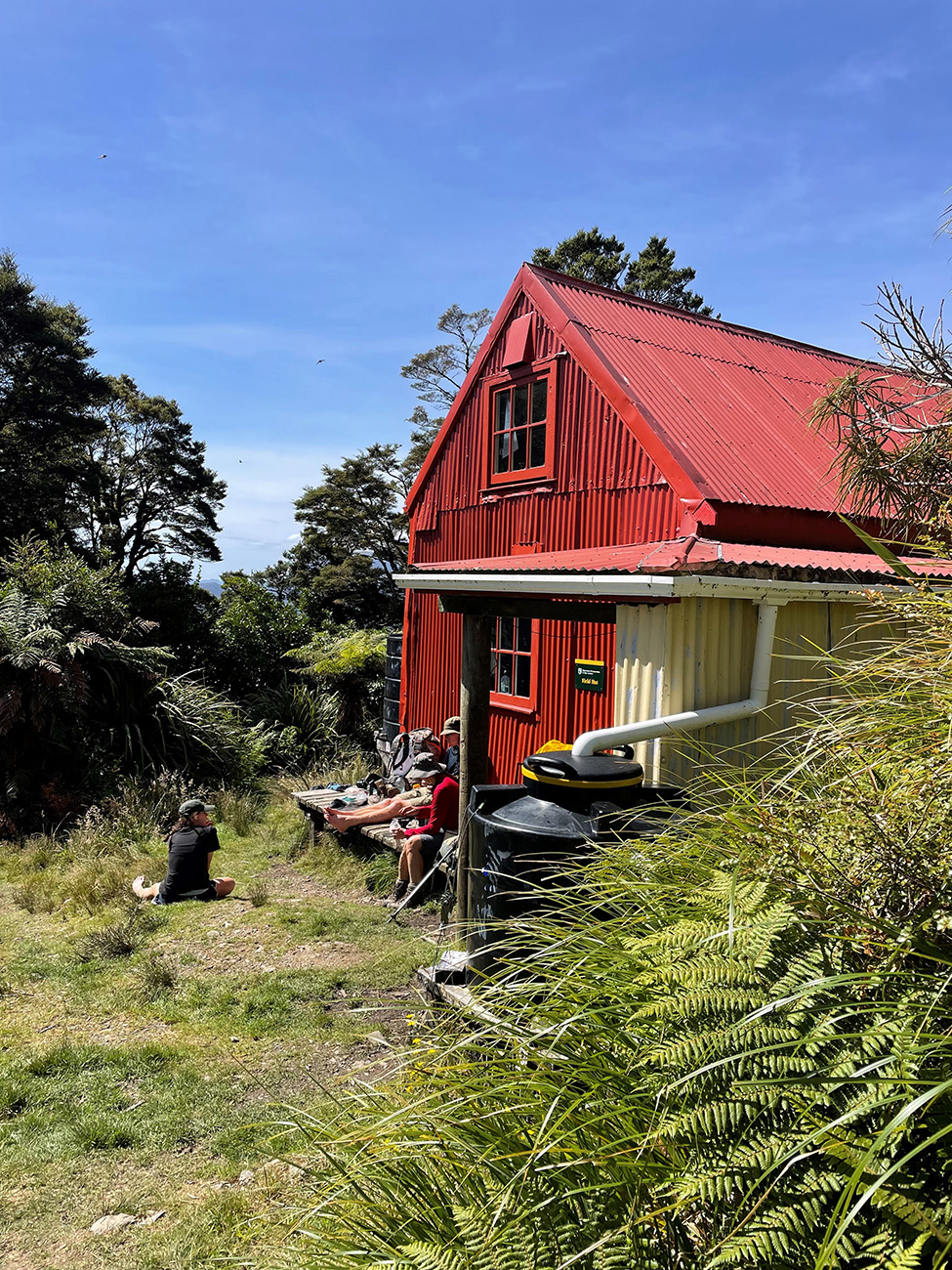
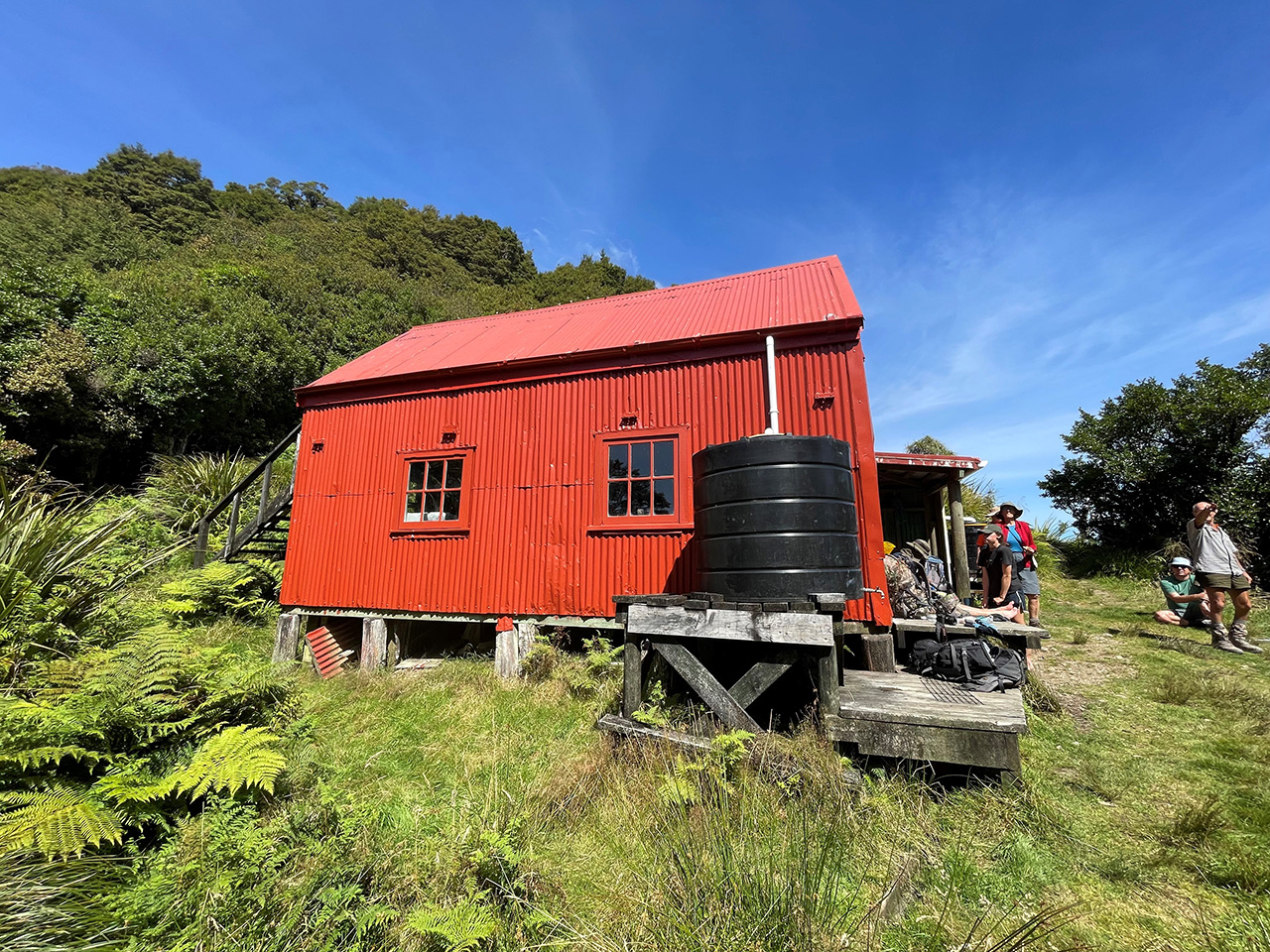
Backcountry huts have been constructed in New Zealand since the 1890s for private or commercial use; Sayer Hut (Waiohine River, 1909), for instance, was Tararua Range’s first private hut. Just three years after the formation of the Tararua Tramping Club, Esmond Kime and Alan Bollons were attempting the Southern Crossing and had almost reached Mount Hector when a south-easterly storm prevented them from continuing. Although found by a club search party, Kime did not survive and the need for shelter was brought into stark focus. Field Hut, the club’s first purpose-built tramping hut, was built in 1924 to protect travellers in what can be a very harsh, inhospitable environment.
Increasing safety has generally driven hut construction but huts have also served as places to meet people or to enjoy isolation; bases for outdoor recreation, biodiversity work, and search and rescue parties; and places for quiet reflection and fellowship. Even for strangers, sharing a hut can evoke ‘the intimacy and intensity of family life.’ Tramper and author Geoff Spearpoint argues that tramping huts are special and memorable because they are:
‘the meetings places of an outdoor culture and are about the only tangible expression of it…we have a responsibility to value them as cultural treasures, to look after them and maintain them as we do our biodiversity.’
The basic amenities in most huts mean that visitors must carry their food, bedding, and other necessities. Hut maintenance has often been undertaken by active trampers, with working parties serving as ways for clubs to build morale and camaraderie. Day-to-day management requires all users to contribute, for instance, hut etiquette requires visitors to keep huts clean, replace firewood, and sign the intentions book.
Tararua Tramping Club’s first hut: The construction of Field Hut and its early years
Joseph (Joe or Old Joe) Henry Gibbs (1879-1969) had only been a member of the Tararua Tramping Club for a year when the club decided to cut the Marchant Ridge track in order to provide access to the Tararua Range from Kaitoke. Renowned for his bush skills, Gibbs was contracted to do this work, which he undertook with Jack Fisk in 1922. Improved access led to higher visitor numbers and a greater need for shelter. Gibbs and Fisk were contracted to enlarge Alpha Hut (1915-1952, Tararua Range) in 1922, then, having proved their abilities, were contracted to build Field Hut. Before the hut could be built, however, a track was needed for packhorse access.
The Public Works Department agreed to assist with the building of the hut and track, and Willie Field donated £100. Gibbs and Fisk were paid £460. They worked on the track from 3 June to 17 August 1924 and on the hut until 10 November 1924, labouring seven days a week. After cutting the track, they felled trees from the bush surrounding the hut site and used Gibbs’ horses to draw the logs to a sawpit that had been dug close to the site. Although steam-powered sawmills became the norm in the nineteenth century, pit sawing continued to be used in isolated or difficult areas. It was used for backcountry shelters such as Ellis Hut (1884, Ruahine Range) and Waihohonu Hut (1904, Tongariro National Park), but was very rare by the 1920s, and therefore Field Hut is one of the most recent buildings constructed in New Zealand using this method.
Pit sawing could be carried out on site by two people, with the ‘top notcher’ working on top guiding the blade of a 3-metre saw, and the second person working in the pit, making it viable for Gibbs and Fisk, although hard and slow. Pit sawing produces distinctive straight saw marks, some of which can be seen on the original timber in Field Hut.
Early outdoor recreation huts typically featured a room for eating and separate sleeping quarters for men and women. Waihohonu Hut, for instance, conceded ‘to Edwardian social requirements…with two bunk rooms so that men and women were separated.’ Field Hut’s interior comprised two open rooms, one of which was a loft, accessed by a ladder. By not having separate sleeping spaces, the hut marked a significant departure from early backcountry hut designs. Although originally designed to have a doorway and external gangway from the loft, the main access was, and remains to be, a door on the south elevation. A verandah ran along the west and south facades.
The hut was opened on Sunday, 26 October 1924, shortly before construction was completed. The event was attended by 20-30 members of the Tararua Tramping Club who had tramped from the west; bad weather prevented a further 40 people from joining from the east. Club president F W Vosseler ‘congratulated the contractors upon the exceptionally good job…in making so commodious and comfortable a hut’.
In 1930 Gibbs and Fisk were contracted to build Kime Hut, a job that would not have been possible without having Field Hut as a base. Gibbs also built the first Tauherenikau Hut (1930). His contribution has been acknowledged at events such as Field Hut’s jubilee celebrations (1974) and its 80th anniversary (2004). At the former, Wally Neill delivered a toast to the hut’s builders, stating:
‘[i]t was a wonderful thing for the Tararua Tramping Club when Gibby became a member in 1921… he found his heart’s desire…and he did all these wonderful things for the Tararua Tramping Club.’
Gibbs has also been celebrated in popular culture. Ian Mackersey’s novel Crusader Fox King (1955) features a bushman named Joe Taranui who was based upon Gibbs. Furthermore, Tony Nolan’s tramping song ‘Up at the Kime’ begins with lyrics about Gibbs.
Until the establishment of the 40-hour working week, trampers would only have one and a half day weekends. At Field Hut’s jubilee celebrations, John Gaffertys proposed a toast in which he shared his memories of staying in the hut in the 1930s:
‘In those days of course we worked till midday on Saturday and by the time we came out to the Forks, particularly during wintertime, we had a long slog up here in the dark and I can assure you we were mighty grateful to get here.’
Leslie Adkin, who lived near and frequently explored the Tararua Range, stayed at Field Hut on 16 July 1938 with members of various tramping clubs of the Wellington region. He noted the downside of short weekends: ‘Daylight was just about gone when we reached Field Hut, our immediate objective, at 5.22.’ The hut, however, provided more than just shelter – it was a space for socialising and amusement:
‘Despite damp & green wood a good fire was soon going under the expert hands of Wilf. Ransom, & the customary hearty meal prepared for the hungry gathering. Sleeping bags were sought about 9.30, but not for sleep, a continuous barrage of jest & humour, largely sustained by the wit of Arthur Harvey, continuing until about midnight.’
Ten members of the group decided to climb Mount Hector in time to ‘witness the sunrise’. They returned to Field Hut at 1 pm, where Adkin photographed the hut, and then made the return trip, with Adkin arriving home at 5.30 pm: ‘A hot bath, tea & bed brought a most interesting outing & experience to an appropriate ending.’
Groups of US Marines visited Field Hut in 1943. Several thousand Marines arrived in the country from June 1942 and were based in camps predominantly in the Wellington and Wairarapa regions. In preparation for deployment in the Pacific, training was provided in the Tararua Range. Members of the Tararua Tramping Club joined the School of Bush and Mountain Warfare and led exercises for groups of soldiers. Lt Carson wrote in the hut’s logbook on 21 March 1943:
‘There can be little doubt that it always rains here. Beautiful weather for duck hunting but no ducks. Beautiful weather for a fire but no wood in. Ah well, plenty of shelter and it can’t rain for ever. Look [sic] like no shooting to-day.’
On 31 August 1943, 31 members of the Third Platoon (Scouts) D Co 2nd Tank Bn visited Field Hut during a five-day trip.
Through the middle of the twentieth century the hut continued to provide shelter, often serving as a place for people to have new experiences and to be challenged. Pete Lusk, during a speech entitled ‘How Tramping Changed My Life’ given to the Massey University Alpine Club in 1975, recalled: ‘In the Tararua huts you’d all sleep together on the wide sleeping platforms, called Maori bunks, and for the first time in your life you slept with other people, including women, and really enjoyed it.’ Numerous members of the Tararua Tramping Club met their future spouse through tramping.
A place of happy memories: Preserving and celebrating Field Hut
Field Hut’s fiftieth jubilee was a weekend-long event attended by 120 people, comprising: a dinner for approximately eighty people; toasts to Queen Elizabeth II, the founders of the Tararua Tramping Club, and past and present members who contributed to the hut and the club; singing ‘Happy Birthday’ and ‘Tararua Ranges’; banners; a cake that took the form of the hut; and the sharing of memories, including those of Bill Young who described the hut as a ‘place of happy memories’.
During his speech on this occasion, a former Tararua Tramping Club guide stated that at the end of its first half century, Field Hut:
‘[is] not only is a standing memorial to the builders but also a tribute to the tradition of this club, which we are all justly proud, and this doesn’t just happen, it happens throughout the years by their effort and determination to keep the club to the tradition and standard we all know. When we first put the celebration of this hut on the fixture card, we thought oh well, perhaps maybe half dozen or dozen or couple of dozen people come up just to celebrate it. We had no idea the turnout to be like this.’
The builders of the hut, particularly Joe Gibbs, were also acknowledged, as well as those who had looked after it since its construction.
Alongside celebrating the hut’s milestone anniversaries, its community has maintained Field Hut, with substantial refurbishments in 1983 costing just over $6000. Working parties spent many hours replacing the roof, putting in new piles, and building a new verandah; wherever possible, the original structural timber was retained. At an event marking the work’s completion, Ross Hodder, chairman of the Tararua Forest Park advisory committee praised the Tararua Tramping Club for its ‘very fine and substantial effort in the reconstitution of this hut’, further noting that the club had ‘made a substantial contribution to the Forest Park.’
The ownership of Field Hut has remained with the Tararua Tramping Club, but management shifted to the Department of Conservation (DOC). When DOC began a major review of their outdoor facilities in the 1990s, it was proposed that the number of huts in Tararua Forest Park be reduced and Field Hut be replaced with a 36-bunk hut on Table Top. It was argued that the hut was too small and its facilities did not meet the expectations of trampers, in terms of comfort and bed numbers. This proposal was opposed by Tararua Tramping Club and the wider outdoors community. A report commissioned by DOC, written by conservation architect Chris Cochran in 1996, recognised the importance of Field Hut. A maintenance plan was drafted in 2001 and the hut continues to be one of the heritage sites looked after by DOC.
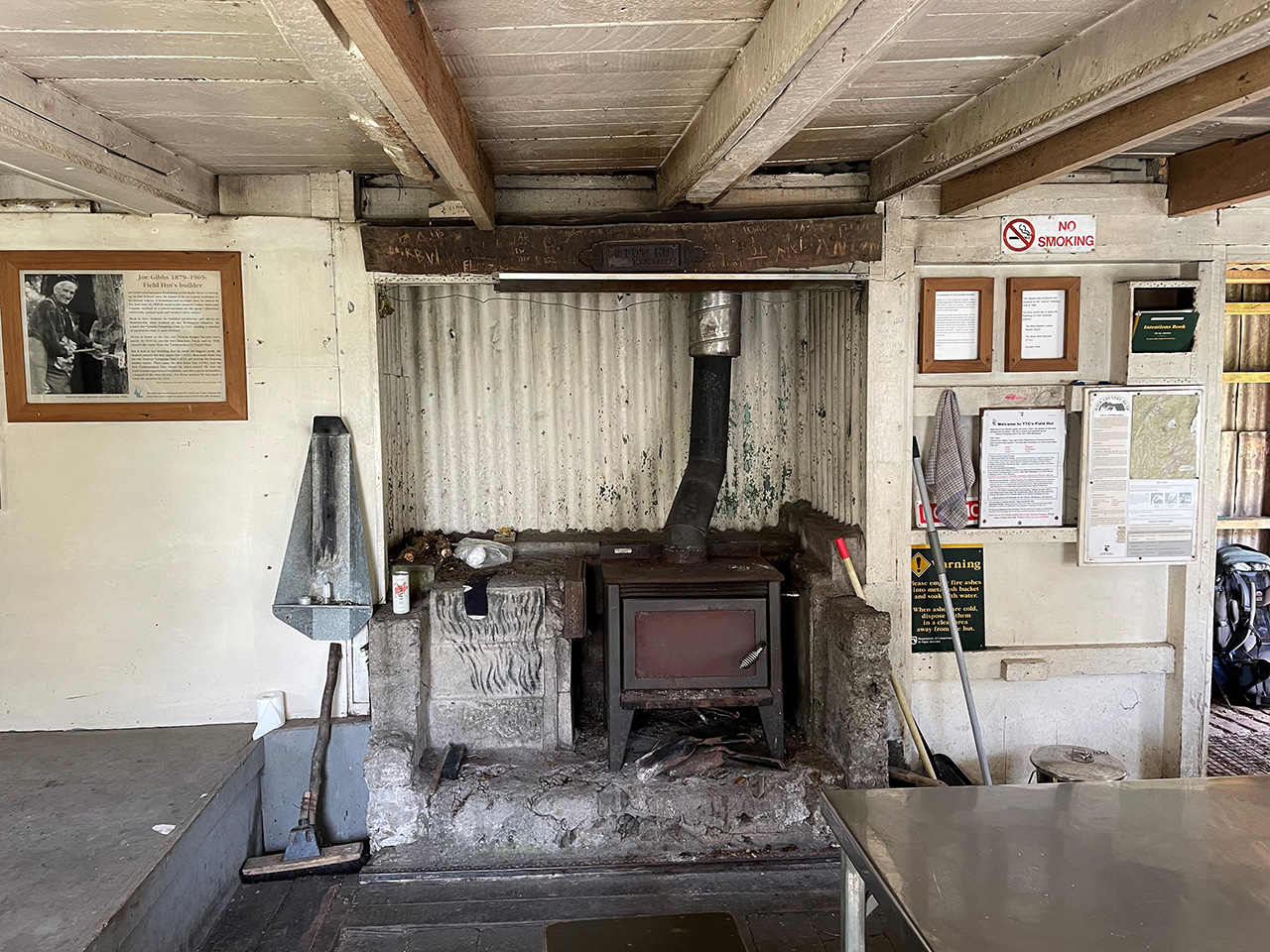
The history of the hut and key people associated with it are acknowledged in a display of historic photographs within the hut, opened on 25 April 1998. An additional panel, which celebrates the hut’s builder, Joe Gibbs, was unveiled by the Director General of DOC, Hugh Logan, on 6 November 2004 as part of Field Hut’s 80th birthday.
In 2003, work costing $35,000 (partly funded by revenue generated by hut fees) was undertaken by DOC to address issues with increased use and health and safety. Mattresses were installed for the first time, long after most other huts in the range had them; an upstairs fire exit was built; the windows were fitted with laminated safety glass; and a new toilet and a deck were installed.
Field Hut has been in continual use since its initial construction and remains a popular overnight hut. DOC’s records show that each year around 1,000 people reach Table Top, and it is believed that use of the hut itself is likely to be even higher. Prior to a large slip that forced the closure of the Ōtaki Forks Road and increased the walk to the hut by 1-2 hours, approximately 3,200 persons used the track to Field Hut each year. DOC’s intentions books provide insight into the range of people who have used Field Hut and their experience. While visitors are predominantly from the lower North Island, international visitors have frequently visited the hut. British tourists, including two-year-old Olive Rigby, stayed in the hut in October 2016. Despite wet weather, their entry shows they were: ‘[h]appy we came to such a historic hut for our daughter’s first hut night, and she didn’t walk a step!’ Keely and Lucy made a daytrip in fine but snowy conditions in July 2015 to ‘[s]ave our souls from the concrete jungle’ of Wellington; they reported it was a ‘[b]eautiful hut. Just what we needed xoxo thanks DOC/W H Fields’.
Tramping huts have inspired the design of contemporary domestic architecture. Luggate House by Chaney & Norman Architects is an alpine home inspired by DOC huts. A holiday house in the Coromandel, designed by Richard Naish and RTA Studio (2015), fulfilled the desire of one of its owners to reproduce the simplicity and robustness of tramping huts where he had found solace. Mitchell Stout Dodds Architects Ltd’s clients suggested a tramping hut design for their King Country house, which won the 2013 Waikato/Bay of Plenty architecture award.
Tramper and author Shaun Barnett has stated: ‘To me, Field is a symbol of that great endeavour by clubs to open up the backcountry, not for some pecuniary purpose, but for the sheer love of tramping through bush and over mountains. For recreation, not remuneration.’ In his introduction to A Bunk for the Night: A Guide to New Zealand’s Best Backcountry Huts, Geoff Spearpoint writes:
‘[f]ew things are so utterly, deeply satisfying as reaching a hut in a storm. But huts aren’t just about shelter. They are also places where people celebrate life events, meet friends and introduce kids to the hills. They provide a base for fishing, hunting, tramping and climbing. They offer handy refuges for those doing biodiversity work. And they are fantastic places to enjoy a brew and discuss all the issues of the world deep into the night, or hole up with a book on a wet day.’