Early History
The Ng King Brothers Chinese Market Garden Settlement is situated on land on Allens Road on the western outskirts of the town of Ashburton. The settlement is part of a recognised physical landscape long associated with Waitaha and latterly Kāi Tahu. The upper reach of the Whakanui (Wakanui Creek) runs through this area, once a tributary of the Hakatere/Ashburton River. These waterways are known ara pounamu (pounamu trading routes) and the flatlands were travelled over constantly by Kāi Tahu whānui en route to the interior and various mahinga kai. Many taoka (treasures) and other archaeological remains have been recovered from the lower reaches of the Whakanui, which was partly archaeologically excavated in the 1970s. The waterway has important associations for Kāi Tahu:
‘In 1843–44, Tarawhata (Kāti Huirapa) guided Edward Shortland (Protector of Aborigines) through South Canterbury to Akaroa during Shortland’s census of the southern Māori population of New Zealand. On reaching Whakanui, they filled water bottles left purposely on the banks for travelers, as there was no fresh water between Whakanui and the Rakaia River. Foods gathered at Whakanui included kiore (Polynesian rat), birds, aruhe (bracken fernroot), and waharoa (smelt).’
From the mid nineteenth century, Pākeha missionaries and immigrants settled in the Canterbury Plains, many arriving as part of the Canterbury Association settlement programme. Apart from some small reserves, land commissioner Henry Kemp purchased the whole of the Canterbury block in 1848. The Ashburton Māori Reserve is situated in near proximity to the subject land. Ashburton Native Reserve 2060 is 253 acres of land allocated under the Kaiapoi Native Reserves Act 1877 to redress grievances arising from the Canterbury Purchase. It was one the few such reserves that were a result of the controversial land sale, both for their small number, size and location. Ashburton Golf Course is currently situated on part of the reserve.
The land on Allens Road was surveyed by the Crown as Rural Section (RS) 10091, a 183 acre section which, with adjacent RS 10092, was transferred to Henry John Tancred in 1871. In 1878 the land was subdivided into smaller rural sections on the outskirts of Ashburton township. The following year the subject land area was within Lot 158 of DP 236 transferred to the Honourable Thomas Braddell, Attorney-General for Singapore. Braddell died in 1891 and the land was transferred to Charles Braddell, an accountant of Ashburton. In 1896 Charles Braddell was bankrupt and the land transferred to the mortgagee. It was then on-sold to Susanna Wilson, wife of Arthur Wilson, a farmer of Winslow.
In 1902 Lots 157 and 158 DP236 were transferred to Thomas Everard Upton a farmer of Ashburton. Previously that year Upton had purchased a house and 40 acres of land on Alford Forest Road, which was the residence for Upton and his wife, Kathleen Moana Upton. In December 1903 Upton advertised the subdivision and sale of a ‘Grand Suburban Property’ of around 40 acres ‘fronting the Wakanui Creek, Racecourse and Allenton [sic] Roads, just behind the Flour Mills’. The sale was apparently unsuccessful as no formal subdivision and transfer of the land occurred at this time.
Ng King Brothers Chinese Market Garden
The Ng family from Hoisan (Toi Shan), Guangdong (Canton) Province, China, settled in Gore in 1905. They opened the Jou Lee laundry and purchased a nearby garden. In 1917 more family members arrived from China, all taking up jobs within the market garden and earning up to 30 shillings per week. A flood in 1921 forced the Ng family to establish a new garden on higher ground but this proved to be less fertile and so they started to look for land elsewhere.
They found suitable land on Allens Road, Ashburton, and established a company under the trading name of King Brothers (King Bros.). Apparently this name came from a mixture of ‘Ning’ which was the European pronunciation of Ng and also from ‘Kane’ which was the middle part of the birth names of the four Ng brothers who became partners. This was not the first Chinese garden in Ashburton – it is recorded that in around 1911 three Hoisan men established a market garden in Allenton but is thought to have been less than successful due to competition at that time from Jung Seng’s garden in Tinwald.
From 1 August 1920 part of the land area of Lot 158 was leased to Ng King for an initial period of seven years. On 7 August 1920 the Ashburton Guardian reported that a ‘Chinese market garden’ was to be established on ‘the Racecourse Road’. The previous day the Ashburton County Council had refused an application for a water-race to serve the garden on the justification that it would decrease the supply of water for the downstream Wakanui district. The application had been made on behalf of Ng King and the Council was persuaded to reconsider this decision at their next meeting.
The County Engineer stated that a connection could be made with an existing water-race on Racecourse Road which flowed into Wakanui Creek 60 chains (1,207 metres) downstream of the market garden site. Yee Bee Lee made a statement that the garden was close to the main race and he proposed to make a connection to use the water during periods of dry weather as they intended to grow vegetables that would be ‘unfit for use’ without a water supply. Yee Bee Lee had operated a laundry in Wills Street, Ashburton since 1910. His association with the market garden is not known, but from this statement it is clear he had a role in establishing the garden on the property.
In support of the water-race application, Councillor Henry Maginness stated that: ‘…it would be a pity to discourage the industry of the Chinese. They paid their £100 poll-tax and were entitled to the same consideration as a British subject.’
The supply of water to Wakanui had been a perennial issue for the Council, but another Councillor stated his view that it was the duty of the Council to supply water to everyone, where possible. The Council voted to grant the application for water.
Upon the establishment of the Ng King Brothers market garden in 1921, the business went from strength to strength, growing quickly to become the largest Chinese market garden in the South Island. Initially they took the horse and cart, and hawked fruit and vegetables around the town and obtained a flourishing customer base. Over the years many townspeople came to the Ng King Brothers settlement to purchase their produce and became good loyal lifetime friends. They extended their service to other part of Mid-Canterbury with country runs that ranged from Hinds, Rakaia and Chertsey, up to 35 kilometres from the settlement. As the business grew, Ng King Brothers produce was also taken to be sold in Christchurch, with the return trip being filled with more exotic, special or early produce for Ashburton supply.
After 1946 Chinese were permitted to buy land and in 1948 Ng King Yau (Young King) purchased the Allens Road land from Upton’s estate. In 1957 Charlie King, George Boe, James King and Fook Ying were added to the title as co-owners with Ng King Yau. Around the same time of the 1948 purchase, James King also bought 200 acres of land by the riverside and rented it back to the Ng King Brothers, who utilised more than 150 acres of it for market gardening. Sometime later, Norman Ng and Ng Don Shong obtained an interest in this land, although for reasons unknown they were never noted as registered proprietors on title.
At that time King Brothers were said to dominate the fruit and vegetable supply within the whole of the Ashburton District. Vegetables were sold from a shop on the site and in 1947 they also opened a fruit shop on Burnett Street in Ashburton. In 1964 this was taken over by Young King in partnership with his three sons, Yep, Hong and Tong. They paid each of the original partnership shareholders for the shop building, fruit business, farming equipment and the use of the Allens Road King Brothers yard. By 1966 they had opened another shop in Harrison Street, Allenton, which operated until 1986. In 1987 Yep became sole proprietor of the Burnett Street shop, which he ran until 2006 when it closed.
Social History
The Chinese sense of family and community was of utmost importance and they understood that co-operation could lead to great success as a community. A communal family approach was followed in the management and farming of the land, the operation of the business and the arrangement of living quarters.
The market garden and settlement operated for the benefit of the proprietors, their families and the Chinese community in mid-Canterbury.
The early Chinese settlers in Ashburton were all male, with the first women and children arriving in 1939 when three of the men were able to bring their families out to New Zealand under a war refugee scheme. A further seven families had arrived by 1950, and the community was said to be at its peak during the late 1940s and throughout the 1950s.
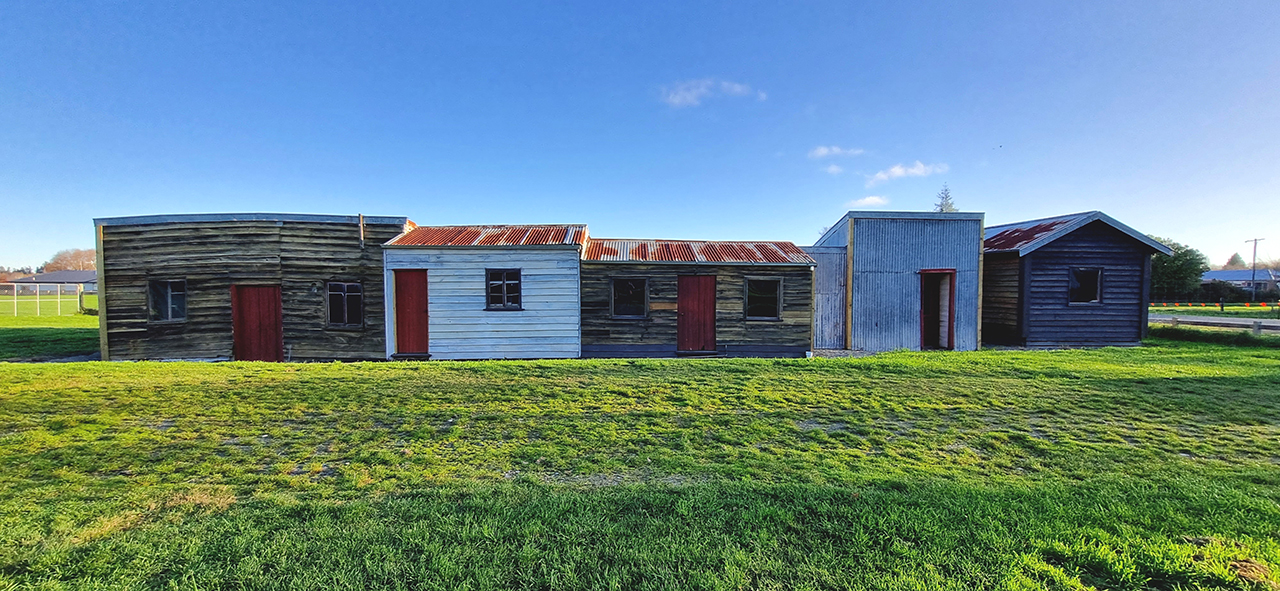
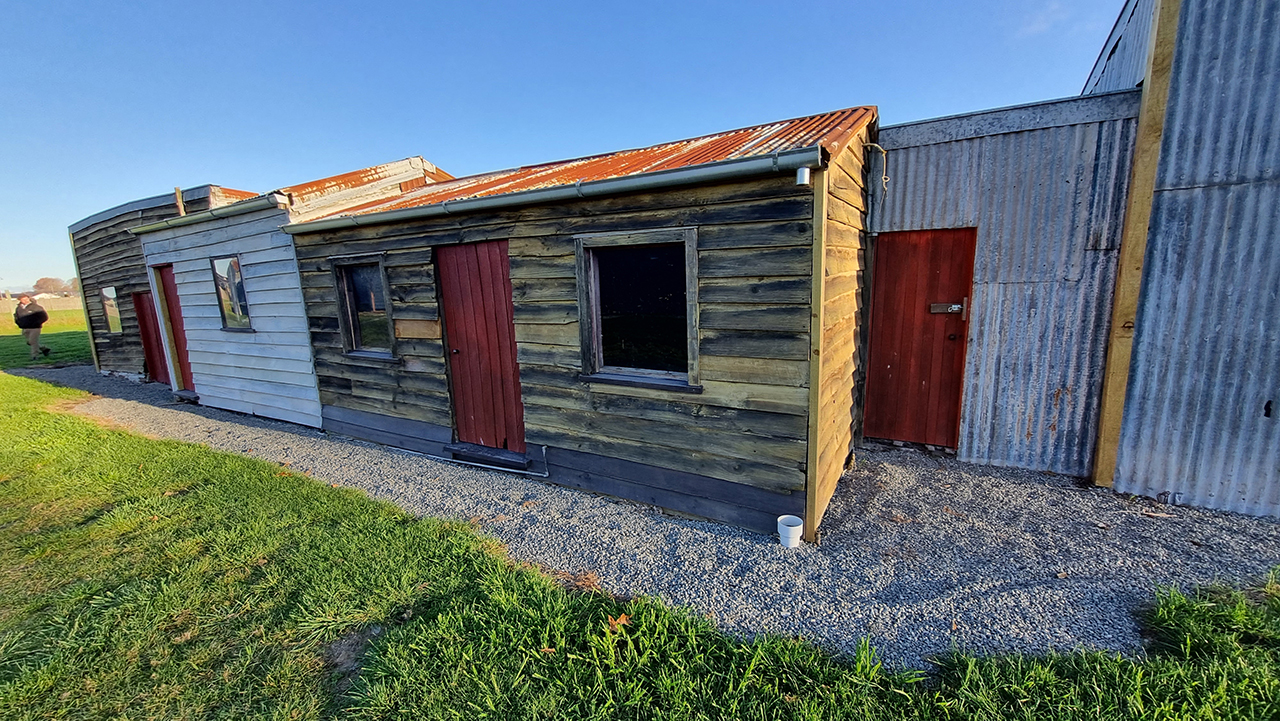
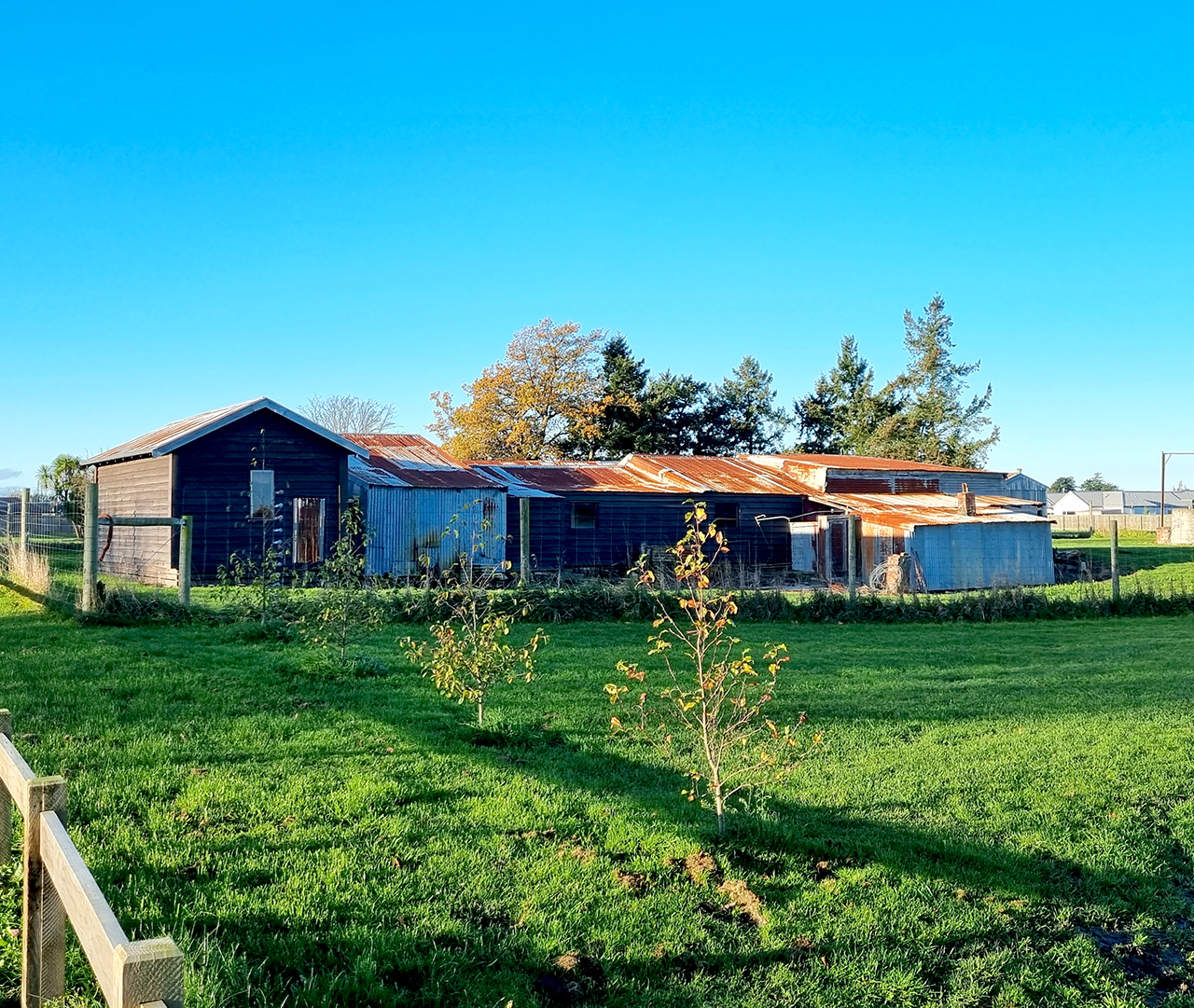
At this time there were about 12 houses in the settlement and at least 80 people living in the community, including children. The buildings which are the subject of this report were mainly used for single men as well as communal living, eating etc., whereas families had larger homes on the site or on the opposite side of Allens Road. The settlement was supplied with reticulated gas from the Ashburton Gasworks. Even though the settlement was located at the outskirts of Ashburton, at a considerable distance of the gas works, it was considered a worthwhile undertaking because of the large amount of gas the settlement used on a daily basis, not only for heating but also for general cooking.
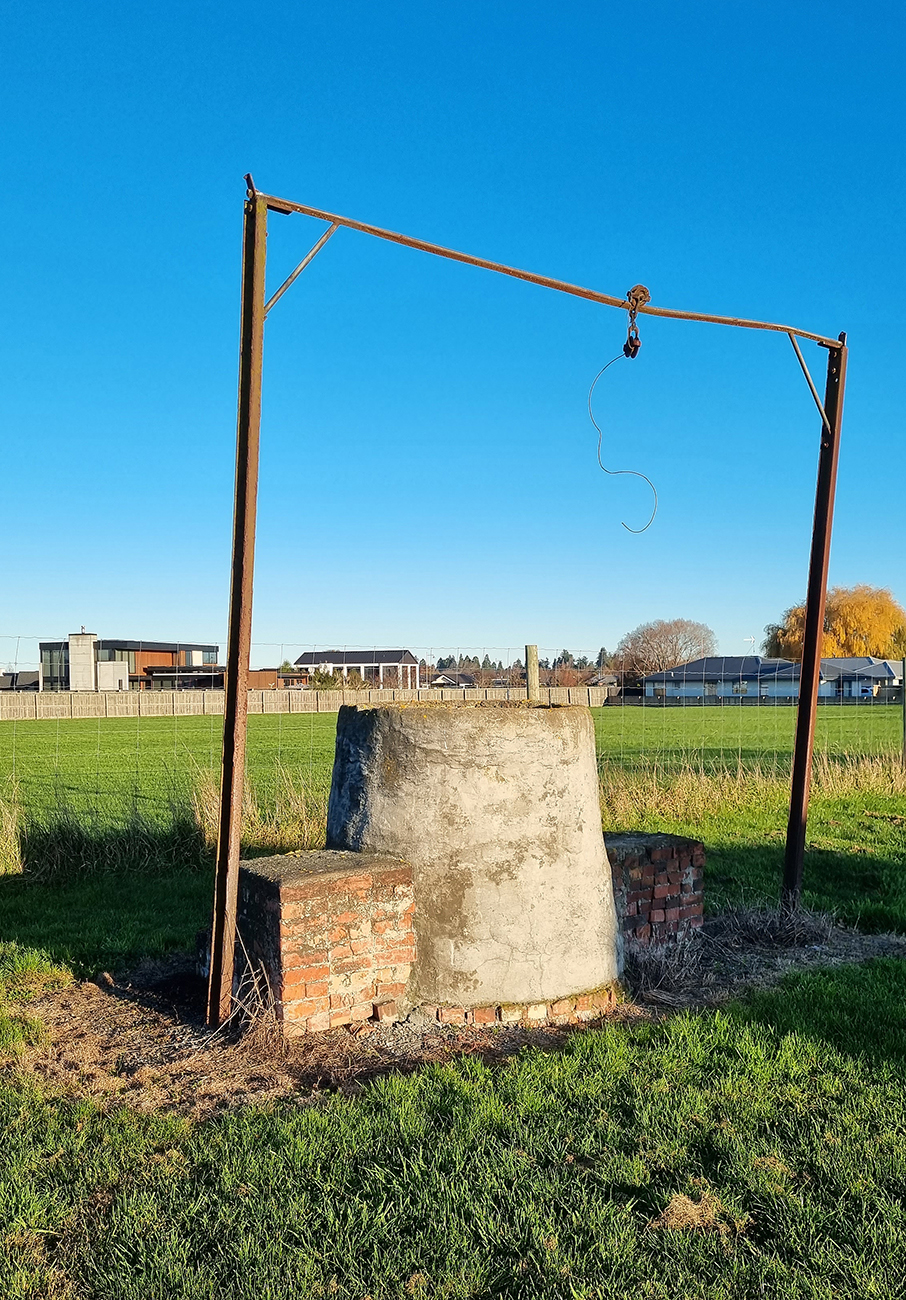
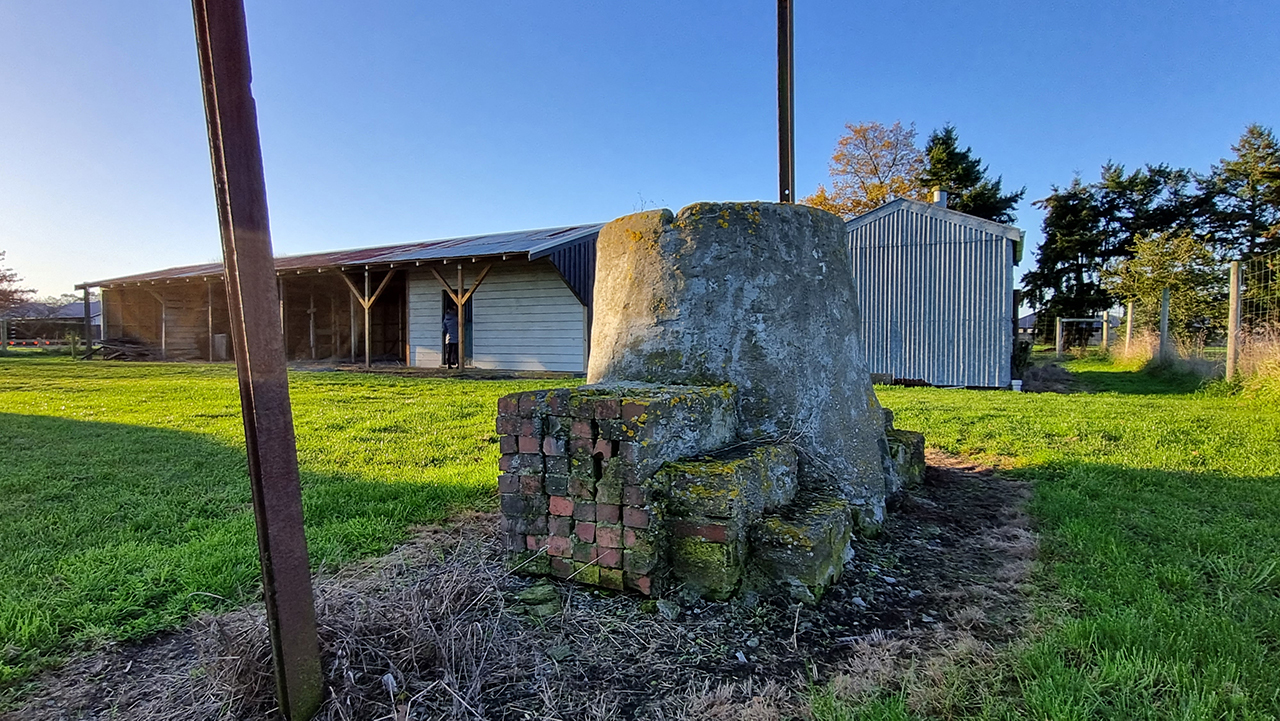
The Chinese Pig Oven was used for roasting pigs on Sundays and special occasions. Its exact date of construction is not known but it may have been that such an oven was built in the 1930s when it was a ‘single men’s’ settlement and later rebuilt or reworked in the 1940s.
Yep, son of Ng King Yau, came to New Zealand with his mother and siblings in 1949, to join his father and uncles at the Allens Road settlement. Yep started working at the market garden and lived at the settlement until 1964.
Towards the late 1950s, families began to disperse, and the numbers living and working in the settlement declined steeply. The nature of the business had changed dramatically by that time. Originally the market garden grew produce locally and sold it in and around Ashburton, but after the Second World War it transformed into a produce trading company. Produce was bought at markets in Christchurch, and subsequently distributed throughout mid-Canterbury. In addition to fruit and vegetables, the company also started trading the cases in which produce was transported, as well as selling fireworks in the first week of November. The market garden and on-site shop at Allens Road closed in 1964, although the garages remained in use until 1987.
After the site ceased to be the primary location for the growing and selling of produce, a number of buildings fell into disrepair and were demolished or removed. These include garages, sheds, stables, outdoor toilets, two small dwellings, and duck and hen houses.
Cultural associations
The settlement is of importance to, and has significant cultural and social values for, the Chinese community of Ashburton and Mid Canterbury in general, and in particular the descendants of the owners Charlie King, George Boe, James King, Ng Fook Ying, and Ng King Yau (Young King), Norman Ng and Ng Don Shong.
As kinsmen from China came to New Zealand, King Brothers settlement was a place that offered employment, companionship and education of the New Zealand way of life. The men had a place where they could eat, work, sleep and get basic needs. Through the businesses, market garden, selling produce, country runs and fruit shop, they made contact with the Ashburton businessmen and the community.
From the early days, King Brothers welcomed and hosted Chinese people who were travelling within the South Island and had stopped in Ashburton. On Sundays, the workers’ day off, a Chinese dinner was cooked by Charlie King, James King and Fook Ng, and all would gather to eat together in the open air. By taking their goods to the Christchurch produce markets, the King Brothers would meet other Chinese men folk, have morning tea together and catch up on local news.
By the 1950s, the wives and children of the Ng King families had come from Hoisan County in China. A settlement of 12 families with a total of about 80 people lived at the Allens Road property and two families lived across the road. Allenton School which was just down the road accommodated all the Chinese children of varying ages into their classes. The headmaster, Mr Alan Bain, and teacher, Mr Scott, would run additional English classes for them after normal school hours. As the children became old enough, they worked in the garden and shop. Pat McCormick, another Allenton School teacher, would go to the Allens Road settlement to teach basic English to the women folk. Consequently, they also became immersed in the community through schooling, clubs, sports and voluntary service.
The contact with other Chinese settlers was also important to hear about their homeland and for socialisation. Chinese families from Ōamaru, Timaru and Christchurch would also visit and maybe partake in gambling – mah-jong, fan tan, dominoes, cards and table tennis. For celebration days such as Chinese New Year, birthdays, weddings and one-month parties for babies, a pig would be roasted in the pig oven.
In the early 1960s, the market garden business was starting to wind down so the families started to move on to their own ventures in Wellington, and other South Island towns. They went into fish and chip shops, takeaway shops, restaurants, fruit shops and market gardening. Some of the older children were now venturing on to study at university or take on careers of their own. Socialisation through the decades among all was at the Chinese Nationalist Double Tenth picnics, the New Zealand Chinese Association, Canterbury branch activities and sport tournaments, weddings and other celebrations. The families were closely linked by village connections or by marriage.
Later History
In March 2013, a custodial agreement was signed between the Ashburton District Council and the descendants of the registered proprietors of the land. The agreement was the result of attempts by Yep Ng, descendant of one of the registered proprietors of the subject land, to resolve issues in respect of the land and settlement. It was jointly decided by the descendants of the registered proprietors and the Ashburton District Council that an agreement was the best and most cost effective method to ensure ongoing management of the land to avoid it falling derelict, and to honour the contribution of the registered proprietors and their descendants and the Chinese community in general to Mid Canterbury. To enable this agreement to be reached, Yep Ng worked over a period of five years to track down all possible descendants. Yep Ng virtually achieved that, and has contacted the male descendants of Charlie King, George Boe, James King, Ng Fook Ying and Ng King Yau, as well as Norman Ng and Ng Don Shong. As a result, Yep Ng obtained the consent of representatives of the families to enter the agreement.
The agreement provides for Ashburton District Council to manage the subject land as if it was a reserve under the Reserves Act. In doing so it will use its best endeavours to restore and protect all items of heritage value, and work with Yep Ng and the Chinese community in Ashburton. This has provided a mechanism for protection of the site and buildings and the development of a plan to restore the extant buildings and structures as part of a proposed public reserve.
Conservation work began with the award of a grant from the Chinese Poll Tax Trust Heritage Trust to restore the outdoor pig roasting oven and clean up the site. At the same time, decades of rubbish that was either left when the settlement was abandoned or had accumulated in the following decades, was cleared out.
Ashburton District Council has been active in its role to manage the property on behalf of the owners and the Ashburton community. At a Historic Places Mid Canterbury street festival in early 2018, it was selected by members of the public as being a site most worthy of deserving a blue heritage plaque. In 2019 the site was declared a post-1900 archaeological site. In 2020 the Council is part-way through a programme of stabilisation, restoration and maintenance of the significant buildings that are able to be retained, with the aim of preserving the site for future generations to enjoy.
Contextual Information
Chinese settlers in New Zealand
During the 1860s Chinese immigrants, who had a reputation for working hard and living frugally, were invited to New Zealand from the Australian goldfields by the Dunedin Chamber of Commerce. With the lure of gold on the West Coast, the Otago fields were left without workers, as miners sought the easy won gold of new diggings. Chinese labour was seen as a way to reinvigorate the flagging fortunes of the southern goldfields. The first Chinese arrived in Otago in December 1865 and by 1872 the number peaked at 4,700, many of them coming directly from China rather than via Australia.
In 1881 the New Zealand government passed the Chinese Immigration Act, imposing a poll tax and limiting Chinese immigration. New Zealand’s Chinese population (mainly male) fluctuated, growing in the late nineteenth century to over 4,000 and dropping in the early twentieth century to 2,570 in 1906.
By the turn of the twentieth century as the New Zealand’s gold country became worked out, Chinese miners spread around the country. Some had become relatively rich from their work, others were not as successful. By this time, around thirty percent of the Chinese mining migrants remained in New Zealand. Many took up familiar trades to become market gardeners, laundrymen, and greengrocers.
Chinese Market Gardens in New Zealand
The first Chinese market gardens were probably established in New Zealand in 1866, established by miners who grew vegetables for their own consumption and sold the surplus to others. They were small in scale, run by two or three (often related) men at the most, often as part of a wider occupation such as gold digging, store keeping or hawking. In many cases market gardening provided an economic foundation for the transition of the Chinese immigrants from goldmining sojourners to permanent settlers. Records show that by 1926 the Chinese made up over 50% of the country’s market gardeners, indicating what a major role the Chinese market gardeners played in supplying fresh vegetables and fruit to New Zealand communities at that time.
Things changed again markedly in the late 1930s. Japanese invasions into China in the 1930s led to the New Zealand government agreeing to a refugee scheme whereby Chinese men in New Zealand could bring out their families. Between August 1939 and 1941, a total of 250 wives and 245 children came out to New Zealand, and it is estimated that around 114 of the wives and the same number of children are thought to have gone to live and work directly in market gardens throughout the country.
Labour intensive traditional Chinese gardening techniques explains the process of chain migrations as offspring, nephews or cousins followed the first family members, and often clusters of gardens were operated by groups of men from the same district.
Until well into the twentieth century, Chinese immigrants in New Zealand (and Australia) generally did not own land but rather worked for others or leased small plots. They were not legally able to buy land during World War Two (between 1942 and 1945). More Chinese market gardeners in New Zealand and Australia began to purchase land after World War Two.
Comparative analysis
On the one hand, the Ng King Brothers Chinese Market Garden Settlement reflects a pattern of communal settlement once common for ethnic Chinese migrants to New Zealand. However, while there were numerous Chinese market gardens with associated fruit and vegetable shops and hawkers throughout the country, no similar settlement quite like this Ashburton one is known to have existed elsewhere in the twentieth century. It was the place where the market gardening was done, produce sold at the on-site shop, where the Chinese settlers lived and where Chinese newcomers to the district were based to learn about living in New Zealand. Although some of the original buildings have been lost, many remain. Since their functions are known, they encapsulate the story of the settlement, particularly how the market garden business and the occupants’ domestic lives were organised.
A number of nineteenth century Chinese settlements have been identified, such as Lawrence (Central Otago) and Carlaw Park (Auckland). Archaeological investigations at these places gained significant information, such as internal spatial layout and changes over time, how labour was organised, the technology and techniques used in gardening, what vegetables were grown, interaction with the surrounding community, and relationships within the Chinese community, particularly with regard to gender and status. While there are other Chinese Settlements in New Zealand, such as in Arrowtown and Lawrence, these were significantly earlier than this settlement, dating to the 1860s, and were driven by a different set of factors, largely the gold rush and its later phases, which led to Chinese gold miners being actively recruited by Dunedin businessmen. Instead, the Chinese who settled in Ashburton in the 1920s came of their own accord and those who arrived there in the 1940s were leaving behind a China in turmoil. .
As such, the settlement patterns and work space at the Ng King Brothers Chinese Market Garden Settlement represent the different way these ventures were established, being positioned in a Chinese world view.
Chinese Pig Oven
The Chinese Pig Oven is one of most important items remaining on the site. The practice of roasting entire pigs in large wood fired ovens is known to have occurred in Guangdong Province, China, but this may have been a regional phenomenon. While studies indicate such ovens of this form were not unique to southeast China, and were widely used in Europe and Asia for many centuries in one form or another, in Australia and New Zealand they are rare. In Australasia, Chinese Pig Ovens, or Roast Pig Pits as they are sometimes known, were constructed by Chinese gold miners and market gardeners in the late nineteenth and twentieth century. Representing an important social cultural function, a point where the Chinese community regularly came together, they provide significant material evidence of transported Chinese culture into Australia and New Zealand.
It appears that there were pig ovens at market gardens in both the North and South Islands but they are now rare. It is understood that pig ovens still exist in Ōamaru and in the Auckland area but these were not built until the 1960s. The oven at the Lawrence Chinese Camp is a modern reconstruction.