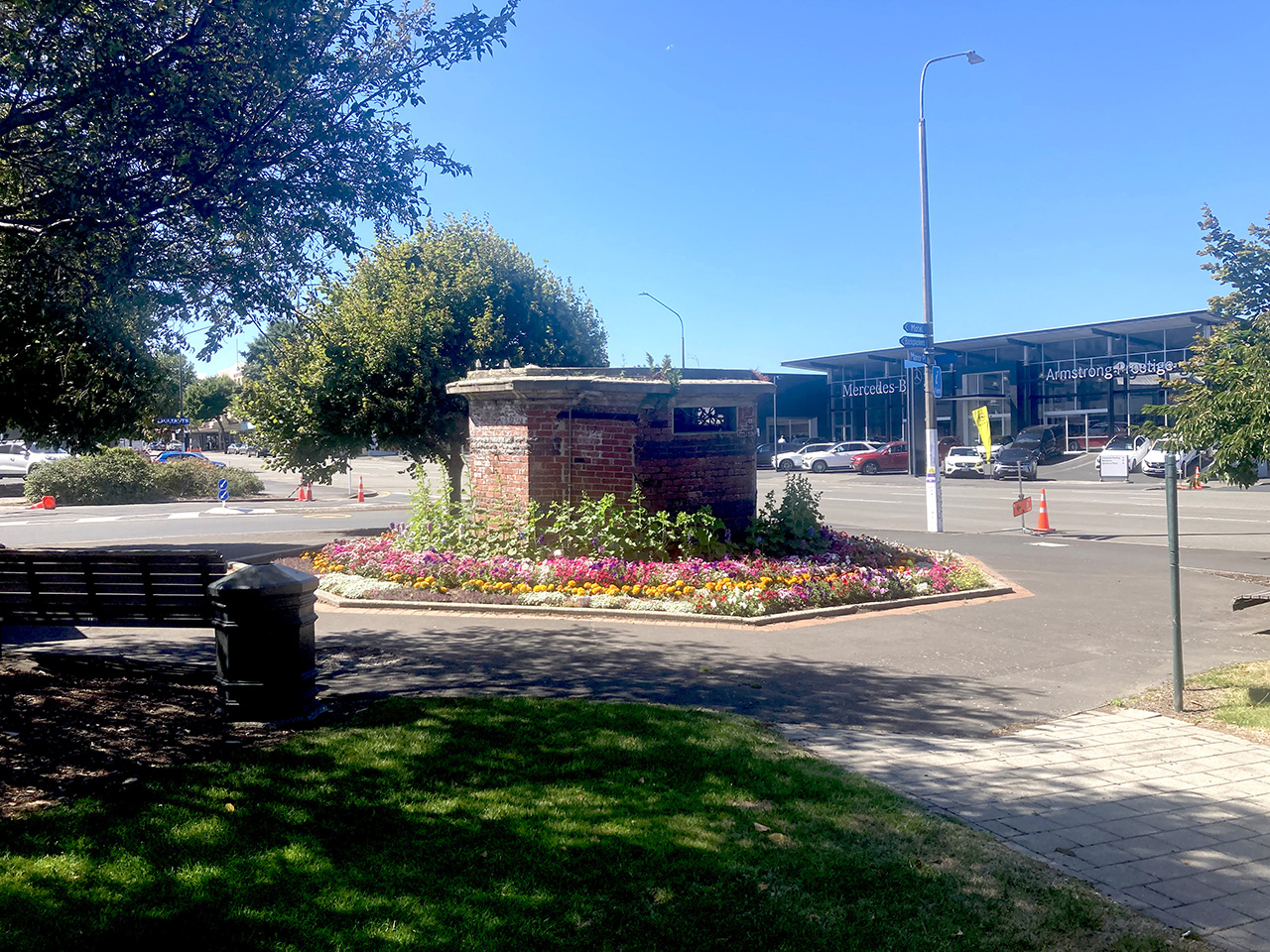
Situated on the southern corner of Manor Place and Princes Street the Manor Place Conveniences, built 1912, is the last remaining public convenience in Dunedin from the early 20th century. It is a structure of architectural and historical significance. It remains as physical evidence of a once common facility, indicative of early 20th century responses towards sanitation and hygiene, as well as acceptable behaviour in the public sphere. The structure provides evidence around the issues of gendered public facilities in New Zealand.
Both iwi history and archaeological evidence show Māori occupation in the Ōtākou/Otago region since the 12th century. Historically, Kāi Tahu and previous tangata whenua Waitaha and Kati Mamoe used the tauraka waka (landing site) at Ōtepoti (Dunedin city) when they visited the head of the Ōtākou harbour. However, while requested as a Māori Reserve in the 1840s, this site was not reserved and instead an area of land, near the Manor Place Convenience site, was designated as Native Reserve from 1868 and later Public Reserve. There was early confusion over the land’s legal status as Captain Cargill is reported to have laid the same area as a reserve to protect the waterfront in 1848. A Crown Grant was issued in 1866 for the land to be used for public utilities known as the ‘Princes Street Reserve’ and the area was reclaimed with roads established and an area laid out for a public market.
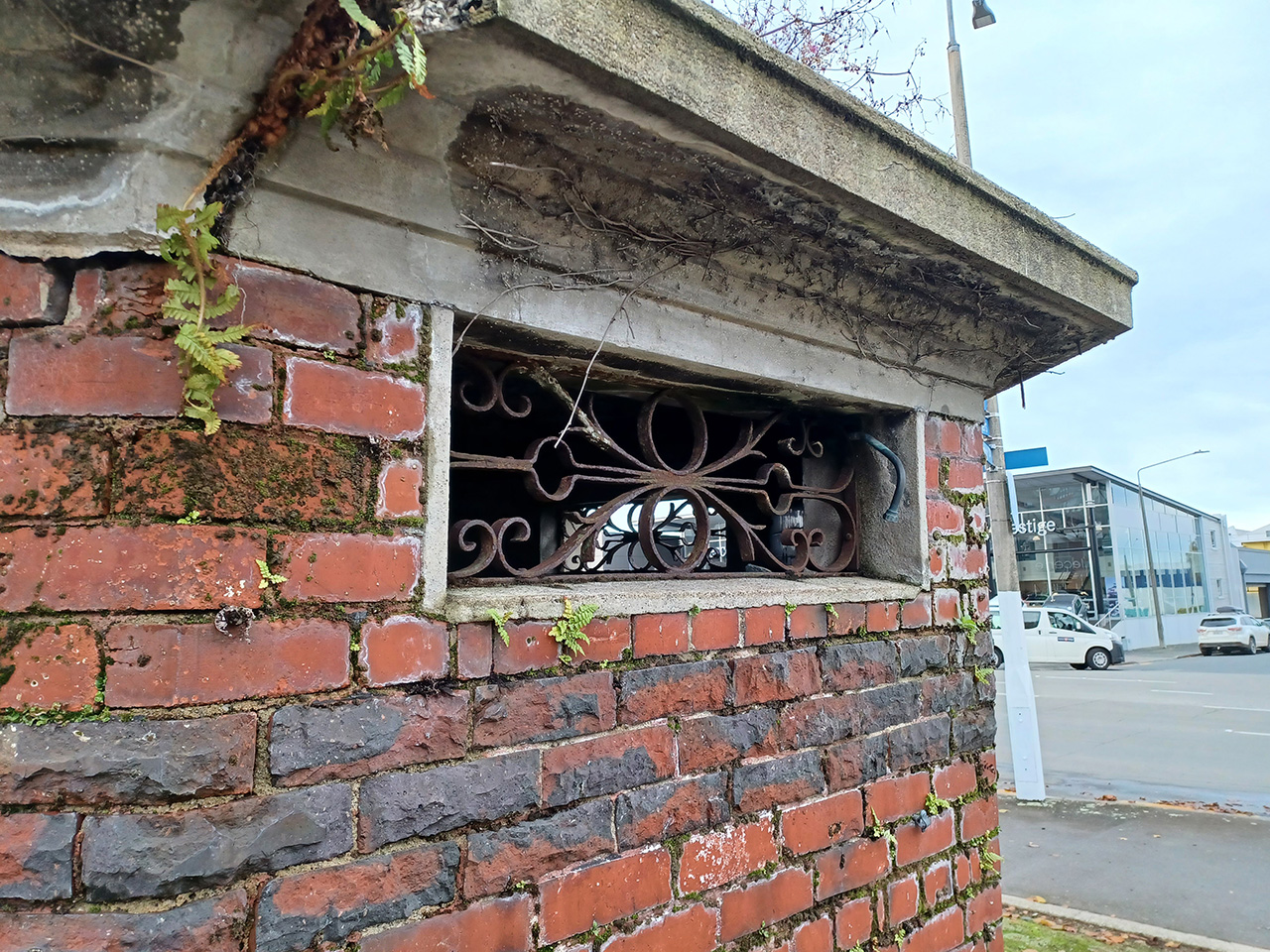
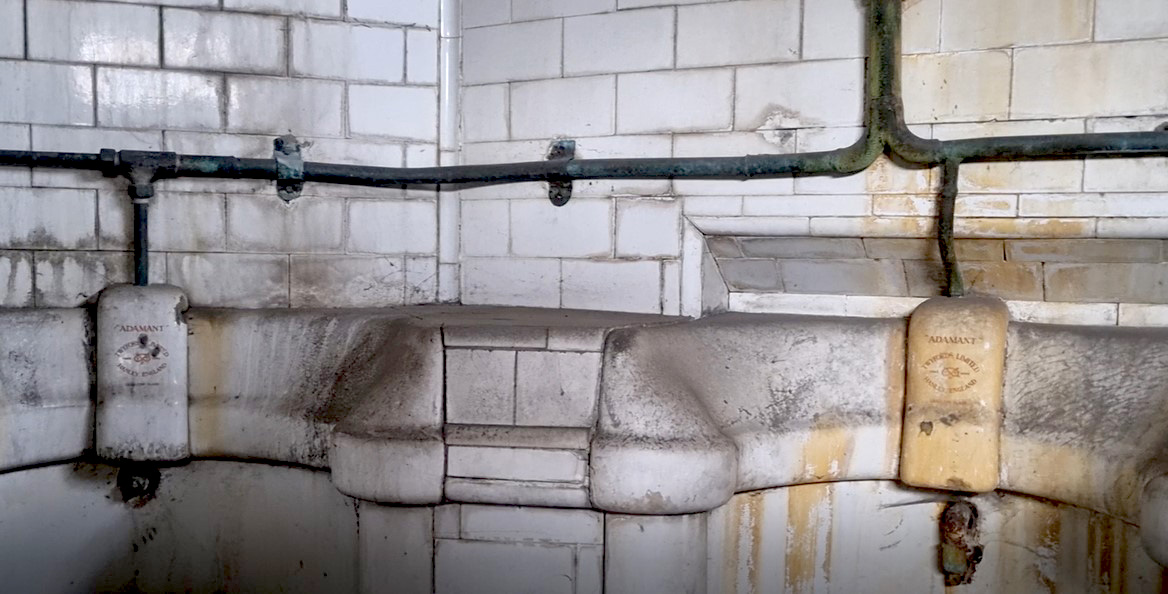
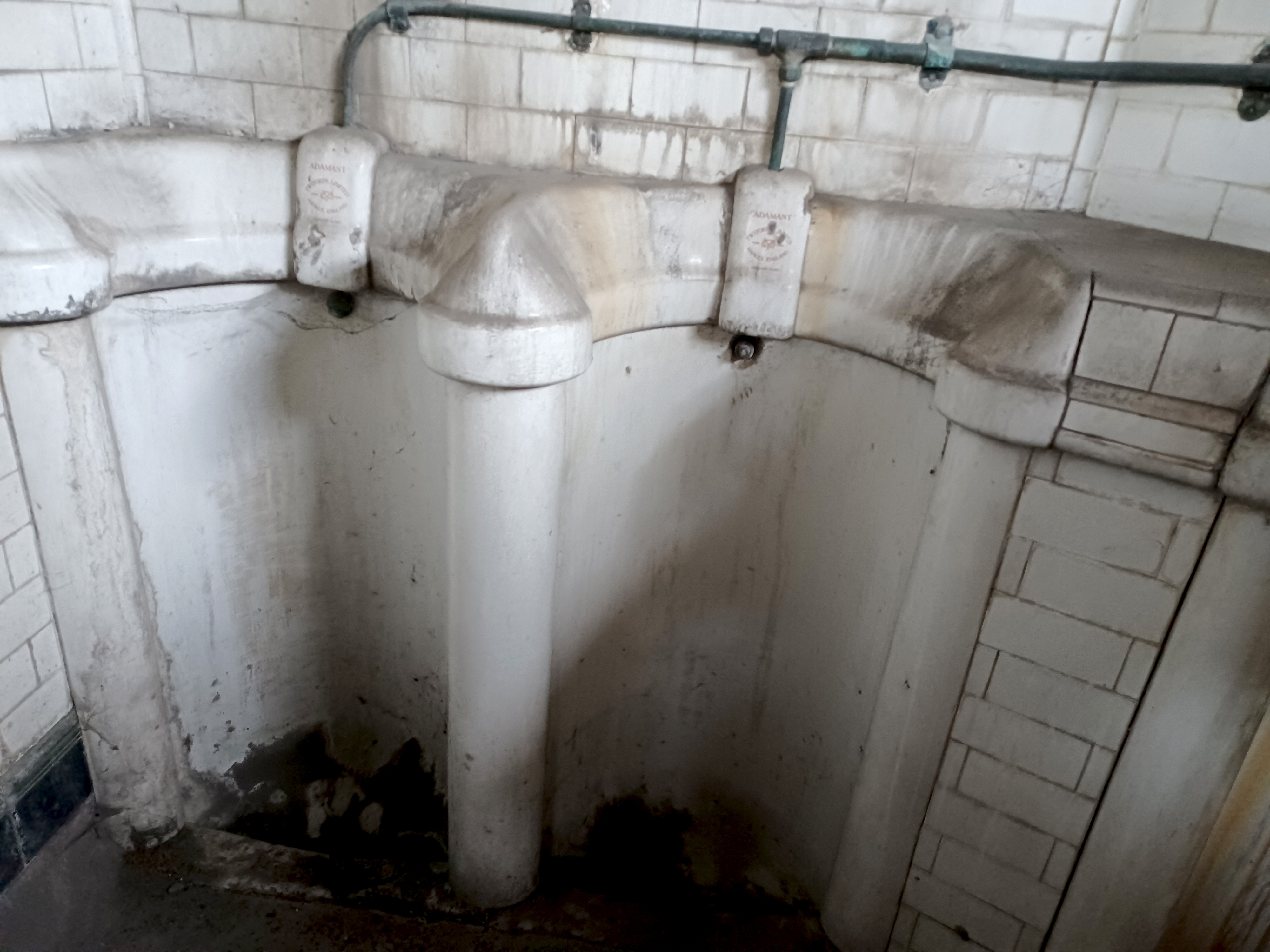
A small brick octagonal structure, the Manor Place Convenience was built by the Dunedin City Council (DCC)as a urinal in 1912. Designed by the Dunedin City Building Surveyor, G.W. Gough, it was built by contractor Augustine Ferry. Its sole use has been a public urinal from 1912 until its official closure to the public in 1976. During this time, it suffered from vandalism, the damage of which was routinely fixed by the DCC. It remains today within its original footprint, although it did have an additional substation structure adjacent to it from 1926-1958. It was briefly closed in 1958 as repairs were undertaken on the footings and drainage as a result of damage from the new adjacent underground substation. In 1963, after a spate of vandalism, two porcelain cisterns were replaced. In 1976, after a narrow escape from demolition, the urinal was used exclusively by DCC Transport bus drivers. This department offered it back to DCC in 1985 to be used again as a public toilet, however it never reopened with both entrances bricked up after this time. The interior was accessed in 2017, as DCC prepared a report on potential works on the structure.
The Manor Place Conveniences has become a small but prominent Dunedin city landmark, and is unique in New Zealand because of its original interior, its distinctive octagonal form, and as a rare example of an early 20th century urinal.
Both iwi history and archaeological evidence show Māori occupation in the Ōtākou/Otago region since the 12th century. Historically, Kāi Tahu and previous tangata whenua Waitaha and Kati Mamoe used the tauraka waka (landing site) at Ōtepoti (Dunedin city) when they visited the head of the Ōtākou harbour. However, while requested as a Māori Reserve in the 1840s, this site was not reserved and instead an area of land, near the Manor Place Convenience site, was designated as Native Reserve from 1868 and later Public Reserve. There was early confusion over the land’s legal status as Captain Cargill is reported to have laid the same area as a reserve to protect the waterfront in 1848. A Crown Grant was issued in 1866 for the land to be used for public utilities known as the ‘Princes Street Reserve’ and the area was reclaimed with roads established and an area laid out for a public market.
A small brick octagonal structure, the Manor Place Convenience was built by the Dunedin City Council (DCC)as a urinal in 1912. Designed by the Dunedin City Building Surveyor, G.W. Gough, it was built by contractor Augustine Ferry. Its sole use has been a public urinal from 1912 until its official closure to the public in 1976. During this time, it suffered from vandalism, the damage of which was routinely fixed by the DCC. It remains today within its original footprint, although it did have an additional substation structure adjacent to it from 1926-1958. It was briefly closed in 1958 as repairs were undertaken on the footings and drainage as a result of damage from the new adjacent underground substation. In 1963, after a spate of vandalism, two porcelain cisterns were replaced. In 1976, after a narrow escape from demolition, the urinal was used exclusively by DCC Transport bus drivers. This department offered it back to DCC in 1985 to be used again as a public toilet, however it never reopened with both entrances bricked up after this time. The interior was accessed in 2017, as DCC prepared a report on potential works on the structure.
The Manor Place Conveniences has become a small but prominent Dunedin city landmark, and is unique in New Zealand because of its original interior, its distinctive octagonal form, and as a rare example of an early 20th century urinal.