

Post Office (Former), built in the Central Hawke’s Bay town of Ongaonga in 1910, has historic significance as a representative of the nationwide expansion of postal services in the early twentieth century. Associated with government architect John Campbell and built by well-known Ongaonga contractors Coles Brothers, it has architectural significance as a restrained example of a small town post office. For almost 80 years it was the site of a vital community service for the people of Ongaonga.
Ongaonga was founded in 1872 by pastoral run-holder Henry Hamilton Bridge on his large estate ‘Fairfield’. James Newman ran the first village post office out of a store in the Sandford Hotel and was appointed postmaster in 1873. New facilities were added to the post office over time, such as a money order service in 1885, followed by a telephone service in 1890. All these services remained part of the village store until 1910, when a purpose-built permanent post office opened on Bridge Street, Ongaonga’s main thoroughfare. This was a period of great expansion for the Post and Telegraph Department, with numerous new post office buildings appearing around the country between the turn of the century and the First World War.
Constructed by prolific local contractors Coles Brothers to plans drawn up by the Public Works Department under the purview of government architect John Campbell, the Ongaonga building was divided into two parts: a post office in the front half facing the street and a postmaster’s residence comprised of a parlour, kitchen and two bedrooms at the back. This public/private division was typical of post offices built in this period. The exterior was clad in rusticated timber weatherboards and punctuated with double-hung sash windows. The front end of the gable roof was infilled with plain vertical mouldings. Simple arches above the windows and door, both of which were framed with vertical and horizontal battens, completed the restrained main elevation decoration.
The Ongaonga Post Office served the local community until 1988, when it was one of 432 mostly small town post offices closed as part of government rationalisation of services. The building was sold in 1989 and converted into a private dwelling. While the front door has been replaced, a small extension added to the west elevation and part of the interior converted to open-plan, it retains many of its original design elements and decorative features. Under the windows on the main elevation is what appears to be the original two-slot post box, an enduring reminder of this building’s past life.
Ongaonga was founded in 1872 by pastoral run-holder Henry Hamilton Bridge on his large estate ‘Fairfield’. James Newman ran the first village post office out of a store in the Sandford Hotel and was appointed postmaster in 1873. New facilities were added to the post office over time, such as a money order service in 1885, followed by a telephone service in 1890. All these services remained part of the village store until 1910, when a purpose-built permanent post office opened on Bridge Street, Ongaonga’s main thoroughfare. This was a period of great expansion for the Post and Telegraph Department, with numerous new post office buildings appearing around the country between the turn of the century and the First World War.
Constructed by prolific local contractors Coles Brothers to plans drawn up by the Public Works Department under the purview of government architect John Campbell, the Ongaonga building was divided into two parts: a post office in the front half facing the street and a postmaster’s residence comprised of a parlour, kitchen and two bedrooms at the back. This public/private division was typical of post offices built in this period. The exterior was clad in rusticated timber weatherboards and punctuated with double-hung sash windows. The front end of the gable roof was infilled with plain vertical mouldings. Simple arches above the windows and door, both of which were framed with vertical and horizontal battens, completed the restrained main elevation decoration.
The Ongaonga Post Office served the local community until 1988, when it was one of 432 mostly small town post offices closed as part of government rationalisation of services. The building was sold in 1989 and converted into a private dwelling. While the front door has been replaced, a small extension added to the west elevation and part of the interior converted to open-plan, it retains many of its original design elements and decorative features. Under the windows on the main elevation is what appears to be the original two-slot post box, an enduring reminder of this building’s past life.
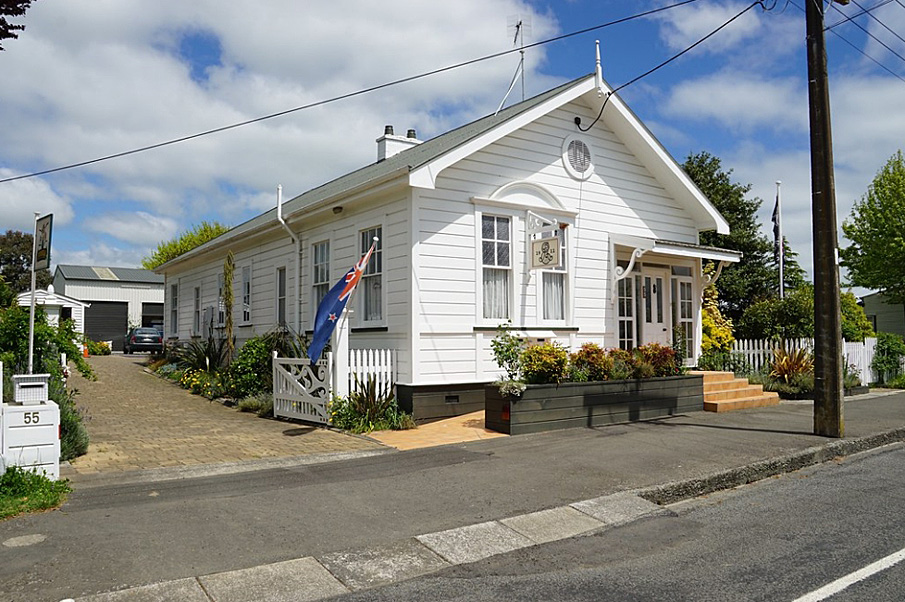
Post Office (Former), Ongaonga. CC BY 2.0 Image courtesy of www.flickr.com | Natalia Volna - itravelNZ® | 01/11/2015 | Natalia Volna
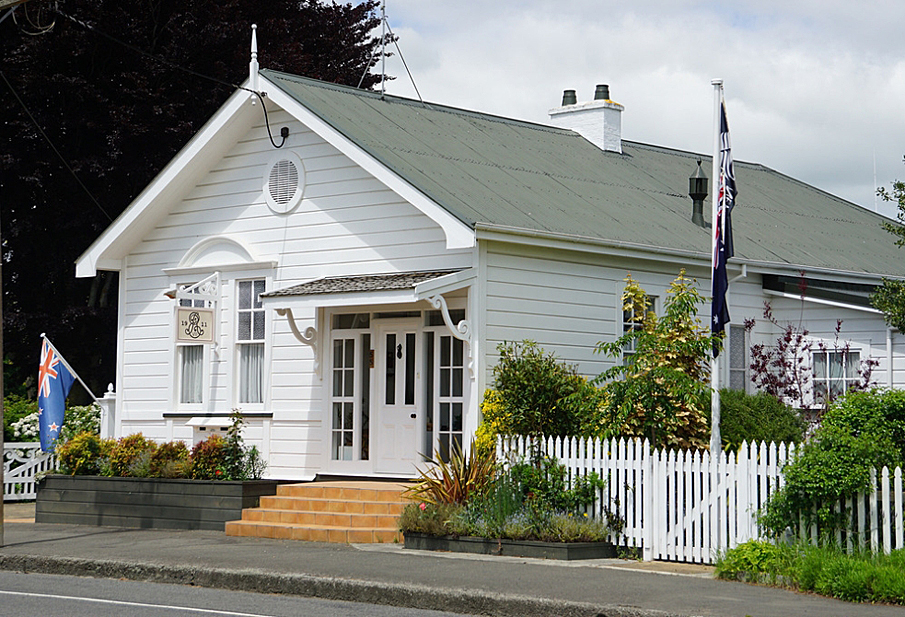
Post Office (Former), Ongaonga. CC BY 2.0 Image courtesy of www.flickr.com | Natalia Volna - itravelNZ® | 01/11/2015 | Natalia Volna
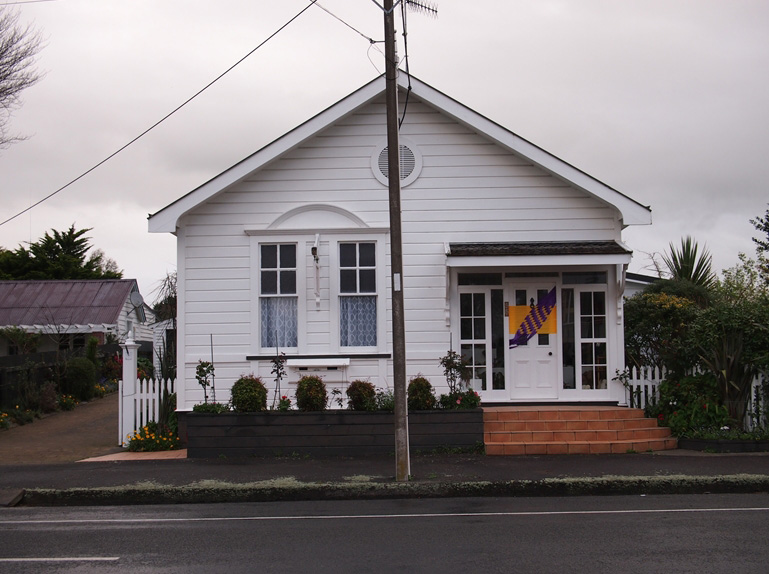
Post Office (Former), Ongaonga | Karen Astwood | 27/09/2018 | Heritage New Zealand Pouhere Taonga
Post Office (Former), Ongaonga. CC BY 2.0 Image courtesy of www.flickr.com | Natalia Volna - itravelNZ® | 01/11/2015 | Natalia Volna
Post Office (Former), Ongaonga. CC BY 2.0 Image courtesy of www.flickr.com | Natalia Volna - itravelNZ® | 01/11/2015 | Natalia Volna
Post Office (Former), Ongaonga | Karen Astwood | 27/09/2018 | Heritage New Zealand Pouhere Taonga
