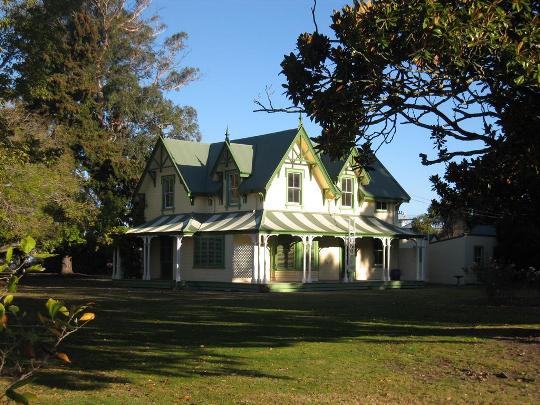
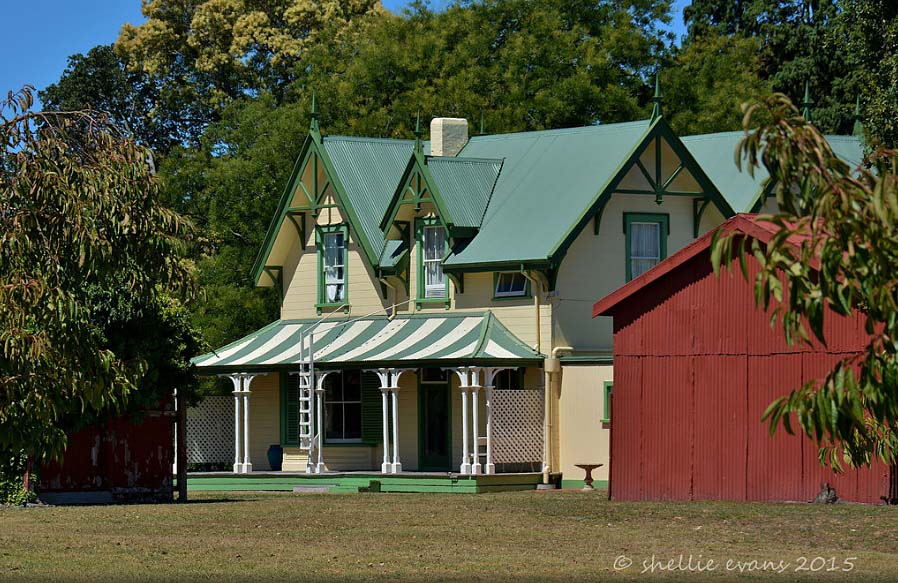
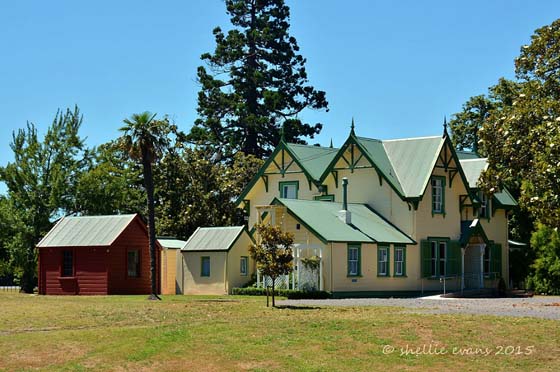
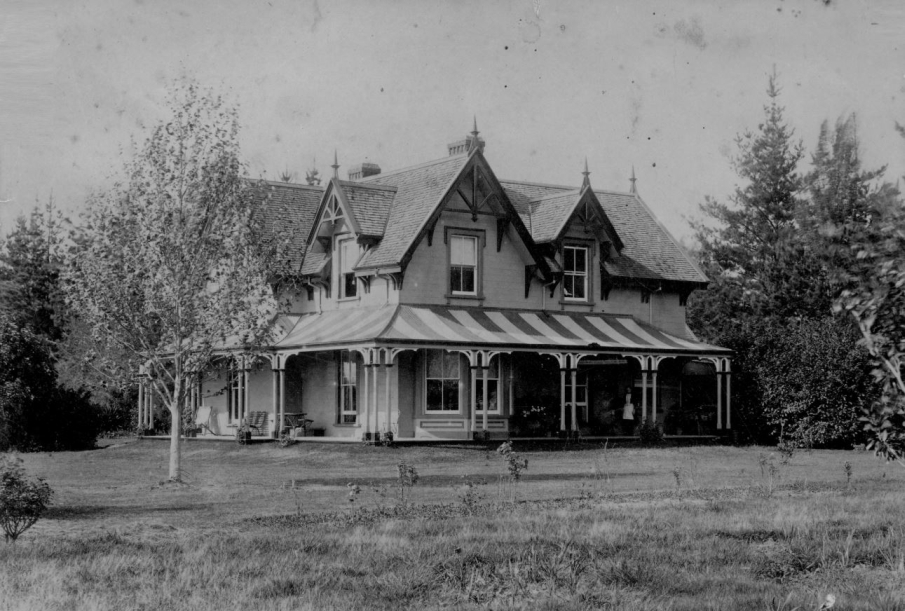
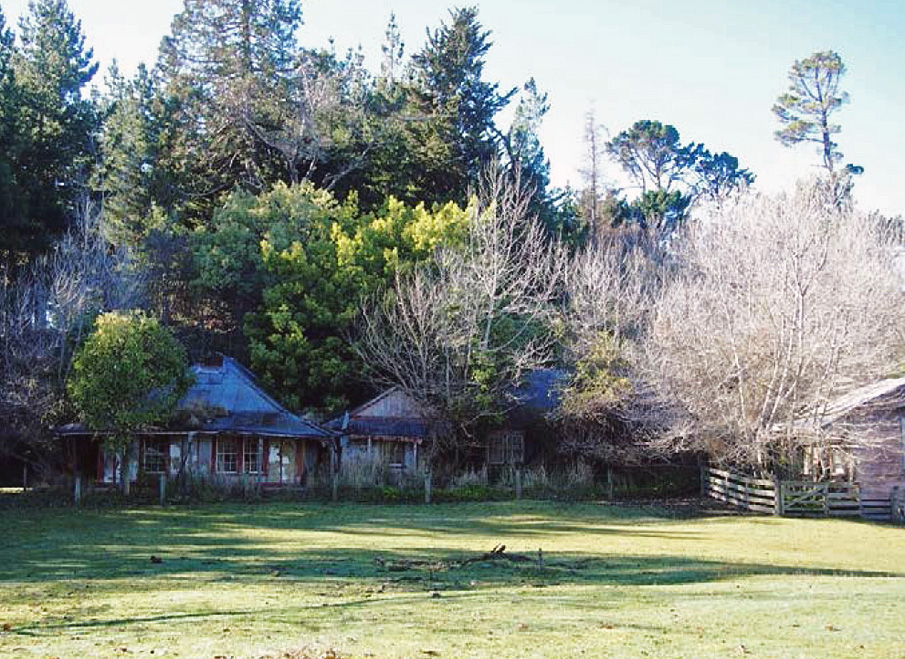
Considered one of the oldest homes in Hastings, Stoneycroft is situated on the corner of the Hawke’s Bay expressway and Omahu Road, where it fittingly symbolises the gateway to Hastings. The house is a significant local landmark with its distinctive Carpenter Gothic architecture, and is recognised for its historical, social, aesthetic and technological significance. Built circa 1877 as a townhouse, as opposed to the more common homesteads of the region, it is associated with prominent Hawke’s Bay settlers and provides insights into the social history of late Victorian farming families. In 1954 it was purchased by local doctor, Diamond Allen Ballentyne, and his wife, Joyce, who lived in the house for almost 50 years. Relatively few alterations and the longevity of the Ballentyne ownership has ensured that the house has retained a high level of authenticity.
Settlements were established by Māori in Hawke’s Bay between 1250 and 1300 AD, along the coast between Māhia to the north and Pōrangahau to the south, and along the inland rivers. Rangitāne ancestors arrived around the same time, settling in the Heretaunga area. With the migration into the region of Ngāti Kahungunu in the sixteenth century Rangitāne moved south to Tāmaki-nui-a-Rua (Dannevirke area) and Ngāti Kahungunu became the dominant tribal group in Hawke’s Bay. Heretaunga haukū nui (Heretaunga of the plentiful dews) was the name given to the region, since the soil was rich and fertile, and the swamp areas provided abundant food, fibre and plant resources. From the 1820s, Ngāti Kahungunu were attacked by tribes from the north and the west, who had traded with European settlers and acquired muskets. Ngāti Kahungunu moved to Māhia to escape the raids, only returning in the late 1830s just as European settlers started to arrive, attracted by the opportunities for farming in the area. The first flock of sheep arrived in Hawke’s Bay in 1849 and negotiations took place directly with Māori to lease land for agriculture. Large-scale sheep stations soon dominated the Hawke’s Bay landscape.
The city of Hastings was laid out in 1873 together with the construction of road networks and bridges in the region. A railway was planned the same year with the first train from Napier arriving at Hastings station in October 1874. The first services were focused on supporting the agricultural industry – stockyards, a showground and a racecourse – and related industries in animal-rendering and wool-scouring plants. Stoneycroft was built by William J Birch, a run-holder of Erewhon Station in the Ōruamātua Kaimanawa block. It is not known when he purchased the section, which had been part of the bitterly contested Heretaunga block, but the area in which Stoneycroft now sits was likely to have been part of the Frimley Estate, owned by James Nelson Williams, so Birch may have bought the Stoneycroft land directly from Williams. The design for the house and the actual date of construction are unknown but is likely to be in 1877 or early 1878.
Stoneycroft is a two-storey timber house with verandas extending around two sides, a steep-pitched gable roof, dormer windows, and patterned timberwork to the gables and veranda, typical of the Carpenter Gothic style. Its architectural significance comes from the intact nature of the house since it remains largely unaltered, and from the fact that it is very well built from high quality materials. The level of authenticity has enabled most of the original fabric to remain undisturbed. This demonstrates the high-level of trade skill in the house’s construction, particularly in the finishing details, and perhaps argues for William Birch’s close supervision of the building work.
However, the Birches did not remain at Stoneycroft for long (see HNZPT List No. 2736 Birch Homestead at Orumatua). In February 1884, the Hawke’s Bay Herald advertised the property as ‘to let or sell’, with the advertisement continuing till August the same year, when the Hawke’s Bay Herald reported that it had been bought by Nathaniel Beamish. The Beamish family retained ownership of the house into the twentieth century. When Dr and Mrs Ballentyne purchased Stoneycroft in 1954 they recognised its heritage value and were concerned with restoring and conserving the house. In 1967 Dr Ballantyne wrote to the Minister of Lands with an offer to gift Stoneycroft to the New Zealand Historic Places Trust. Whilst the gift did not eventuate, Mrs Ballentyne pursued a heritage covenant for the property after her husband’s death, and this was registered against the property in 1995. Following Mrs Ballantyne’s death in 2003 Stoneycroft was purchased by Hastings District Council in 2005. The house is now leased to Hawke’s Bay Knowledge Bank, a digital repository for the history of Hawke’s Bay.