

St. John's College Chapel was begun in March 1847 and consecrated by Bishop Selwyn in November of the same year.
The Chapel, which for some 135 years has formed the focal point of everyday life at the College, is built of wood on a stone base and is cruciform in plan with apsidal east and west ends. Its most important feature was the use of an externally exposed timber frame which expressed the structural elements of the building as advocated by A.W.N. Pugin and the Ecclesiologists in Britain.
The Chapel's architect was Frederick Thatcher who was assisted to a lesser degree by Reader Wood. This team was responsible for many of the so-called 'Selwyn Churches' of Auckland. Thatcher was one of early New Zealand's most important architects, his most significant buildings besides St. John's College Chapel being Old St. Paul's, Wellington and the Gables, New Plymouth.
The Chapel is the earliest surviving example of a 'Selwyn Church' and incorporates the chief characteristics of churches of this type. These include steeply pitched roofs, overhanging eaves, early English fenestration and carefully calculated proportions.
In terms of historical importance, the Chapel is the third oldest surviving church building in New Zealand behind Christ Church, Russell and St. John's, Wakefield and contains memorials to many of New Zealand's most illustrious clergymen.
In 1959 the Chapel was extended at its west end, the alteration being made very sympathetically.
The early date of the Chapel, and the individuality of its architecture make it unique among timber Gothic Revival churches, not only in New Zealand, but throughout the world.
The Chapel, which for some 135 years has formed the focal point of everyday life at the College, is built of wood on a stone base and is cruciform in plan with apsidal east and west ends. Its most important feature was the use of an externally exposed timber frame which expressed the structural elements of the building as advocated by A.W.N. Pugin and the Ecclesiologists in Britain.
The Chapel's architect was Frederick Thatcher who was assisted to a lesser degree by Reader Wood. This team was responsible for many of the so-called 'Selwyn Churches' of Auckland. Thatcher was one of early New Zealand's most important architects, his most significant buildings besides St. John's College Chapel being Old St. Paul's, Wellington and the Gables, New Plymouth.
The Chapel is the earliest surviving example of a 'Selwyn Church' and incorporates the chief characteristics of churches of this type. These include steeply pitched roofs, overhanging eaves, early English fenestration and carefully calculated proportions.
In terms of historical importance, the Chapel is the third oldest surviving church building in New Zealand behind Christ Church, Russell and St. John's, Wakefield and contains memorials to many of New Zealand's most illustrious clergymen.
In 1959 the Chapel was extended at its west end, the alteration being made very sympathetically.
The early date of the Chapel, and the individuality of its architecture make it unique among timber Gothic Revival churches, not only in New Zealand, but throughout the world.
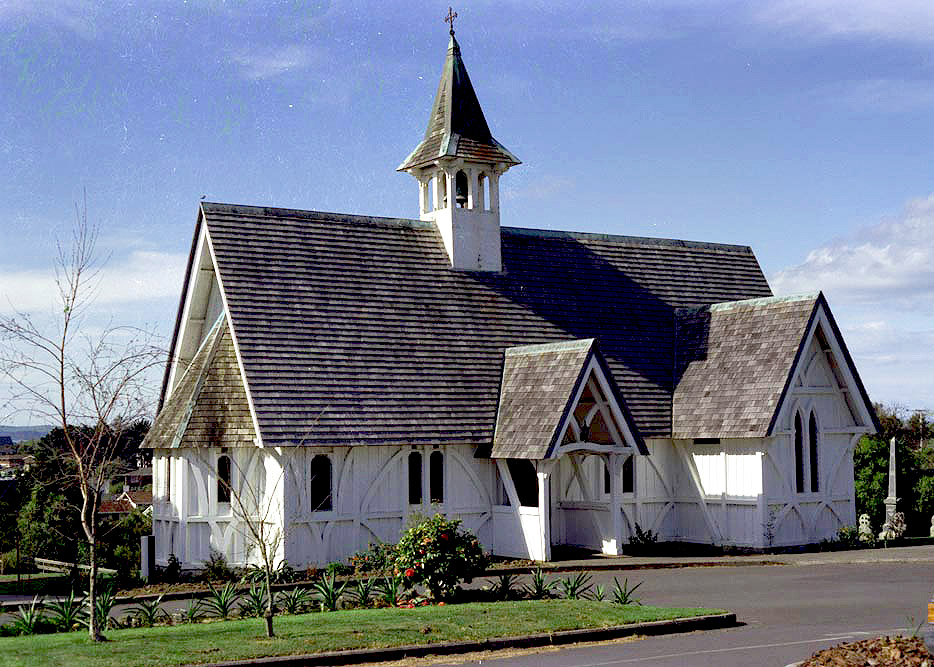
Chapel of St John the Evangelist, Meadowbank, Auckland. Image courtesy of Auckland Libraries Heritage Collections, Record # 1052-M8-29 | Unknown | 29/06/1986 | Auckland Libraries
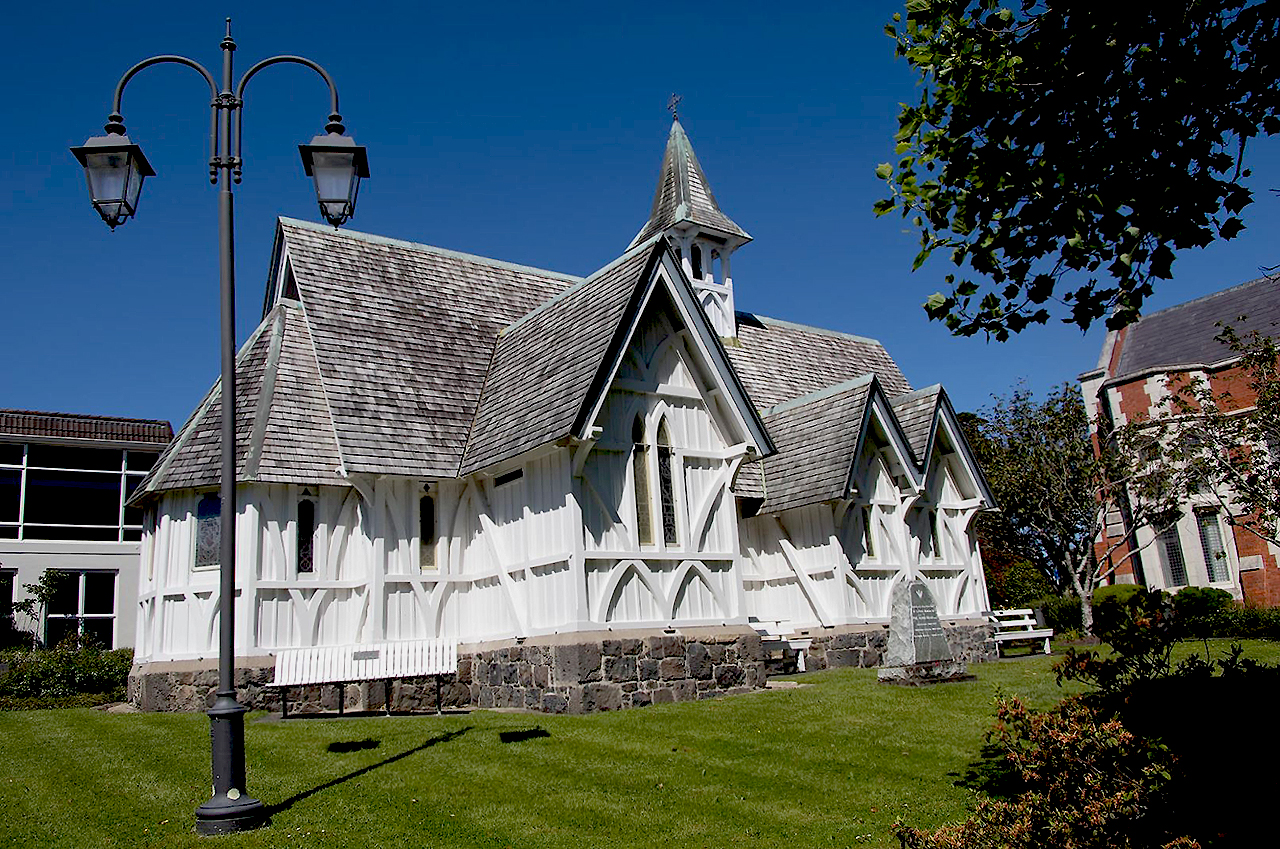
Chapel of St John the Evangelist, Meadowbank, Auckland. Image courtesy of theplantpeople.co.nz | www.theplantpeople.co.nz
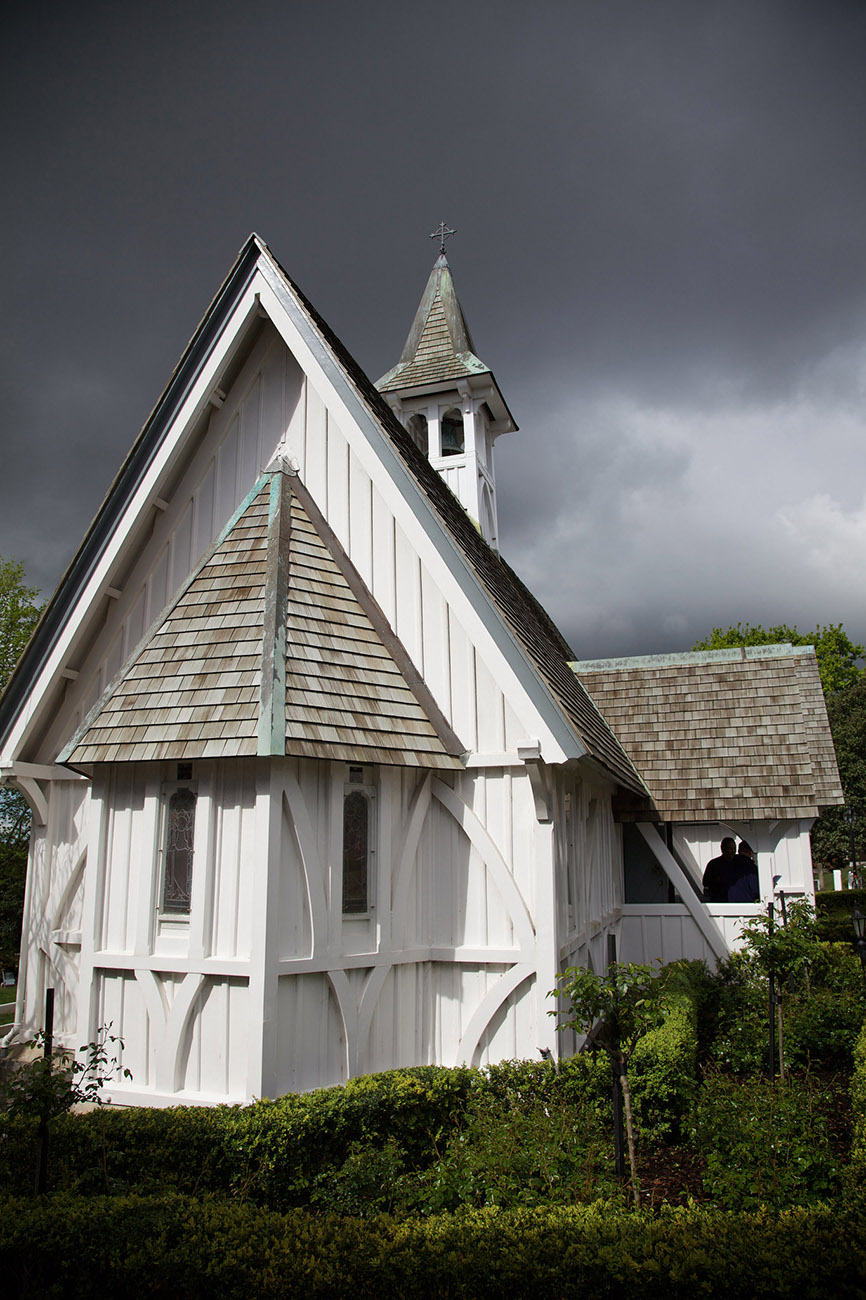
Chapel of St John the Evangelist, Meadowbank, Auckland. CC BY-SA 2.0 Image courtesy of www.flickr.com | Nick Thompson | 26/09/2009 | Nick Thompson
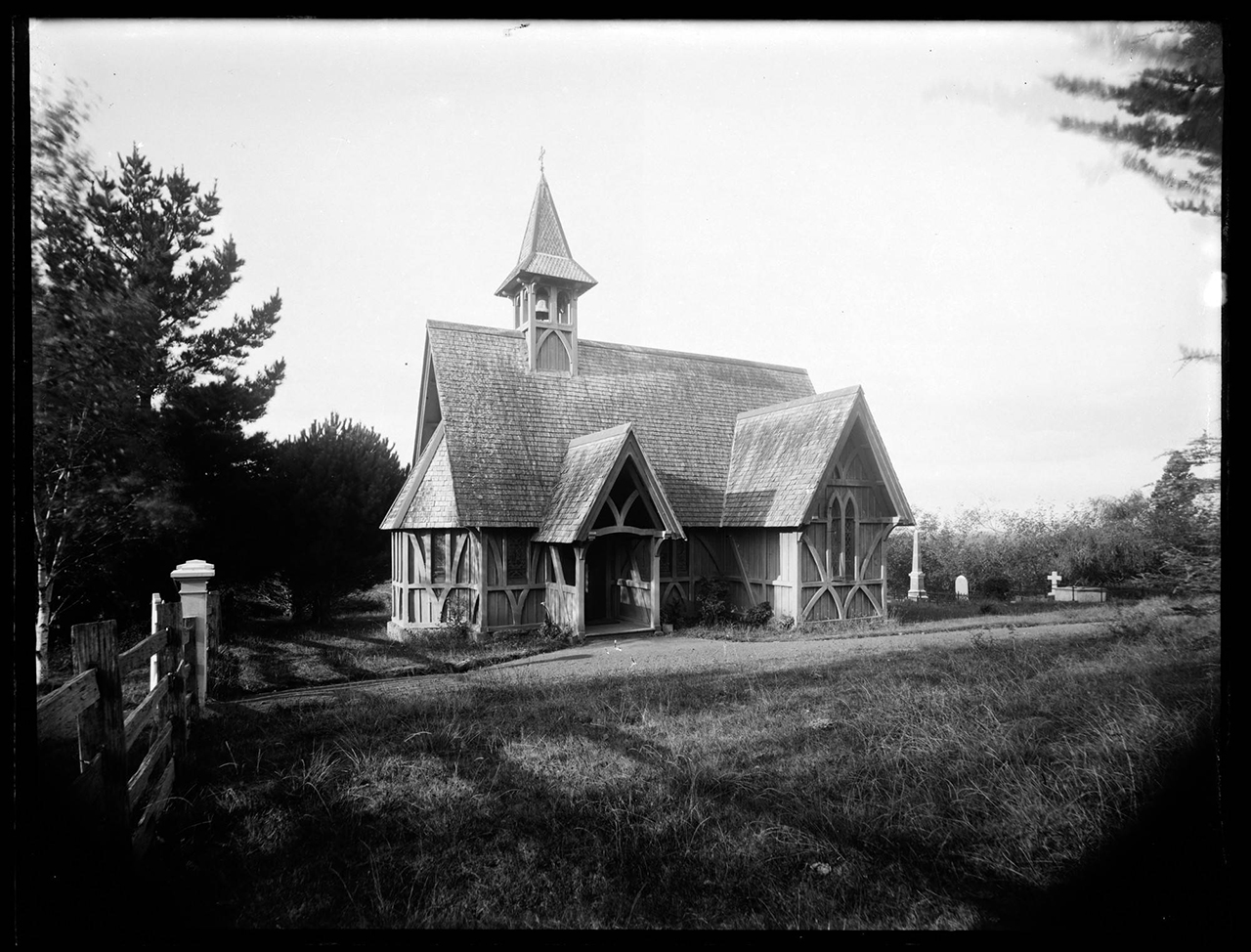
Chapel of St John the Evangelist, Meadowbank, Auckland. c.1890's Auckland Libraries Heritage Collections 1-W1834 | Henry Winkelmann | No Known Copyright Restrictions
Chapel of St John the Evangelist, Meadowbank, Auckland. Image courtesy of Auckland Libraries Heritage Collections, Record # 1052-M8-29 | Unknown | 29/06/1986 | Auckland Libraries
Chapel of St John the Evangelist, Meadowbank, Auckland. Image courtesy of theplantpeople.co.nz | www.theplantpeople.co.nz
Chapel of St John the Evangelist, Meadowbank, Auckland. CC BY-SA 2.0 Image courtesy of www.flickr.com | Nick Thompson | 26/09/2009 | Nick Thompson
Chapel of St John the Evangelist, Meadowbank, Auckland. c.1890's Auckland Libraries Heritage Collections 1-W1834 | Henry Winkelmann | No Known Copyright Restrictions
