DonateMembershipVisit Heritage
  • Tūrangawaewae
    Places
  • Tira Māori
    Māori Heritage
  • Poutairangahia
    Archaeology
  • Rauemi
    Resources
  • Mō Tātou
    About Us
  • New Zealand Heritage List
  • Nominate and submit
  • Explore the List
  • National Historic Landmarks
  • Plaques
  • Rainbow List Project
  • Lost heritage
  • Visit Heritage
  • Our properties
  • Turnbull House Project
  • Collections
  • Shop
  • Tohu Whenua
  • Tira Māori
  • Conserving Māori heritage
  • Marae built heritage
  • Māori heritage on the List
  • Hinemihi—Te Hokinga Mai
  • What is archaeology?
  • Is there a site on my property?
  • What are my legal requirements?
  • Affecting an archaeological site
  • Declaring an archaeological site
  • Archaeology FAQs
  • Archaeology Digital Library
  • Archaeology guidelines and templates
  • Resources
  • Funding
  • Publications
  • Sustainable management guides
  • Disaster recovery
  • Podcasts & digital resources
  • Education Hub
  • Conservation plans
  • About
  • Board
  • Māori Heritage Council
  • Senior Staff
  • Offices
  • Contact us
  • Careers
  • Covenants
  • Fast-track
  • Corporate documents
  • Currently consulting on
  • Our submissions
  • News
  • Covid-19 response
Quick links
Rārangi Kōrero | The List
Explore the List
National Historic Landmarks
Ngā Manawhenua o Aotearoa me ōna Kōrero Tūturu
Quick links
Tapuwae
A Vision for Places of Māori Heritage
Funding for Māori Heritage
Resources
Quick links
Archaeological Authority Portal
Applying for an archaeological authority
Archaeology FAQs
Browse the most frequently asked questions about archaeological authorities and the archaeological process.
Quick links
Quick links
News
News Keep up to date with Heritage New Zealand Pouhere Taonga
Membership
Membership Find out more and sign up today
DonateMembershipVisit Heritage
  • Tūrangawaewae
    Places
  • Tira Māori
    Māori Heritage
  • Poutairangahia
    Archaeology
  • Rauemi
    Resources
  • Mō Tātou
    About Us
  • New Zealand Heritage List
  • Nominate and submit
  • Explore the List
  • National Historic Landmarks
  • Plaques
  • Rainbow List Project
  • Lost heritage
  • Visit Heritage
  • Our properties
  • Turnbull House Project
  • Collections
  • Shop
  • Tohu Whenua
  • Tira Māori
  • Conserving Māori heritage
  • Marae built heritage
  • Māori heritage on the List
  • Hinemihi—Te Hokinga Mai
  • What is archaeology?
  • Is there a site on my property?
  • What are my legal requirements?
  • Affecting an archaeological site
  • Declaring an archaeological site
  • Archaeology FAQs
  • Archaeology Digital Library
  • Archaeology guidelines and templates
  • Resources
  • Funding
  • Publications
  • Sustainable management guides
  • Disaster recovery
  • Podcasts & digital resources
  • Education Hub
  • Conservation plans
  • About
  • Board
  • Māori Heritage Council
  • Senior Staff
  • Offices
  • Contact us
  • Careers
  • Covenants
  • Fast-track
  • Corporate documents
  • Currently consulting on
  • Our submissions
  • News
  • Covid-19 response
Quick links
Rārangi Kōrero | The List
Explore the List
National Historic Landmarks
Ngā Manawhenua o Aotearoa me ōna Kōrero Tūturu
Quick links
Tapuwae
A Vision for Places of Māori Heritage
Funding for Māori Heritage
Resources
Quick links
Archaeological Authority Portal
Applying for an archaeological authority
Archaeology FAQs
Browse the most frequently asked questions about archaeological authorities and the archaeological process.
Quick links
Quick links
News
News Keep up to date with Heritage New Zealand Pouhere Taonga
Membership
Membership Find out more and sign up today
  • Places
  • Nominate and submit
  • National Historic Landmarks
  • Places
  • Nominate and submit
  • National Historic Landmarks
  • Tira Māori
  • Conserving Māori heritage
  • Marae built heritage
  • Tira Māori
  • Conserving Māori heritage
  • Marae built heritage
  • Archaeological authorities
  • Archaeology Digital Library
  • Archaeological authorities
  • Archaeology Digital Library
  • All resources
  • Publications
  • Funding
  • All resources
  • Publications
  • Funding
  • FAQs
  • FAQs
Follow us on:
Places
  • Places
  • Nominate and submit
  • National Historic Landmarks
Tira Māori
  • Tira Māori
  • Conserving Māori heritage
  • Marae built heritage
Archaeology
  • Archaeological authorities
  • Archaeology Digital Library
Resources
  • All resources
  • Publications
  • Funding
FAQs
  • FAQs
Follow us on
HomePrivacyTerms and conditionsAbout this site
© Heritage New Zealand Pouhere Taonga 2026.
 
Thames North School (Former)

600 Tararu Road, Tararu, THAMES

Public

Historic Place Category 1

List No. 133

Quick links:
List GalleryLocationDetails
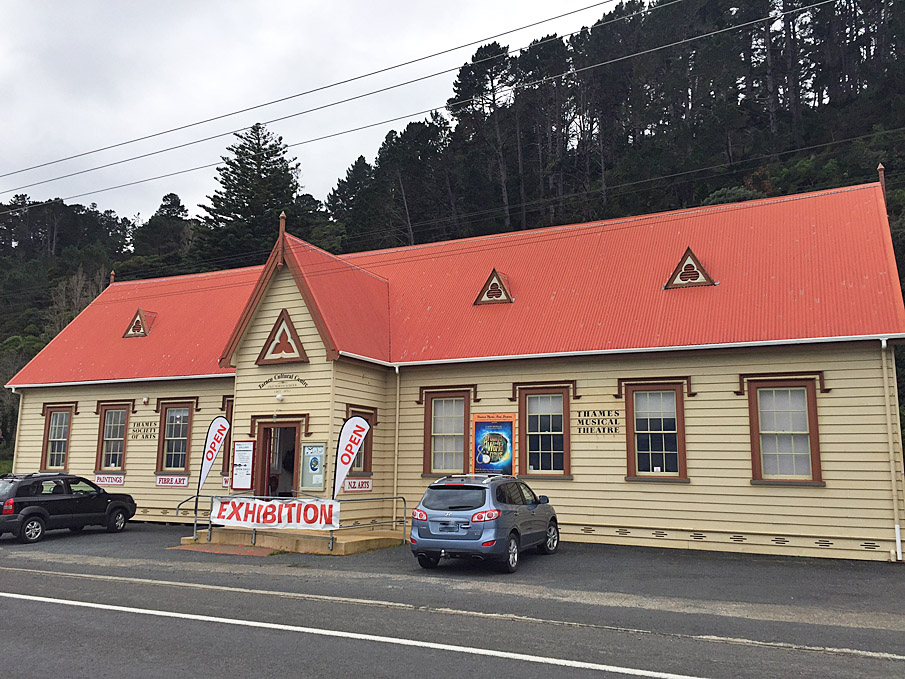
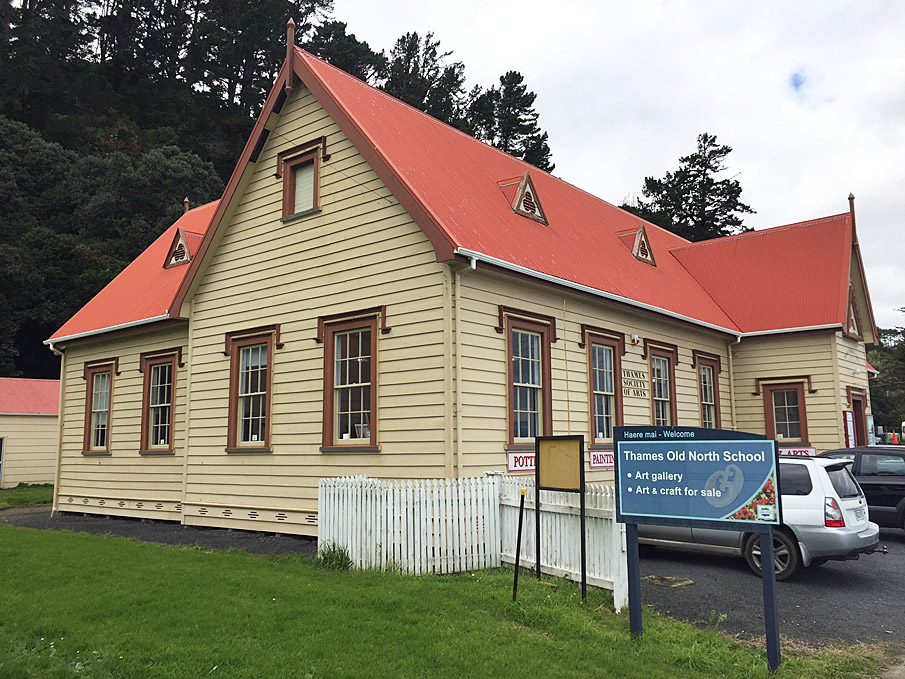
The building of the Thames North school was a result of the coincidence of the population expansion in the town with the development of the Thames goldfields and the passing of the 1877 Education Act which, among other things, made the provision of schools and schooling the responsibility of Boards of Education established under the Act. The classrooms were large so as to be able to cope with the rapidly expanding roll. The roll progressively declined from the early years of the 20th century and the school was closed in 1971. In 1974, in response to community demand, it was taken over by the Thames Borough Council and leased to the Thames Society of Arts and the Thames Operatic Society.
Thames North School (Former), Thames | Jamie Douglas | 07/07/2018 | Heritage New Zealand

List Entry Information

Overview

Status
Listed

List Entry Status
Historic Place Category 1

Access
Able to Visit

List Number
133

Date Entered
15th February 1990

Date of Effect
15th February 1990

City/District Council
Thames-Coromandel District

Region
Waikato Region

Extent of List Entry

Extent includes the land described as Sec 78 Blk IV Thames SD (NZ Gazette 1977, p.2480; 1978, pp.148 & 531), South Auckland Land District, and the buildings known as Thames North School (Former) thereon, and their fittings and fixtures.

Legal description

Sec 78 Blk IV Thames SD (NZ Gazette 1977, p.2480; 1978, pp.148 & 531), South Auckland Land District

Detailed List Entry
Significance

Historic Significance

Historical Significance or Value The Thames North School is a remarkable reminder of the population fluctuations of a gold mining settlement with its period of heavy and urgent demand for such community facilities followed by redundancy as the population rapidly declined following the hey-day of the goldfield. It is also remarkable in that the demand for the school coincided with the passing of the 1877 Education Act.

Physical Significance

ARCHITECTURAL QUALITY: The Thames North school is a pleasing example of the larger primary school building which was common in New Zealand following the passing of the 1877 Education Act. It conforms to the general 'house style' of that period of the Auckland Education Board. TOWNSCAPE/LANDMARK VALUE: This building has pleasing streetscape quality. It occupies a prominent position in north Thames

Construction Professional

Name

Allright, Henry

Type

Architect

Biography

Allright (1827-1906) was born in Kent in 1827. After training as an architect, he emigrated to New Zealand in 1854. From 1856 he was employed in various positions by the Auckland Provincial Board of Works, becoming Provincial Engineer in 1874. In 1877 he was appointed architect to the Auckland Board of Education. He held this position for 15 years during a period of major building expansion following the passing of the 1877 Education Act. In 1883 he was appointed engineer to the Waitemata County, although he retained his position with the Education Board. He retired from the Education Board in 1892 and entered into practice as an engineer, from which he retired in 1901. He died in 1906. From 1881-85, he was a member of the Auckland Institute of Engineers.

Construction Details

Start Year

1877

Type

Original Construction

Start Year

1883

Type

Modification

Description

Front room of school partitioned into three rooms

Start Year

1891

Type

Modification

Description

Two brick chimneys, and infant room partition and tiered gallery added

Start Year

1893

Type

Addition

Description

Shelter sheds and porches added

Start Year

1899

Type

Modification

Description

Roof reclad with corrugated iron

Start Year

1874

Finish Year

1877

Type

Modification

Description

Major repairs and restoration work

Construction Materials

Heart kauri timber throughout, with kauri shingles.

Notable Features

Trefoil decorated air vents.

Physical Description

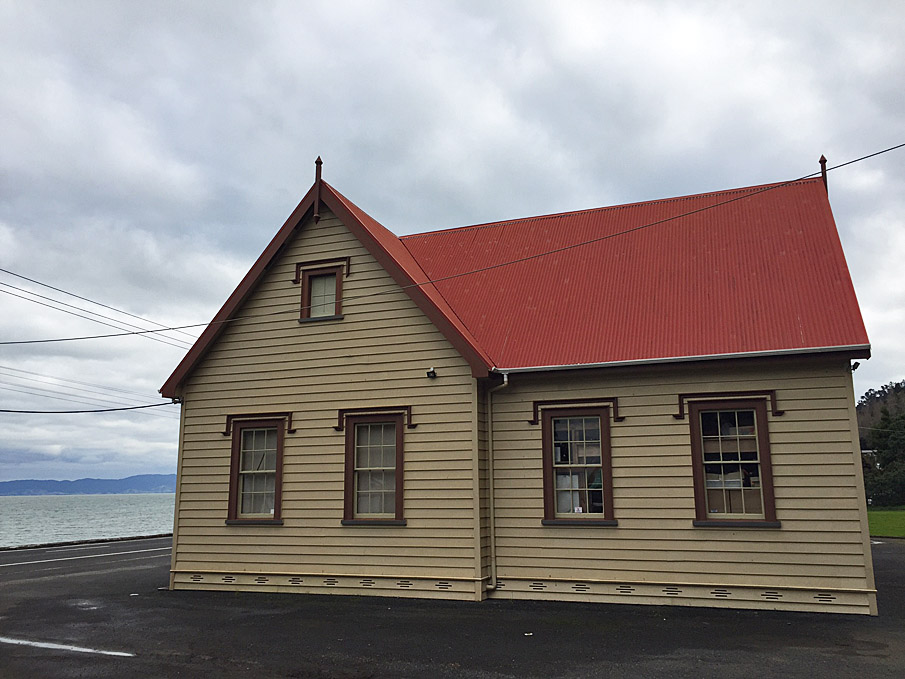
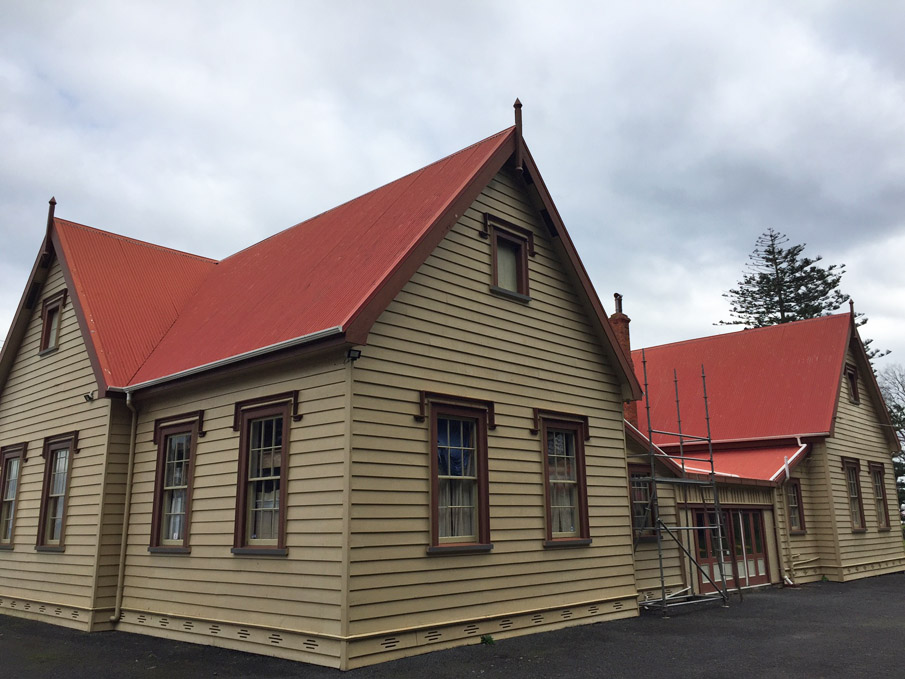
ARCHITECTURAL DESCRIPTION: A simple Victorian design; single storeyed with a steeply-pitched roof and plain barge boards with a slight curve at the lower ends. The symmetrical front facade has a projecting central porch entrance-way. The entrance has a triangular air vent in the gable, and there are triangular-framed ventilators in the main roof structures. Trefoil shaped vents complement the regular fenestration with its large sash windows with small pane divisions, and label moulds. This design was already established by 1877 as the 'house style' of the Auckland Education Board.

Reference

Information Sources

Kellaway, 1981

J. Warwick Kellaway, Education 150: From Schoolhouse to Classpace in the Waikato-Bay of Plenty, Hamilton, 1981

Kelly, 1968

W A Kelly. Thames: The First Hundred Years, Thames, 1968

Ammon, 1988

M D Ammon. 1988 The History of the Thames North School, Tararu 1877-1977, compiled for the Thames Society of Arts, Thames

Report Written By

This historic place was registered under the Historic Places Act 1980. This report includes the text from the original Building Classification Committee report considered by the NZHPT Board at the time of registration. Please note that entry on the New Zealand Heritage List/Rarangi Korero identifies only the heritage values of the property concerned, and should not be construed as advice on the state of the property, or as a comment of its soundness or safety, including in regard to earthquake risk, safety in the event of fire, or insanitary conditions.

Further Information

Current Usages

Uses: Civic Facilities

Specific Usage: Art Centre

Former Usages

General Usage:: Education

Specific Usage: School

Themes

Web Links

Overview

Status

Listed

List Entry Status

Historic Place Category 1

Access

Able to Visit

List Number

133

Date Entered

15th February 1990

Date of Effect

15th February 1990

City/District Council

Thames-Coromandel District

Region

Waikato Region

Extent of List Entry

Extent includes the land described as Sec 78 Blk IV Thames SD (NZ Gazette 1977, p.2480; 1978, pp.148 & 531), South Auckland Land District, and the buildings known as Thames North School (Former) thereon, and their fittings and fixtures.

Legal description

Sec 78 Blk IV Thames SD (NZ Gazette 1977, p.2480; 1978, pp.148 & 531), South Auckland Land District

Status

Listed

List Entry Status

Historic Place Category 1

Access

Able to Visit

List Number

133

Date Entered

15th February 1990

Date of Effect

15th February 1990

City/District Council

Thames-Coromandel District

Region

Waikato Region

Extent of List Entry

Extent includes the land described as Sec 78 Blk IV Thames SD (NZ Gazette 1977, p.2480; 1978, pp.148 & 531), South Auckland Land District, and the buildings known as Thames North School (Former) thereon, and their fittings and fixtures.

Legal description

Sec 78 Blk IV Thames SD (NZ Gazette 1977, p.2480; 1978, pp.148 & 531), South Auckland Land District

Significance

Why is this place significant?

Historic Significance

Historical Significance or Value The Thames North School is a remarkable reminder of the population fluctuations of a gold mining settlement with its period of heavy and urgent demand for such community facilities followed by redundancy as the population rapidly declined following the hey-day of the goldfield. It is also remarkable in that the demand for the school coincided with the passing of the 1877 Education Act.

Physical Significance

ARCHITECTURAL QUALITY: The Thames North school is a pleasing example of the larger primary school building which was common in New Zealand following the passing of the 1877 Education Act. It conforms to the general 'house style' of that period of the Auckland Education Board. TOWNSCAPE/LANDMARK VALUE: This building has pleasing streetscape quality. It occupies a prominent position in north Thames

Why is this place significant?

Historic Significance

Historical Significance or Value The Thames North School is a remarkable reminder of the population fluctuations of a gold mining settlement with its period of heavy and urgent demand for such community facilities followed by redundancy as the population rapidly declined following the hey-day of the goldfield. It is also remarkable in that the demand for the school coincided with the passing of the 1877 Education Act.

Physical Significance

ARCHITECTURAL QUALITY: The Thames North school is a pleasing example of the larger primary school building which was common in New Zealand following the passing of the 1877 Education Act. It conforms to the general 'house style' of that period of the Auckland Education Board. TOWNSCAPE/LANDMARK VALUE: This building has pleasing streetscape quality. It occupies a prominent position in north Thames

Construction Information

Construction Professional

Name

Allright, Henry

Type

Architect

Biography

Allright (1827-1906) was born in Kent in 1827. After training as an architect, he emigrated to New Zealand in 1854. From 1856 he was employed in various positions by the Auckland Provincial Board of Works, becoming Provincial Engineer in 1874. In 1877 he was appointed architect to the Auckland Board of Education. He held this position for 15 years during a period of major building expansion following the passing of the 1877 Education Act. In 1883 he was appointed engineer to the Waitemata County, although he retained his position with the Education Board. He retired from the Education Board in 1892 and entered into practice as an engineer, from which he retired in 1901. He died in 1906. From 1881-85, he was a member of the Auckland Institute of Engineers.

Construction Details

Start Year

1877

Type

Original Construction

Start Year

1883

Type

Modification

Description

Front room of school partitioned into three rooms

Start Year

1891

Type

Modification

Description

Two brick chimneys, and infant room partition and tiered gallery added

Start Year

1893

Type

Addition

Description

Shelter sheds and porches added

Start Year

1899

Type

Modification

Description

Roof reclad with corrugated iron

Start Year

1874

Finish Year

1877

Type

Modification

Description

Major repairs and restoration work

Construction Materials

Heart kauri timber throughout, with kauri shingles.

Notable Features

Trefoil decorated air vents.

Construction Professional

Name

Allright, Henry

Type

Architect

Biography

Allright (1827-1906) was born in Kent in 1827. After training as an architect, he emigrated to New Zealand in 1854. From 1856 he was employed in various positions by the Auckland Provincial Board of Works, becoming Provincial Engineer in 1874. In 1877 he was appointed architect to the Auckland Board of Education. He held this position for 15 years during a period of major building expansion following the passing of the 1877 Education Act. In 1883 he was appointed engineer to the Waitemata County, although he retained his position with the Education Board. He retired from the Education Board in 1892 and entered into practice as an engineer, from which he retired in 1901. He died in 1906. From 1881-85, he was a member of the Auckland Institute of Engineers.

Construction Details

Start Year

1877

Type

Original Construction

Start Year

1883

Type

Modification

Description

Front room of school partitioned into three rooms

Start Year

1891

Type

Modification

Description

Two brick chimneys, and infant room partition and tiered gallery added

Start Year

1893

Type

Addition

Description

Shelter sheds and porches added

Start Year

1899

Type

Modification

Description

Roof reclad with corrugated iron

Start Year

1874

Finish Year

1877

Type

Modification

Description

Major repairs and restoration work

Construction Materials

Heart kauri timber throughout, with kauri shingles.

Notable Features

Trefoil decorated air vents.

Physical Description

ARCHITECTURAL DESCRIPTION: A simple Victorian design; single storeyed with a steeply-pitched roof and plain barge boards with a slight curve at the lower ends. The symmetrical front facade has a projecting central porch entrance-way. The entrance has a triangular air vent in the gable, and there are triangular-framed ventilators in the main roof structures. Trefoil shaped vents complement the regular fenestration with its large sash windows with small pane divisions, and label moulds. This design was already established by 1877 as the 'house style' of the Auckland Education Board.

ARCHITECTURAL DESCRIPTION: A simple Victorian design; single storeyed with a steeply-pitched roof and plain barge boards with a slight curve at the lower ends. The symmetrical front facade has a projecting central porch entrance-way. The entrance has a triangular air vent in the gable, and there are triangular-framed ventilators in the main roof structures. Trefoil shaped vents complement the regular fenestration with its large sash windows with small pane divisions, and label moulds. This design was already established by 1877 as the 'house style' of the Auckland Education Board.

Reference

Historical and Associated Iwi / Hapū / Whānau

Information Sources

Kellaway, 1981

J. Warwick Kellaway, Education 150: From Schoolhouse to Classpace in the Waikato-Bay of Plenty, Hamilton, 1981

Kelly, 1968

W A Kelly. Thames: The First Hundred Years, Thames, 1968

Ammon, 1988

M D Ammon. 1988 The History of the Thames North School, Tararu 1877-1977, compiled for the Thames Society of Arts, Thames

Other Information

This historic place was registered under the Historic Places Act 1980. This report includes the text from the original Building Classification Committee report considered by the NZHPT Board at the time of registration. Please note that entry on the New Zealand Heritage List/Rarangi Korero identifies only the heritage values of the property concerned, and should not be construed as advice on the state of the property, or as a comment of its soundness or safety, including in regard to earthquake risk, safety in the event of fire, or insanitary conditions.

Historical and Associated Iwi / Hapū / Whānau

Information Sources

Kellaway, 1981

J. Warwick Kellaway, Education 150: From Schoolhouse to Classpace in the Waikato-Bay of Plenty, Hamilton, 1981

Kelly, 1968

W A Kelly. Thames: The First Hundred Years, Thames, 1968

Ammon, 1988

M D Ammon. 1988 The History of the Thames North School, Tararu 1877-1977, compiled for the Thames Society of Arts, Thames

Other Information

This historic place was registered under the Historic Places Act 1980. This report includes the text from the original Building Classification Committee report considered by the NZHPT Board at the time of registration. Please note that entry on the New Zealand Heritage List/Rarangi Korero identifies only the heritage values of the property concerned, and should not be construed as advice on the state of the property, or as a comment of its soundness or safety, including in regard to earthquake risk, safety in the event of fire, or insanitary conditions.

Further Information

Current Usages

Uses: Civic Facilities

Specific Usage: Art Centre

Former Usages

General Usage: Education

Specific Usage: School

Current Usages

Uses: Civic Facilities

Specific Usage: Art Centre

Former Usages

General Usage: Education

Specific Usage: School

Location

Loading
Stay up to date with Heritage this month