The renowned Polynesian navigator Kupe first explored the Wellington area during his voyage to Aotearoa from Hawaiki, the ancestral homeland of Māori. The earliest permanent settlers in the area were the descendants of Whātonga, a chief from Hawke’s Bay. His son, Tara, travelled south from the Mahia peninsula and established a settlement at Te Whanganui-a-Tara, the great harbour of Tara. Prior to European arrival, the fertile soils of the inner harbour supported abundant food sources, and the rohe saw successive waves of tribal occupation. Between 1824 and 1834, several migrations from Taranaki brought hapū to settle the coastline of Te Whanganui-a-Tara and into Wairarapa. In 1835 Ngāti Mutunga and Ngāti Tama migrated to Wharekauri (Chatham Islands) prompting Te Ātiawa hapū to return to Te Whanganui-a-Tara from Wairarapa. The rohe remains significant to Te Ātiawa, Taranaki Whānui ki Te Upoko o Te Ika, Ngāti Toa Rangatira, and Muaūpoko.
Rapid colonisation took place following the purchase of the Port Nicholson Block by the New Zealand Company in 1839, completely transforming the gardens and kāinga of Te Aro into a dirty and polluted urban Victorian landscape. Initially the British settlement of Britannia had been planned at Pito-one, but following severe flooding in March 1840, the settlers moved to Thorndon and Te Aro on the opposite side of the harbour. The land was parcelled into 1,100 town acre sections in 1841. Section 142 in Te Aro was purchased by Edward Daniell. Originally a larger section, it subsequently changed hands several times and was eventually subdivided. The plot at the corner of Willis and Ghuznee Streets, diagonally opposite St Peter’s Church, was purchased by Mrs Agnes Paul in January 1886. Mrs Paul sold the property to Donald Johnstone McGavin in July 1906. Doctor McGavin had worked as a civilian surgeon during the South African War, and was a volunteer medical officer in the New Zealand Field Hospital and Bearer Corps. He later served during World War One as assistant director of medical services for the New Zealand Division and was awarded a DSO. McGavin was knighted in 1921 for services to medicine.
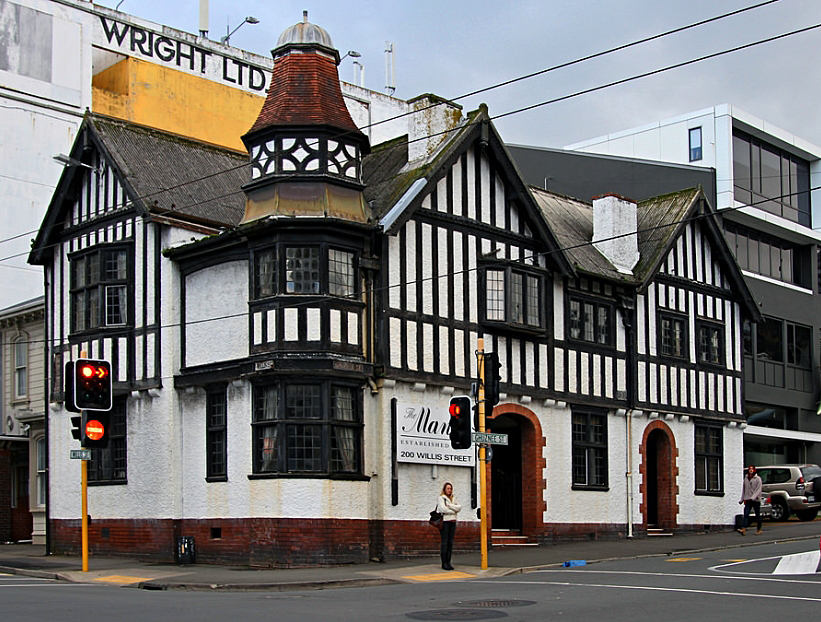
On 4 October 1907 a building application form was submitted to the Council by builder J. Stanford for a ‘dwelling house’ commissioned by Dr McGavin. Intended to serve both as his residence and as his consulting rooms, the building was designed with two entrances, both fronting onto Ghuznee Street and framed by curved brick archways. The smaller, western section of the house was the consulting rooms and servants’ quarters, whilst the larger, eastern end with its more generous-sized rooms was his residence. McGavin started advertising his new premises in April 1909. The building’s location on Willis Street, once a hub of medical practices, enhances its historical significance as a rare surviving example of this early-twentieth-century use pattern. McGavin remained there until 1944 when the building began being used by the United Industries Club, an organisation working to promote the war work of women and girls in industry. In 1947 the New Zealand Red Cross purchased the building for use as its headquarters.
In the 1970s the building was threatened with demolition due to the proposed realignment of the motorway exit at Ghuznee Street. Eventually the Ministry of Works announced in January 1978 that the building would not be demolished as the off-ramp intersection had been realigned in such a way as to avoid it. The Red Cross continued using the building for several more years until, the space being insufficient for their activities, they sold it. It was purchased in 1981 by architectural firm Mitchell and Mitchell, whose originating partners were involved with the original drawings for the building in 1908. Since then, Red Cross Building (Former) has had several owners and is currently tenanted as office space.


List Entry Information
Status
Listed
List Entry Status
Historic Place Category 1
Access
Private/No Public Access
List Number
1342
Date Entered
15th February 1990
Date of Effect
15th February 1990
City/District Council
Wellington City
Region
Wellington Region
Extent of List Entry
Extent includes the land described as Pt Sec 142 Town of Wellington and defined on A 2408 (RT WN21D/930), Wellington Land District, and the building known as Red Cross Building (Former) thereon.
Legal description
Pt Sec 142 Town of Wellington and defined on A 2408 (RT WN21D/930), Wellington Land District
Status
Listed
List Entry Status
Historic Place Category 1
Access
Private/No Public Access
List Number
1342
Date Entered
15th February 1990
Date of Effect
15th February 1990
City/District Council
Wellington City
Region
Wellington Region
Extent of List Entry
Extent includes the land described as Pt Sec 142 Town of Wellington and defined on A 2408 (RT WN21D/930), Wellington Land District, and the building known as Red Cross Building (Former) thereon.
Legal description
Pt Sec 142 Town of Wellington and defined on A 2408 (RT WN21D/930), Wellington Land District
Why is this place significant?
Historic Significance
Historical Significance or Value The Former Red Cross Building has been a familiar landmark in Wellington for over eighty years. Its distinctive and unusual design has been regarded with considerable affection by Wellingtonians. The house was built for Dr McGavin, one of Wellington's pre-eminent medical practitioners and surgeons in the early part of this century. It is best known for its association with the Red Cross Society.
Physical Significance
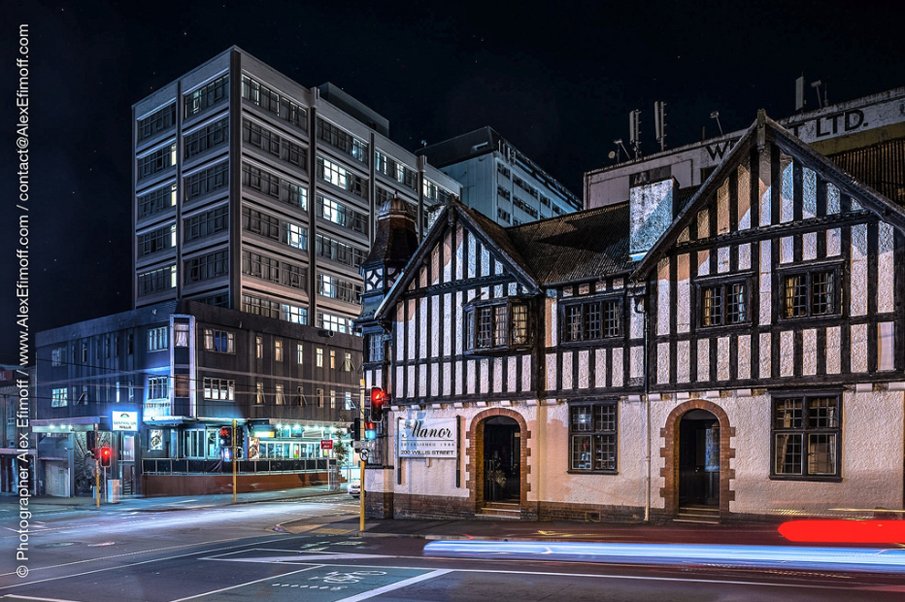
ARCHITECTURAL QUALITY: Half timbered construction is the name given to timber framed buildings with the spaces between the timber members filled with some solid material, usually brick or cob. Many English houses and manor houses of the fifteenth and sixteenth centuries were built in this manner. Interest was created from the way in which the timber frame is highlighted by white-washing the panels between. Some Victorian and Edwardian architects made use of the Tudor style in domestic architecture. This attractive house is the best of the few examples of this style in Wellington. Although the construction method uses contemporary techniques it is an honest attempt at reproducing a Tudor building. TOWNSCAPE/LANDMARK VALUE: On its prominent corner site, this building with its Tudor style arouses strong visual interest giving it considerable townscape significance.
Why is this place significant?
Historic Significance
Historical Significance or Value The Former Red Cross Building has been a familiar landmark in Wellington for over eighty years. Its distinctive and unusual design has been regarded with considerable affection by Wellingtonians. The house was built for Dr McGavin, one of Wellington's pre-eminent medical practitioners and surgeons in the early part of this century. It is best known for its association with the Red Cross Society.
Physical Significance
ARCHITECTURAL QUALITY: Half timbered construction is the name given to timber framed buildings with the spaces between the timber members filled with some solid material, usually brick or cob. Many English houses and manor houses of the fifteenth and sixteenth centuries were built in this manner. Interest was created from the way in which the timber frame is highlighted by white-washing the panels between. Some Victorian and Edwardian architects made use of the Tudor style in domestic architecture. This attractive house is the best of the few examples of this style in Wellington. Although the construction method uses contemporary techniques it is an honest attempt at reproducing a Tudor building. TOWNSCAPE/LANDMARK VALUE: On its prominent corner site, this building with its Tudor style arouses strong visual interest giving it considerable townscape significance.
Construction Professional
Name
King & Dawson
Type
Architect
Biography
This longstanding Wellington architectural firm was established in 1906 by J. M. Dawson. The firm operated under Dawson’s name until 1929 when it became known as Dawson and King. After another name variation, King Cook and Dawson, the firm became King and Dawson in 1957. In 2012 King and Dawson Limited Architects and Engineers were still in business in Wellington. Source: List Entry report for Freyberg Pool, 25 Nov 2014
Name
Atkins & Bacon
Type
Architect
Biography
Alfred Atkins (1850-1919) was born in Birmingham, England. He had trained primarily as a civil engineer in England and on his arrival in New Zealand in 1875 he worked on railway location in the Wanganui district. He was elected an Associate Member of the Institute of Civil Engineers in 1886 and two years later became a Fellow of the Royal Institute of British Architects. He set up practice in Wanganui in both professions and during the 1880s Atkins was in partnership with Frederick de Jersey Clere. When Atkins moved to Wellington in 1908, Roger Bacon joined him in practice and the firm of Atkins and Bacon was established. Shortly after this C H Mitchell (1891-1949) was taken on as a draughtsman. The firm continued to operate a branch in Wanganui and designed buildings at Wanganui Collegiate School including the Big School, boarding houses, Dining Hall and staff residences between 1909-21. The firm undertook several hospital designs including Cook Hospital, Gisborne (1911), and Wairoa Hospital (1912) and was also responsible for much domestic work in Wellington. Owing to failing health Roger Bacon had left the firm and moved to Blenheim about 1918. In 1919 Alfred Atkins died. C H Mitchell became a partner in the firm in 1918. Mitchell re-established the firm as a leading one in Wellington. The firm became Gooch Mitchell Macdiarmid.
Name
Turnbull, William (1868-1941)
Type
Architect
Biography
William Turnbull (1868-1941) entered the architectural office of his father Thomas (1825-1907) in 1882, and received a professional education from him. In 1890, William visited Melbourne and Sydney and was engaged in the office of J A Gordon, a Melbourne architect who at that time was engaged in the design of several major commercial buildings including the Melbourne (now Victoria) Markets. In 1891 William returned to Wellington and was admitted into partnership in the firm of Thomas Turnbull and Son. This was one of the foremost architectural practices in the city at the turn of the century and it continued after Thomas Turnbull's death in 1907. William became a Fellow of the Royal Institute of British Architects in 1906, designing many important early twentieth century buildings in Wellington such as 12 Boulcott Street (1902), Turnbull House (1918), and the Wellington Free Ambulance Building (1932). The range and variety of his adaptation of architectural styles show him to be fully versed in virtually every contemporary architectural style and to have special skills and flair for masonry design.
Name
J Stanford
Type
Builder
Biography
Name
F.L. Jeffries & Co. Ltd
Type
Builder
Biography
Construction Details
Start Year
1978
Finish Year
1979
Type
Modification
Description
Building alterations – recorded by Wellington City Council without further details.
Start Year
1989
Type
Physical access improvements
Description
Installation of yard sumps and gully traps to carpark area. Repaving in recycled bricks.
Start Year
1997
Finish Year
1998
Type
Refurbishment/renovation
Description
Conversion to single dwelling and earthquake strengthening.
Start Year
1961
Type
Modification
Description
Building alterations – recorded by Wellington City Council without further details. Wall between original kitchen and scullery at ground floor level removed. Walls between original drawing room and bedroom and balcony at east end of first floor level removed; balcony closed in.
Start Year
1907
Finish Year
1908
Type
Original Construction
Start Year
2020
Finish Year
2021
Type
Refurbishment/renovation
Description
Roofing replacement work including asbestos removal, installation of clay tiles, replacement of chimneys and barge boards, and seismic works.
Construction Materials
Un-reinforced brick on concrete footings; concrete piles. Half timbered treatment planted on brick walling above ground floor. Partitions, timber framed. Floors, timber. Roof, timber framed, originally clad with tiles, now corrugated fibrous sheeting and corrugated iron.
Notable Features
The Tudor treatment The lead rain water head
Construction Professional
Name
King & Dawson
Type
Architect
Biography
This longstanding Wellington architectural firm was established in 1906 by J. M. Dawson. The firm operated under Dawson’s name until 1929 when it became known as Dawson and King. After another name variation, King Cook and Dawson, the firm became King and Dawson in 1957. In 2012 King and Dawson Limited Architects and Engineers were still in business in Wellington. Source: List Entry report for Freyberg Pool, 25 Nov 2014
Name
Atkins & Bacon
Type
Architect
Biography
Alfred Atkins (1850-1919) was born in Birmingham, England. He had trained primarily as a civil engineer in England and on his arrival in New Zealand in 1875 he worked on railway location in the Wanganui district. He was elected an Associate Member of the Institute of Civil Engineers in 1886 and two years later became a Fellow of the Royal Institute of British Architects. He set up practice in Wanganui in both professions and during the 1880s Atkins was in partnership with Frederick de Jersey Clere. When Atkins moved to Wellington in 1908, Roger Bacon joined him in practice and the firm of Atkins and Bacon was established. Shortly after this C H Mitchell (1891-1949) was taken on as a draughtsman. The firm continued to operate a branch in Wanganui and designed buildings at Wanganui Collegiate School including the Big School, boarding houses, Dining Hall and staff residences between 1909-21. The firm undertook several hospital designs including Cook Hospital, Gisborne (1911), and Wairoa Hospital (1912) and was also responsible for much domestic work in Wellington. Owing to failing health Roger Bacon had left the firm and moved to Blenheim about 1918. In 1919 Alfred Atkins died. C H Mitchell became a partner in the firm in 1918. Mitchell re-established the firm as a leading one in Wellington. The firm became Gooch Mitchell Macdiarmid.
Name
Turnbull, William (1868-1941)
Type
Architect
Biography
William Turnbull (1868-1941) entered the architectural office of his father Thomas (1825-1907) in 1882, and received a professional education from him. In 1890, William visited Melbourne and Sydney and was engaged in the office of J A Gordon, a Melbourne architect who at that time was engaged in the design of several major commercial buildings including the Melbourne (now Victoria) Markets. In 1891 William returned to Wellington and was admitted into partnership in the firm of Thomas Turnbull and Son. This was one of the foremost architectural practices in the city at the turn of the century and it continued after Thomas Turnbull's death in 1907. William became a Fellow of the Royal Institute of British Architects in 1906, designing many important early twentieth century buildings in Wellington such as 12 Boulcott Street (1902), Turnbull House (1918), and the Wellington Free Ambulance Building (1932). The range and variety of his adaptation of architectural styles show him to be fully versed in virtually every contemporary architectural style and to have special skills and flair for masonry design.
Name
J Stanford
Type
Builder
Biography
Name
F.L. Jeffries & Co. Ltd
Type
Builder
Biography
Construction Details
Start Year
1978
Finish Year
1979
Type
Modification
Description
Building alterations – recorded by Wellington City Council without further details.
Start Year
1989
Type
Physical access improvements
Description
Installation of yard sumps and gully traps to carpark area. Repaving in recycled bricks.
Start Year
1997
Finish Year
1998
Type
Refurbishment/renovation
Description
Conversion to single dwelling and earthquake strengthening.
Start Year
1961
Type
Modification
Description
Building alterations – recorded by Wellington City Council without further details. Wall between original kitchen and scullery at ground floor level removed. Walls between original drawing room and bedroom and balcony at east end of first floor level removed; balcony closed in.
Start Year
1907
Finish Year
1908
Type
Original Construction
Start Year
2020
Finish Year
2021
Type
Refurbishment/renovation
Description
Roofing replacement work including asbestos removal, installation of clay tiles, replacement of chimneys and barge boards, and seismic works.
Construction Materials
Un-reinforced brick on concrete footings; concrete piles. Half timbered treatment planted on brick walling above ground floor. Partitions, timber framed. Floors, timber. Roof, timber framed, originally clad with tiles, now corrugated fibrous sheeting and corrugated iron.
Notable Features
The Tudor treatment The lead rain water head
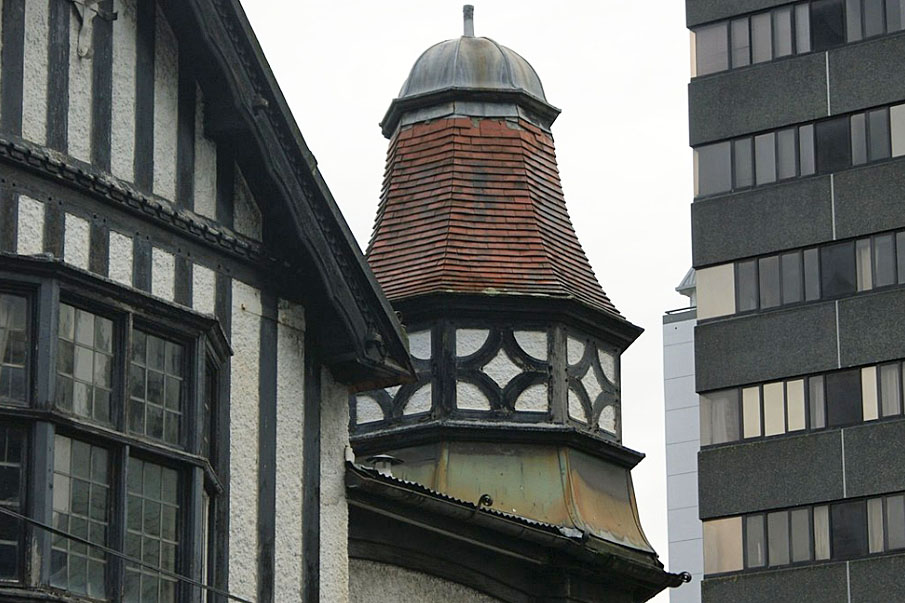
ARCHITECT/ENGINEER OR DESIGNER: William TURNBULL (1868-1941) Sketch plans ATKINS & BACON Working Drawings ARCHITECTURAL DESCRIPTION: This two storey building is imitation Tudor in style. The first floor has a half timbered treatment. The roof of the building is double pitched with a turret in the north east corner and two gables on the Ghuznee Street elevation. The main entry to the building is on Ghuznee Street, where there are shallow arches emphasizing the two doorways; the right one originally providing access to Dr McGavin's surgery and the left one to his residential quarters. The west end of the building is lower than the main structure and contained servants quarters and service areas. The south and west elevations have small windows only, while the two street elevations have a generous number of windows. At first floor level there are bay windows. The lead rain water head has the date 1908 beaten into it. MODIFICATIONS: 1961 - Wall between original kitchen and scullery at ground floor level removed. Walls between original drawing room and bedroom and balcony at east end of first floor level removed; balcony closed in.
Historical and Associated Iwi / Hapū / Whānau
Completion Date
25th August 2025
Report Written By
Anna Renton-Green
Information Sources
Dominion
Dominion, 16 Jul 1915, p. 9.
Evening Post
Evening Post, 27 Jun 1919, p.7.
New Zealand Historic Places Trust (NZHPT)
New Zealand Historic Places Trust
Cochran, 1984
Chris Cochran, Report: Red Cross Building for Wellington Branch Committee, HNZPT, 1984. Held on HNZPT Central Regional Office file 12009-066.
Potter, 1988
J. C. Potter, Assistant City Architect’s Report on 200 Willis Street, 29 September 1988. Held on HNZPT Central Regional Office file 12009-066.
Wellington City Heritage Inventory
Wellington City Heritage Inventory, https://wellingtoncityheritage.org.nz/buildings/301-450/351-mcgavin-house-and-surgery
Other Information
A fully referenced copy of the Upgrade Report is available upon request from the Central Regional Office of Heritage New Zealand Pouhere Taonga. Disclaimer Please note that entry on the New Zealand Heritage List/Rārangi Kōrero identifies only the heritage values of the property concerned, and should not be construed as advice on the state of the property, or as a comment of its soundness or safety, including in regard to earthquake risk, safety in the event of fire, or insanitary conditions. Archaeological sites are protected by the Heritage New Zealand Pouhere Taonga Act 2014, regardless of whether they are entered on the New Zealand Heritage List/Rārangi Kōrero or not. Archaeological sites include ‘places associated with pre-1900 human activity, where there may be evidence relating to the history of New Zealand’. This List entry report should not be read as a statement on whether or not the archaeological provisions of the Act apply to the property(s) concerned. Please contact your local Heritage New Zealand office for archaeological advice.
Historical and Associated Iwi / Hapū / Whānau
Completion Date
25th August 2025
Report Written By
Anna Renton-Green
Information Sources
Dominion
Dominion, 16 Jul 1915, p. 9.
Evening Post
Evening Post, 27 Jun 1919, p.7.
New Zealand Historic Places Trust (NZHPT)
New Zealand Historic Places Trust
Cochran, 1984
Chris Cochran, Report: Red Cross Building for Wellington Branch Committee, HNZPT, 1984. Held on HNZPT Central Regional Office file 12009-066.
Potter, 1988
J. C. Potter, Assistant City Architect’s Report on 200 Willis Street, 29 September 1988. Held on HNZPT Central Regional Office file 12009-066.
Wellington City Heritage Inventory
Wellington City Heritage Inventory, https://wellingtoncityheritage.org.nz/buildings/301-450/351-mcgavin-house-and-surgery
Other Information
A fully referenced copy of the Upgrade Report is available upon request from the Central Regional Office of Heritage New Zealand Pouhere Taonga. Disclaimer Please note that entry on the New Zealand Heritage List/Rārangi Kōrero identifies only the heritage values of the property concerned, and should not be construed as advice on the state of the property, or as a comment of its soundness or safety, including in regard to earthquake risk, safety in the event of fire, or insanitary conditions. Archaeological sites are protected by the Heritage New Zealand Pouhere Taonga Act 2014, regardless of whether they are entered on the New Zealand Heritage List/Rārangi Kōrero or not. Archaeological sites include ‘places associated with pre-1900 human activity, where there may be evidence relating to the history of New Zealand’. This List entry report should not be read as a statement on whether or not the archaeological provisions of the Act apply to the property(s) concerned. Please contact your local Heritage New Zealand office for archaeological advice.
Current Usages
Uses: Accommodation
Specific Usage: House
Uses: Trade
Specific Usage: Office building/Offices
Former Usages
General Usage: Health
Specific Usage: Doctor’s Surgery
Current Usages
Uses: Accommodation
Specific Usage: House
Uses: Trade
Specific Usage: Office building/Offices
Former Usages
General Usage: Health
Specific Usage: Doctor’s Surgery
Location
Stay up to date with Heritage this month

