DonateMembershipVisit Heritage
  • Tūrangawaewae
    Places
  • Tira Māori
    Māori Heritage
  • Poutairangahia
    Archaeology
  • Rauemi
    Resources
  • Mō Tātou
    About Us
  • New Zealand Heritage List
  • Nominate and submit
  • Explore the List
  • National Historic Landmarks
  • Plaques
  • Rainbow List Project
  • Lost heritage
  • Visit Heritage
  • Our properties
  • Turnbull House Project
  • Collections
  • Shop
  • Tohu Whenua
  • Tira Māori
  • Conserving Māori heritage
  • Marae built heritage
  • Māori heritage on the List
  • Hinemihi—Te Hokinga Mai
  • What is archaeology?
  • Is there a site on my property?
  • What are my legal requirements?
  • Affecting an archaeological site
  • Declaring an archaeological site
  • Archaeology FAQs
  • Archaeology Digital Library
  • Archaeology guidelines and templates
  • Resources
  • Funding
  • Publications
  • Sustainable management guides
  • Disaster recovery
  • Podcasts & digital resources
  • Education Hub
  • Conservation plans
  • About
  • Board
  • Māori Heritage Council
  • Senior Staff
  • Offices
  • Contact us
  • Careers
  • Covenants
  • Fast-track
  • Corporate documents
  • Currently consulting on
  • Our submissions
  • News
  • Covid-19 response
Quick links
Rārangi Kōrero | The List
Explore the List
National Historic Landmarks
Ngā Manawhenua o Aotearoa me ōna Kōrero Tūturu
Quick links
Tapuwae
A Vision for Places of Māori Heritage
Funding for Māori Heritage
Resources
Quick links
Archaeological Authority Portal
Applying for an archaeological authority
Archaeology FAQs
Browse the most frequently asked questions about archaeological authorities and the archaeological process.
Quick links
Quick links
News
News Keep up to date with Heritage New Zealand Pouhere Taonga
Membership
Membership Find out more and sign up today
DonateMembershipVisit Heritage
  • Tūrangawaewae
    Places
  • Tira Māori
    Māori Heritage
  • Poutairangahia
    Archaeology
  • Rauemi
    Resources
  • Mō Tātou
    About Us
  • New Zealand Heritage List
  • Nominate and submit
  • Explore the List
  • National Historic Landmarks
  • Plaques
  • Rainbow List Project
  • Lost heritage
  • Visit Heritage
  • Our properties
  • Turnbull House Project
  • Collections
  • Shop
  • Tohu Whenua
  • Tira Māori
  • Conserving Māori heritage
  • Marae built heritage
  • Māori heritage on the List
  • Hinemihi—Te Hokinga Mai
  • What is archaeology?
  • Is there a site on my property?
  • What are my legal requirements?
  • Affecting an archaeological site
  • Declaring an archaeological site
  • Archaeology FAQs
  • Archaeology Digital Library
  • Archaeology guidelines and templates
  • Resources
  • Funding
  • Publications
  • Sustainable management guides
  • Disaster recovery
  • Podcasts & digital resources
  • Education Hub
  • Conservation plans
  • About
  • Board
  • Māori Heritage Council
  • Senior Staff
  • Offices
  • Contact us
  • Careers
  • Covenants
  • Fast-track
  • Corporate documents
  • Currently consulting on
  • Our submissions
  • News
  • Covid-19 response
Quick links
Rārangi Kōrero | The List
Explore the List
National Historic Landmarks
Ngā Manawhenua o Aotearoa me ōna Kōrero Tūturu
Quick links
Tapuwae
A Vision for Places of Māori Heritage
Funding for Māori Heritage
Resources
Quick links
Archaeological Authority Portal
Applying for an archaeological authority
Archaeology FAQs
Browse the most frequently asked questions about archaeological authorities and the archaeological process.
Quick links
Quick links
News
News Keep up to date with Heritage New Zealand Pouhere Taonga
Membership
Membership Find out more and sign up today
  • Places
  • Nominate and submit
  • National Historic Landmarks
  • Places
  • Nominate and submit
  • National Historic Landmarks
  • Tira Māori
  • Conserving Māori heritage
  • Marae built heritage
  • Tira Māori
  • Conserving Māori heritage
  • Marae built heritage
  • Archaeological authorities
  • Archaeology Digital Library
  • Archaeological authorities
  • Archaeology Digital Library
  • All resources
  • Publications
  • Funding
  • All resources
  • Publications
  • Funding
  • FAQs
  • FAQs
Follow us on:
Places
  • Places
  • Nominate and submit
  • National Historic Landmarks
Tira Māori
  • Tira Māori
  • Conserving Māori heritage
  • Marae built heritage
Archaeology
  • Archaeological authorities
  • Archaeology Digital Library
Resources
  • All resources
  • Publications
  • Funding
FAQs
  • FAQs
Follow us on
HomePrivacyTerms and conditionsAbout this site
© Heritage New Zealand Pouhere Taonga 2026.
 
Nelson Institute Building (Former)

309 Hardy Street and Harley Street, NELSON

Private

Historic Place Category 2

List No. 1603

Quick links:
List GalleryLocationDetails
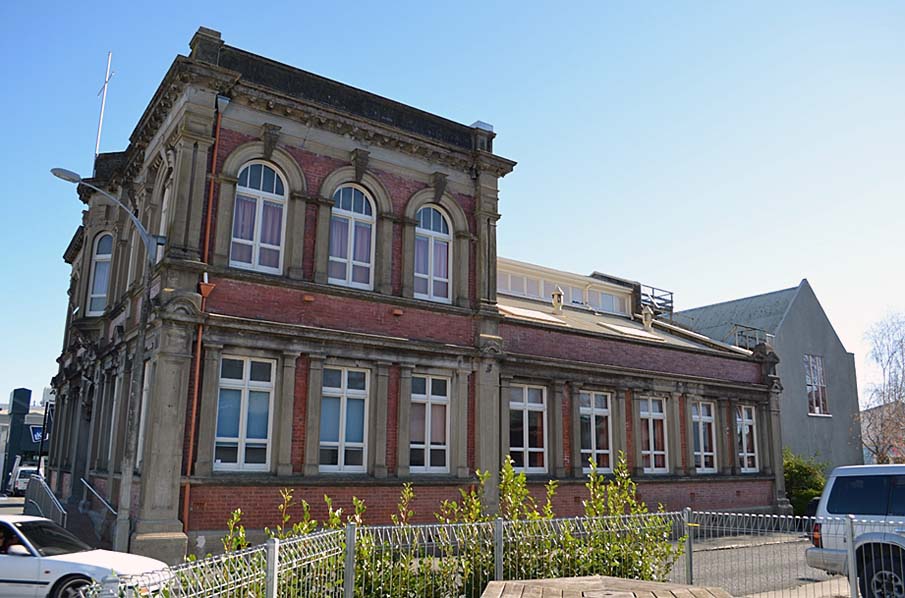
The former Nelson Institute Building, built in 1884 and 1911, has considerable historic and social significance as the foundation of two of Nelson’s most important public institutions: the public library and the Nelson Provincial Museum. It links these facilities with the social aspirations for education, literacy and scientific and intellectual development demonstrated by the original Nelson colonists, and echoed around New Zealand in the nineteenth century. The building has architectural and aesthetic significance for the impact of its ornate Edwardian Free style street frontage designed by A.R. Griffin, complemented by the Gothic-revival character of A.F.T. Somerville’s earlier timber addition.

The Nelson Literary and Scientific Institution was established in 1841 by New Zealand Company colonists before they had even disembarked, to promote intellectual development and literacy. In 1858 it was re-organised under a new name, the Nelson Institute. Members initially met in premises on Trafalgar Street, but in the late 1850s passed a motion to fundraise for a new purpose-built building on land donated by the Provincial Government. Architect Maxwell Bury designed a two-storey totara building fronting onto Hardy Street, and the foundation stone was laid by visiting German geologist Dr Ferdinand von Hochstetter in 1859. Two years later it was opened, and members and the public were able to appreciate and study the museum collections, use the library, and attend lectures and classes. An extension, designed by A.F.T. Somerville in the Gothic-revival/Elizabethan styles and built in timber by Andrew Brown, was added to the rear in 1884, and renovated in 1903. On 25 February 1906, however, the Institute’s premises were largely destroyed by fire, with only the rear addition surviving.

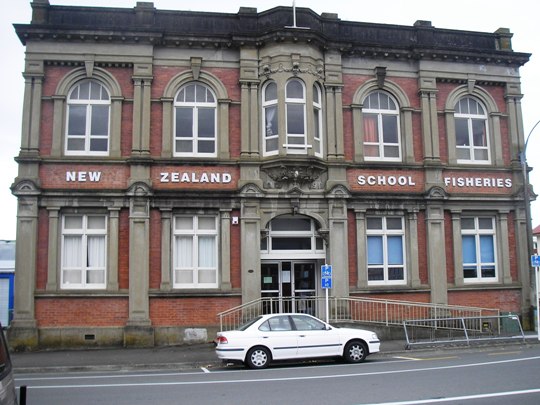
Committee members vowed to rebuild bigger and better. It took six years of fundraising, updated legislation, a loan from the Public Trustee, local government subsidies, and a donation from Thomas Cawthron to achieve this, after the conditions of a grant from library benefactor Andrew Carnegie were deemed too difficult to meet. In 1911 architect Arthur Griffin designed a two-storey reinforced concrete building with impressive brick and masonry street-frontage. A central entrance from Hardy Street, flanked with rectangular windows, was overhung with a Queen-Anne oriel window – a design feature carried over from the 1861 building. Arched second-storey windows, dentilled pediments, pilasters and other rendered Classical decoration contributed Italianate style. A cupola and flagpole topped the building. Robert Galbraith won the construction tender; the plans also included moving the 1884 addition back 30 feet and connecting it to the new building. It was opened on 27 November 1912.

Although the Nelson Institute remains active, Nelson City Council purchased the building in 1965, running the library services from there until 1990. The museum function was separated out in 1973, moving to Isel Park. In 1990 the Nelson Marlborough Institute of Technology bought the building and it became the New Zealand School of Fisheries until 2011, when seismic concerns rendered the building vacant. These concerns had also seen the cupola, pediments and finials removed in the 1930s.
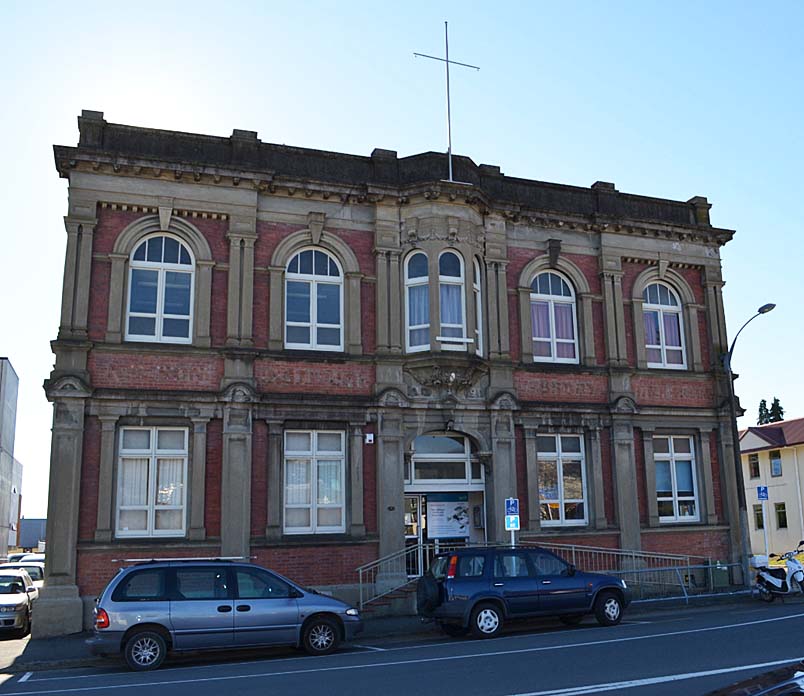
Nelson Institute Building (Former), Nelson | Calum Maclean | 29/06/2012 | Heritage New Zealand
Nelson Institute Building (Former), Nelson. Viewed from Harley Street, , with the 1884 part of the building (painted grey) visible at the right of the image | Calum Maclean | 29/06/2012 | Heritage New Zealand
Nelson Institute Building (Former), Nelson | Anika Klee | 03/01/2010 | Heritage New Zealand
Nelson Institute Building (Former), Nelson | Calum Maclean | 29/06/2012 | Heritage New Zealand
Nelson Institute Building (Former), Nelson. Viewed from Harley Street, , with the 1884 part of the building (painted grey) visible at the right of the image | Calum Maclean | 29/06/2012 | Heritage New Zealand
Nelson Institute Building (Former), Nelson | Anika Klee | 03/01/2010 | Heritage New Zealand

List Entry Information

Overview

Status
Listed

List Entry Status
Historic Place Category 2

Access
Private/No Public Access

List Number
1603

Date Entered
25th November 1982

Date of Effect
25th November 1982

City/District Council
Nelson City

Region
Nelson Region

Extent of List Entry

Extent includes the land described as Pt Sec 178 City of Nelson (RT NL5A/699), Nelson Land District and the building known as Nelson Institute Building (Former) thereon.

Legal description

Pt Sec 178 City of Nelson (RT NL5A/699), Nelson Land District

Detailed List Entry

Construction Professional

Name

Somerville, Antequil F. T.

Type

Architect

Biography

Antequil F. T. Somerville was an architect and, between 1887 and 1890, was based in Trafalgar Street North, Nelson. As well as winning the design for the Queens Gardens, Somerville entered and won a City Council competition to design a drainage scheme for Nelson. (Queens Gardens Registration Report, 30 March 2007) Somerville was an architect who was active in Nelson from the 1870s to 1890 when he left New Zealand for Australia. Somerville designed a range of commercial, ecclesiastical, public, scholastic, and residential buildings in Nelson during this period. In his role as architect for Nelson Girl's College he designed the buildings there and he was also responsible for other school buildings because he was the Town School Committee's architect. Some of his most high profile buildings and projects in Nelson remain, including the Queens Gardens, New Zealand Insurance Building, and the Garin Memorial Chapel. Somerville also entered and won a City Council competition to design a drainage scheme for Nelson. (Colonist, 10 June 1890, p.3; Queens Garden, Nelson, Category II historic place (Record number 7689); New Zealand Insurance Building, Nelson, Category II historic place (Record number 3022)

Name

Griffin, Arthur Reynolds

Type

Architect

Biography

Griffin practised architecture in Nelson from the early 1900s to about 1960. Arthur Reynolds Griffin was the grandson of John Griffin the founder of Griffin & Sons Ltd, the Nelson-based biscuit company. Born and raised in Nelson, A.R. Griffin trained in architecture via the International Correspondence School based in Pennsylvania in the United States. Simultaneously, he worked as a draughtsman in the offices of JD and L Robertson before setting up his own offices in the Norwich Union Chambers. His work in Nelson was diverse and prolific including the Nelson Institute (1911, List No. 1603), the former Nelson Hospital (1925) and Nurses Home (1916), and the Church Steps (1913; List No. 253), funded by Griffin’s patron, Thomas Cawthron. He designed Nelson’s Plunket and Rest Rooms (1936; List No. 5169), and a host of commercial buildings including the Ritz Kerr Building (c.1930; List No. 3027), and the former Dalgety and Co Ltd Building (c.1930; List No. 1621). He was also successful in winning a number of design competitions, notably Hokitika’s Carnegie Free Public Library (List No. 1702) completed in 1908. It was noted in the local press that Griffin made trips to Australia and brought ideas back with him both for his commercial work, and for the hospital, illustrating the architectural connection between the two countries. FROM: Summary Report Anchor Shipping & Foundry Co Building, NELSON (List No. 1554) by M. Katz March 2020

Name

Brown, Andrew

Type

Builder

Biography

No biography is currently available for this construction professional

Name

Galbraith, Robert

Type

Builder

Biography

No biography is currently available for this construction professional

Construction Details

Start Year

1859

Finish Year

1861

Type

Original Construction

Description

Foundation stone laid in 1859, building opened in 1861

Finish Year

1884

Type

Addition

Description

Addition added to the rear of the original building

Start Year

1903

Type

Maintenance/repairs

Description

Repairs to both parts of the building

Finish Year

1906

Type

Partial Demolition

Description

Original (front) part of the building destroyed by fire; roof of rear addition damaged

Finish Year

1911

Type

Reconstruction

Description

New foundation stone laid on the front part of the site

Finish Year

1912

Type

Reconstruction

Description

Construction completed

Type

Modification

Description

Cupola, pediments and roof finials removed

Period

Unknown, possibly 1930s

Reference

Information Sources

Nelson Evening Mail

Nelson Evening Mail

Colonist

The Colonist

Prow

The Prow, www.theprow.org.nz

Brereton, 1948

Brereton, C.B., The History of the Nelson Institute, Reed, Wellington, 1948

Report Written By

This place was identified as significant under previous legislation with different information requirements. It remains significant under the current legislation. There is opportunity under our legislation and policies to add to this information. Further information about this place may be available from the Central Regional Office of Heritage New Zealand Pouhere Taonga. Please note that entry on the New Zealand Heritage List/Rarangi Korero identifies only the heritage values of the property concerned, and should not be construed as advice on the state of the property, or as a comment of its soundness or safety, including in regard to earthquake risk, safety in the event of fire, or insanitary conditions. A fully referenced summaryreport is available on request from the Central Region Office of Heritage New Zealand.

Further Information

Current Usages

Uses: Vacant

Specific Usage: Vacant

Former Usages

General Usage:: Civic Facilities

Specific Usage: Club rooms/building

General Usage:: Civic Facilities

Specific Usage: Gymnasium

General Usage:: Civic Facilities

Specific Usage: Library

General Usage:: Civic Facilities

Specific Usage: Museum

General Usage:: Education

Specific Usage: Adult Education/training

General Usage:: Education

Specific Usage: Polytechnic

General Usage:: Education

Specific Usage: Technical Institute

General Usage:: Research

Specific Usage: Scientific Facilities - other

Themes

Web Links

Overview

Status

Listed

List Entry Status

Historic Place Category 2

Access

Private/No Public Access

List Number

1603

Date Entered

25th November 1982

Date of Effect

25th November 1982

City/District Council

Nelson City

Region

Nelson Region

Extent of List Entry

Extent includes the land described as Pt Sec 178 City of Nelson (RT NL5A/699), Nelson Land District and the building known as Nelson Institute Building (Former) thereon.

Legal description

Pt Sec 178 City of Nelson (RT NL5A/699), Nelson Land District

Status

Listed

List Entry Status

Historic Place Category 2

Access

Private/No Public Access

List Number

1603

Date Entered

25th November 1982

Date of Effect

25th November 1982

City/District Council

Nelson City

Region

Nelson Region

Extent of List Entry

Extent includes the land described as Pt Sec 178 City of Nelson (RT NL5A/699), Nelson Land District and the building known as Nelson Institute Building (Former) thereon.

Legal description

Pt Sec 178 City of Nelson (RT NL5A/699), Nelson Land District

Construction Information

Construction Professional

Name

Somerville, Antequil F. T.

Type

Architect

Biography

Antequil F. T. Somerville was an architect and, between 1887 and 1890, was based in Trafalgar Street North, Nelson. As well as winning the design for the Queens Gardens, Somerville entered and won a City Council competition to design a drainage scheme for Nelson. (Queens Gardens Registration Report, 30 March 2007) Somerville was an architect who was active in Nelson from the 1870s to 1890 when he left New Zealand for Australia. Somerville designed a range of commercial, ecclesiastical, public, scholastic, and residential buildings in Nelson during this period. In his role as architect for Nelson Girl's College he designed the buildings there and he was also responsible for other school buildings because he was the Town School Committee's architect. Some of his most high profile buildings and projects in Nelson remain, including the Queens Gardens, New Zealand Insurance Building, and the Garin Memorial Chapel. Somerville also entered and won a City Council competition to design a drainage scheme for Nelson. (Colonist, 10 June 1890, p.3; Queens Garden, Nelson, Category II historic place (Record number 7689); New Zealand Insurance Building, Nelson, Category II historic place (Record number 3022)

Name

Griffin, Arthur Reynolds

Type

Architect

Biography

Griffin practised architecture in Nelson from the early 1900s to about 1960. Arthur Reynolds Griffin was the grandson of John Griffin the founder of Griffin & Sons Ltd, the Nelson-based biscuit company. Born and raised in Nelson, A.R. Griffin trained in architecture via the International Correspondence School based in Pennsylvania in the United States. Simultaneously, he worked as a draughtsman in the offices of JD and L Robertson before setting up his own offices in the Norwich Union Chambers. His work in Nelson was diverse and prolific including the Nelson Institute (1911, List No. 1603), the former Nelson Hospital (1925) and Nurses Home (1916), and the Church Steps (1913; List No. 253), funded by Griffin’s patron, Thomas Cawthron. He designed Nelson’s Plunket and Rest Rooms (1936; List No. 5169), and a host of commercial buildings including the Ritz Kerr Building (c.1930; List No. 3027), and the former Dalgety and Co Ltd Building (c.1930; List No. 1621). He was also successful in winning a number of design competitions, notably Hokitika’s Carnegie Free Public Library (List No. 1702) completed in 1908. It was noted in the local press that Griffin made trips to Australia and brought ideas back with him both for his commercial work, and for the hospital, illustrating the architectural connection between the two countries. FROM: Summary Report Anchor Shipping & Foundry Co Building, NELSON (List No. 1554) by M. Katz March 2020

Name

Brown, Andrew

Type

Builder

Biography

No biography is currently available for this construction professional

Name

Galbraith, Robert

Type

Builder

Biography

No biography is currently available for this construction professional

Construction Details

Start Year

1859

Finish Year

1861

Type

Original Construction

Description

Foundation stone laid in 1859, building opened in 1861

Finish Year

1884

Type

Addition

Description

Addition added to the rear of the original building

Start Year

1903

Type

Maintenance/repairs

Description

Repairs to both parts of the building

Finish Year

1906

Type

Partial Demolition

Description

Original (front) part of the building destroyed by fire; roof of rear addition damaged

Finish Year

1911

Type

Reconstruction

Description

New foundation stone laid on the front part of the site

Finish Year

1912

Type

Reconstruction

Description

Construction completed

Type

Modification

Description

Cupola, pediments and roof finials removed

Period

Unknown, possibly 1930s

Construction Professional

Name

Somerville, Antequil F. T.

Type

Architect

Biography

Antequil F. T. Somerville was an architect and, between 1887 and 1890, was based in Trafalgar Street North, Nelson. As well as winning the design for the Queens Gardens, Somerville entered and won a City Council competition to design a drainage scheme for Nelson. (Queens Gardens Registration Report, 30 March 2007) Somerville was an architect who was active in Nelson from the 1870s to 1890 when he left New Zealand for Australia. Somerville designed a range of commercial, ecclesiastical, public, scholastic, and residential buildings in Nelson during this period. In his role as architect for Nelson Girl's College he designed the buildings there and he was also responsible for other school buildings because he was the Town School Committee's architect. Some of his most high profile buildings and projects in Nelson remain, including the Queens Gardens, New Zealand Insurance Building, and the Garin Memorial Chapel. Somerville also entered and won a City Council competition to design a drainage scheme for Nelson. (Colonist, 10 June 1890, p.3; Queens Garden, Nelson, Category II historic place (Record number 7689); New Zealand Insurance Building, Nelson, Category II historic place (Record number 3022)

Name

Griffin, Arthur Reynolds

Type

Architect

Biography

Griffin practised architecture in Nelson from the early 1900s to about 1960. Arthur Reynolds Griffin was the grandson of John Griffin the founder of Griffin & Sons Ltd, the Nelson-based biscuit company. Born and raised in Nelson, A.R. Griffin trained in architecture via the International Correspondence School based in Pennsylvania in the United States. Simultaneously, he worked as a draughtsman in the offices of JD and L Robertson before setting up his own offices in the Norwich Union Chambers. His work in Nelson was diverse and prolific including the Nelson Institute (1911, List No. 1603), the former Nelson Hospital (1925) and Nurses Home (1916), and the Church Steps (1913; List No. 253), funded by Griffin’s patron, Thomas Cawthron. He designed Nelson’s Plunket and Rest Rooms (1936; List No. 5169), and a host of commercial buildings including the Ritz Kerr Building (c.1930; List No. 3027), and the former Dalgety and Co Ltd Building (c.1930; List No. 1621). He was also successful in winning a number of design competitions, notably Hokitika’s Carnegie Free Public Library (List No. 1702) completed in 1908. It was noted in the local press that Griffin made trips to Australia and brought ideas back with him both for his commercial work, and for the hospital, illustrating the architectural connection between the two countries. FROM: Summary Report Anchor Shipping & Foundry Co Building, NELSON (List No. 1554) by M. Katz March 2020

Name

Brown, Andrew

Type

Builder

Biography

No biography is currently available for this construction professional

Name

Galbraith, Robert

Type

Builder

Biography

No biography is currently available for this construction professional

Construction Details

Start Year

1859

Finish Year

1861

Type

Original Construction

Description

Foundation stone laid in 1859, building opened in 1861

Finish Year

1884

Type

Addition

Description

Addition added to the rear of the original building

Start Year

1903

Type

Maintenance/repairs

Description

Repairs to both parts of the building

Finish Year

1906

Type

Partial Demolition

Description

Original (front) part of the building destroyed by fire; roof of rear addition damaged

Finish Year

1911

Type

Reconstruction

Description

New foundation stone laid on the front part of the site

Finish Year

1912

Type

Reconstruction

Description

Construction completed

Type

Modification

Description

Cupola, pediments and roof finials removed

Period

Unknown, possibly 1930s

Reference

Historical and Associated Iwi / Hapū / Whānau

Information Sources

Nelson Evening Mail

Nelson Evening Mail

Colonist

The Colonist

Prow

The Prow, www.theprow.org.nz

Brereton, 1948

Brereton, C.B., The History of the Nelson Institute, Reed, Wellington, 1948

Other Information

This place was identified as significant under previous legislation with different information requirements. It remains significant under the current legislation. There is opportunity under our legislation and policies to add to this information. Further information about this place may be available from the Central Regional Office of Heritage New Zealand Pouhere Taonga. Please note that entry on the New Zealand Heritage List/Rarangi Korero identifies only the heritage values of the property concerned, and should not be construed as advice on the state of the property, or as a comment of its soundness or safety, including in regard to earthquake risk, safety in the event of fire, or insanitary conditions. A fully referenced summaryreport is available on request from the Central Region Office of Heritage New Zealand.

Historical and Associated Iwi / Hapū / Whānau

Information Sources

Nelson Evening Mail

Nelson Evening Mail

Colonist

The Colonist

Prow

The Prow, www.theprow.org.nz

Brereton, 1948

Brereton, C.B., The History of the Nelson Institute, Reed, Wellington, 1948

Other Information

This place was identified as significant under previous legislation with different information requirements. It remains significant under the current legislation. There is opportunity under our legislation and policies to add to this information. Further information about this place may be available from the Central Regional Office of Heritage New Zealand Pouhere Taonga. Please note that entry on the New Zealand Heritage List/Rarangi Korero identifies only the heritage values of the property concerned, and should not be construed as advice on the state of the property, or as a comment of its soundness or safety, including in regard to earthquake risk, safety in the event of fire, or insanitary conditions. A fully referenced summaryreport is available on request from the Central Region Office of Heritage New Zealand.

Further Information

Current Usages

Uses: Vacant

Specific Usage: Vacant

Former Usages

General Usage: Civic Facilities

Specific Usage: Club rooms/building

General Usage: Civic Facilities

Specific Usage: Gymnasium

General Usage: Civic Facilities

Specific Usage: Library

General Usage: Civic Facilities

Specific Usage: Museum

General Usage: Education

Specific Usage: Adult Education/training

General Usage: Education

Specific Usage: Polytechnic

General Usage: Education

Specific Usage: Technical Institute

General Usage: Research

Specific Usage: Scientific Facilities - other

Current Usages

Uses: Vacant

Specific Usage: Vacant

Former Usages

General Usage: Civic Facilities

Specific Usage: Club rooms/building

General Usage: Civic Facilities

Specific Usage: Gymnasium

General Usage: Civic Facilities

Specific Usage: Library

General Usage: Civic Facilities

Specific Usage: Museum

General Usage: Education

Specific Usage: Adult Education/training

General Usage: Education

Specific Usage: Polytechnic

General Usage: Education

Specific Usage: Technical Institute

General Usage: Research

Specific Usage: Scientific Facilities - other

Location

Loading
Stay up to date with Heritage this month