The first Takaka Post Office was opened on 1 January 1861. It closed on 1 January 1876 when facilities were moved to Waitapu. The second Takaka Post Office was erected on 1 April 1881, when it was decided that better postal facilities were needed in the area. Eight years later, in 1889, the Government set aside £400 for the third Takaka Post Office and a postmaster's residence. The plans were drawn up by the Public Works Office and amended by John Campbell (1857-1942) in December 1899. The building was completed in July of 1900 and cost just under £500.
The building was one of the first to be amended by Campbell in his newly created position as the Public Works Department's 'Government Architect', a position established that same year in 1899. He held this position until his retirement in 1922. Campbell and the Public Works Department were responsible for the design of many post office buildings between the late nineteenth century and World War I. The Takaka Post Office is a simple and small-scale example of Campbell's post offices, though it does incorporate elements such as a grand central gable, hipped roof and symmetrical street façade, which were used frequently in his series of post-office buildings.
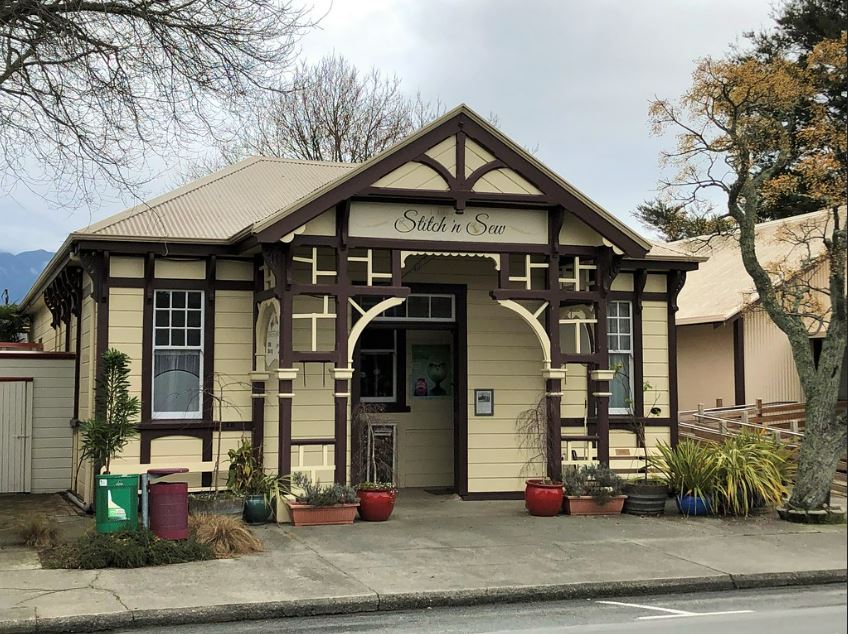
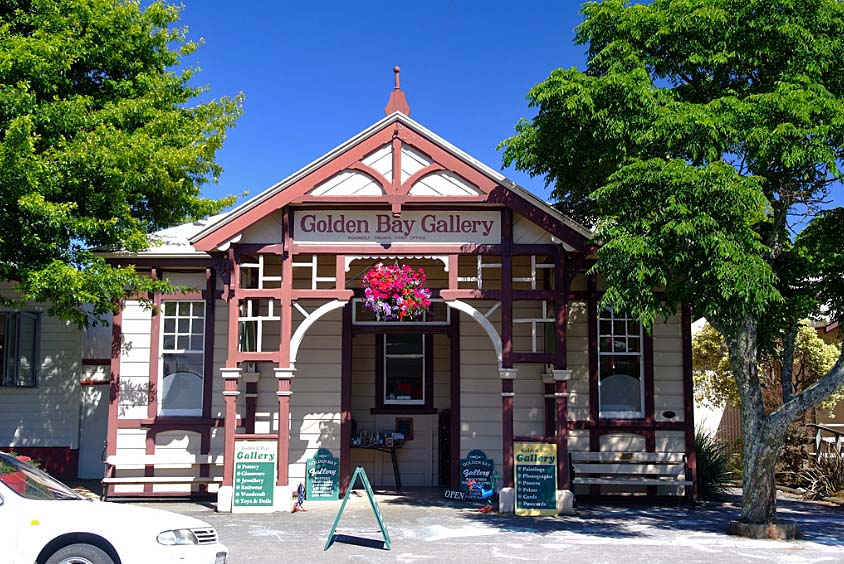
The Takaka Post Office is a single storied building with a hipped roof and large gable on the street (eastern) façade. The gable extends to form a canopy over the entrance and postal lobby. On either side of the gable is a symmetrically placed, double hung sash window with a decorative apron and moulded eaves brackets attached to its architrave. The north and south façades have window treatment identical to that of the street façade. The floor plan has the office section at the front of the building and a family residence at the back. At some point before 1990, an extension was made to the western side of the building. In 1990 the building was restored by the Takaka Museum and Cultural Society. This involved internal alterations, including the realignment of some walls.
During the economic changes of the late 1980s the public postal system was corporatized. In 1987 three private organisations, Telecom, Postbank, and New Zealand Post, were established. At the same time the Takaka Post Office was closed, and the town's postal services were transferred to the postmaster's house next door. In 1989 the Tasman District Council, then the Golden Bay County Council, brought the Takaka Post Office on behalf of the Takaka Museum and Cultural Society, who planned to restore it and use it as a museum. However, in an effort to respect the architectural integrity of the building it was decided not to modify it for a museum. Instead it was converted into an art gallery, which opened as the Golden Bay Gallery in December 1991.
The Takaka Post Office has both architectural and historical significance. John Campbell, the first architect to hold the position of Government Architect, designed the Post Office at the start of a post office building boom. It was one of his earlier designs and lacks the extravagance of some of his later work, though it still has design details worthy of note, such as the moulded eaves and the grand gable entrance to the building. The Takaka Post Office has historical significance as it served the Takaka community from 1900-1987 and is associated with the development of the town and the surrounding area.

List Entry Information
Status
Listed
List Entry Status
Historic Place Category 2
Access
Private/No Public Access
List Number
1624
Date Entered
2nd April 2004
Date of Effect
2nd April 2004
City/District Council
Tasman District
Region
Tasman Region
Extent of List Entry
Registration includes the building, its fixtures and fittings, and land in NZ Gazette 1990 p.2314 Lot 2 DP3053 Nelson Registry but excludes the Museum addition built in 1991 (see Plan A in Appendix 4 of the Registration Report for the extent of building subject to this registration)
Legal description
Lot 2 DP 3053 (NZ Gazette 1990 p.2314)
Status
Listed
List Entry Status
Historic Place Category 2
Access
Private/No Public Access
List Number
1624
Date Entered
2nd April 2004
Date of Effect
2nd April 2004
City/District Council
Tasman District
Region
Tasman Region
Extent of List Entry
Registration includes the building, its fixtures and fittings, and land in NZ Gazette 1990 p.2314 Lot 2 DP3053 Nelson Registry but excludes the Museum addition built in 1991 (see Plan A in Appendix 4 of the Registration Report for the extent of building subject to this registration)
Legal description
Lot 2 DP 3053 (NZ Gazette 1990 p.2314)
Why is this place significant?
Historic Significance
Historical Significance or Value The former Takaka Post Office's architectural significance cannot be considered in isolation as it was built as part of a boom in post office building, with designs largely done by John Campbell (1857-1942), the first 'Government Architect'. The grandeur of the post offices varied with scale and the Takaka Post Office is a simple and small-scale example. It is also a relatively early example of Campbell's work. The moulded eave brackets and extended gable are of particular architectural value. The Post Office served the Takaka community for 87 years from 1900 -1987, and is associated with the development of the town and the surrounding area.
Why is this place Category 1 / Category 2?
Detail Of Assessed Criteria
b, g, k The Takaka Post Office is associated with prominent New Zealand architect John Campbell. Campbell was born on 4 July 1857 in Glasgow, Scotland. He embarked on a career as an architect, serving his apprenticeship under John Gordon between 1872 and 1876. Gordon generally designed in the Greek Revival style fashionable in Scotland, however Campbell's designs in New Zealand reveal little of Gordon's influence. Campbell came to Dunedin in 1882 then transferred to Wellington in 1888 where he became a draughtsman for the Public Building Department in 1889. The Department merged with the Public Works Department in 1890, and Campbell's title became 'Architect' in 1899. He held the newly created title of 'Government Architect' until his retirement in 1922. His standardisation of the architecture of government buildings is most obvious in the design of post offices. He was largely responsible for the majority of post office designs during a post office building boom between 1900 and 1914. Many of his buildings are so grandiose that they command attention, because of this probably more examples of his work are known to New Zealanders, although anonymously, than buildings designed by any other architect. The Post Office has design value firstly because it is part of John Campbell's series of post-offices, and secondly on its own architectural merit with its large gable attracting some prominence. The Takaka Post Office forms part of the wider historical and cultural landscape of Takaka township as it is situated next door to the former postmaster's residence and is on the same street as the Bank of New Zealand (Category I historic place).
Why is this place significant?
Historic Significance
Historical Significance or Value The former Takaka Post Office's architectural significance cannot be considered in isolation as it was built as part of a boom in post office building, with designs largely done by John Campbell (1857-1942), the first 'Government Architect'. The grandeur of the post offices varied with scale and the Takaka Post Office is a simple and small-scale example. It is also a relatively early example of Campbell's work. The moulded eave brackets and extended gable are of particular architectural value. The Post Office served the Takaka community for 87 years from 1900 -1987, and is associated with the development of the town and the surrounding area.
Why is this place Category 1 / Category 2?
Detail Of Assessed Criteria
b, g, k The Takaka Post Office is associated with prominent New Zealand architect John Campbell. Campbell was born on 4 July 1857 in Glasgow, Scotland. He embarked on a career as an architect, serving his apprenticeship under John Gordon between 1872 and 1876. Gordon generally designed in the Greek Revival style fashionable in Scotland, however Campbell's designs in New Zealand reveal little of Gordon's influence. Campbell came to Dunedin in 1882 then transferred to Wellington in 1888 where he became a draughtsman for the Public Building Department in 1889. The Department merged with the Public Works Department in 1890, and Campbell's title became 'Architect' in 1899. He held the newly created title of 'Government Architect' until his retirement in 1922. His standardisation of the architecture of government buildings is most obvious in the design of post offices. He was largely responsible for the majority of post office designs during a post office building boom between 1900 and 1914. Many of his buildings are so grandiose that they command attention, because of this probably more examples of his work are known to New Zealanders, although anonymously, than buildings designed by any other architect. The Post Office has design value firstly because it is part of John Campbell's series of post-offices, and secondly on its own architectural merit with its large gable attracting some prominence. The Takaka Post Office forms part of the wider historical and cultural landscape of Takaka township as it is situated next door to the former postmaster's residence and is on the same street as the Bank of New Zealand (Category I historic place).
Construction Professional
Name
Hales, William (1830-1909)
Type
Engineer
Biography
William Hales (1830-1909) was born in New Brunswick and studied engineering in Liverpool before immigrating to Australia in 1853. After working there as a contractor for three years, Hales settled in New Zealand and subsequently joined the civil service as an engineer in 1861. In the forty-five years of government service which followed, William Hales held a variety of posts and was responsible for the design of lighthouses, bridges, wharves and roads throughout the country. Having served ten years as the Auckland District Engineer, Hales was promoted to the position of Acting Engineer-in-Chief of New Zealand in January 1891. He was confirmed as Engineer-in-Chief in the following year and held this office until his retirement in 1906 at the age of seventy-six. During a long and productive career William Hales played a major role in the development of New Zealand's public works and he was a key figure within the Public Works Department at a time when it had become the biggest construction agency in the country.
Name
Campbell, John
Type
Architect
Biography
John Campbell (1857-1942) served his articles under John Gordon (c1835-1912) in Glasgow. He arrived in Dunedin in 1882 and after a brief period as a draughtsman with Mason and Wales joined the Dunedin branch of the Public Works Department in 1883. His first known work, an unbuilt design for the Dunedin Railway Station, reveals an early interest in Baroque architecture. In November 1888 Campbell was transferred to Wellington where in 1889 he took up the position of draughtsman in charge of the Public Buildings Division of the Public Works Department. He remained in charge of the design of government buildings throughout New Zealand until his retirement in 1922, becoming in 1909 the first person to hold the position of Government Architect. Government architecture designed under his aegis evidences a change in style from Queen Anne to Edwardian Baroque. His best-known Queen Anne design is the Dunedin Police Station (1895-8), modelled on Richard Norman Shaw's New Scotland Yard (1887-90). Among his most exuberant Edwardian Baroque buildings is the Public Trust Office, Wellington (1905-09). Although Campbell designed the Dunedin Law Courts (1899-1902) in the Gothic style with a Scottish Baronial inflection, he established Edwardian Baroque as the government style for police stations, courthouses and post offices throughout New Zealand. In 1911 Campbell won the nation-wide architectural competition for the design of Parliament Buildings, Wellington. Although only partially completed, Parliament House is the crowning achievement of Campbell's career.
Name
Davies, J. M.
Type
Builder
Biography
No biography is currently available for this construction professional
Construction Details
Start Year
1900
Type
Original Construction
Description
Post office erected
Start Year
1987
Type
Other
Description
Postal services relocated
Start Year
1989
Type
Other
Description
Local Authority purchased building for Takaka Museum and Cultural Society (building found to be unsuitable)
Start Year
1900
startYearCirca
Finish Year
1990
Type
Modification
Description
West end of the building extended
Start Year
1990
Type
Modification
Description
Post office restored as a gallery; new building and passageway constructed on northern elevation for use as museum
Start Year
1991
Type
Other
Description
Gallery opens
Construction Materials
Totara piles; timber frame clad with weatherboards (rusticated to original portion, shiplap to the west end); corrugated iron roof cladding.
Construction Professional
Name
Hales, William (1830-1909)
Type
Engineer
Biography
William Hales (1830-1909) was born in New Brunswick and studied engineering in Liverpool before immigrating to Australia in 1853. After working there as a contractor for three years, Hales settled in New Zealand and subsequently joined the civil service as an engineer in 1861. In the forty-five years of government service which followed, William Hales held a variety of posts and was responsible for the design of lighthouses, bridges, wharves and roads throughout the country. Having served ten years as the Auckland District Engineer, Hales was promoted to the position of Acting Engineer-in-Chief of New Zealand in January 1891. He was confirmed as Engineer-in-Chief in the following year and held this office until his retirement in 1906 at the age of seventy-six. During a long and productive career William Hales played a major role in the development of New Zealand's public works and he was a key figure within the Public Works Department at a time when it had become the biggest construction agency in the country.
Name
Campbell, John
Type
Architect
Biography
John Campbell (1857-1942) served his articles under John Gordon (c1835-1912) in Glasgow. He arrived in Dunedin in 1882 and after a brief period as a draughtsman with Mason and Wales joined the Dunedin branch of the Public Works Department in 1883. His first known work, an unbuilt design for the Dunedin Railway Station, reveals an early interest in Baroque architecture. In November 1888 Campbell was transferred to Wellington where in 1889 he took up the position of draughtsman in charge of the Public Buildings Division of the Public Works Department. He remained in charge of the design of government buildings throughout New Zealand until his retirement in 1922, becoming in 1909 the first person to hold the position of Government Architect. Government architecture designed under his aegis evidences a change in style from Queen Anne to Edwardian Baroque. His best-known Queen Anne design is the Dunedin Police Station (1895-8), modelled on Richard Norman Shaw's New Scotland Yard (1887-90). Among his most exuberant Edwardian Baroque buildings is the Public Trust Office, Wellington (1905-09). Although Campbell designed the Dunedin Law Courts (1899-1902) in the Gothic style with a Scottish Baronial inflection, he established Edwardian Baroque as the government style for police stations, courthouses and post offices throughout New Zealand. In 1911 Campbell won the nation-wide architectural competition for the design of Parliament Buildings, Wellington. Although only partially completed, Parliament House is the crowning achievement of Campbell's career.
Name
Davies, J. M.
Type
Builder
Biography
No biography is currently available for this construction professional
Construction Details
Start Year
1900
Type
Original Construction
Description
Post office erected
Start Year
1987
Type
Other
Description
Postal services relocated
Start Year
1989
Type
Other
Description
Local Authority purchased building for Takaka Museum and Cultural Society (building found to be unsuitable)
Start Year
1900
startYearCirca
Finish Year
1990
Type
Modification
Description
West end of the building extended
Start Year
1990
Type
Modification
Description
Post office restored as a gallery; new building and passageway constructed on northern elevation for use as museum
Start Year
1991
Type
Other
Description
Gallery opens
Construction Materials
Totara piles; timber frame clad with weatherboards (rusticated to original portion, shiplap to the west end); corrugated iron roof cladding.
The Takaka Post Office is a single storied building with a hipped roof and large gable to the street (eastern) façade. This façade is symmetrical about the gable; the gable extends to form a canopy over the entrance and postal lobby. It is supported on chamfered posts with arched bracing and moulded brackets. On either side of the gable is a double hung sash window with a decorative apron and moulded eaves brackets attached to its architrave. The upper sashes have nine lights. The south and north façades have window treatment identical to that of the street façade and decorative moulded eaves brackets. Moving west the building becomes progressively plainer. The original floor plan has the office section at the front of the building and a family residence at the back, however the interior was highly modified during restorative work in 1990. The building was restored with the help of the NZHPT, and a new building, with a connecting passageway to the Post Office, was built on the north elevation to house the museum originally planned for the Former Post Office building. It was decided that alterations needed to convert the Post Office building into a museum were to great, and instead it was decided that an art gallery would be a more suitable use for the building.
Historical and Associated Iwi / Hapū / Whānau
Completion Date
8th September 2004
Report Written By
Penelope Laurenson
Information Sources
Marlborough District Council
Dictionary of New Zealand Biography
Startup, 1975
R. Startup, Through Gorge and Valley: A History of the Postal District of Nelson from 1842, Masterton, 1975
Other Information
A fully referenced registration report can be viewed at the NZHPT Central Region Office Please note that entry on the New Zealand Heritage List/Rarangi Korero identifies only the heritage values of the property concerned, and should not be construed as advice on the state of the property, or as a comment of its soundness or safety, including in regard to earthquake risk, safety in the event of fire, or insanitary conditions.
Historical and Associated Iwi / Hapū / Whānau
Completion Date
8th September 2004
Report Written By
Penelope Laurenson
Information Sources
Marlborough District Council
Dictionary of New Zealand Biography
Startup, 1975
R. Startup, Through Gorge and Valley: A History of the Postal District of Nelson from 1842, Masterton, 1975
Other Information
A fully referenced registration report can be viewed at the NZHPT Central Region Office Please note that entry on the New Zealand Heritage List/Rarangi Korero identifies only the heritage values of the property concerned, and should not be construed as advice on the state of the property, or as a comment of its soundness or safety, including in regard to earthquake risk, safety in the event of fire, or insanitary conditions.
Current Usages
Uses: Civic Facilities
Specific Usage: Art Gallery
Former Usages
General Usage: Civic Facilities
Specific Usage: Museum
General Usage: Communication
Specific Usage: Post Office
Web Links
description:
Current Usages
Uses: Civic Facilities
Specific Usage: Art Gallery
Former Usages
General Usage: Civic Facilities
Specific Usage: Museum
General Usage: Communication
Specific Usage: Post Office
Web Links
description:
Location
Stay up to date with Heritage this month

