St George's Church (Anglican), situated on the main highway between Nelson and Murchison and constructed in 1892, was the first Anglican church in this rural area. Like many other farming areas around New Zealand, the establishment of this church in the rural community of Motupiko signalled that the population had reached the point when a purpose built religious building was desirable and tenable, and as such the construction of St George's Church in the late nineteenth century is an indicator of the maturing of this remote settlement.
The Nelson region was initially settled from the 1840s as part of the New Zealand Company's planned settlement programme. However, remote areas such as Motupiko were slow to develop, due to distance and difficult access from the main nucleuses of settlement. Therefore, despite sporadic visits by explorers and then isolated gold-mining and timber-milling settlements from the mid-1840s, it was not until the Nelson to Glenhope railway was being constructed in the late nineteenth century that any concentrated settler penetration into this remote area began in earnest. An indicator of the growth of this rural community during this time was the construction of St George's Church. The railway later had a direct effect on the form of the building, with the increase in population necessitating the extension of the church in order to compensate for the growth in congregation. Prior to 1913 St George's Church was a peripheral place of worship in the Wakefield Parochial District. However, at this time the church became the centre of the Motupiko Parochial District and has been cared for by this community since that period through the donation of money, materials, and labour.
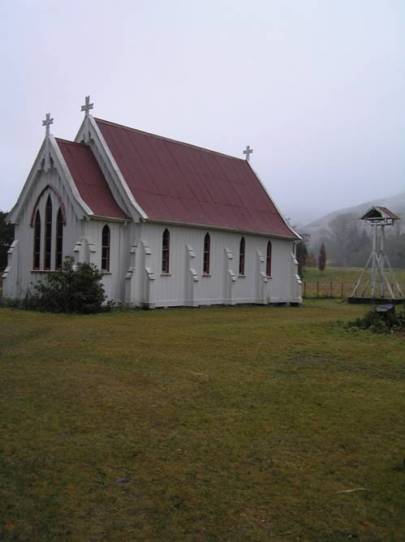
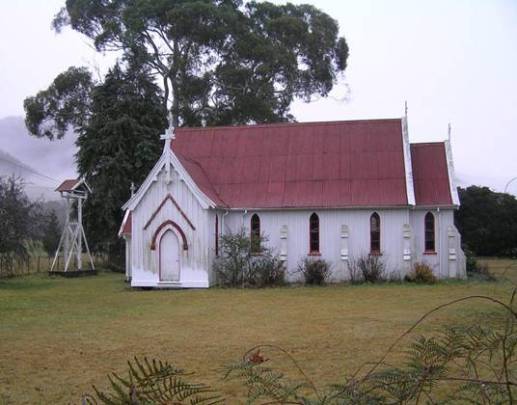
St George's Church is typical of many country churches in New Zealand of the period, which reference Gothic Revival architecture but within a New Zealand vernacular. The building is a simple design consisting of a nave, chancel, porch and vestry, these latter two aspects being the only additions to the church subsequent to its original construction, with the exception of the lengthening of the nave in 1910. The timber structure and the board and batten cladding, as well as other features like its steep pitched gable, emphasis the verticality of the building, a characteristic of Gothic Revival country churches.
St George's Church is a historically and socially important place because its construction and subsequent extension in the late nineteenth and early twentieth centuries marks the maturing of this farming community, which was aided by the construction of the Nelson to Glenhope railway. While the church is significant locally as a place of worship, it also facilitates social interaction, a function that was particularly important within the diffusely populated Motupiko area in the late nineteenth and early twentieth centuries, before technical developments enabled ease of transport and communication. St George's Church is still identifiably a country church in its form and because of the retention of the pastoral nature of its surroundings, and it is mostly because of this that it is a local landmark which has considerable aesthetic significance as well as architectural value.
The Nelson region was initially settled from the 1840s as part of the New Zealand Company's planned settlement programme. However, remote areas such as Motupiko were slow to develop, due to distance and difficult access from the main nucleuses of settlement. Therefore, despite sporadic visits by explorers and then isolated gold-mining and timber-milling settlements from the mid-1840s, it was not until the Nelson to Glenhope railway was being constructed in the late nineteenth century that any concentrated settler penetration into this remote area began in earnest. An indicator of the growth of this rural community during this time was the construction of St George's Church. The railway later had a direct effect on the form of the building, with the increase in population necessitating the extension of the church in order to compensate for the growth in congregation. Prior to 1913 St George's Church was a peripheral place of worship in the Wakefield Parochial District. However, at this time the church became the centre of the Motupiko Parochial District and has been cared for by this community since that period through the donation of money, materials, and labour.
St George's Church is typical of many country churches in New Zealand of the period, which reference Gothic Revival architecture but within a New Zealand vernacular. The building is a simple design consisting of a nave, chancel, porch and vestry, these latter two aspects being the only additions to the church subsequent to its original construction, with the exception of the lengthening of the nave in 1910. The timber structure and the board and batten cladding, as well as other features like its steep pitched gable, emphasis the verticality of the building, a characteristic of Gothic Revival country churches.
St George's Church is a historically and socially important place because its construction and subsequent extension in the late nineteenth and early twentieth centuries marks the maturing of this farming community, which was aided by the construction of the Nelson to Glenhope railway. While the church is significant locally as a place of worship, it also facilitates social interaction, a function that was particularly important within the diffusely populated Motupiko area in the late nineteenth and early twentieth centuries, before technical developments enabled ease of transport and communication. St George's Church is still identifiably a country church in its form and because of the retention of the pastoral nature of its surroundings, and it is mostly because of this that it is a local landmark which has considerable aesthetic significance as well as architectural value.