The Customhouse at Hokitika remains one of the few remaining links to the years when Hokitika was a busy and prosperous port. The discovery of gold in the Hokitika River at the end of 1864 led to a gold rush and the township of Hokitika sprang up almost overnight. In 1865 Hokitika was selected to be the administration centre by the Canterbury Provincial Council, thus making the town the official port-of-entry of the West Coast as well as the commercial centre of the West Coast goldfields. The first customhouse at Hokitika was constructed by the end of July 1865. By 1866 Hokitika was one of New Zealand's leading ports, second only to Auckland, with visitors reporting having seen over 40 ships in the harbour at one time, with more waiting offshore. However, Hokitika also had a deserved reputation as being one of the most dangerous New Zealand ports, with 21 wrecks in its first year. Between 1865 and 1867 there were 108 strandings and 32 ships were completely lost. Once the gold began to peter out, traffic in and out of Hokitika also dropped off and never regained the level it once had. While various industries, such as sawmilling, fishing and brickmaking were established in the area, the lack of coal meant the port declined more quickly than Greymouth or Westport.
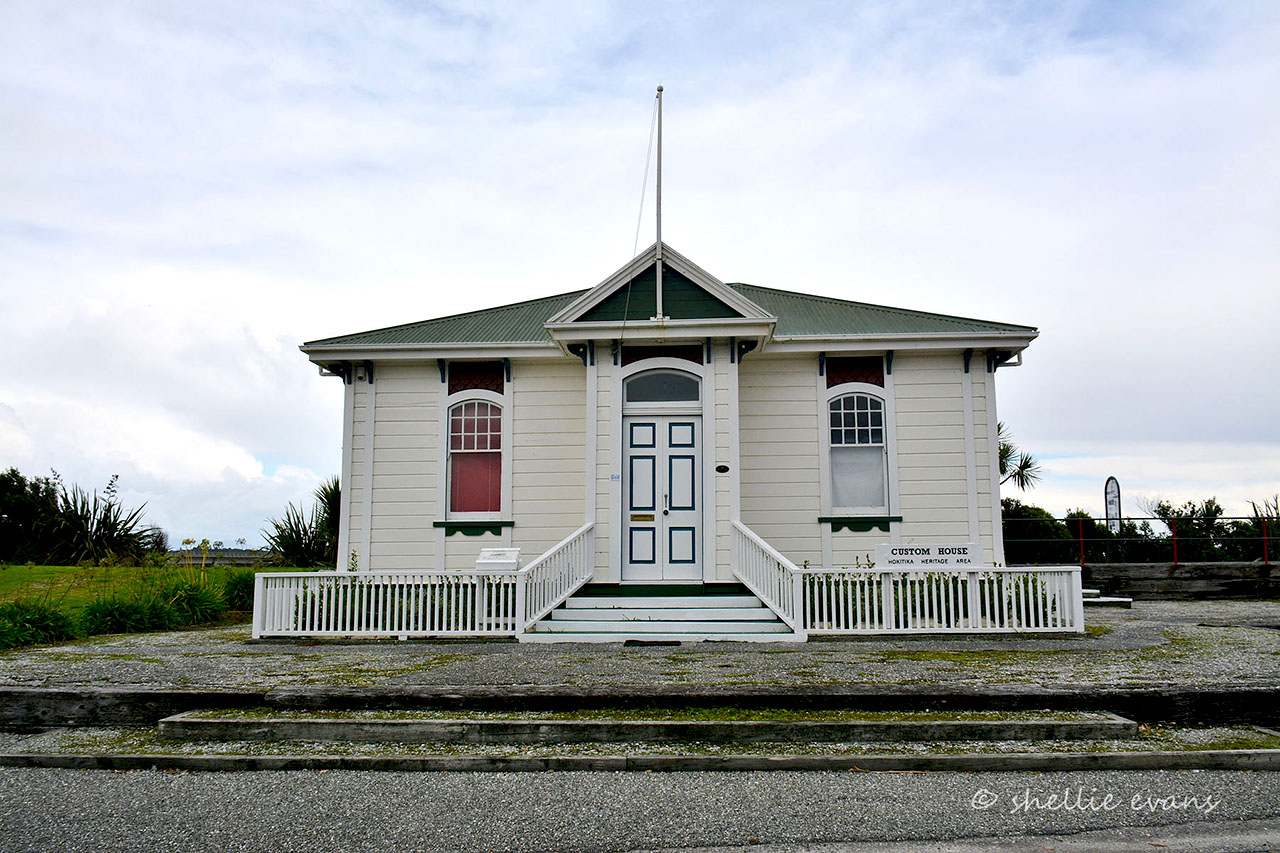
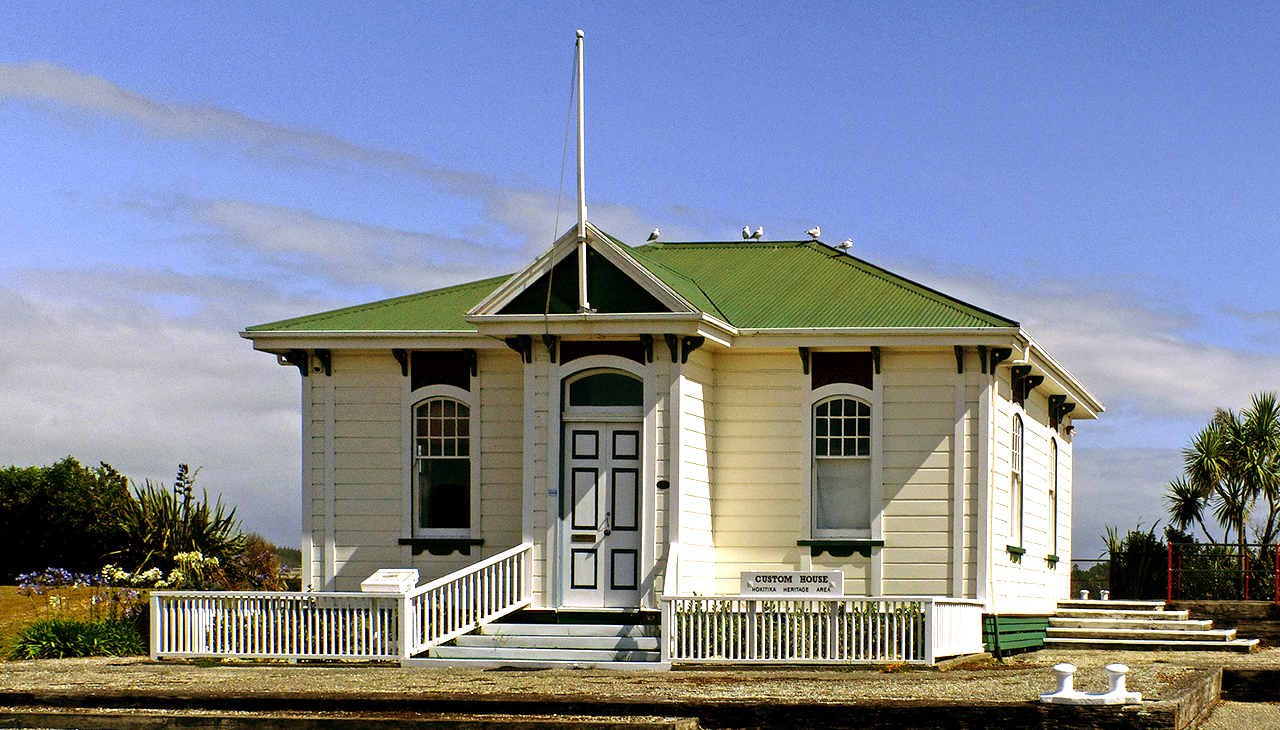
Despite the decline Hokitika retained a harbourmaster until the 1920s and remained an official port until the 1950s. As with many other customhouses throughout New Zealand Hokitika's was rebuilt during the 1890s, as part of the Liberal government's building programme initiated by Premier and West Coast politician Richard Seddon (1845-1906). The Hokitika Customhouse was designed by John Campbell (1857-1942), then a draughtsman in the Public Works Department. Campbell was eventually appointed to be Government Architect in 1909. Erected for £400, the Customhouse was a small single-storey building clad in weatherboard with a gabled porch over the entrance.
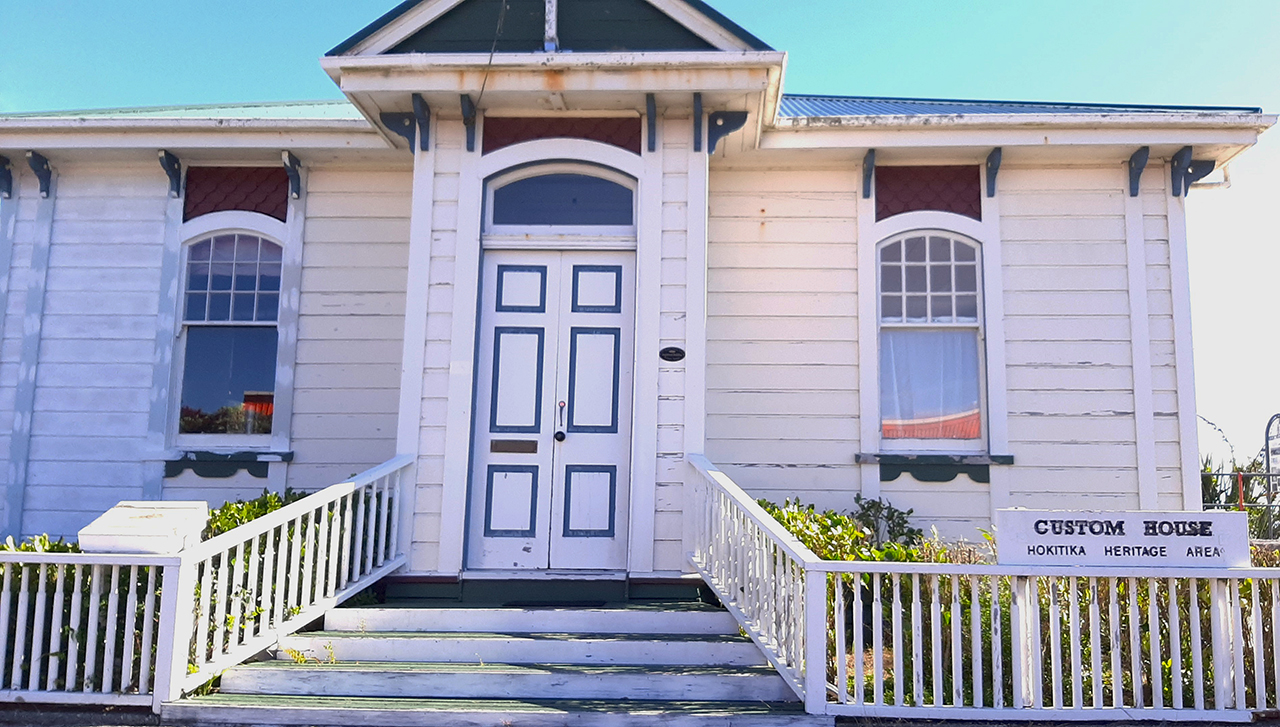
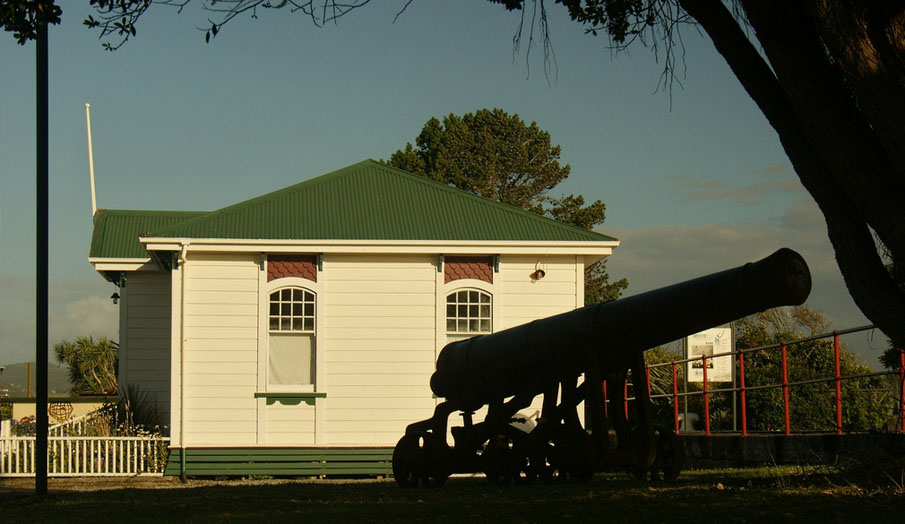
In design the customhouse is one of Campbell's standardised government buildings, which were typified by a rectangular plan, a hipped roof with a gabled porch over the entrance, the use of vertical and horizontal battens to subdivide the walls, and shingles above the windows. The latter reflects Campbell's interest in the American Stick and Shingle style. Other similar buildings include the former customhouse in Napier (1895) and the courthouse at Hunterville (1895), both of which are also registered by the New Zealand Historic Places Trust Pouhere Taonga.
After the harbourmaster was removed from Hokitika the customhouse was taken over by the Ministry of Works and used as a depot. It was threatened with demolition during the 1980s but was eventually preserved and moved onto a site across the road by the river. A lean-to addition at the rear of the building was removed and the interior returned to its original layout of three rooms. However, the public counter and one fireplace was removed during this work. A trust was established to look after the building and it has been used by community groups over the years.
The Customhouse at Hokitika is one of the last remaining links to Hokitika's heyday as a busy and prosperous port. The establishment of Hokitika as a port-of-entry with a customs officer was a direct result of the West Coast gold rush, and the customhouse stands as a physical link to the history of extractive industries on the West Coast. The building is one of Campbell's earlier designs and part of an attempt by the government to standardise public buildings for ease and quickness of construction. As Campbell preferred to design and build in brick, the customhouse at Hokitika is an interesting example of his timber buildings, which formed a very small part of his work. Today the Customhouse stands as a prominent landmark close to its original site.