

George Hunter Jnr lived in Wellington and worked in his father's firm, Bethune and Hunter, Stock and Station Agents. When Kenneth Bethune died, George became the sole partner. He was a member of the Provincial Council from 1857 until the abolition of Provincial Governments, a Member of Parliament (1870-79) and a member of the Wellington City Council until his retirement in 1879. As he was based in Wellington, Porangahau Station was managed by his brothers David and William, and a detailed weekly correspondence took place between Wellington and Porangahau.
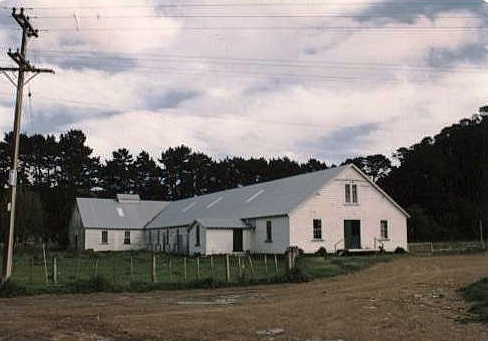
Sheep returns increased rapidly from the original flock of 500 to 3400 by 1860 and to over 27000 by 1875. By this time shearing facilities were inadequate. A new shearing shed (now known as the woolshed) and an additional woolshed were required. In the interests of safety from fire these were built a small distance apart by Duncan McDougall in 1876.
In 1877 George Hunter (III) (1859-1930) took over the management of Porangahau Station from his uncles. Following the death of his father in 1880, George and his brother Paul owned the station in partnership. The partnership ended in 1908 with each taking about 16000 acres of the station. George retained the homestead portion. He was prominent in local affairs, being elected Member of Parliament for Waipawa (1896-1899 and 1911-1930) and a member of the Patangata County Council for more than 30 years. He was knighted in 1920.
From the end of World War I George gifted and sold acreages of the station, much of its for the resettlement by ballot of returned servicemen. The present Porangahau Station is about 922 hectares (2540 acres) and until October 1986 was owned by John Humphreys and his wife Elizabeth, Sir George's only daughter. At that time the property passed out of the Hunter family into the hands of the present owners.
List Entry Information
Status
Listed
List Entry Status
Historic Place Category 1
Access
Private/No Public Access
List Number
175
Date Entered
28th June 1990
Date of Effect
28th June 1990
City/District Council
Central Hawke's Bay District
Region
Hawke's Bay Region
Extent of List Entry
Extent includes part of the land described as Pt Lot 1 DP 6205 (RT HBV2/54), Hawkes Bay Land District and the building known as Porangahau Station Woolshed thereon. Refer to the extent map tabled at the Rārangi Kōrero Committee meeting on 30 May 2019.
Legal description
Pt Lot 1 DP 6205 (RT HBV2/54), Hawkes Bay Land District
Status
Listed
List Entry Status
Historic Place Category 1
Access
Private/No Public Access
List Number
175
Date Entered
28th June 1990
Date of Effect
28th June 1990
City/District Council
Central Hawke's Bay District
Region
Hawke's Bay Region
Extent of List Entry
Extent includes part of the land described as Pt Lot 1 DP 6205 (RT HBV2/54), Hawkes Bay Land District and the building known as Porangahau Station Woolshed thereon. Refer to the extent map tabled at the Rārangi Kōrero Committee meeting on 30 May 2019.
Legal description
Pt Lot 1 DP 6205 (RT HBV2/54), Hawkes Bay Land District
Why is this place significant?
Historic Significance
Historical Significance or Value Porangahau Station Woolshed has historical associations with four generations of the Hunter family of which George Hunter Jnr (1821-80) and Sir George (1859-1930) were prominent citizens at a national level.
Physical Significance
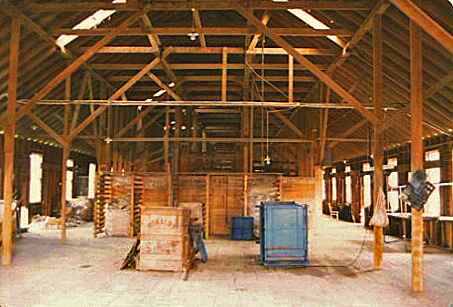
ARCHITECTURAL QUALITY: With 30 stands in the days of blade shearing Porangahau Station Woolshed is one of the largest woolsheds ever built in the North Island. This building is largely in its original condition and gives an insight into the quality and scale of woolshed required by the owners of large sheep stations last century. TOWNSCAPE/LANDMARK VALUE: Impressive at close viewing but not visible from the public road.
Why is this place significant?
Historic Significance
Historical Significance or Value Porangahau Station Woolshed has historical associations with four generations of the Hunter family of which George Hunter Jnr (1821-80) and Sir George (1859-1930) were prominent citizens at a national level.
Physical Significance
ARCHITECTURAL QUALITY: With 30 stands in the days of blade shearing Porangahau Station Woolshed is one of the largest woolsheds ever built in the North Island. This building is largely in its original condition and gives an insight into the quality and scale of woolshed required by the owners of large sheep stations last century. TOWNSCAPE/LANDMARK VALUE: Impressive at close viewing but not visible from the public road.
Construction Details
Start Year
1876
Type
Original Construction
Construction Materials
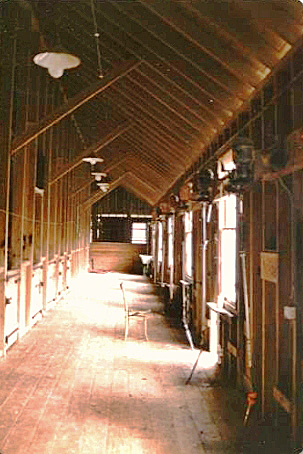
Timber framing, weatherboard cladding, timber piles. Timber framed roof supported by timber posts. Slatted floors for pens. Corrugated galvanised iron roof.
Notable Features
The largely original character of the woolshed. Early use of ventilating lanterns.
Construction Details
Start Year
1876
Type
Original Construction
Construction Materials
Timber framing, weatherboard cladding, timber piles. Timber framed roof supported by timber posts. Slatted floors for pens. Corrugated galvanised iron roof.
Notable Features
The largely original character of the woolshed. Early use of ventilating lanterns.
ARCHITECT/ENGINEER/DESIGNER: Possibly Duncan McDOUGALL (n.d.) ARCHITECT/ENGINEER/DESIGNER: Duncan McDougall was a builder who had travelled in New Zealand, particularly Otago, and had seen some of the best yards, sheds and farm buildings in the country. He was responsible for much construction work for Bethune and Hunter, Stock and Station Agents, and also for George Hunter (1821-80) at Porangahau Station. Here he built the shearing shed (1876), woolshed (1876) and stable and converted the old shearing shed into a cottage. ARCHITECTURAL DESCRIPTION: Two of the buildings built at Porangahau in 1876 relate to the shearing of the flock and the storage of the wool. The smaller of these buildings was for the storage of the wool. The larger building is actually the shearing shed but is now generally known as the woolshed. It is this larger building which is the subject of this report. This large Victorian woolshed is T-shaped in plan and had 30 stands in the days of blade shearing. The long section of the "T" is oriented east-west with the shorter section on the west end. Both sections have a pitched roof and a regular fenestration of double-hung sash windows. Opening windows are required for ventilation and there are also two ventilating lanterns on the ridge of the west wing. The glazing also provides natural illumination of the interior, aided by later skylights. As is customary in woolsheds there is no interior lining to walls or roof. MODIFICATIONS: No major modifications. Minor (undated) modifications include a small gabled addition to each side of the east end, the lining of the south extension for use as a kitchen, re-roofing in corrugated iron and some repiling.
ARCHITECT/ENGINEER/DESIGNER: Possibly Duncan McDOUGALL (n.d.) ARCHITECT/ENGINEER/DESIGNER: Duncan McDougall was a builder who had travelled in New Zealand, particularly Otago, and had seen some of the best yards, sheds and farm buildings in the country. He was responsible for much construction work for Bethune and Hunter, Stock and Station Agents, and also for George Hunter (1821-80) at Porangahau Station. Here he built the shearing shed (1876), woolshed (1876) and stable and converted the old shearing shed into a cottage. ARCHITECTURAL DESCRIPTION: Two of the buildings built at Porangahau in 1876 relate to the shearing of the flock and the storage of the wool. The smaller of these buildings was for the storage of the wool. The larger building is actually the shearing shed but is now generally known as the woolshed. It is this larger building which is the subject of this report. This large Victorian woolshed is T-shaped in plan and had 30 stands in the days of blade shearing. The long section of the "T" is oriented east-west with the shorter section on the west end. Both sections have a pitched roof and a regular fenestration of double-hung sash windows. Opening windows are required for ventilation and there are also two ventilating lanterns on the ridge of the west wing. The glazing also provides natural illumination of the interior, aided by later skylights. As is customary in woolsheds there is no interior lining to walls or roof. MODIFICATIONS: No major modifications. Minor (undated) modifications include a small gabled addition to each side of the east end, the lining of the south extension for use as a kitchen, re-roofing in corrugated iron and some repiling.
Historical and Associated Iwi / Hapū / Whānau
Information Sources
Alexander Turnbull Library
Alexander Turnbull Library, Wellington
Evening Post
Evening Post, 27 Jun 1919, p.7.
Hawkes Bay Herald Tribune
Hawkes Bay Herald Tribune
Land Information New Zealand (LINZ)
Land Information New Zealand
MacGregor, 1970
Miriam MacGregor, Early Stations of Hawke's Bay, A.H. & A.W. Reed, Wellington, 1970
Scholefield, 1940
G. H. Scholefield, A Dictionary of New Zealand Biography, Department of Internal Affairs, Wellington, 1940
Thornton, 1986
Geoffrey Thornton, The New Zealand Heritage of Farm Buildings, Auckland, 1986
Castle, 1980
John Castle & Sydney Grant, Hawkes Bay Heritage, Collins, Auckland, 1980
Other Information
Please note that entry on the New Zealand Heritage List/Rarangi Korero identifies only the heritage values of the property concerned, and should not be construed as advice on the state of the property, or as a comment of its soundness or safety, including in regard to earthquake risk, safety in the event of fire, or insanitary conditions.
Historical and Associated Iwi / Hapū / Whānau
Information Sources
Alexander Turnbull Library
Alexander Turnbull Library, Wellington
Evening Post
Evening Post, 27 Jun 1919, p.7.
Hawkes Bay Herald Tribune
Hawkes Bay Herald Tribune
Land Information New Zealand (LINZ)
Land Information New Zealand
MacGregor, 1970
Miriam MacGregor, Early Stations of Hawke's Bay, A.H. & A.W. Reed, Wellington, 1970
Scholefield, 1940
G. H. Scholefield, A Dictionary of New Zealand Biography, Department of Internal Affairs, Wellington, 1940
Thornton, 1986
Geoffrey Thornton, The New Zealand Heritage of Farm Buildings, Auckland, 1986
Castle, 1980
John Castle & Sydney Grant, Hawkes Bay Heritage, Collins, Auckland, 1980
Other Information
Please note that entry on the New Zealand Heritage List/Rarangi Korero identifies only the heritage values of the property concerned, and should not be construed as advice on the state of the property, or as a comment of its soundness or safety, including in regard to earthquake risk, safety in the event of fire, or insanitary conditions.
Current Usages
Uses: Agriculture
Specific Usage: Woolshed/Shearing Shed
Current Usages
Uses: Agriculture
Specific Usage: Woolshed/Shearing Shed
Sign up to hear more
Get the latest heritage news, features and events delivered
straight to your inbox.
