

Built in stages, beginning in 1861-2, with additions before 1877 and in circa 1908, Eliza’s Manor on Bealey is notable as a large central city townhouse associated with a number of prominent Cantabrians. The dwelling has historical, social, architectural and aesthetic significance. A celebrated post-quake survivor of large historic residences in this area, it represents the way of life of the professional and business men and their families who resided in such houses close to the city centre in the nineteenth and early twentieth centuries.
Charles W Wyatt, solicitor and Canterbury Provincial Council member had a house built at 82 Bealey Avenue (the Town Belt) in circa 1861 and this forms the core of the current building. Wyatt left Canterbury in 1863, selling his property to Jewish merchant Maurice Harris, who had arrived in Canterbury in 1860. By 1877 major additions had been carried out for the Harris’s. Maurice’s son Henry took over the property after Maurice moved to nearby 96 Bealey Avenue in 1885. The last major phase of construction took place in circa 1908 when Frederick Pyne was owner. Founder of stock and station agents Pyne and Co (later Pyne, Gould and Guinness), Frederick Pyne had bought the property in 1906.
The multi-gabled, two storeyed timber building has stylistic elements of its various phases of expansion but an overall Domestic Revival/Arts and Crafts style, attributable to the circa 1908 expansion and refurbishment. The long principal elevation overlooking the major thoroughfare of Bealey Avenue has gabled roof forms, half-timbering on the gable ends, bay and oriel windows and repeated tripartite fenestration. The house has around 30 rooms, including three large entertainment rooms on the ground floor. On the interior, the carved timber staircase in the entrance hall is a major feature.
In the early 1920s the place operated as a boarding house for St Margaret’s College students, and from 1926-1929 it was run as a private hospital and convalescent home. In the late 1950s it was converted into 10 separate flats and run as a boarding house for women. In 1981 the building was converted into a boutique hotel, Eliza’s Manor, named after Eliza Doolittle from My Fair Lady. Owners’ quarters were added to the south-west side of the building in 2005. The property suffered damage in the Canterbury earthquakes of 2010 and 2011 and all the brick fireplaces were deconstructed. After a major programme of repair and refurbishment, the building reopened in November 2011.
Charles W Wyatt, solicitor and Canterbury Provincial Council member had a house built at 82 Bealey Avenue (the Town Belt) in circa 1861 and this forms the core of the current building. Wyatt left Canterbury in 1863, selling his property to Jewish merchant Maurice Harris, who had arrived in Canterbury in 1860. By 1877 major additions had been carried out for the Harris’s. Maurice’s son Henry took over the property after Maurice moved to nearby 96 Bealey Avenue in 1885. The last major phase of construction took place in circa 1908 when Frederick Pyne was owner. Founder of stock and station agents Pyne and Co (later Pyne, Gould and Guinness), Frederick Pyne had bought the property in 1906.
The multi-gabled, two storeyed timber building has stylistic elements of its various phases of expansion but an overall Domestic Revival/Arts and Crafts style, attributable to the circa 1908 expansion and refurbishment. The long principal elevation overlooking the major thoroughfare of Bealey Avenue has gabled roof forms, half-timbering on the gable ends, bay and oriel windows and repeated tripartite fenestration. The house has around 30 rooms, including three large entertainment rooms on the ground floor. On the interior, the carved timber staircase in the entrance hall is a major feature.
In the early 1920s the place operated as a boarding house for St Margaret’s College students, and from 1926-1929 it was run as a private hospital and convalescent home. In the late 1950s it was converted into 10 separate flats and run as a boarding house for women. In 1981 the building was converted into a boutique hotel, Eliza’s Manor, named after Eliza Doolittle from My Fair Lady. Owners’ quarters were added to the south-west side of the building in 2005. The property suffered damage in the Canterbury earthquakes of 2010 and 2011 and all the brick fireplaces were deconstructed. After a major programme of repair and refurbishment, the building reopened in November 2011.
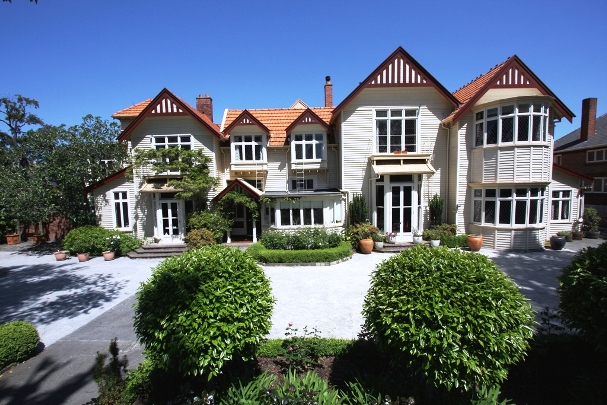
Eliza's Manor on Bealey | 05/11/2009 | Eliza's Manor on Bealey
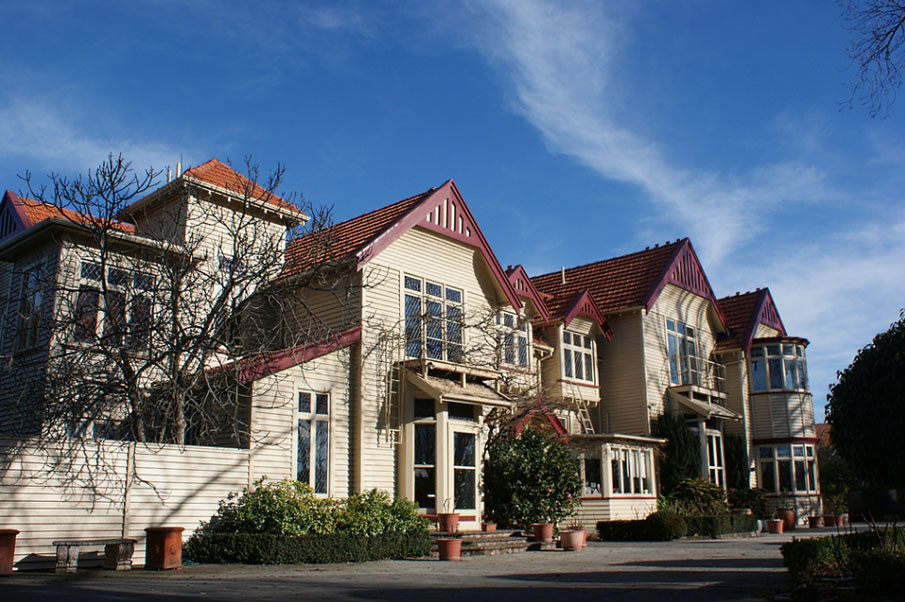
Eliza's Manor on Bealey. Image courtesy of www.flickr.com | PhilBee NZ - Phil Braithwaite | 21/07/2013 | PhilBee NZ - Phil Braithwaite
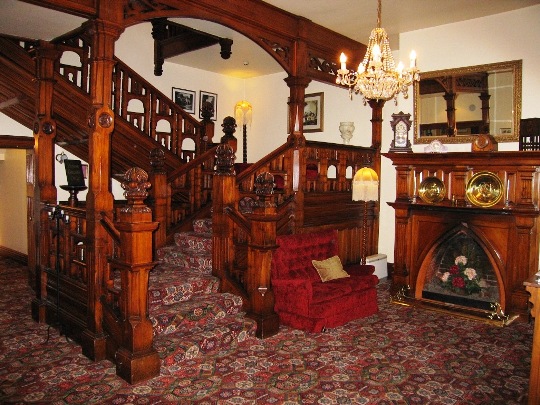
Eliza's Manor on Bealey. Interior | 24/01/2008 | Eliza's Manor on Bealey
Eliza's Manor on Bealey | 05/11/2009 | Eliza's Manor on Bealey
Eliza's Manor on Bealey. Image courtesy of www.flickr.com | PhilBee NZ - Phil Braithwaite | 21/07/2013 | PhilBee NZ - Phil Braithwaite
Eliza's Manor on Bealey. Interior | 24/01/2008 | Eliza's Manor on Bealey
