Quick links


Quick links
Quick links
Quick links
Quick links
Quick links
7 Hertford Street and Merioneth Street, ARROWTOWN
Private
Historic Place Category 2
List No. 2117
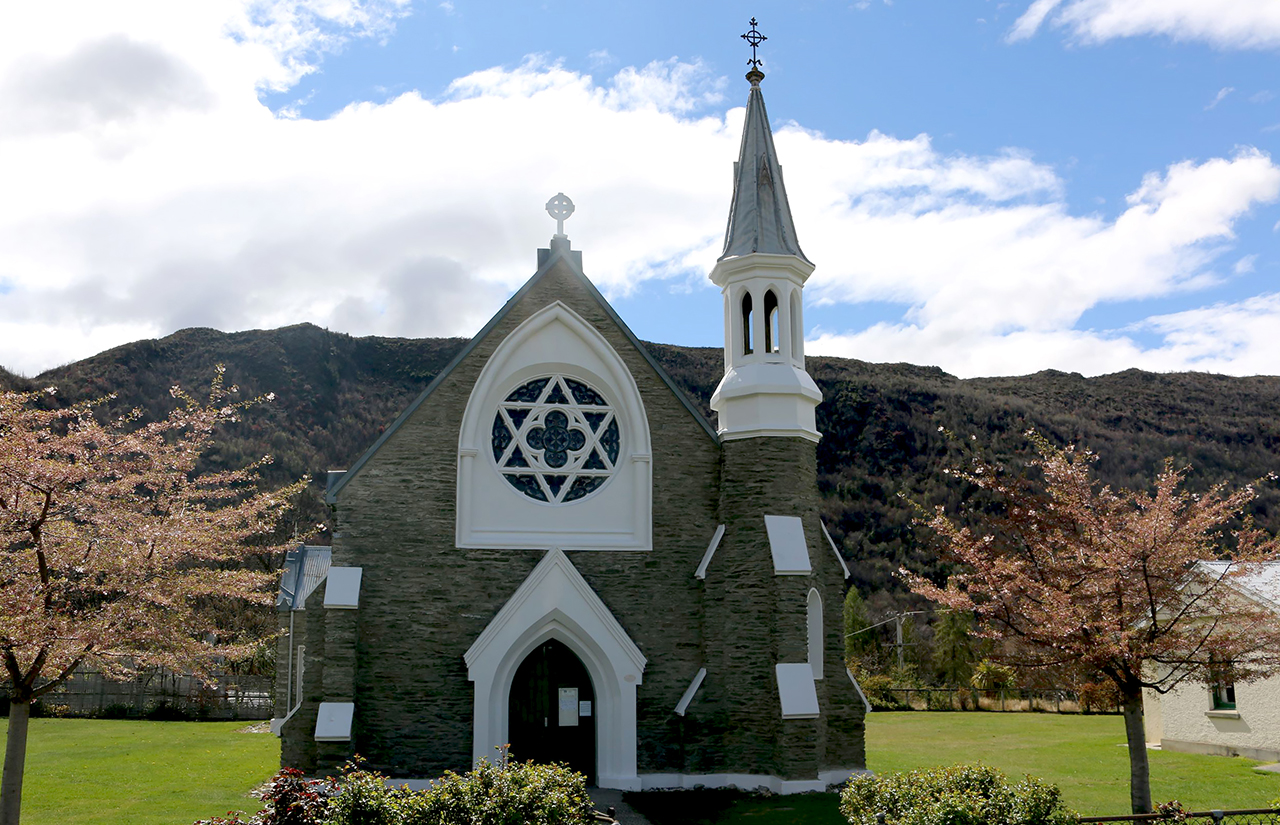
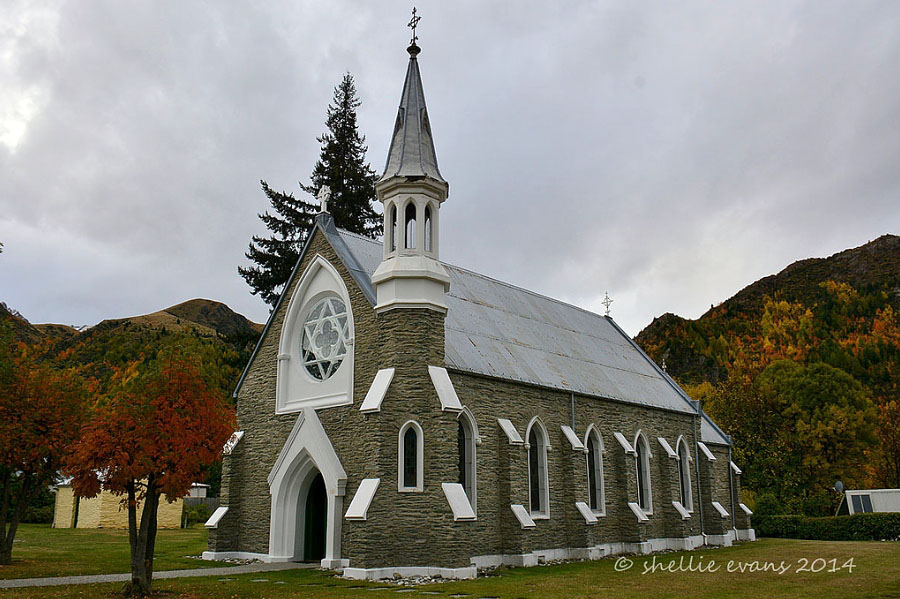
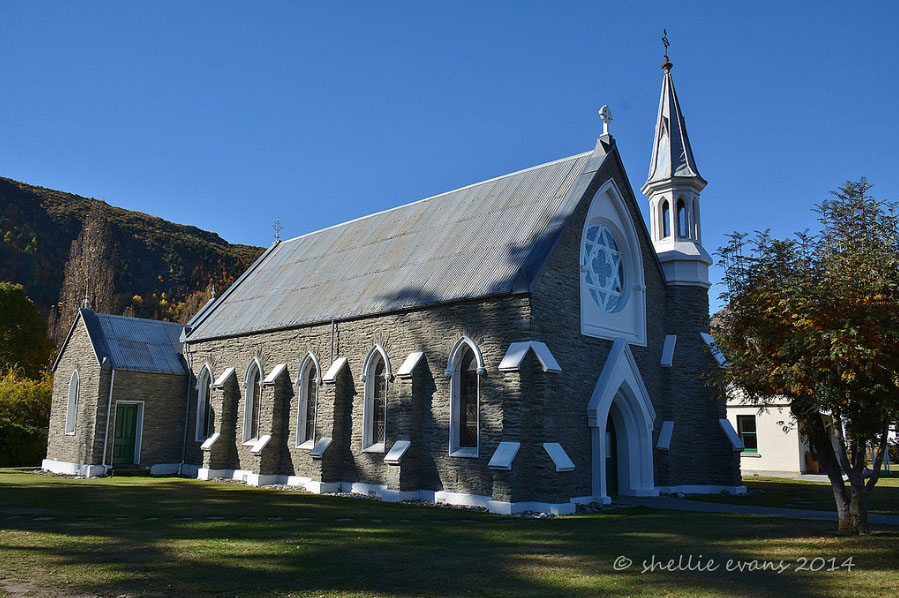
List Entry Information
Status
Listed
List Entry Status
Historic Place Category 2
Access
Private/No Public Access
List Number
2117
Date Entered
24th November 1983
Date of Effect
24th November 1983
City/District Council
Queenstown-Lakes District
Region
Otago Region
Extent of List Entry
The extent includes part of the land described as Lot 2 DP 17118 (RT OT8D/251), Otago Land District, and the building known as St Patrick's Catholic Church thereon.
Legal description
Lot 2 DP 17118 (RT OT8D/251), Otago Land District
Status
Listed
List Entry Status
Historic Place Category 2
Access
Private/No Public Access
List Number
2117
Date Entered
24th November 1983
Date of Effect
24th November 1983
City/District Council
Queenstown-Lakes District
Region
Otago Region
Extent of List Entry
The extent includes part of the land described as Lot 2 DP 17118 (RT OT8D/251), Otago Land District, and the building known as St Patrick's Catholic Church thereon.
Legal description
Lot 2 DP 17118 (RT OT8D/251), Otago Land District
Construction Professional
Name
Burwell, F. W.
Type
Architect
Biography
F.W. Burwell (1846-1915) is noted for designing many buildings in Invercargill, transforming the centre of the town between 1874 and the mid-1880s. Born in Scotland, Burwell served his articles with the architect John Matthews and immigrated to New Zealand in the late 1860s. By 1873, he had established his practice in Queenstown. He moved to Invercargill the following year. Once established there, he began designing elegant two and three-storey buildings in the Renaissance style. He designed almost all the buildings in Dee Street, including the hospital. 'The Crescent' was another notable Invercargill streetscape created by Burwell. In recognition of his work, he was elected a Fellow of the Royal Institute of British Architects in 1880. The depression in the 1880s saw his commissions decline and he moved to Australia in 1887 where he practised in Melbourne, Perth and then Fremantle. He was particularly successful in the last, as Western Australia was in the middle of a building boom, and a number of his commercial buildings in central Fremantle are now classified by the Australian Heritage Commission. Burwell returned to Melbourne in 1910, and died there five years later. (Jonathan Mane-Wheoki, 'Burwell, Frederick William (1846-1915)' in Jane Thomson (ed.), Southern People: a dictionary of Otago Southland biography, Dunedin, 1998, p. 74.)
Name
Walker, Peter
Type
Builder
Biography
In 1873, the Otago Witness described Peter Walker as a Queenstown contractor. Walker worked with Burwell on Bendix Hallenstein’s residence at Thurlby Domain (Register No. 2240), and St John’s Presbyterian Church at Arrowtown (Register No. 2119), and possibly other projects. (Source: Information Upgrade Report, Heather Bauchop, Mar 2014)
Construction Details
Start Year
1873
Type
Original Construction
Start Year
1882
Type
Addition
Description
Sanctuary
Start Year
1902
Type
Addition
Description
Sacristy
Construction Professional
Name
Burwell, F. W.
Type
Architect
Biography
F.W. Burwell (1846-1915) is noted for designing many buildings in Invercargill, transforming the centre of the town between 1874 and the mid-1880s. Born in Scotland, Burwell served his articles with the architect John Matthews and immigrated to New Zealand in the late 1860s. By 1873, he had established his practice in Queenstown. He moved to Invercargill the following year. Once established there, he began designing elegant two and three-storey buildings in the Renaissance style. He designed almost all the buildings in Dee Street, including the hospital. 'The Crescent' was another notable Invercargill streetscape created by Burwell. In recognition of his work, he was elected a Fellow of the Royal Institute of British Architects in 1880. The depression in the 1880s saw his commissions decline and he moved to Australia in 1887 where he practised in Melbourne, Perth and then Fremantle. He was particularly successful in the last, as Western Australia was in the middle of a building boom, and a number of his commercial buildings in central Fremantle are now classified by the Australian Heritage Commission. Burwell returned to Melbourne in 1910, and died there five years later. (Jonathan Mane-Wheoki, 'Burwell, Frederick William (1846-1915)' in Jane Thomson (ed.), Southern People: a dictionary of Otago Southland biography, Dunedin, 1998, p. 74.)
Name
Walker, Peter
Type
Builder
Biography
In 1873, the Otago Witness described Peter Walker as a Queenstown contractor. Walker worked with Burwell on Bendix Hallenstein’s residence at Thurlby Domain (Register No. 2240), and St John’s Presbyterian Church at Arrowtown (Register No. 2119), and possibly other projects. (Source: Information Upgrade Report, Heather Bauchop, Mar 2014)
Construction Details
Start Year
1873
Type
Original Construction
Start Year
1882
Type
Addition
Description
Sanctuary
Start Year
1902
Type
Addition
Description
Sacristy
Historical and Associated Iwi / Hapū / Whānau
Completion Date
10th March 2014
Report Written By
Heather Bauchop
Information Sources
Miller, 1973
F.W.G Miller, Golden Days of Lake County, 5th edn, Christchurch, 1973
New Zealand Tablet
New Zealand Tablet
Otago Witness
Otago Witness
Catholic Church in the Wakatipu
Catholic Church in the Wakatipu, Tablet Print, Dunedin, 1963.
Gardiner, 1994
Paul Gardiner, Mary MacKillop: An extraordinary Australian, E.J.Dwyer (Australia) Pty Ltd, Alexandria, 1994
Other Information
This place was identified as significant under previous legislation with different information requirements. It remains significant under the current legislation. There is opportunity under our legislation and policies to add to this information. Further information about this place may be available from the Otago/Southland Office of Heritage New Zealand Pouhere Taonga. A fully referenced upgrade report is available on request from the Southern Regioanl office of the NZHPT. Please note that entry on the New Zealand Heritage List/Rarangi Korero identifies only the heritage values of the property concerned, and should not be construed as advice on the state of the property, or as a comment of its soundness or safety, including in regard to earthquake risk, safety in the event of fire, or insanitary conditions.
Historical and Associated Iwi / Hapū / Whānau
Completion Date
10th March 2014
Report Written By
Heather Bauchop
Information Sources
Miller, 1973
F.W.G Miller, Golden Days of Lake County, 5th edn, Christchurch, 1973
New Zealand Tablet
New Zealand Tablet
Otago Witness
Otago Witness
Catholic Church in the Wakatipu
Catholic Church in the Wakatipu, Tablet Print, Dunedin, 1963.
Gardiner, 1994
Paul Gardiner, Mary MacKillop: An extraordinary Australian, E.J.Dwyer (Australia) Pty Ltd, Alexandria, 1994
Other Information
This place was identified as significant under previous legislation with different information requirements. It remains significant under the current legislation. There is opportunity under our legislation and policies to add to this information. Further information about this place may be available from the Otago/Southland Office of Heritage New Zealand Pouhere Taonga. A fully referenced upgrade report is available on request from the Southern Regioanl office of the NZHPT. Please note that entry on the New Zealand Heritage List/Rarangi Korero identifies only the heritage values of the property concerned, and should not be construed as advice on the state of the property, or as a comment of its soundness or safety, including in regard to earthquake risk, safety in the event of fire, or insanitary conditions.
Current Usages
Uses: Religion
Specific Usage: Church
Former Usages
General Usage: Religion
Specific Usage: Church
Current Usages
Uses: Religion
Specific Usage: Church
Former Usages
General Usage: Religion
Specific Usage: Church
Location
Get the latest heritage news, features and events delivered
straight to your inbox.