DonateMembershipVisit Heritage
  • Tūrangawaewae
    Places
  • Tira Māori
    Māori Heritage
  • Poutairangahia
    Archaeology
  • Rauemi
    Resources
  • Mō Tātou
    About Us
  • New Zealand Heritage List
  • Nominate and submit
  • Explore the List
  • National Historic Landmarks
  • Plaques
  • Rainbow List Project
  • Lost heritage
  • Visit Heritage
  • Our properties
  • Turnbull House Project
  • Collections
  • Shop
  • Tohu Whenua
  • Tira Māori
  • Conserving Māori heritage
  • Marae built heritage
  • Māori heritage on the List
  • Hinemihi—Te Hokinga Mai
  • What is archaeology?
  • Is there a site on my property?
  • What are my legal requirements?
  • Affecting an archaeological site
  • Declaring an archaeological site
  • Archaeology FAQs
  • Archaeology Digital Library
  • Archaeology guidelines and templates
  • Resources
  • Funding
  • Publications
  • Sustainable management guides
  • Disaster recovery
  • Podcasts & digital resources
  • Education Hub
  • Conservation plans
  • About
  • Board
  • Māori Heritage Council
  • Senior Staff
  • Offices
  • Contact us
  • Careers
  • Covenants
  • Fast-track
  • Corporate documents
  • Currently consulting on
  • Our submissions
  • News
  • Covid-19 response
Quick links
Rārangi Kōrero | The List
Explore the List
National Historic Landmarks
Ngā Manawhenua o Aotearoa me ōna Kōrero Tūturu
Quick links
Tapuwae
A Vision for Places of Māori Heritage
Funding for Māori Heritage
Resources
Quick links
Archaeological Authority Portal
Applying for an archaeological authority
Archaeology FAQs
Browse the most frequently asked questions about archaeological authorities and the archaeological process.
Quick links
Quick links
Contact us
Offices
DonateMembershipVisit Heritage
  • Tūrangawaewae
    Places
  • Tira Māori
    Māori Heritage
  • Poutairangahia
    Archaeology
  • Rauemi
    Resources
  • Mō Tātou
    About Us
  • New Zealand Heritage List
  • Nominate and submit
  • Explore the List
  • National Historic Landmarks
  • Plaques
  • Rainbow List Project
  • Lost heritage
  • Visit Heritage
  • Our properties
  • Turnbull House Project
  • Collections
  • Shop
  • Tohu Whenua
  • Tira Māori
  • Conserving Māori heritage
  • Marae built heritage
  • Māori heritage on the List
  • Hinemihi—Te Hokinga Mai
  • What is archaeology?
  • Is there a site on my property?
  • What are my legal requirements?
  • Affecting an archaeological site
  • Declaring an archaeological site
  • Archaeology FAQs
  • Archaeology Digital Library
  • Archaeology guidelines and templates
  • Resources
  • Funding
  • Publications
  • Sustainable management guides
  • Disaster recovery
  • Podcasts & digital resources
  • Education Hub
  • Conservation plans
  • About
  • Board
  • Māori Heritage Council
  • Senior Staff
  • Offices
  • Contact us
  • Careers
  • Covenants
  • Fast-track
  • Corporate documents
  • Currently consulting on
  • Our submissions
  • News
  • Covid-19 response
Quick links
Rārangi Kōrero | The List
Explore the List
National Historic Landmarks
Ngā Manawhenua o Aotearoa me ōna Kōrero Tūturu
Quick links
Tapuwae
A Vision for Places of Māori Heritage
Funding for Māori Heritage
Resources
Quick links
Archaeological Authority Portal
Applying for an archaeological authority
Archaeology FAQs
Browse the most frequently asked questions about archaeological authorities and the archaeological process.
Quick links
Quick links
Contact us
Offices
  • Places
  • Nominate and submit
  • National Historic Landmarks
  • Places
  • Nominate and submit
  • National Historic Landmarks
  • Tira Māori
  • Conserving Māori heritage
  • Marae built heritage
  • Tira Māori
  • Conserving Māori heritage
  • Marae built heritage
  • Archaeological authorities
  • Archaeology Digital Library
  • Archaeological authorities
  • Archaeology Digital Library
  • All resources
  • Publications
  • Funding
  • All resources
  • Publications
  • Funding
  • FAQs
  • FAQs
Follow us on:
Places
  • Places
  • Nominate and submit
  • National Historic Landmarks
Tira Māori
  • Tira Māori
  • Conserving Māori heritage
  • Marae built heritage
Archaeology
  • Archaeological authorities
  • Archaeology Digital Library
Resources
  • All resources
  • Publications
  • Funding
FAQs
  • FAQs
Follow us on
HomePrivacyTerms and conditionsAbout this site
© Heritage New Zealand Pouhere Taonga 2026.
 
Government House

Dufferin Street, WELLINGTON

Private

Historic Place Category 1

List No. 218

Quick links:
List GalleryLocationDetails
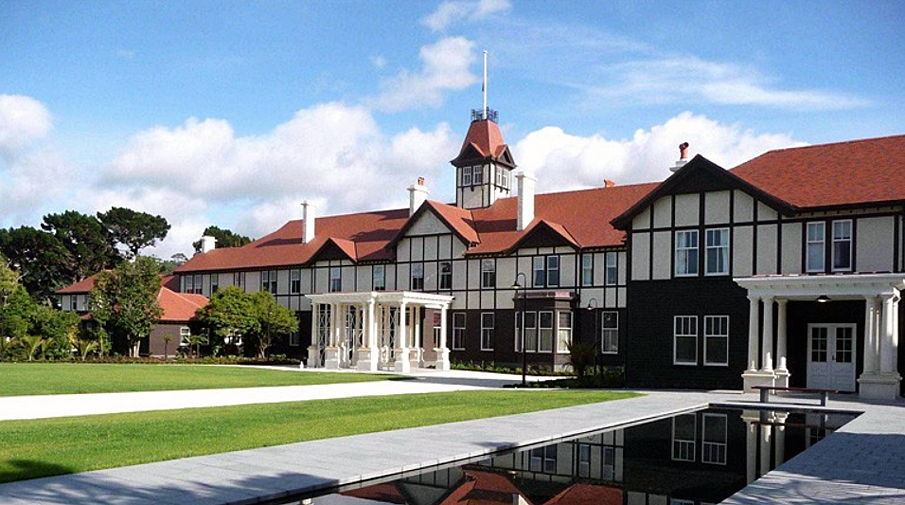
Built in 1910 to replace the Clayton Building commandeered by Parliament to replace their own fire-damaged buildings, the site of the former Mt View Asylum was selected for the new vice-regal residence on the lower slopes of Mt Victoria. It was designed by Claude E Paton of the Government Architect's Office.

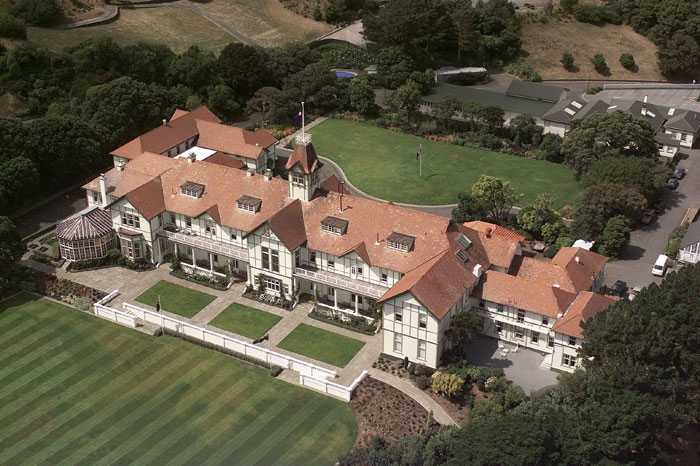
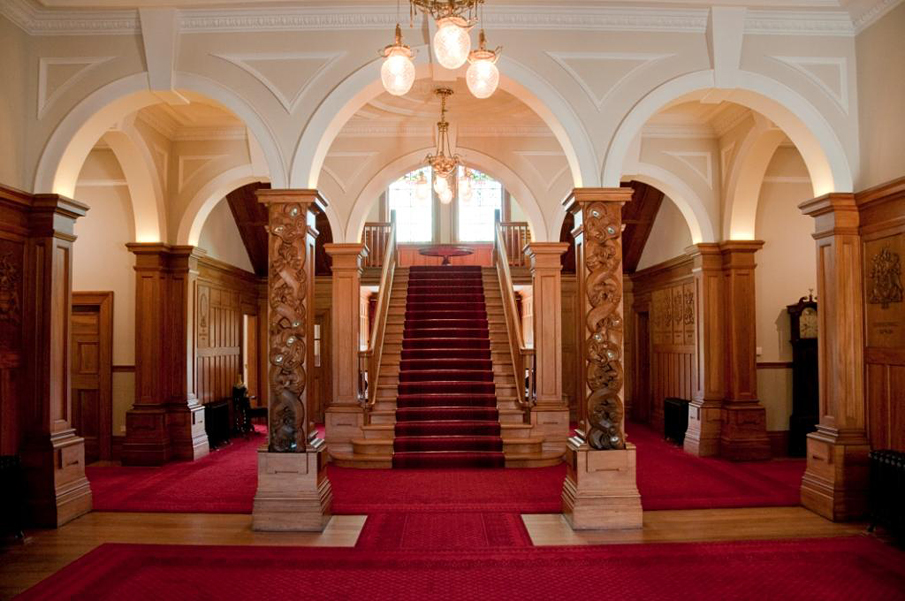
A large two-storey Edwardian structure with attics it is built of wood frame with plastered infill panels. It fulfils two main functions - as a residence of the governor-general and his family and for holding formal and state functions. The formal spaces on the main floor are impressive and include a ballroom, drawing room, Conservatory, Smoking room, dining room and entrance hall.

Government House is set in spacious undulating grounds having the northern elevation fronting the main lawn. The formal entrance has a classical styled porte-cochere with southerly aspect. As the vice-regal home for a long succession of governors-general and as a setting for many formal occasions Government House is a building of real significance.
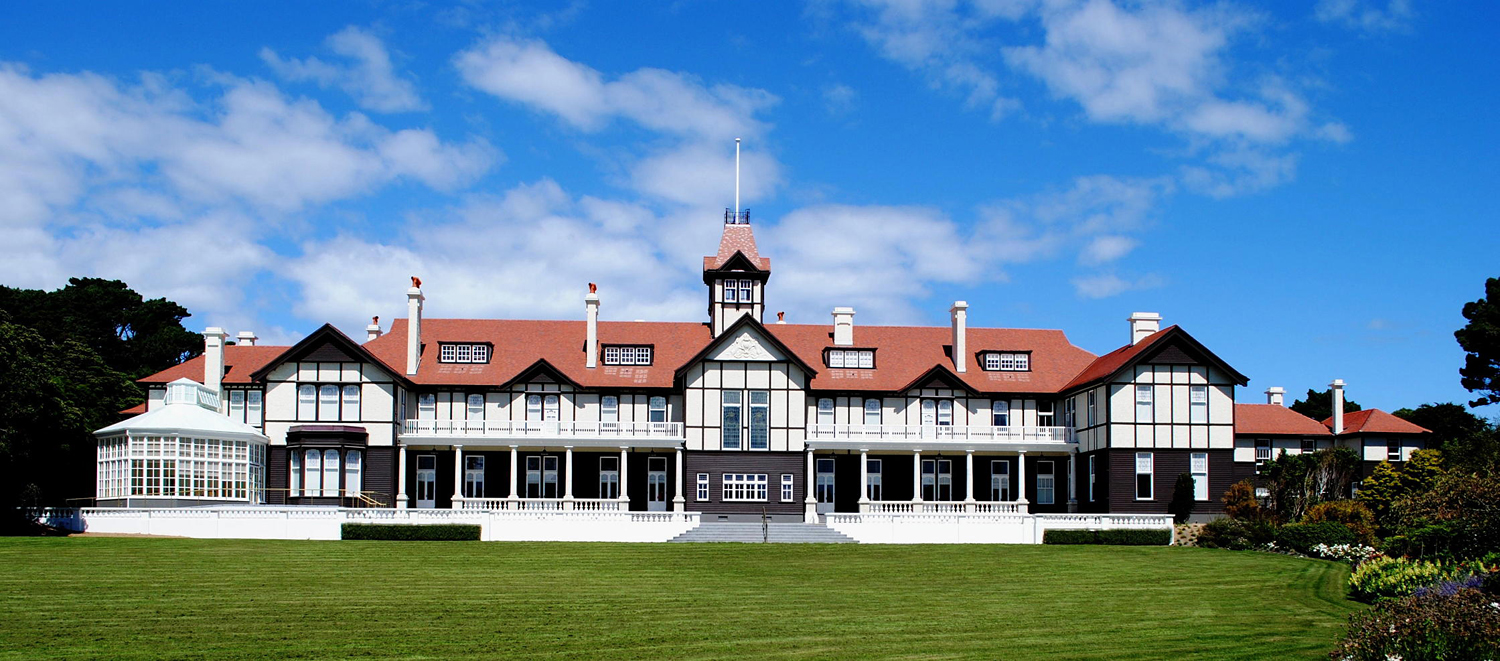
Government House, Wellington. Image courtesy of WellingtonNZ.com | WellingtonNZ.com
Government House, Wellington. South Image courtesy of gg.govt.nz | 01/03/2017 | Government House
Government House, Wellington. Aerial image courtesy of gg.govt.nz | 01/03/2010 | Government House
Government House, Wellington. The Taupaepae is the formal entrance where guests are greeted. Image courtesy of gg.govt.nz | Government House
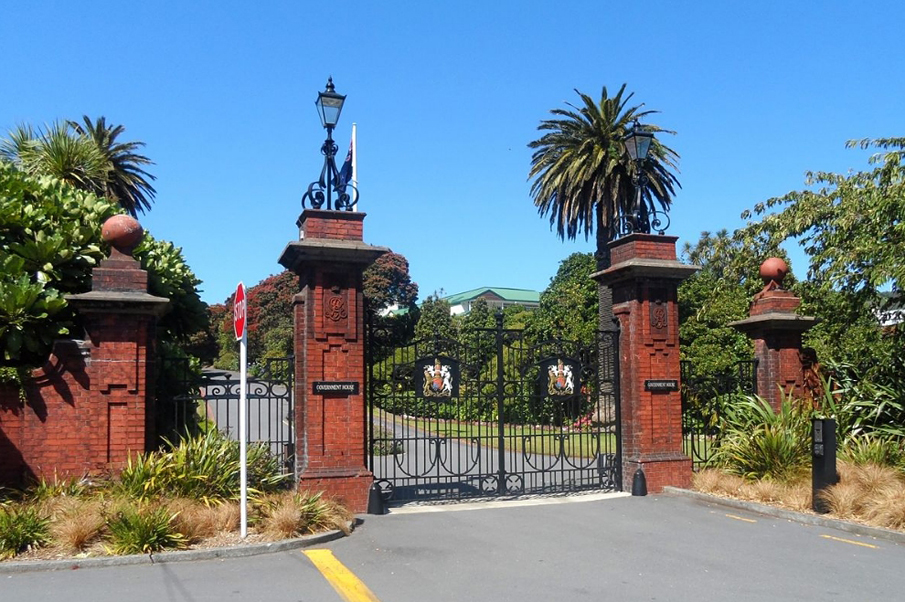
Governement House, Wellington. Gates to Government House on the corner of Duffern St & Rugby St, Wellington. CC BY 4.0 Image courtesy of commons.wikimedia.org | Pear285 | 09/01/2015 | Pear285 - Wikimedia Commons
Government House, Wellington. Image courtesy of WellingtonNZ.com | WellingtonNZ.com
Government House, Wellington. South Image courtesy of gg.govt.nz | 01/03/2017 | Government House
Government House, Wellington. Aerial image courtesy of gg.govt.nz | 01/03/2010 | Government House
Government House, Wellington. The Taupaepae is the formal entrance where guests are greeted. Image courtesy of gg.govt.nz | Government House
Governement House, Wellington. Gates to Government House on the corner of Duffern St & Rugby St, Wellington. CC BY 4.0 Image courtesy of commons.wikimedia.org | Pear285 | 09/01/2015 | Pear285 - Wikimedia Commons

List Entry Information

Overview

Status
Listed

List Entry Status
Historic Place Category 1

Access
Private/No Public Access

List Number
218

Date Entered
25th November 1982

Date of Effect
25th November 1982

City/District Council
Wellington City

Region
Wellington Region

Legal description

Secs 1250 1362 (SO 33757) Pt 1248 Sec 1394 & 1395 (SO 32412)

Detailed List Entry

Construction Professional

Name

Paton, Claude

Type

Architect

Biography

Claude Paton (1881 -1953) was born in Scotland and arrived in New Zealand in 1904. He received some architectural or draughting training in Glasgow which enabled him to gain employment with the Public Works Department in 1906 as an architectural draughtsman. Although Paton was never given the title of architect he was an influential force in the Department. He carried particular weight during the last decade of John Campbell's tenure as Government Architect; both were committed to the Edwardian Baroque style. Paton retired from the Public Works Department as a senior draughtsman in 1946.

Construction Details

Start Year

1910

Type

Original Construction

Reference

Report Written By

This place was identified as significant under previous legislation with different information requirements. It remains significant under the current legislation. There is opportunity under our legislation and policies to add to this information. Further information about this place may be available from the Central Regional Office of Heritage New Zealand Pouhere Taonga. Please note that entry on the New Zealand Heritage List/Rarangi Korero identifies only the heritage values of the property concerned, and should not be construed as advice on the state of the property, or as a comment of its soundness or safety, including in regard to earthquake risk, safety in the event of fire, or insanitary conditions. This historic place was registered under the Historic Places Act 1980. The following text is the original citation considered by the NZHPT Board at the time of registration.

Further Information

Current Usages

Uses: Accommodation

Specific Usage: House

Former Usages

General Usage:: Accommodation

Specific Usage: House

Themes

Web Links

Overview

Status

Listed

List Entry Status

Historic Place Category 1

Access

Private/No Public Access

List Number

218

Date Entered

25th November 1982

Date of Effect

25th November 1982

City/District Council

Wellington City

Region

Wellington Region

Legal description

Secs 1250 1362 (SO 33757) Pt 1248 Sec 1394 & 1395 (SO 32412)

Status

Listed

List Entry Status

Historic Place Category 1

Access

Private/No Public Access

List Number

218

Date Entered

25th November 1982

Date of Effect

25th November 1982

City/District Council

Wellington City

Region

Wellington Region

Legal description

Secs 1250 1362 (SO 33757) Pt 1248 Sec 1394 & 1395 (SO 32412)

Construction Information

Construction Professional

Name

Paton, Claude

Type

Architect

Biography

Claude Paton (1881 -1953) was born in Scotland and arrived in New Zealand in 1904. He received some architectural or draughting training in Glasgow which enabled him to gain employment with the Public Works Department in 1906 as an architectural draughtsman. Although Paton was never given the title of architect he was an influential force in the Department. He carried particular weight during the last decade of John Campbell's tenure as Government Architect; both were committed to the Edwardian Baroque style. Paton retired from the Public Works Department as a senior draughtsman in 1946.

Construction Details

Start Year

1910

Type

Original Construction

Construction Professional

Name

Paton, Claude

Type

Architect

Biography

Claude Paton (1881 -1953) was born in Scotland and arrived in New Zealand in 1904. He received some architectural or draughting training in Glasgow which enabled him to gain employment with the Public Works Department in 1906 as an architectural draughtsman. Although Paton was never given the title of architect he was an influential force in the Department. He carried particular weight during the last decade of John Campbell's tenure as Government Architect; both were committed to the Edwardian Baroque style. Paton retired from the Public Works Department as a senior draughtsman in 1946.

Construction Details

Start Year

1910

Type

Original Construction

Reference

Historical and Associated Iwi / Hapū / Whānau

Other Information

This place was identified as significant under previous legislation with different information requirements. It remains significant under the current legislation. There is opportunity under our legislation and policies to add to this information. Further information about this place may be available from the Central Regional Office of Heritage New Zealand Pouhere Taonga. Please note that entry on the New Zealand Heritage List/Rarangi Korero identifies only the heritage values of the property concerned, and should not be construed as advice on the state of the property, or as a comment of its soundness or safety, including in regard to earthquake risk, safety in the event of fire, or insanitary conditions. This historic place was registered under the Historic Places Act 1980. The following text is the original citation considered by the NZHPT Board at the time of registration.

Historical and Associated Iwi / Hapū / Whānau

Other Information

This place was identified as significant under previous legislation with different information requirements. It remains significant under the current legislation. There is opportunity under our legislation and policies to add to this information. Further information about this place may be available from the Central Regional Office of Heritage New Zealand Pouhere Taonga. Please note that entry on the New Zealand Heritage List/Rarangi Korero identifies only the heritage values of the property concerned, and should not be construed as advice on the state of the property, or as a comment of its soundness or safety, including in regard to earthquake risk, safety in the event of fire, or insanitary conditions. This historic place was registered under the Historic Places Act 1980. The following text is the original citation considered by the NZHPT Board at the time of registration.

Further Information

Current Usages

Uses: Accommodation

Specific Usage: House

Former Usages

General Usage: Accommodation

Specific Usage: House
Current Usages

Uses: Accommodation

Specific Usage: House

Former Usages

General Usage: Accommodation

Specific Usage: House

Location

Loading
Related listings
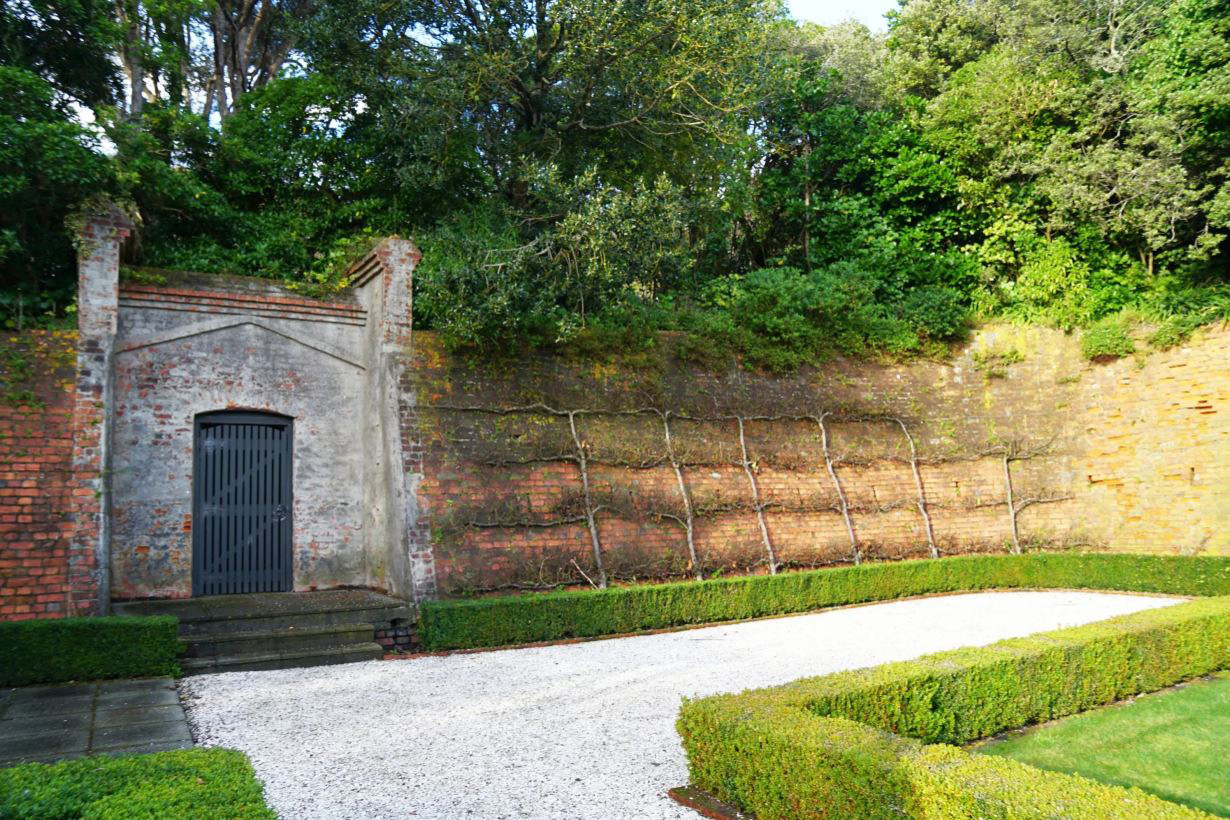
Mt View Asylum Wall, Government House Grounds, Wellington. Image courtesy of www.jonynz.com
Mt View Asylum Garden Wall
Mt View Asylum Wall, Government House Grounds, Wellington. Image courtesy of www.jonynz.com
Mt View Asylum Garden Wall
Sign up to hear more

Get the latest heritage news, features and events delivered
straight to your inbox.

Subscribe