Quick links


Quick links
Quick links
Quick links
Quick links
Quick links
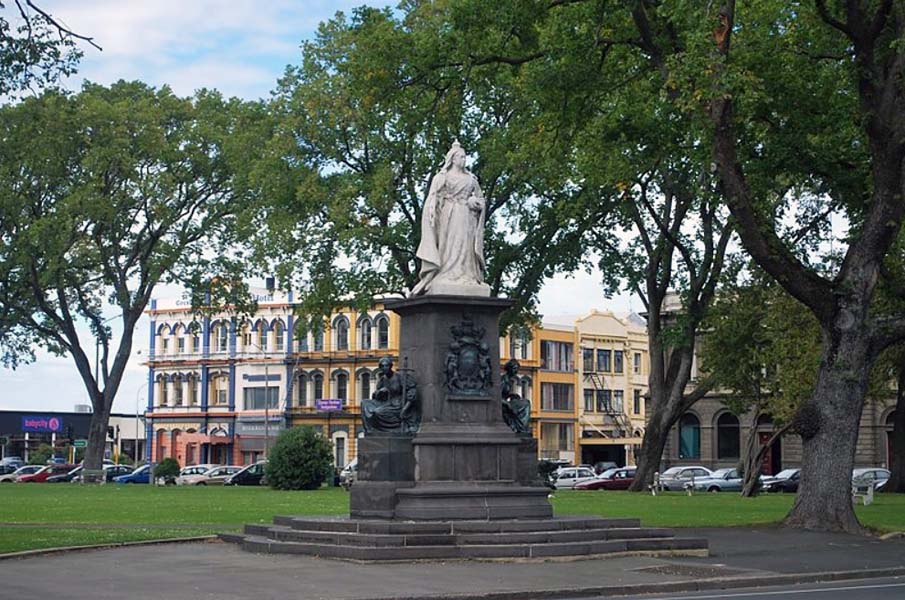
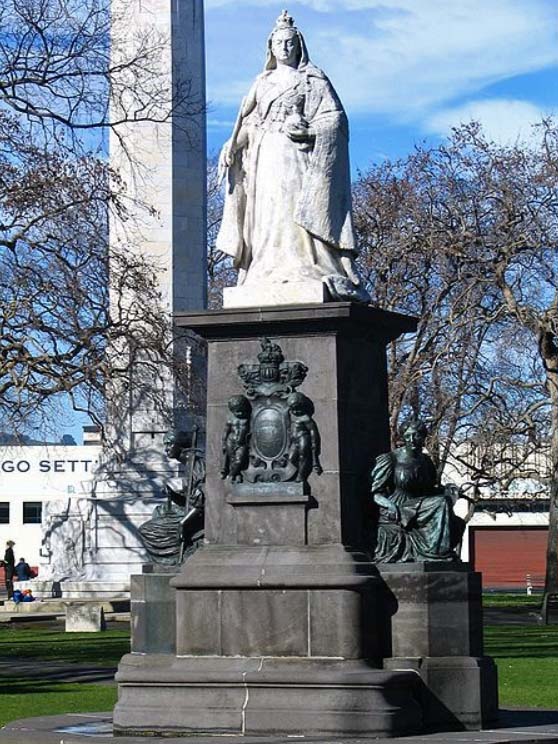
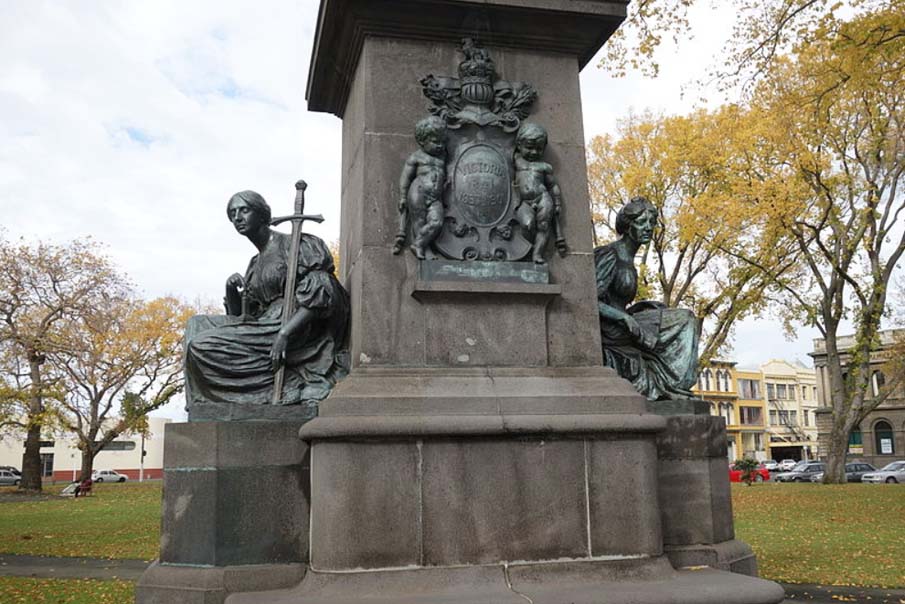
Queen Victoria Memorial Statue
Queens Gardens, DUNEDIN
Public
Historic Place Category 2
List No. 2206
Quick links:
List GalleryLocationDetails
Queens Gardens, DUNEDIN
Public
Historic Place Category 2
List No. 2206
List Entry Information
Status
Listed
List Entry Status
Historic Place Category 2
Access
Able to Visit
List Number
2206
Date Entered
2nd July 1982
Date of Effect
2nd July 1982
City/District Council
Dunedin City
Region
Otago Region
Extent of List Entry
Extent includes part of the land described as Pt Blk XLV Town of Dunedin (RT OT79/189), Otago Land District, and the Queen Victoria Statue thereon. Refer to the extent map tabled at the Rārangi Kōrero Committee meeting on 31 May 2018.
Legal description
Pt Blk XLV Town of Dunedin (RT OT79/189), Otago Land District
Status
Listed
List Entry Status
Historic Place Category 2
Access
Able to Visit
List Number
2206
Date Entered
2nd July 1982
Date of Effect
2nd July 1982
City/District Council
Dunedin City
Region
Otago Region
Extent of List Entry
Extent includes part of the land described as Pt Blk XLV Town of Dunedin (RT OT79/189), Otago Land District, and the Queen Victoria Statue thereon. Refer to the extent map tabled at the Rārangi Kōrero Committee meeting on 31 May 2018.
Legal description
Pt Blk XLV Town of Dunedin (RT OT79/189), Otago Land District
Construction Professional
Name
Hampton, Herbert
Type
Sculptor
Biography
British sculptor and artist Herbert Hampton (1862-1929) was educated at Cardiff School of Art, Lambeth School of Art, Westminster School of Art, the Slade and then the Académies Julien and Colarossi, Paris. He exhibited 55 sculptures at the Royal Academy between 1889 and 1927. He was known as a successful creator of public memorials – he created six statues of Queen Victoria, one of Edward VII and one of King George. His two New Zealand works are the Queen Victoria statue in Dunedin, and the statue of William Rolleston (List No. 1946, Category 2) in Christchurch.
Construction Details
Start Year
1901
Type
Original Construction
Description
foundation stone laid
Start Year
1905
Type
Original Construction
Description
statue unveiled
Construction Professional
Name
Hampton, Herbert
Type
Sculptor
Biography
British sculptor and artist Herbert Hampton (1862-1929) was educated at Cardiff School of Art, Lambeth School of Art, Westminster School of Art, the Slade and then the Académies Julien and Colarossi, Paris. He exhibited 55 sculptures at the Royal Academy between 1889 and 1927. He was known as a successful creator of public memorials – he created six statues of Queen Victoria, one of Edward VII and one of King George. His two New Zealand works are the Queen Victoria statue in Dunedin, and the statue of William Rolleston (List No. 1946, Category 2) in Christchurch.
Construction Details
Start Year
1901
Type
Original Construction
Description
foundation stone laid
Start Year
1905
Type
Original Construction
Description
statue unveiled
Historical and Associated Iwi / Hapū / Whānau
Public NZAA Number
I44/735
Completion Date
1st May 2018
Report Written By
Janny Sjaaholm
Information Sources
Evening Star
Evening Star
Otago Witness
Otago Witness
Dunn, 2002
Dunn, Michael, New Zealand Sculpture: A History, Auckland University Press, Auckland, 2002.
Richard Dingwall
Otago Sculpture Trust
Other Information
This place was identified as significant under previous legislation with different information requirements. It remains significant under the current legislation. There is opportunity under our legislation and policies to add to this information. Further information about this place may be available from the Otago/Southland Office of Heritage New Zealand Pouhere Taonga. Please note that entry on the New Zealand Heritage List/Rarangi Korero identifies only the heritage values of the property concerned, and should not be construed as advice on the state of the property, or as a comment of its soundness or safety, including in regard to earthquake risk, safety in the event of fire, or insanitary conditions. A fully referenced upgrade report is available on request from the Otago/Southland Area Office of Heritage New Zealand
Historical and Associated Iwi / Hapū / Whānau
Public NZAA Number
I44/735
Completion Date
1st May 2018
Report Written By
Janny Sjaaholm
Information Sources
Evening Star
Evening Star
Otago Witness
Otago Witness
Dunn, 2002
Dunn, Michael, New Zealand Sculpture: A History, Auckland University Press, Auckland, 2002.
Richard Dingwall
Otago Sculpture Trust
Other Information
This place was identified as significant under previous legislation with different information requirements. It remains significant under the current legislation. There is opportunity under our legislation and policies to add to this information. Further information about this place may be available from the Otago/Southland Office of Heritage New Zealand Pouhere Taonga. Please note that entry on the New Zealand Heritage List/Rarangi Korero identifies only the heritage values of the property concerned, and should not be construed as advice on the state of the property, or as a comment of its soundness or safety, including in regard to earthquake risk, safety in the event of fire, or insanitary conditions. A fully referenced upgrade report is available on request from the Otago/Southland Area Office of Heritage New Zealand
Current Usages
Uses: Civic Facilities
Specific Usage: Statue/public art
Uses: Commemoration
Specific Usage: Memorial - Particular person or group
Former Usages
General Usage: Civic Facilities
Specific Usage: Statue/public art
General Usage: Commemoration
Specific Usage: Memorial - Particular person or group
Web Links
description: Richard Dingwall, “Queen Victoria (Queens gardens): 1905”. Otago Sculpture Trust,
url: https://web.archive.org/web/20180129231113/http://www.ost-sculpture.org.nz/press/279/
Current Usages
Uses: Civic Facilities
Specific Usage: Statue/public art
Uses: Commemoration
Specific Usage: Memorial - Particular person or group
Former Usages
General Usage: Civic Facilities
Specific Usage: Statue/public art
General Usage: Commemoration
Specific Usage: Memorial - Particular person or group
Web Links
description: Richard Dingwall, “Queen Victoria (Queens gardens): 1905”. Otago Sculpture Trust,
url: https://web.archive.org/web/20180129231113/http://www.ost-sculpture.org.nz/press/279/
Location
Get the latest heritage news, features and events delivered
straight to your inbox.