

Horatio Nelson Firth immigrated to New Zealand in 1863. Overcoming a series of career challenges, by 1883 Firth found himself in Queenstown appointed to the positions of Receiver of Gold Revenue and Mining Registrar, and Clerk for the Local Courts. A sizeable inheritance in 1886 enabled Firth to extend his landholdings and commission a villa ‘fit for a gentleman’. Mason and Wales designed a large and impressive home for the Firth family, which now included seven children, and John Salmond was contracted to build it.
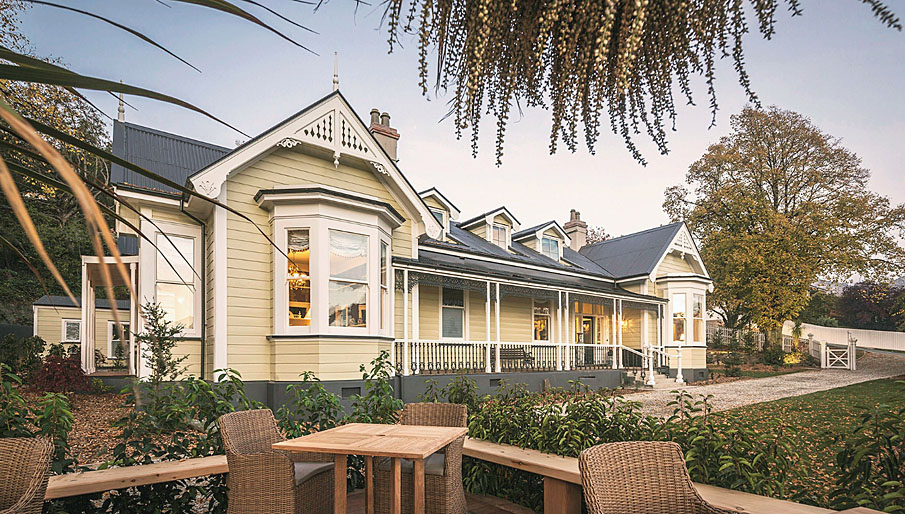
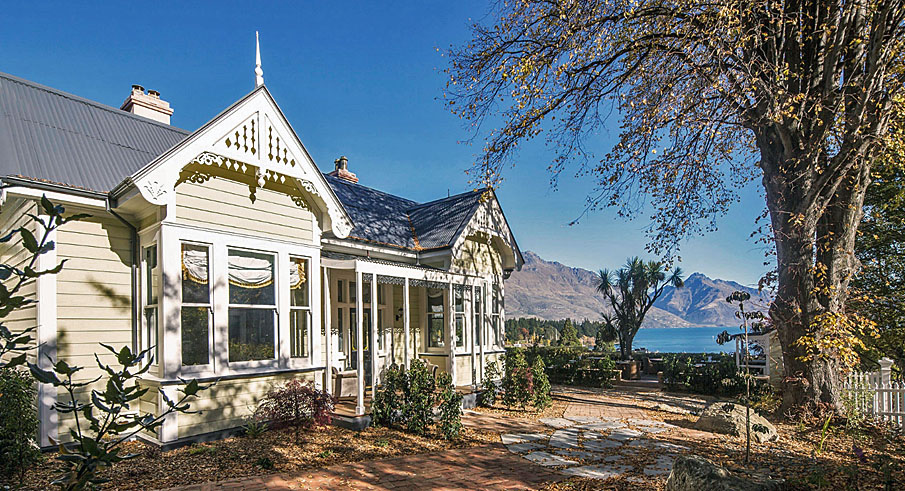
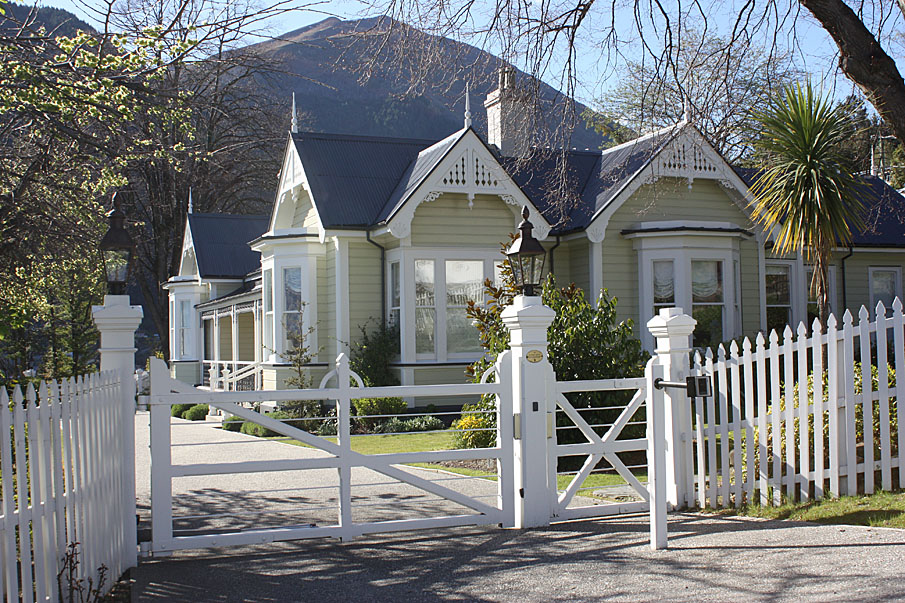
The timber villa was built of Red Beech, with several bays, two verandas and double hung sash windows. The interior was decorated with quality fittings including imported marble fireplaces, decorated ceilings, and joinery with panels of glass featuring gold leaf work. Its size, setting and architectural grandeur made it one of Queenstown’s most impressive residences. The family lived in a grand manner at Hullert until 1901 when Firth was imprisoned for embezzlement. His wife Catherine opened Hullert as a boarding house until 1909 when it was sold and the Firths removed to Wellington.
In the following years the house had a number of owners and uses. Renamed ‘Tutuila’, the house was used as a nursing home and later as a holiday home and rental accommodation. During World War II it was leased as a refuge for a private girls' school in case of invasion. Immediately following the War Tutuila became a maternity home but in 1948 resumed its guest house status. It was not until 1981 when it was purchased by Edward Sturt, that the house was carefully restored and refurbished. Sturt, who renamed the house ‘Hulbert House’, operated a bed and breakfast from the restored premises. Following his death in 2009, the house became backpackers’ accommodation.
Hullert is one of a decreasing number of early houses which remain in Queenstown. Its setting and location are impressive and the residence is a prominent landmark in the town. Architecturally, it is a fine example of the design skills of Mason and Wales. The interior is significant also because of its high degree of intactness. Much of the heritage fabric remains or has been carefully repaired and restored. Historically, the house stands as a testament to Horatio Nelson Firth and the colourful career of a Mining Registrar in gold-rich Otago. The house also provides insight into the lot of married, middle-class women who were suddenly forced to earn an income. Hullert stands as a testament to the boarding house as an important middle-class institution.
List Entry Information
Status
Listed
List Entry Status
Historic Place Category 2
Access
Private/No Public Access
List Number
2343
Date Entered
24th November 1983
Date of Effect
24th November 1983
City/District Council
Queenstown-Lakes District
Region
Otago Region
Extent of List Entry
Extent includes the land described as Sec 4-5, Pt Sec 3 & Pt Sec 6 Blk XIX Town of Queenstown (RT OT9B/637), Otago Land District and the building known as Hullert thereon, and its fittings and fixtures.
Legal description
Secs 4-5, Pt Sec 3 and Pt Sec 6 Blk XX Town of Queenstown (RT OT9B/637), Otago Land District
Status
Listed
List Entry Status
Historic Place Category 2
Access
Private/No Public Access
List Number
2343
Date Entered
24th November 1983
Date of Effect
24th November 1983
City/District Council
Queenstown-Lakes District
Region
Otago Region
Extent of List Entry
Extent includes the land described as Sec 4-5, Pt Sec 3 & Pt Sec 6 Blk XIX Town of Queenstown (RT OT9B/637), Otago Land District and the building known as Hullert thereon, and its fittings and fixtures.
Legal description
Secs 4-5, Pt Sec 3 and Pt Sec 6 Blk XX Town of Queenstown (RT OT9B/637), Otago Land District
Why is this place Category 1 / Category 2?
Detail Of Assessed Criteria
From Upgrade Report, May 2012: Hullert is one of an increasingly smaller number of early houses which remain in Queenstown. Its setting and location are impressive, surrounded by Linden trees and facing Cecil and Walter Peaks over Lake Wakatipu. It remains a prominent landmark in the town because of its elevated position and the particular architectural characteristics which it demonstrates. Its sheer size is impressive, so much so that it needed little alteration to function as a guesthouse, nursing home and hostel. Architecturally, it is a fine example of the design skills of Mason and Wales employed on behalf of society’s middle to upper classes. The interior is also significant because of its high degree of intactness. Most of the features remain in place or have been carefully repaired or restored. Historically, the house stands as a testament to Horatio Nelson Firth and the colourful career of a Mining Registrar in gold-rich Otago. The house also provides insight into the lot of married, middle-class women who were suddenly forced to earn an income. Catherine Firth was better prepared than many. Hullert stands as a testament to the boarding house as ‘an important middle-class institution in Otago in the first half of this century’. Indeed many extant examples of these buildings are suffering badly as they tend to be too large to recycle as family homes.
Why is this place Category 1 / Category 2?
Detail Of Assessed Criteria
From Upgrade Report, May 2012: Hullert is one of an increasingly smaller number of early houses which remain in Queenstown. Its setting and location are impressive, surrounded by Linden trees and facing Cecil and Walter Peaks over Lake Wakatipu. It remains a prominent landmark in the town because of its elevated position and the particular architectural characteristics which it demonstrates. Its sheer size is impressive, so much so that it needed little alteration to function as a guesthouse, nursing home and hostel. Architecturally, it is a fine example of the design skills of Mason and Wales employed on behalf of society’s middle to upper classes. The interior is also significant because of its high degree of intactness. Most of the features remain in place or have been carefully repaired or restored. Historically, the house stands as a testament to Horatio Nelson Firth and the colourful career of a Mining Registrar in gold-rich Otago. The house also provides insight into the lot of married, middle-class women who were suddenly forced to earn an income. Catherine Firth was better prepared than many. Hullert stands as a testament to the boarding house as ‘an important middle-class institution in Otago in the first half of this century’. Indeed many extant examples of these buildings are suffering badly as they tend to be too large to recycle as family homes.
Construction Professional
Name
Mason & Wales Architects Ltd
Type
Architectural Partnership
Biography
Mason and Wales Architects Ltd is the oldest architectural practice in New Zealand, having been founded by William Mason (1810-1897) in 1862 Dunedin. Mason was born in England, studied under Peter Nicholson and worked under Thomas Telford and Edward Blore. In 1838 he immigrated to New South Wales, and came to New Zealand in 1840. Having spent 22 years in Auckland he went to Dunedin at the time of the gold discoveries and was elected the first mayor of Dunedin in 1865. He was active in politics as well as in architecture. Mason was in partnership firstly with David Ross (1827-1908) and William Henry Clayton (1823-1877) and he took in N.Y.A. Wales (1832-1903) when Clayton left the firm to become Colonial Architect in Wellington. Wales had worked as a clerk of works and was very competent in all aspects of construction. The firm was responsible for many of Dunedin's early important buildings such as the Post Office (later known as the Exchange Building), Princes Street (1864-68), the Exhibition Building (later the Dunedin Hospital), Great King Street (1864), St Matthew's Church, Stafford Street (1873), and the Wains Hotel, Princes Street (1878). Mason and Wales designed the Abbotsford Farm Steading (1871) at Outram, Otago (NZHPT Reg. No. 7579). This farm steading was designed for James Shand, a prominent land owner, politician and businessman in the area. Mason and Wales designed another farm steading for Shand at his property Berkeley in 1881 (demolished 1981). In 1881, Mason and Wales also designed a plain concrete Chicory Kiln (NZHPT Reg. No. 3359, Cat II) at Inch Clutha, South Otago for Gregg and Coy. Mason and Wales continues today. N.Y.A. Wales (b.1927) is a fourth generation director of the firm. WALES, Nathaniel Young Armstrong (1832-1903) Wales was born in Northumberland, England, and educated at Jedburgh, Scotland. He immigrated to Australia in 1854 and found employment as a carpenter working on the buildings for the first exhibition held in Melbourne. He arrived in Dunedin about 1863, and was a clerk of works for William Mason on the old Bank of New Zealand Building (1862-64), the Post Office Building (1864-68) and the Port Chalmers Graving Dock (1868-72). Wales entered partnership with William Mason in 1871. The firm of Mason and Wales was responsible for many fine buildings in Dunedin including Bishopscourt (1873), St Matthew's Church (1873), Government Life Insurance Building (1897) and Wains Hotel (1878). Wales had military and political interests and was a Member of Parliament for some years. He occupied a seat on the Dunedin Harbour Board and was a Dunedin City Councillor. In 1895 he was elected Mayor of Dunedin. In 1900 he was elected a Fellow of the Royal Institute of British Architects.
Name
Salmond, John
Type
Builder
Biography
No biography is currently available for this construction professional
Construction Details
Start Year
1888
Finish Year
1889
Type
Original Construction
Start Year
1930
Finish Year
1939
Type
Modification
Description
Outhouse extended
Start Year
1980
Finish Year
1989
Type
Modification
Description
Restoration and refit for bed and breakfast business
Construction Professional
Name
Mason & Wales Architects Ltd
Type
Architectural Partnership
Biography
Mason and Wales Architects Ltd is the oldest architectural practice in New Zealand, having been founded by William Mason (1810-1897) in 1862 Dunedin. Mason was born in England, studied under Peter Nicholson and worked under Thomas Telford and Edward Blore. In 1838 he immigrated to New South Wales, and came to New Zealand in 1840. Having spent 22 years in Auckland he went to Dunedin at the time of the gold discoveries and was elected the first mayor of Dunedin in 1865. He was active in politics as well as in architecture. Mason was in partnership firstly with David Ross (1827-1908) and William Henry Clayton (1823-1877) and he took in N.Y.A. Wales (1832-1903) when Clayton left the firm to become Colonial Architect in Wellington. Wales had worked as a clerk of works and was very competent in all aspects of construction. The firm was responsible for many of Dunedin's early important buildings such as the Post Office (later known as the Exchange Building), Princes Street (1864-68), the Exhibition Building (later the Dunedin Hospital), Great King Street (1864), St Matthew's Church, Stafford Street (1873), and the Wains Hotel, Princes Street (1878). Mason and Wales designed the Abbotsford Farm Steading (1871) at Outram, Otago (NZHPT Reg. No. 7579). This farm steading was designed for James Shand, a prominent land owner, politician and businessman in the area. Mason and Wales designed another farm steading for Shand at his property Berkeley in 1881 (demolished 1981). In 1881, Mason and Wales also designed a plain concrete Chicory Kiln (NZHPT Reg. No. 3359, Cat II) at Inch Clutha, South Otago for Gregg and Coy. Mason and Wales continues today. N.Y.A. Wales (b.1927) is a fourth generation director of the firm. WALES, Nathaniel Young Armstrong (1832-1903) Wales was born in Northumberland, England, and educated at Jedburgh, Scotland. He immigrated to Australia in 1854 and found employment as a carpenter working on the buildings for the first exhibition held in Melbourne. He arrived in Dunedin about 1863, and was a clerk of works for William Mason on the old Bank of New Zealand Building (1862-64), the Post Office Building (1864-68) and the Port Chalmers Graving Dock (1868-72). Wales entered partnership with William Mason in 1871. The firm of Mason and Wales was responsible for many fine buildings in Dunedin including Bishopscourt (1873), St Matthew's Church (1873), Government Life Insurance Building (1897) and Wains Hotel (1878). Wales had military and political interests and was a Member of Parliament for some years. He occupied a seat on the Dunedin Harbour Board and was a Dunedin City Councillor. In 1895 he was elected Mayor of Dunedin. In 1900 he was elected a Fellow of the Royal Institute of British Architects.
Name
Salmond, John
Type
Builder
Biography
No biography is currently available for this construction professional
Construction Details
Start Year
1888
Finish Year
1889
Type
Original Construction
Start Year
1930
Finish Year
1939
Type
Modification
Description
Outhouse extended
Start Year
1980
Finish Year
1989
Type
Modification
Description
Restoration and refit for bed and breakfast business
Historical and Associated Iwi / Hapū / Whānau
Completion Date
16th May 2012
Report Written By
Susan Irvine
Information Sources
Gillies and Associates, 2010
Jackie Gillies & Associates, ‘Hulbert House, Ballarat Street, Queenstown. Outline Condition Report, June 2010
Gillies and Associates, 2010(2)
Jackie Gillies & Associates, ‘Hulbert House, Queenstown. Summary of heritage values’, Sept 2010
Other Information
This place was identified as significant under previous legislation with different information requirements. It remains significant under the current legislation. There is opportunity under our legislation and policies to add to this information. Further information about this place may be available from the Otago/Southland Office of Heritage New Zealand Pouhere Taonga. A fully referenced Upgrade Report is available from the Otago/Southland Area office of NZHPT. NZHPT Heritage Covenant (13Oct92) Covenant Legal Description: Sec 4 and 5 and Pt Secs 3 and 6 Blk XX Town of Queenstown. CT 9B/637 (Otago Land Registry). Please note that entry on the New Zealand Heritage List/Rarangi Korero identifies only the heritage values of the property concerned, and should not be construed as advice on the state of the property, or as a comment of its soundness or safety, including in regard to earthquake risk, safety in the event of fire, or insanitary conditions.
Historical and Associated Iwi / Hapū / Whānau
Completion Date
16th May 2012
Report Written By
Susan Irvine
Information Sources
Gillies and Associates, 2010
Jackie Gillies & Associates, ‘Hulbert House, Ballarat Street, Queenstown. Outline Condition Report, June 2010
Gillies and Associates, 2010(2)
Jackie Gillies & Associates, ‘Hulbert House, Queenstown. Summary of heritage values’, Sept 2010
Other Information
This place was identified as significant under previous legislation with different information requirements. It remains significant under the current legislation. There is opportunity under our legislation and policies to add to this information. Further information about this place may be available from the Otago/Southland Office of Heritage New Zealand Pouhere Taonga. A fully referenced Upgrade Report is available from the Otago/Southland Area office of NZHPT. NZHPT Heritage Covenant (13Oct92) Covenant Legal Description: Sec 4 and 5 and Pt Secs 3 and 6 Blk XX Town of Queenstown. CT 9B/637 (Otago Land Registry). Please note that entry on the New Zealand Heritage List/Rarangi Korero identifies only the heritage values of the property concerned, and should not be construed as advice on the state of the property, or as a comment of its soundness or safety, including in regard to earthquake risk, safety in the event of fire, or insanitary conditions.
Current Usages
Uses: Accommodation
Specific Usage: Backpackers/ Youth Hostel
Former Usages
General Usage: Accommodation
Specific Usage: House
General Usage: Accommodation
Specific Usage: Resthome
General Usage: Commemoration
Specific Usage: Accommodation House
Web Links
description:
Current Usages
Uses: Accommodation
Specific Usage: Backpackers/ Youth Hostel
Former Usages
General Usage: Accommodation
Specific Usage: House
General Usage: Accommodation
Specific Usage: Resthome
General Usage: Commemoration
Specific Usage: Accommodation House
Web Links
description:
Location
Sign up to hear more
Get the latest heritage news, features and events delivered
straight to your inbox.
