DonateMembershipVisit Heritage
  • Tūrangawaewae
    Places
  • Tira Māori
    Māori Heritage
  • Poutairangahia
    Archaeology
  • Rauemi
    Resources
  • Mō Tātou
    About Us
  • New Zealand Heritage List
  • Nominate and submit
  • Explore the List
  • National Historic Landmarks
  • Plaques
  • Rainbow List Project
  • Lost heritage
  • Visit Heritage
  • Our properties
  • Turnbull House Project
  • Collections
  • Shop
  • Tohu Whenua
  • Tira Māori
  • Conserving Māori heritage
  • Marae built heritage
  • Māori heritage on the List
  • Hinemihi—Te Hokinga Mai
  • What is archaeology?
  • Is there a site on my property?
  • What are my legal requirements?
  • Affecting an archaeological site
  • Declaring an archaeological site
  • Archaeology FAQs
  • Archaeology Digital Library
  • Archaeology guidelines and templates
  • Resources
  • Funding
  • Publications
  • Sustainable management guides
  • Disaster recovery
  • Podcasts & digital resources
  • Education Hub
  • Conservation plans
  • About
  • Board
  • Māori Heritage Council
  • Senior Staff
  • Offices
  • Contact us
  • Careers
  • Covenants
  • Fast-track
  • Corporate documents
  • Currently consulting on
  • Our submissions
  • News
  • Covid-19 response
Quick links
Rārangi Kōrero | The List
Explore the List
National Historic Landmarks
Ngā Manawhenua o Aotearoa me ōna Kōrero Tūturu
Quick links
Tapuwae
A Vision for Places of Māori Heritage
Funding for Māori Heritage
Resources
Quick links
Archaeological Authority Portal
Applying for an archaeological authority
Archaeology FAQs
Browse the most frequently asked questions about archaeological authorities and the archaeological process.
Quick links
Quick links
News
News Keep up to date with Heritage New Zealand Pouhere Taonga
Membership
Membership Find out more and sign up today
DonateMembershipVisit Heritage
  • Tūrangawaewae
    Places
  • Tira Māori
    Māori Heritage
  • Poutairangahia
    Archaeology
  • Rauemi
    Resources
  • Mō Tātou
    About Us
  • New Zealand Heritage List
  • Nominate and submit
  • Explore the List
  • National Historic Landmarks
  • Plaques
  • Rainbow List Project
  • Lost heritage
  • Visit Heritage
  • Our properties
  • Turnbull House Project
  • Collections
  • Shop
  • Tohu Whenua
  • Tira Māori
  • Conserving Māori heritage
  • Marae built heritage
  • Māori heritage on the List
  • Hinemihi—Te Hokinga Mai
  • What is archaeology?
  • Is there a site on my property?
  • What are my legal requirements?
  • Affecting an archaeological site
  • Declaring an archaeological site
  • Archaeology FAQs
  • Archaeology Digital Library
  • Archaeology guidelines and templates
  • Resources
  • Funding
  • Publications
  • Sustainable management guides
  • Disaster recovery
  • Podcasts & digital resources
  • Education Hub
  • Conservation plans
  • About
  • Board
  • Māori Heritage Council
  • Senior Staff
  • Offices
  • Contact us
  • Careers
  • Covenants
  • Fast-track
  • Corporate documents
  • Currently consulting on
  • Our submissions
  • News
  • Covid-19 response
Quick links
Rārangi Kōrero | The List
Explore the List
National Historic Landmarks
Ngā Manawhenua o Aotearoa me ōna Kōrero Tūturu
Quick links
Tapuwae
A Vision for Places of Māori Heritage
Funding for Māori Heritage
Resources
Quick links
Archaeological Authority Portal
Applying for an archaeological authority
Archaeology FAQs
Browse the most frequently asked questions about archaeological authorities and the archaeological process.
Quick links
Quick links
News
News Keep up to date with Heritage New Zealand Pouhere Taonga
Membership
Membership Find out more and sign up today
  • Places
  • Nominate and submit
  • National Historic Landmarks
  • Places
  • Nominate and submit
  • National Historic Landmarks
  • Tira Māori
  • Conserving Māori heritage
  • Marae built heritage
  • Tira Māori
  • Conserving Māori heritage
  • Marae built heritage
  • Archaeological authorities
  • Archaeology Digital Library
  • Archaeological authorities
  • Archaeology Digital Library
  • All resources
  • Publications
  • Funding
  • All resources
  • Publications
  • Funding
  • FAQs
  • FAQs
Follow us on:
Places
  • Places
  • Nominate and submit
  • National Historic Landmarks
Tira Māori
  • Tira Māori
  • Conserving Māori heritage
  • Marae built heritage
Archaeology
  • Archaeological authorities
  • Archaeology Digital Library
Resources
  • All resources
  • Publications
  • Funding
FAQs
  • FAQs
Follow us on
HomePrivacyTerms and conditionsAbout this site
© Heritage New Zealand Pouhere Taonga 2026.
 
Bank of Otago

5 Mountfort Street, OUTRAM

Private

Historic Place Category 2

List No. 2353

Quick links:
List GalleryLocationDetails
Outram, situated at the western edge of the Taieri Plains, backing onto the Maungaatua Ranges, developed at the site of a ferry crossing on the Taieri River, on the wagon track between the Old Dunstan Road and Dunedin. After severe floods in 1869 the township was re-surveyed on the plan of Mountfort (who had surveyed the area in 1862), and named after General Outram of the Indian Mutiny fame. In October 1877 the Mosgiel-Outram railway line was completed, and Outram experienced renewed activity as it became the terminus of the developing Central Otago railway line. Outram remained the centre of the carting industry for nearly fifty years.

The building was constructed for the Bank of Otago, which was founded by a group of Dunedin businessmen in 1863. The bank had its origins in the rich gold discoveries of the Otago Province. A group of financiers registered a company in London, and during the 1863 session of the New Zealand Parliament, authority was obtained for the bank via a private members bill. John Bathgate became the first manager of the Bank of Otago. Branches were established on the goldfields, and outlying areas around Dunedin.

The Bank of Otago acquired the half acre triangular section in 1869 and erected the building shortly afterwards. By the early 1870s, the Bank of Otago was having financial trouble as a large loan to the government for the construction of public works, coupled with the end of the gold boom, tightened conditions. The troubles led to the withdrawal of Mr Bathgate as manager, and the absorption of the Bank of Otago by the National Bank of New Zealand, under the management of W.J.M. Larnach.

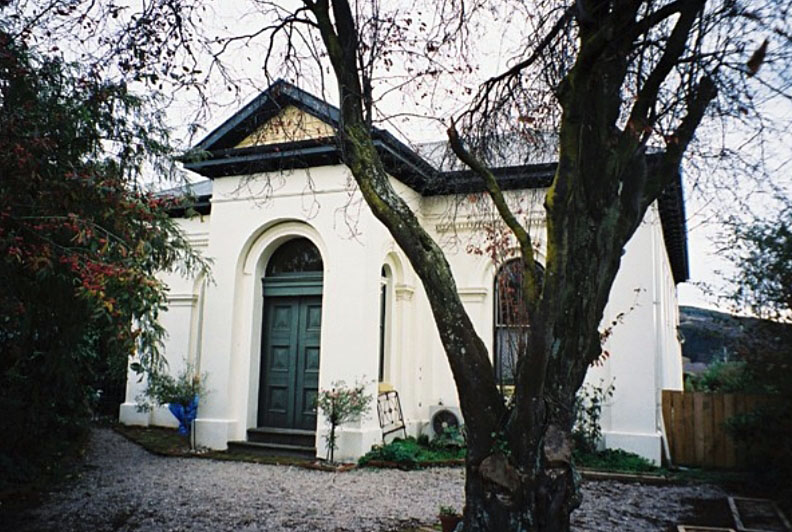
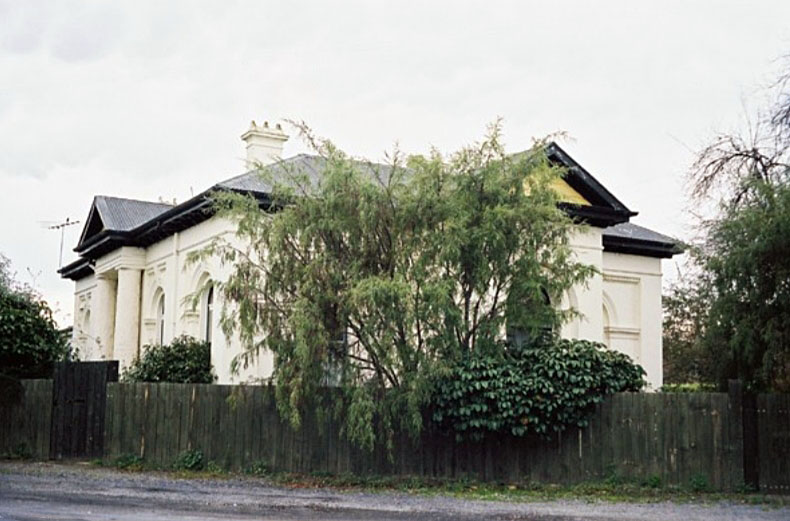
[Prominent Dunedin architect Robert Arthur Lawson designed the building. The contractor was Joseph Clayton. The Bruce Herald described the building in 1870: 'The entrance porch is formed of two massive Eqyptian pillars, which support a suitable entablature with fancy scroll, a similar scroll work being continued around the building which greatly tends to relive its whole appearance.' The articles goes on to describe the bankinr room with its cedar desks, and the manager's room. Behind the manager's room was the fire-proof brick safe with two iron doors. The remainder of the building was turned over to the domestic requirements of the manager in a 'style which amply proves that every comfort and convenience.' The dwelling house consisted of 'handsome rooms' beside the stores, scullery and kitchen, and stabling.]

The Bank of Otago was taken over by the National Bank in 1873. Within a few years there were doubts as to the viability of agencies at both Mosgiel and Outram. By 1891 W.R.C. Churton was acting as manager for both branches. As Mosgiel progressed, Outram declined. In 1931 closed the branch at Outram and converted into an agency.

The bank operated in Outram until 1957-1958, when it was sold. Since then it has been used as a dwelling, at one time converted into flats, but now used as a family home.
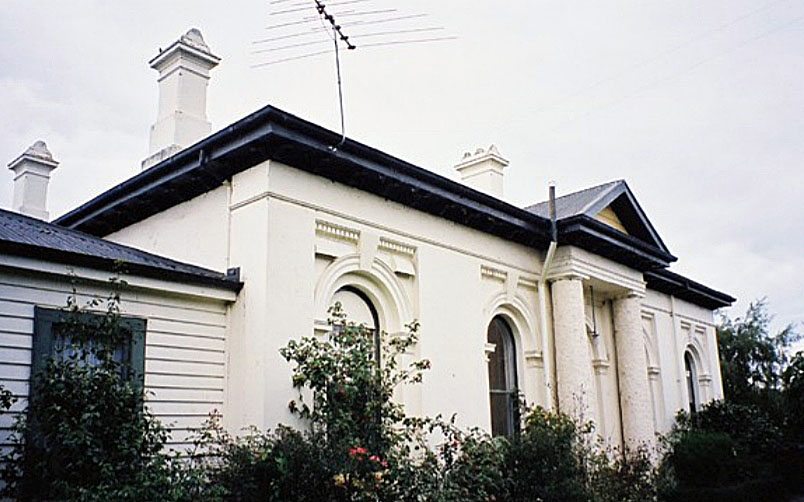
Bank of Otago, Outram. 2004 | Heather Bauchop | Heritage New Zealand

List Entry Information

Overview

Status
Listed

List Entry Status
Historic Place Category 2

Access
Private/No Public Access

List Number
2353

Date Entered
14th April 2005

Date of Effect
14th April 2005

City/District Council
Dunedin City

Region
Otago Region

Extent of List Entry

Registration includes the land, building, fixtures and fittings in Certificate of Title OT8B/49. The registration applies to the former bank and bank manager's residence building.

Legal description

Lot 1 Deed Plan 79 Blk II Town of Outram (OT8B/49), Otago Land District

Detailed List Entry
Significance

Historic Significance

Historical Significance or Value The former Bank of Otago at Outram has architectural and historical significance. Historically the bank building represents the short-lived existence of the Bank of Otago, and its attempts to establish a network of branches dealing with gold mining settlements as well as lenders in small towns and rural communities. The history of the Bank of Otago and the later National Bank of New Zealand which occupied the premises illustrate an important part of the financial history of New Zealand.

Physical Significance

Architecturally it is representative of nineteenth century bank buildings, built in a small community which was seen to have potential for future growth and therefore deserving of the grand architectural statement made by this building. The classical detailing and imposing street presence are typical of nineteenth century bank architecture which emphasised authority, responsibility and stability.

Detail Of Assessed Criteria

The formation of the bank at Outram represents the establishment of the small settlement, in a period characterised by economic boom. The subsequent stagnation of growth and development in the town, and the contraction of rural services such as banking, is a representative aspect of New Zealand history. The former Bank of Otago represents the history of banking in Otago, in particular the formation of the aforementioned bank, as a second generation banking institution - a relatively under-researched event in local history. Although registered in London, the Bank of Otago was one of series of locally-motivated moves to form a financial institution. Its short-lived existence, and take-over by rival National Bank of New Zealand tells the turbulent history of the mid-nineteenth century banking industry; a history of change that contrasts strongly with the image of solidity and permanence found in the architecture.

Construction Professional

Name

Joseph Clayton

Type

Builder

Biography

No biography is currently available for this construction professional

Name

Lawson, Robert Arthur

Type

Architect

Biography

Born in Scotland, Lawson (1833-1902) began his professional career in Perth. At the age of 25 he moved to Melbourne and was engaged in goldmining and journalism before resuming architectural practice. In 1862 Lawson sailed for Dunedin, where his sketch plans had won the competition for the design of First Church. This was built 1867-73. Lawson went on to become one of the most important architects in New Zealand. First Church is regarded as his masterpiece and one of the finest nineteenth century churches in New Zealand. He was also responsible for the design of the Trinity Church (now Fortune Theatre), Dunedin (1869-70), the East Taieri Presbyterian Church (1870), and Knox Church, Dunedin (1874). He designed Park's School (1864) and the ANZ Bank (originally Union Bank, 1874). In Oamaru he designed the Bank of Otago (later National Bank building, 1870) and the adjoining Bank of New South Wales (now Forrester Gallery, 1881). See also: Ledgerwood, Norman, 2013. 'R.A. Lawson: Victorian Architect of Dunedin'. Historic Cemeteries Conservation NZ.

Construction Details

Start Year

1869

Type

Original Construction

Start Year

1908

Finish Year

1909

Type

Other

Description

Electricity installed

Construction Materials

Painted and plastered brick with an iron roof.

Physical Description

In 1875 the building was described as being built of plastered brick with an iron roof. It contained a banking chamber, manager's room, strong-room, and a manager's residence of seven rooms and bathroom, with a detached wooden stable and coach house. The only structure remaining is the above described building with banking chamber and manager's residence.

Reference

Information Sources

New Zealand Historic Places Trust (NZHPT)

New Zealand Historic Places Trust

Otago Daily Times

Otago Daily Times, 1 Jun 1915, p.10.

Otago Witness

Otago Witness

Shaw, 1949

Margaret Shaw and Edgar D. Farrant, The Taieri Plain: Tales of the Years that are Gone, Otago Centennial Historical Publications, Dunedin, 1949

Bruce Herald

Bruce Herald

Report Written By

A fully referenced registration report is available from the NZHPT Otago/Southland Area office Please note that entry on the New Zealand Heritage List/Rarangi Korero identifies only the heritage values of the property concerned, and should not be construed as advice on the state of the property, or as a comment of its soundness or safety, including in regard to earthquake risk, safety in the event of fire, or insanitary conditions.

Further Information

Current Usages

Uses: Accommodation

Specific Usage: House

Former Usages

General Usage:: Accommodation

Specific Usage: Complex of flats

General Usage:: Finance

Specific Usage: Bank

Themes

Web Links

Overview

Status

Listed

List Entry Status

Historic Place Category 2

Access

Private/No Public Access

List Number

2353

Date Entered

14th April 2005

Date of Effect

14th April 2005

City/District Council

Dunedin City

Region

Otago Region

Extent of List Entry

Registration includes the land, building, fixtures and fittings in Certificate of Title OT8B/49. The registration applies to the former bank and bank manager's residence building.

Legal description

Lot 1 Deed Plan 79 Blk II Town of Outram (OT8B/49), Otago Land District

Status

Listed

List Entry Status

Historic Place Category 2

Access

Private/No Public Access

List Number

2353

Date Entered

14th April 2005

Date of Effect

14th April 2005

City/District Council

Dunedin City

Region

Otago Region

Extent of List Entry

Registration includes the land, building, fixtures and fittings in Certificate of Title OT8B/49. The registration applies to the former bank and bank manager's residence building.

Legal description

Lot 1 Deed Plan 79 Blk II Town of Outram (OT8B/49), Otago Land District

Significance

Why is this place significant?

Historic Significance

Historical Significance or Value The former Bank of Otago at Outram has architectural and historical significance. Historically the bank building represents the short-lived existence of the Bank of Otago, and its attempts to establish a network of branches dealing with gold mining settlements as well as lenders in small towns and rural communities. The history of the Bank of Otago and the later National Bank of New Zealand which occupied the premises illustrate an important part of the financial history of New Zealand.

Physical Significance

Architecturally it is representative of nineteenth century bank buildings, built in a small community which was seen to have potential for future growth and therefore deserving of the grand architectural statement made by this building. The classical detailing and imposing street presence are typical of nineteenth century bank architecture which emphasised authority, responsibility and stability.

Why is this place Category 1 / Category 2?

Detail Of Assessed Criteria

The formation of the bank at Outram represents the establishment of the small settlement, in a period characterised by economic boom. The subsequent stagnation of growth and development in the town, and the contraction of rural services such as banking, is a representative aspect of New Zealand history. The former Bank of Otago represents the history of banking in Otago, in particular the formation of the aforementioned bank, as a second generation banking institution - a relatively under-researched event in local history. Although registered in London, the Bank of Otago was one of series of locally-motivated moves to form a financial institution. Its short-lived existence, and take-over by rival National Bank of New Zealand tells the turbulent history of the mid-nineteenth century banking industry; a history of change that contrasts strongly with the image of solidity and permanence found in the architecture.

Why is this place significant?

Historic Significance

Historical Significance or Value The former Bank of Otago at Outram has architectural and historical significance. Historically the bank building represents the short-lived existence of the Bank of Otago, and its attempts to establish a network of branches dealing with gold mining settlements as well as lenders in small towns and rural communities. The history of the Bank of Otago and the later National Bank of New Zealand which occupied the premises illustrate an important part of the financial history of New Zealand.

Physical Significance

Architecturally it is representative of nineteenth century bank buildings, built in a small community which was seen to have potential for future growth and therefore deserving of the grand architectural statement made by this building. The classical detailing and imposing street presence are typical of nineteenth century bank architecture which emphasised authority, responsibility and stability.

Why is this place Category 1 / Category 2?

Detail Of Assessed Criteria

The formation of the bank at Outram represents the establishment of the small settlement, in a period characterised by economic boom. The subsequent stagnation of growth and development in the town, and the contraction of rural services such as banking, is a representative aspect of New Zealand history. The former Bank of Otago represents the history of banking in Otago, in particular the formation of the aforementioned bank, as a second generation banking institution - a relatively under-researched event in local history. Although registered in London, the Bank of Otago was one of series of locally-motivated moves to form a financial institution. Its short-lived existence, and take-over by rival National Bank of New Zealand tells the turbulent history of the mid-nineteenth century banking industry; a history of change that contrasts strongly with the image of solidity and permanence found in the architecture.

Construction Information

Construction Professional

Name

Joseph Clayton

Type

Builder

Biography

No biography is currently available for this construction professional

Name

Lawson, Robert Arthur

Type

Architect

Biography

Born in Scotland, Lawson (1833-1902) began his professional career in Perth. At the age of 25 he moved to Melbourne and was engaged in goldmining and journalism before resuming architectural practice. In 1862 Lawson sailed for Dunedin, where his sketch plans had won the competition for the design of First Church. This was built 1867-73. Lawson went on to become one of the most important architects in New Zealand. First Church is regarded as his masterpiece and one of the finest nineteenth century churches in New Zealand. He was also responsible for the design of the Trinity Church (now Fortune Theatre), Dunedin (1869-70), the East Taieri Presbyterian Church (1870), and Knox Church, Dunedin (1874). He designed Park's School (1864) and the ANZ Bank (originally Union Bank, 1874). In Oamaru he designed the Bank of Otago (later National Bank building, 1870) and the adjoining Bank of New South Wales (now Forrester Gallery, 1881). See also: Ledgerwood, Norman, 2013. 'R.A. Lawson: Victorian Architect of Dunedin'. Historic Cemeteries Conservation NZ.

Construction Details

Start Year

1869

Type

Original Construction

Start Year

1908

Finish Year

1909

Type

Other

Description

Electricity installed

Construction Materials

Painted and plastered brick with an iron roof.

Construction Professional

Name

Joseph Clayton

Type

Builder

Biography

No biography is currently available for this construction professional

Name

Lawson, Robert Arthur

Type

Architect

Biography

Born in Scotland, Lawson (1833-1902) began his professional career in Perth. At the age of 25 he moved to Melbourne and was engaged in goldmining and journalism before resuming architectural practice. In 1862 Lawson sailed for Dunedin, where his sketch plans had won the competition for the design of First Church. This was built 1867-73. Lawson went on to become one of the most important architects in New Zealand. First Church is regarded as his masterpiece and one of the finest nineteenth century churches in New Zealand. He was also responsible for the design of the Trinity Church (now Fortune Theatre), Dunedin (1869-70), the East Taieri Presbyterian Church (1870), and Knox Church, Dunedin (1874). He designed Park's School (1864) and the ANZ Bank (originally Union Bank, 1874). In Oamaru he designed the Bank of Otago (later National Bank building, 1870) and the adjoining Bank of New South Wales (now Forrester Gallery, 1881). See also: Ledgerwood, Norman, 2013. 'R.A. Lawson: Victorian Architect of Dunedin'. Historic Cemeteries Conservation NZ.

Construction Details

Start Year

1869

Type

Original Construction

Start Year

1908

Finish Year

1909

Type

Other

Description

Electricity installed

Construction Materials

Painted and plastered brick with an iron roof.

Physical Description

In 1875 the building was described as being built of plastered brick with an iron roof. It contained a banking chamber, manager's room, strong-room, and a manager's residence of seven rooms and bathroom, with a detached wooden stable and coach house. The only structure remaining is the above described building with banking chamber and manager's residence.

In 1875 the building was described as being built of plastered brick with an iron roof. It contained a banking chamber, manager's room, strong-room, and a manager's residence of seven rooms and bathroom, with a detached wooden stable and coach house. The only structure remaining is the above described building with banking chamber and manager's residence.

Reference

Historical and Associated Iwi / Hapū / Whānau

Information Sources

New Zealand Historic Places Trust (NZHPT)

New Zealand Historic Places Trust

Otago Daily Times

Otago Daily Times, 1 Jun 1915, p.10.

Otago Witness

Otago Witness

Shaw, 1949

Margaret Shaw and Edgar D. Farrant, The Taieri Plain: Tales of the Years that are Gone, Otago Centennial Historical Publications, Dunedin, 1949

Bruce Herald

Bruce Herald

Other Information

A fully referenced registration report is available from the NZHPT Otago/Southland Area office Please note that entry on the New Zealand Heritage List/Rarangi Korero identifies only the heritage values of the property concerned, and should not be construed as advice on the state of the property, or as a comment of its soundness or safety, including in regard to earthquake risk, safety in the event of fire, or insanitary conditions.

Historical and Associated Iwi / Hapū / Whānau

Information Sources

New Zealand Historic Places Trust (NZHPT)

New Zealand Historic Places Trust

Otago Daily Times

Otago Daily Times, 1 Jun 1915, p.10.

Otago Witness

Otago Witness

Shaw, 1949

Margaret Shaw and Edgar D. Farrant, The Taieri Plain: Tales of the Years that are Gone, Otago Centennial Historical Publications, Dunedin, 1949

Bruce Herald

Bruce Herald

Other Information

A fully referenced registration report is available from the NZHPT Otago/Southland Area office Please note that entry on the New Zealand Heritage List/Rarangi Korero identifies only the heritage values of the property concerned, and should not be construed as advice on the state of the property, or as a comment of its soundness or safety, including in regard to earthquake risk, safety in the event of fire, or insanitary conditions.

Further Information

Current Usages

Uses: Accommodation

Specific Usage: House

Former Usages

General Usage: Accommodation

Specific Usage: Complex of flats

General Usage: Finance

Specific Usage: Bank

Current Usages

Uses: Accommodation

Specific Usage: House

Former Usages

General Usage: Accommodation

Specific Usage: Complex of flats

General Usage: Finance

Specific Usage: Bank

Location

Loading
Stay up to date with Heritage this month