DonateMembershipVisit Heritage
  • Tūrangawaewae
    Places
  • Tira Māori
    Māori Heritage
  • Poutairangahia
    Archaeology
  • Rauemi
    Resources
  • Mō Tātou
    About Us
  • New Zealand Heritage List
  • Nominate and submit
  • Explore the List
  • National Historic Landmarks
  • Plaques
  • Rainbow List Project
  • Lost heritage
  • Visit Heritage
  • Our properties
  • Turnbull House Project
  • Collections
  • Shop
  • Tohu Whenua
  • Tira Māori
  • Conserving Māori heritage
  • Marae built heritage
  • Māori heritage on the List
  • Hinemihi—Te Hokinga Mai
  • What is archaeology?
  • Is there a site on my property?
  • What are my legal requirements?
  • Affecting an archaeological site
  • Declaring an archaeological site
  • Archaeology FAQs
  • Archaeology Digital Library
  • Archaeology guidelines and templates
  • Resources
  • Funding
  • Publications
  • Sustainable management guides
  • Disaster recovery
  • Podcasts & digital resources
  • Education Hub
  • Conservation plans
  • About
  • Board
  • Māori Heritage Council
  • Senior Staff
  • Offices
  • Contact us
  • Careers
  • Covenants
  • Fast-track
  • Corporate documents
  • Currently consulting on
  • Our submissions
  • News
  • Covid-19 response
Quick links
Rārangi Kōrero | The List
Explore the List
National Historic Landmarks
Ngā Manawhenua o Aotearoa me ōna Kōrero Tūturu
Quick links
Tapuwae
A Vision for Places of Māori Heritage
Funding for Māori Heritage
Resources
Quick links
Archaeological Authority Portal
Applying for an archaeological authority
Archaeology FAQs
Browse the most frequently asked questions about archaeological authorities and the archaeological process.
Quick links
Quick links
News
News Keep up to date with Heritage New Zealand Pouhere Taonga
Membership
Membership Find out more and sign up today
DonateMembershipVisit Heritage
  • Tūrangawaewae
    Places
  • Tira Māori
    Māori Heritage
  • Poutairangahia
    Archaeology
  • Rauemi
    Resources
  • Mō Tātou
    About Us
  • New Zealand Heritage List
  • Nominate and submit
  • Explore the List
  • National Historic Landmarks
  • Plaques
  • Rainbow List Project
  • Lost heritage
  • Visit Heritage
  • Our properties
  • Turnbull House Project
  • Collections
  • Shop
  • Tohu Whenua
  • Tira Māori
  • Conserving Māori heritage
  • Marae built heritage
  • Māori heritage on the List
  • Hinemihi—Te Hokinga Mai
  • What is archaeology?
  • Is there a site on my property?
  • What are my legal requirements?
  • Affecting an archaeological site
  • Declaring an archaeological site
  • Archaeology FAQs
  • Archaeology Digital Library
  • Archaeology guidelines and templates
  • Resources
  • Funding
  • Publications
  • Sustainable management guides
  • Disaster recovery
  • Podcasts & digital resources
  • Education Hub
  • Conservation plans
  • About
  • Board
  • Māori Heritage Council
  • Senior Staff
  • Offices
  • Contact us
  • Careers
  • Covenants
  • Fast-track
  • Corporate documents
  • Currently consulting on
  • Our submissions
  • News
  • Covid-19 response
Quick links
Rārangi Kōrero | The List
Explore the List
National Historic Landmarks
Ngā Manawhenua o Aotearoa me ōna Kōrero Tūturu
Quick links
Tapuwae
A Vision for Places of Māori Heritage
Funding for Māori Heritage
Resources
Quick links
Archaeological Authority Portal
Applying for an archaeological authority
Archaeology FAQs
Browse the most frequently asked questions about archaeological authorities and the archaeological process.
Quick links
Quick links
News
News Keep up to date with Heritage New Zealand Pouhere Taonga
Membership
Membership Find out more and sign up today
  • Places
  • Nominate and submit
  • National Historic Landmarks
  • Places
  • Nominate and submit
  • National Historic Landmarks
  • Tira Māori
  • Conserving Māori heritage
  • Marae built heritage
  • Tira Māori
  • Conserving Māori heritage
  • Marae built heritage
  • Archaeological authorities
  • Archaeology Digital Library
  • Archaeological authorities
  • Archaeology Digital Library
  • All resources
  • Publications
  • Funding
  • All resources
  • Publications
  • Funding
  • FAQs
  • FAQs
Follow us on:
Places
  • Places
  • Nominate and submit
  • National Historic Landmarks
Tira Māori
  • Tira Māori
  • Conserving Māori heritage
  • Marae built heritage
Archaeology
  • Archaeological authorities
  • Archaeology Digital Library
Resources
  • All resources
  • Publications
  • Funding
FAQs
  • FAQs
Follow us on
HomePrivacyTerms and conditionsAbout this site
© Heritage New Zealand Pouhere Taonga 2026.
 
Church of the Good Shepherd

Pioneer Drive, TEKAPO

Private

Historic Place Category 1

List No. 311

Quick links:
List GalleryLocationDetails
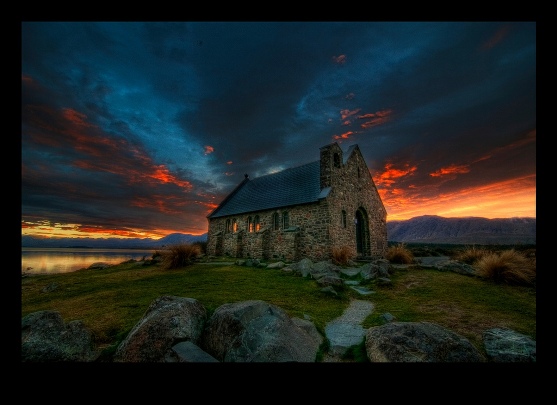
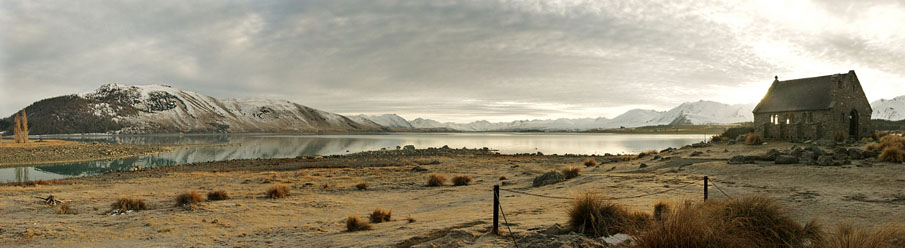
The Church of Good Shepherd on the shores of Lake Tekapo is arguably one of the most photographed of New Zealand's buildings. A small stone church situated in a stunning landscape, it is one of a number of memorial churches built throughout South Canterbury to commemorate the original Pakeha settlers of the area.

Opened in 1935, the Church of the Good Shepherd was the first to be built in the Mackenzie Basin. The idea for a local church was first mooted by the then Vicar of Fairlie, Reverend W.E.D. Davies, and picked up by the local runholders, who saw it as an opportunity to commemorate their ancestors who braved the rigours of this harsh alpine environment to establish the runs. Land for the church was donated by the Murrays of Braemar Station and the design was based on drawings and a model by local artist Esther Hope (1885-1975) of Grampians Station. Hope was a well-known painter, who exhibited regularly at the Canterbury Society of Arts. Her sketches and model were presumably passed onto the architect, Christchurch-based R.S.D. Harman (1896-1953). Although Harman had been involved in church design before, the commission for the Church of the Good Shepherd was his first solo full church design.

Harman's design for the Church of the Good Shepherd evolved from a traditional Gothic form, suggested by Hope's drawings, to a simple and more medieval building appropriate to the bleak landscape. The church was constructed from poured concrete and faced with local boulders, carefully chosen for their size, shape and colour. These were left in their original state complete with any existing lichen. In part this restraint is linked to the economic depression of the thirties, which left the community with little money for building.

Buttresses line the sides of the church and a small belfry rises from the roofline to the left of the main entrance. A concrete cross was placed on top of the north gable. Although the church was originally roofed with Australian oak shingles these proved unable to stand up to the extreme weather conditions of the site and were replaced with slate in 1957.

The interior of the church reflects Harman's Arts and Crafts dedication to the simplicity and inherent beauty of materials, with the rough-plastered cream walls contrasting with the dark stained rimu roof timbers. Harman designed the pews, communion rail, vicar's prayer-desk and seat, but the main carvings in the church were rendered by noted Christchurch carver, Frederick Gurnsey (1868-1953). Gurnsey had taught Harman at the Canterbury School of Art and they went on to form a close working relationship, collaborating on a number of other buildings. At Tekapo Gurnsey carved a representation of the Good Shepherd on the altar and alpine flora and fauna on the Oamaru stone font. He also carved the lecturn and the stand for the Book of Remembrance, which contains a complete list of the original Mackenzie runholders. These carvings are described by art historian Mark Stocker as 'more primitive' and 'quirky' than Gurnsey's normal work. Oak was chosen as the wood for a number of fittings within the church in order to symbolise the links between the Mackenzie Basin runholders and their British forbearers.

The main feature of the interior, however, is the panorama of the lake and mountains, visible through the plate glass window above the altar. This idea, of making visible and framing the glory of God's creation, had first been successfully incorporated into St James Church (1930) at Franz Josef, on the West Coast, also registered by the New Zealand Historic Places Trust Pouhere Taonga. There the window offered the congregation a view of the bush and glacier; at Tekapo the lake and Southern Alps take the place of both a reredos and stained glass window.

As requested by the donors, the immediate surroundings of the church were left in their natural state covered with matagouri, tussock and rock. Adjoining land was also gifted to ensure the church remained in splendid isolation. Although owned by the Anglican Church, the Church of the Good Shepherd was also open to the local Methodist and Presbyterian congregations.

The Church of Good Shepherd is the most well known of Harman's works and illustrates his commitment to Arts and Crafts principles. The way in which the church is built from local materials and surrounded by indigenous plants makes it very much part of the surrounding landscape and gives it a timeless quality. It was erected to provide the local community with a church and for runholders to celebrate their ancestors. It is therefore associated with the early Pakeha settlers of the Mackenzie Basin. The church contains a significant collection of Gurnsey's carvings and features an unusual window, which offers visitors a magnificent view of the surrounding lake and mountains. Today it is a major tourist attraction.
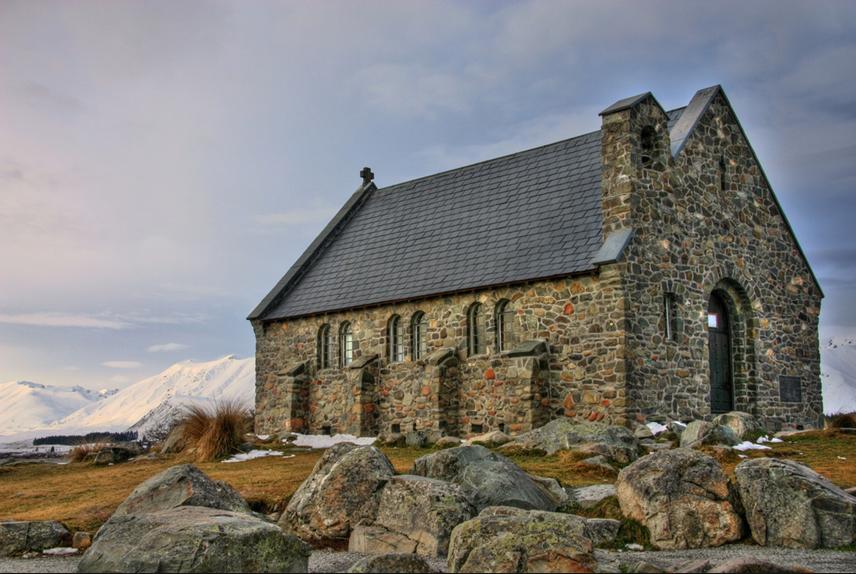
Church of the Good Shepherd. Image courtesy of www.flickr.com | Allison Bennet | 03/08/2008 | Allison Bennet
Church of the Good Shepherd. Image courtesy of www.flickr.com | Jana147 | 01/05/2010 | Jana147
Church of the Good Shepherd. Image courtesy of www.flickr.com | PhilBee NZ - Phil Braithwaite | 11/08/2012 | PhilBee NZ - Phil Braithwaite
Church of the Good Shepherd. Image courtesy of www.flickr.com | Allison Bennet | 03/08/2008 | Allison Bennet
Church of the Good Shepherd. Image courtesy of www.flickr.com | Jana147 | 01/05/2010 | Jana147
Church of the Good Shepherd. Image courtesy of www.flickr.com | PhilBee NZ - Phil Braithwaite | 11/08/2012 | PhilBee NZ - Phil Braithwaite

List Entry Information

Overview

Status
Listed

List Entry Status
Historic Place Category 1

Access
Private/No Public Access

List Number
311

Date Entered
5th September 1985

Date of Effect
5th September 1985

City/District Council
Mackenzie District

Region
Canterbury Region

Extent of List Entry

Extent includes the land described as Pt Sec 1C Blk II Tekapo Village (RT CB440/39), Canterbury Land District and the building known as Church of the Good Shepherd thereon.

Legal description

Pt Sec 1C Blk II Tekapo Village (RT CB440/39), Canterbury Land District

Detailed List Entry

Construction Professional

Name

Harman, Richard Strachan De Renzy

Type

Architect

Biography

Not to be confused with his uncle R.D. Harman of Collins and Harman, Architects, R.S. Harman (1896-1953) was born and educated in Christchurch where he subsequently became one of the city's most competent ecclesiastical and residential architects. He served his articles with the local firm of Seager and Macleod (1914-16) and also attended classes at the Canterbury College School of Art during this time. After service in France during the First World War, he studied at the Royal College of Art, London before returning to New Zealand in 1920 to rejoin Seager's office. Between 1923 and 1926 Harman was once more in London undertaking further study as well as working for the Ancient Monuments Branch of His Majesty's Office of Works. On his return to Christchurch he entered into a short-lived partnership with Cecil Wood before establishing his own practice in 1928. Harman was closely associated with the Anglican Church throughout his career and almost all of his church designs were commissioned by the Anglican dioceses of Canterbury and Nelson. The Church of the Good Shepherd, Tekapo (1935) and St. John's Cathedral, Napier (1953) are among his most well-known ecclesiastical works, although the latter was not erected until after his death. During the late 1940s he worked as the consulting architect for Christchurch Cathedral, designing the Chapel of St Michael and St George in the south transept in 1949 and the reredos behind the High Altar in 1950. Harman was also an active member of the New Zealand Institute of Architects, becoming president of that organisation in 1949.

Construction Details

Start Year

1935

Finish Year

1935

Type

Original Construction

Description

Foundation stone laid January 1935. Dedicated August 1935

Start Year

1933

Finish Year

1934

Type

Designed

Start Year

1957

Type

Modification

Description

Original wooden shingles replaced with slate.

Notable Features

Register of original sheep runs, their owners and employees.

Reference

Completion Date

4th October 2002

Report Written By

Melanie Lovell-Smith

Information Sources

Lochead, 1995

Ian Lochead (ed.) Papers and Proceedings SAHANZ Annual Conference, Christchurch 6-8 July 1991: Regional Responses, Christchurch, 1995

McGill, 1997

David McGill and Grant Sheehan, Landmarks: Notable Historic Buildings of New Zealand, Auckland, 1997

Stocker, 1997

Mark Stocker, Angels and Roses: the art of Frederick George Gurnsey, Christchurch, 1997

University of Canterbury

University of Canterbury

Report Written By

This place was identified as significant under previous legislation with different information requirements. It remains significant under the current legislation. There is opportunity under our legislation and policies to add to this information. Further information about this place may be available from the Southern Regional Office of Heritage New Zealand Pouhere Taonga. Please note that entry on the New Zealand Heritage List/Rarangi Korero identifies only the heritage values of the property concerned, and should not be construed as advice on the state of the property, or as a comment of its soundness or safety, including in regard to earthquake risk, safety in the event of fire, or insanitary conditions.

Further Information

Current Usages

Uses: Religion

Specific Usage: Church

Former Usages

General Usage:: Religion

Specific Usage: Church

Themes

Web Links

Overview

Status

Listed

List Entry Status

Historic Place Category 1

Access

Private/No Public Access

List Number

311

Date Entered

5th September 1985

Date of Effect

5th September 1985

City/District Council

Mackenzie District

Region

Canterbury Region

Extent of List Entry

Extent includes the land described as Pt Sec 1C Blk II Tekapo Village (RT CB440/39), Canterbury Land District and the building known as Church of the Good Shepherd thereon.

Legal description

Pt Sec 1C Blk II Tekapo Village (RT CB440/39), Canterbury Land District

Status

Listed

List Entry Status

Historic Place Category 1

Access

Private/No Public Access

List Number

311

Date Entered

5th September 1985

Date of Effect

5th September 1985

City/District Council

Mackenzie District

Region

Canterbury Region

Extent of List Entry

Extent includes the land described as Pt Sec 1C Blk II Tekapo Village (RT CB440/39), Canterbury Land District and the building known as Church of the Good Shepherd thereon.

Legal description

Pt Sec 1C Blk II Tekapo Village (RT CB440/39), Canterbury Land District

Construction Information

Construction Professional

Name

Harman, Richard Strachan De Renzy

Type

Architect

Biography

Not to be confused with his uncle R.D. Harman of Collins and Harman, Architects, R.S. Harman (1896-1953) was born and educated in Christchurch where he subsequently became one of the city's most competent ecclesiastical and residential architects. He served his articles with the local firm of Seager and Macleod (1914-16) and also attended classes at the Canterbury College School of Art during this time. After service in France during the First World War, he studied at the Royal College of Art, London before returning to New Zealand in 1920 to rejoin Seager's office. Between 1923 and 1926 Harman was once more in London undertaking further study as well as working for the Ancient Monuments Branch of His Majesty's Office of Works. On his return to Christchurch he entered into a short-lived partnership with Cecil Wood before establishing his own practice in 1928. Harman was closely associated with the Anglican Church throughout his career and almost all of his church designs were commissioned by the Anglican dioceses of Canterbury and Nelson. The Church of the Good Shepherd, Tekapo (1935) and St. John's Cathedral, Napier (1953) are among his most well-known ecclesiastical works, although the latter was not erected until after his death. During the late 1940s he worked as the consulting architect for Christchurch Cathedral, designing the Chapel of St Michael and St George in the south transept in 1949 and the reredos behind the High Altar in 1950. Harman was also an active member of the New Zealand Institute of Architects, becoming president of that organisation in 1949.

Construction Details

Start Year

1935

Finish Year

1935

Type

Original Construction

Description

Foundation stone laid January 1935. Dedicated August 1935

Start Year

1933

Finish Year

1934

Type

Designed

Start Year

1957

Type

Modification

Description

Original wooden shingles replaced with slate.

Notable Features

Register of original sheep runs, their owners and employees.

Construction Professional

Name

Harman, Richard Strachan De Renzy

Type

Architect

Biography

Not to be confused with his uncle R.D. Harman of Collins and Harman, Architects, R.S. Harman (1896-1953) was born and educated in Christchurch where he subsequently became one of the city's most competent ecclesiastical and residential architects. He served his articles with the local firm of Seager and Macleod (1914-16) and also attended classes at the Canterbury College School of Art during this time. After service in France during the First World War, he studied at the Royal College of Art, London before returning to New Zealand in 1920 to rejoin Seager's office. Between 1923 and 1926 Harman was once more in London undertaking further study as well as working for the Ancient Monuments Branch of His Majesty's Office of Works. On his return to Christchurch he entered into a short-lived partnership with Cecil Wood before establishing his own practice in 1928. Harman was closely associated with the Anglican Church throughout his career and almost all of his church designs were commissioned by the Anglican dioceses of Canterbury and Nelson. The Church of the Good Shepherd, Tekapo (1935) and St. John's Cathedral, Napier (1953) are among his most well-known ecclesiastical works, although the latter was not erected until after his death. During the late 1940s he worked as the consulting architect for Christchurch Cathedral, designing the Chapel of St Michael and St George in the south transept in 1949 and the reredos behind the High Altar in 1950. Harman was also an active member of the New Zealand Institute of Architects, becoming president of that organisation in 1949.

Construction Details

Start Year

1935

Finish Year

1935

Type

Original Construction

Description

Foundation stone laid January 1935. Dedicated August 1935

Start Year

1933

Finish Year

1934

Type

Designed

Start Year

1957

Type

Modification

Description

Original wooden shingles replaced with slate.

Notable Features

Register of original sheep runs, their owners and employees.

Reference

Historical and Associated Iwi / Hapū / Whānau

Completion Date

4th October 2002

Report Written By

Melanie Lovell-Smith

Information Sources

Christchurch Press

Lochead, 1995

Ian Lochead (ed.) Papers and Proceedings SAHANZ Annual Conference, Christchurch 6-8 July 1991: Regional Responses, Christchurch, 1995

McGill, 1997

David McGill and Grant Sheehan, Landmarks: Notable Historic Buildings of New Zealand, Auckland, 1997

Stocker, 1997

Mark Stocker, Angels and Roses: the art of Frederick George Gurnsey, Christchurch, 1997

University of Canterbury

University of Canterbury

Other Information

This place was identified as significant under previous legislation with different information requirements. It remains significant under the current legislation. There is opportunity under our legislation and policies to add to this information. Further information about this place may be available from the Southern Regional Office of Heritage New Zealand Pouhere Taonga. Please note that entry on the New Zealand Heritage List/Rarangi Korero identifies only the heritage values of the property concerned, and should not be construed as advice on the state of the property, or as a comment of its soundness or safety, including in regard to earthquake risk, safety in the event of fire, or insanitary conditions.

Historical and Associated Iwi / Hapū / Whānau

Completion Date

4th October 2002

Report Written By

Melanie Lovell-Smith

Information Sources

Christchurch Press

Lochead, 1995

Ian Lochead (ed.) Papers and Proceedings SAHANZ Annual Conference, Christchurch 6-8 July 1991: Regional Responses, Christchurch, 1995

McGill, 1997

David McGill and Grant Sheehan, Landmarks: Notable Historic Buildings of New Zealand, Auckland, 1997

Stocker, 1997

Mark Stocker, Angels and Roses: the art of Frederick George Gurnsey, Christchurch, 1997

University of Canterbury

University of Canterbury

Other Information

This place was identified as significant under previous legislation with different information requirements. It remains significant under the current legislation. There is opportunity under our legislation and policies to add to this information. Further information about this place may be available from the Southern Regional Office of Heritage New Zealand Pouhere Taonga. Please note that entry on the New Zealand Heritage List/Rarangi Korero identifies only the heritage values of the property concerned, and should not be construed as advice on the state of the property, or as a comment of its soundness or safety, including in regard to earthquake risk, safety in the event of fire, or insanitary conditions.

Further Information

Current Usages

Uses: Religion

Specific Usage: Church

Former Usages

General Usage: Religion

Specific Usage: Church

Current Usages

Uses: Religion

Specific Usage: Church

Former Usages

General Usage: Religion

Specific Usage: Church

Location

Loading
Stay up to date with Heritage this month