Quick links


Quick links
Quick links
Quick links
Quick links
Quick links
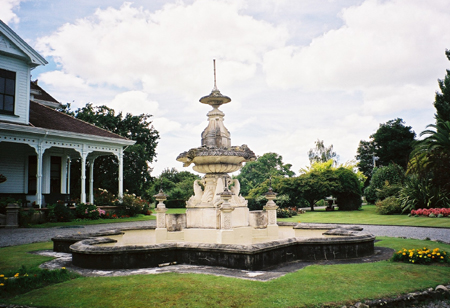
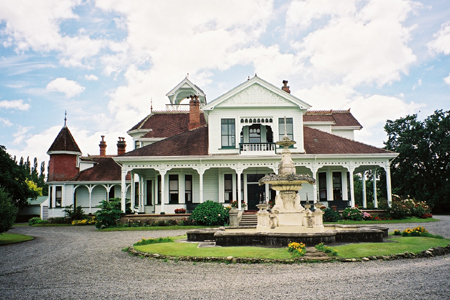
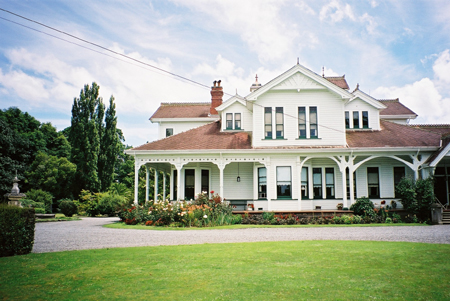
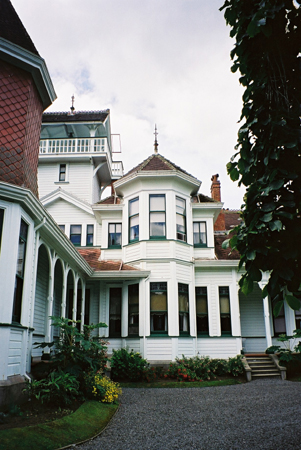
Merchiston Station Homestead
Putorino Road, RATA
Private
Historic Place Category 1
List No. 33
Quick links:
List GalleryLocationDetails
Putorino Road, RATA
Private
Historic Place Category 1
List No. 33
List Entry Information
Status
Listed
List Entry Status
Historic Place Category 1
Access
Private/No Public Access
List Number
33
Date Entered
27th June 1985
Date of Effect
27th June 1985
City/District Council
Rangitīkei District
Region
Horizons (Manawatū-Whanganui) Region
Legal description
Lots 10 11 Pt Lots 1-3 DP 286 Clsd Rds Hapopo Blk IX X Ongo
Status
Listed
List Entry Status
Historic Place Category 1
Access
Private/No Public Access
List Number
33
Date Entered
27th June 1985
Date of Effect
27th June 1985
City/District Council
Rangitīkei District
Region
Horizons (Manawatū-Whanganui) Region
Legal description
Lots 10 11 Pt Lots 1-3 DP 286 Clsd Rds Hapopo Blk IX X Ongo
Construction Professional
Name
Maddison, Joseph Clarkson
Type
Architect
Biography
Joseph Maddison (1850-1923) was born in Greenwich and came to Lyttelton in 1872. He settled in Christchurch and commenced practice as an architect. He designed a large number of public buildings, mainly in Canterbury, including The Church of the Holy Innocents, Amberley, the Anglican Church at Port Levy, Warner's Hotel (1881) and Clarendon Hotel (1902), both in Christchurch, Government Buildings, Christchurch (1913) and numerous private residences. Maddison was well known as an industrial architect and was responsible for the warehouses of the Kaiapoi Woollen Company. His specialty, however, was in the design of freezing works. Among his designs were the Canterbury Freezing Works, Belfast (1883) and the Mataura Freezing Works, Canterbury and he is considered to have been one of the chief exponents in this field during the late nineteeenth century. He was admitted as a Fellow of the Royal Institute of British Architects in 1887.
Construction Details
Start Year
1908
Type
Original Construction
Construction Professional
Name
Maddison, Joseph Clarkson
Type
Architect
Biography
Joseph Maddison (1850-1923) was born in Greenwich and came to Lyttelton in 1872. He settled in Christchurch and commenced practice as an architect. He designed a large number of public buildings, mainly in Canterbury, including The Church of the Holy Innocents, Amberley, the Anglican Church at Port Levy, Warner's Hotel (1881) and Clarendon Hotel (1902), both in Christchurch, Government Buildings, Christchurch (1913) and numerous private residences. Maddison was well known as an industrial architect and was responsible for the warehouses of the Kaiapoi Woollen Company. His specialty, however, was in the design of freezing works. Among his designs were the Canterbury Freezing Works, Belfast (1883) and the Mataura Freezing Works, Canterbury and he is considered to have been one of the chief exponents in this field during the late nineteeenth century. He was admitted as a Fellow of the Royal Institute of British Architects in 1887.
Construction Details
Start Year
1908
Type
Original Construction
Historical and Associated Iwi / Hapū / Whānau
Completion Date
11th October 2001
Report Written By
Helen McCracken
Information Sources
New Zealand Historic Places
New Zealand Historic Places
Other Information
This place was identified as significant under previous legislation with different information requirements. It remains significant under the current legislation. There is opportunity under our legislation and policies to add to this information. Further information about this place may be available from the Central Regional Office of Heritage New Zealand Pouhere Taonga. Please note that entry on the New Zealand Heritage List/Rarangi Korero identifies only the heritage values of the property concerned, and should not be construed as advice on the state of the property, or as a comment of its soundness or safety, including in regard to earthquake risk, safety in the event of fire, or insanitary conditions.
Historical and Associated Iwi / Hapū / Whānau
Completion Date
11th October 2001
Report Written By
Helen McCracken
Information Sources
New Zealand Historic Places
New Zealand Historic Places
Other Information
This place was identified as significant under previous legislation with different information requirements. It remains significant under the current legislation. There is opportunity under our legislation and policies to add to this information. Further information about this place may be available from the Central Regional Office of Heritage New Zealand Pouhere Taonga. Please note that entry on the New Zealand Heritage List/Rarangi Korero identifies only the heritage values of the property concerned, and should not be construed as advice on the state of the property, or as a comment of its soundness or safety, including in regard to earthquake risk, safety in the event of fire, or insanitary conditions.
Current Usages
Uses: Accommodation
Specific Usage: House
Current Usages
Uses: Accommodation
Specific Usage: House
Get the latest heritage news, features and events delivered
straight to your inbox.