Gladstone Grand Hotel, built in 1884 and extended in 1916, at 43-49 Main Street, Fairlie, is a prominent accommodation house and bar that has served tourists and locals in the Mackenzie District since the late nineteenth century. It has aesthetic, architectural, cultural, historical and social significance or value.
The small township of Fairlie sits beside the Ōpihi River, a 75 kilometre hill-fed braided river which runs to the sea 10 kilometres north of Timaru and which is of immense significance to the local Ngāi Tahu hapū of Kāti Huirapa. An important mahinga kai, the Ōpihi was the principal travel route from the Arowhenua region to Te Manahuna (the Mackenzie Basin). The controversial Canterbury Purchase (Kemp’s Deed) land sale took place in the late 1840s. Pākeha arrived in the Fairlie area in the mid-1860s, with David Hamilton and James Litster (Litzer) being pioneer settlers in the place they called ‘Fairlie Creek'. Litster established a timber accommodation house there in circa 1866 and this was later converted to a livery stable. The Railway extension to Fairlie Creek, as a terminus of the branch railway from Timaru (connecting also Albury and Burkes Pass), was begun in 1881 and completed by early 1884. Because of the railway, and as a sign of optimism for prosperity for tourists coming to see the natural beauties of the region, Fairlie Creek businessmen, Messrs Morris and Gall, decided to build the town’s second hotel, at first naming it the ‘Gladstone Hotel’. Within a year, this substantial building became known as the ‘Gladstone Grand Hotel’.
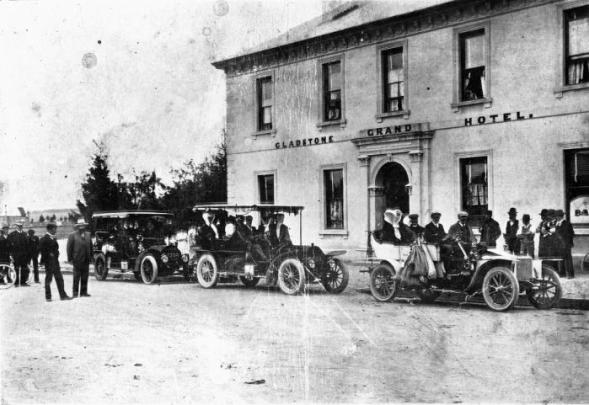
When constructed in 1884, the Gladstone Hotel building stood opposite the railway station, on about one hectare of land on the Main Street of Fairlie Creek, with a lawn and garden surrounded by a plantation of trees. It contained 30 rooms which included a fine billiard room, three sitting rooms and two dining rooms. An invitation dinner and ball was held to celebrate the hotel’s opening in July 1884, the newspapers reporting ‘A large number availed themselves of the hospitality of the host and hostess, Mr and Mrs Gilmore (sic), and thoroughly enjoyed themselves until daylight did appear’.
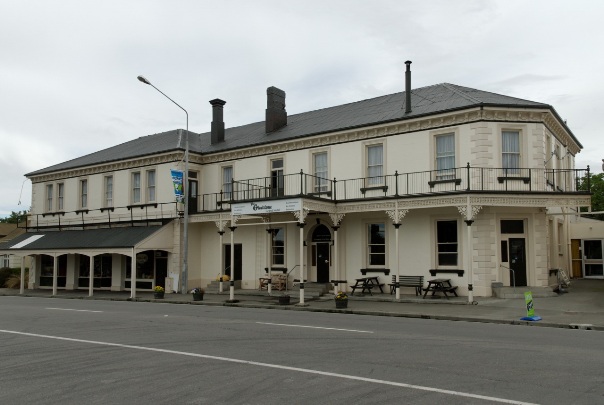
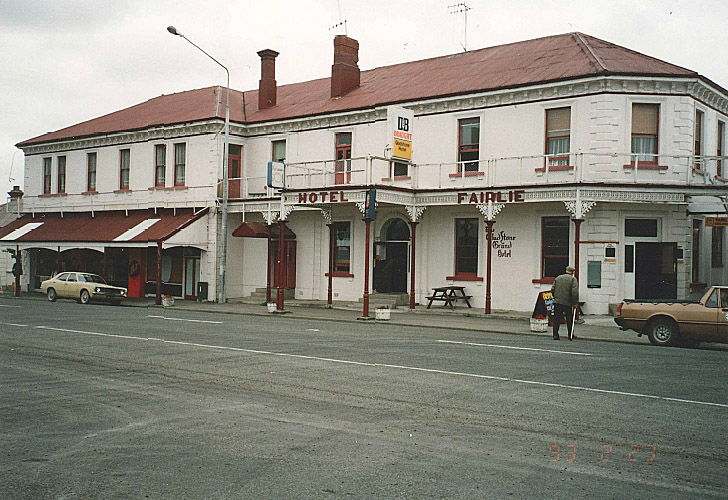
Situated on the west side of the main street of Fairlie, opposite a grassed public reserve that was previously the site of the railway station, the Gladstone Grand Hotel is a two-storeyed structure that appears to be built of stone and plastered brick. Detailing includes a main entrance with a round arch and covered porch, iron fretwork on balcony and verandah posts, sash windows and decorative brackets at the eaves. Its hipped roof is covered in corrugated steel. A two-storeyed extension to the south contains commercial rooms with large shop front windows and a plain sloping verandah.
The hotel was closely associated with the railway and with the stables and later motor coach located on the adjoining property to the north. It became a favoured resort for tourists travelling to Mount Cook, including some distinguished guests such as His Excellency the Governor and Lady Ranfurly. It advertised itself as ‘the leading and most fashionable tourist hotel in Canterbury’, a handsome stone structure and the only fire proof hotel in Fairlie.
The emphasis on the fire safety was relevant, since the railway station buildings opposite had twice burned down (1890 and 1908) and in 1916 the neighbouring Mount Cook Motor Company’s workshop was destroyed by fire, badly scorching the hotel in the process. 1916 was the year that the hotel was extended to the south. E. Millichamp was the contractor for the additions, which comprises about 20 extra bedrooms and three bathrooms, and three shops on the street frontage on the ground floor. Described as a ‘home away from home’, the hotel also catered for permanent guests and staff as well as passing visitors and travelling salesmen. Early on, there were simple timber ‘sample rooms’, separate from the hotel, but by 1916 ‘spacious new sample rooms’ were ‘just completed’ as part of the hotel extension. One of the ‘new shops in the hotel buildings’ was made available for a Patriotic Shop to raise funds to send comforts to local men serving in the First World War overseas. Businesses advertised as operating out of the building, for example, George Chapman (of Timaru), chimney sweep and E. Cholerton, Optical Specialist (of Christchurch). Ballantynes and Co, and Silk Merchant, W. Kee specified they were operating out of the hotel’s ‘Sample Rooms’. By the late 1940s, one of the businesses permanently established in the extension on the ground floor was ‘Fairlie Greengrocer’, selling fresh fruit and vegetables. Right from the early days, lively local goings-on were reported in the papers. Some births and deaths occurred on site. Meetings and celebrations were held, such as Oddfellows’ of Fairlie Creek. Local, Joseph Fleming, mentioned in the place in his poem, ‘Fleming’s Lament on Fairlie Creek’, with the line ‘I’ll ofttimes think about this house, the Gladstone Grand Hotel’.The iron fretwork with balcony and portico on the 1884 portion of the building was added after 1915 (possibly in 1916 when the large south addition was constructed). Later, by the late 1940s, the south extension also had a verandah added.Various additions have been made at the rear, including a single storeyed bar at the north-west corner, which appears to date to the 1970s. A stone building with a square plan at the west rear of the hotel, may date to the early twentieth century and has undergone a number of alterations, including now being joined to the main hotel building – part is now used as the hotel kitchen.
The small township of Fairlie sits beside the Ōpihi River, a 75 kilometre hill-fed braided river which runs to the sea 10 kilometres north of Timaru and which is of immense significance to the local Ngāi Tahu hapū of Kāti Huirapa. An important mahinga kai, the Ōpihi was the principal travel route from the Arowhenua region to Te Manahuna (the Mackenzie Basin). The controversial Canterbury Purchase (Kemp’s Deed) land sale took place in the late 1840s. Pākeha arrived in the Fairlie area in the mid-1860s, with David Hamilton and James Litster (Litzer) being pioneer settlers in the place they called ‘Fairlie Creek'. Litster established a timber accommodation house there in circa 1866 and this was later converted to a livery stable. The Railway extension to Fairlie Creek, as a terminus of the branch railway from Timaru (connecting also Albury and Burkes Pass), was begun in 1881 and completed by early 1884. Because of the railway, and as a sign of optimism for prosperity for tourists coming to see the natural beauties of the region, Fairlie Creek businessmen, Messrs Morris and Gall, decided to build the town’s second hotel, at first naming it the ‘Gladstone Hotel’. Within a year, this substantial building became known as the ‘Gladstone Grand Hotel’.
When constructed in 1884, the Gladstone Hotel building stood opposite the railway station, on about one hectare of land on the Main Street of Fairlie Creek, with a lawn and garden surrounded by a plantation of trees. It contained 30 rooms which included a fine billiard room, three sitting rooms and two dining rooms. An invitation dinner and ball was held to celebrate the hotel’s opening in July 1884, the newspapers reporting ‘A large number availed themselves of the hospitality of the host and hostess, Mr and Mrs Gilmore (sic), and thoroughly enjoyed themselves until daylight did appear’.
Situated on the west side of the main street of Fairlie, opposite a grassed public reserve that was previously the site of the railway station, the Gladstone Grand Hotel is a two-storeyed structure that appears to be built of stone and plastered brick. Detailing includes a main entrance with a round arch and covered porch, iron fretwork on balcony and verandah posts, sash windows and decorative brackets at the eaves. Its hipped roof is covered in corrugated steel. A two-storeyed extension to the south contains commercial rooms with large shop front windows and a plain sloping verandah.
The hotel was closely associated with the railway and with the stables and later motor coach located on the adjoining property to the north. It became a favoured resort for tourists travelling to Mount Cook, including some distinguished guests such as His Excellency the Governor and Lady Ranfurly. It advertised itself as ‘the leading and most fashionable tourist hotel in Canterbury’, a handsome stone structure and the only fire proof hotel in Fairlie.
The emphasis on the fire safety was relevant, since the railway station buildings opposite had twice burned down (1890 and 1908) and in 1916 the neighbouring Mount Cook Motor Company’s workshop was destroyed by fire, badly scorching the hotel in the process. 1916 was the year that the hotel was extended to the south. E. Millichamp was the contractor for the additions, which comprises about 20 extra bedrooms and three bathrooms, and three shops on the street frontage on the ground floor. Described as a ‘home away from home’, the hotel also catered for permanent guests and staff as well as passing visitors and travelling salesmen. Early on, there were simple timber ‘sample rooms’, separate from the hotel, but by 1916 ‘spacious new sample rooms’ were ‘just completed’ as part of the hotel extension. One of the ‘new shops in the hotel buildings’ was made available for a Patriotic Shop to raise funds to send comforts to local men serving in the First World War overseas. Businesses advertised as operating out of the building, for example, George Chapman (of Timaru), chimney sweep and E. Cholerton, Optical Specialist (of Christchurch). Ballantynes and Co, and Silk Merchant, W. Kee specified they were operating out of the hotel’s ‘Sample Rooms’. By the late 1940s, one of the businesses permanently established in the extension on the ground floor was ‘Fairlie Greengrocer’, selling fresh fruit and vegetables. Right from the early days, lively local goings-on were reported in the papers. Some births and deaths occurred on site. Meetings and celebrations were held, such as Oddfellows’ of Fairlie Creek. Local, Joseph Fleming, mentioned in the place in his poem, ‘Fleming’s Lament on Fairlie Creek’, with the line ‘I’ll ofttimes think about this house, the Gladstone Grand Hotel’.The iron fretwork with balcony and portico on the 1884 portion of the building was added after 1915 (possibly in 1916 when the large south addition was constructed). Later, by the late 1940s, the south extension also had a verandah added.Various additions have been made at the rear, including a single storeyed bar at the north-west corner, which appears to date to the 1970s. A stone building with a square plan at the west rear of the hotel, may date to the early twentieth century and has undergone a number of alterations, including now being joined to the main hotel building – part is now used as the hotel kitchen.