Quick links


Quick links
Quick links
Quick links
Quick links
Quick links
31-33 Dowling Street and 152, 158 Princes Street, DUNEDIN
Private
Historic Place Category 2
List No. 3368
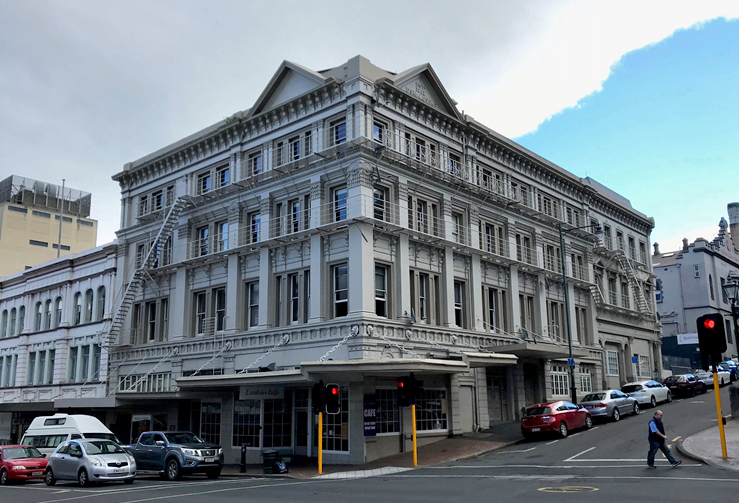
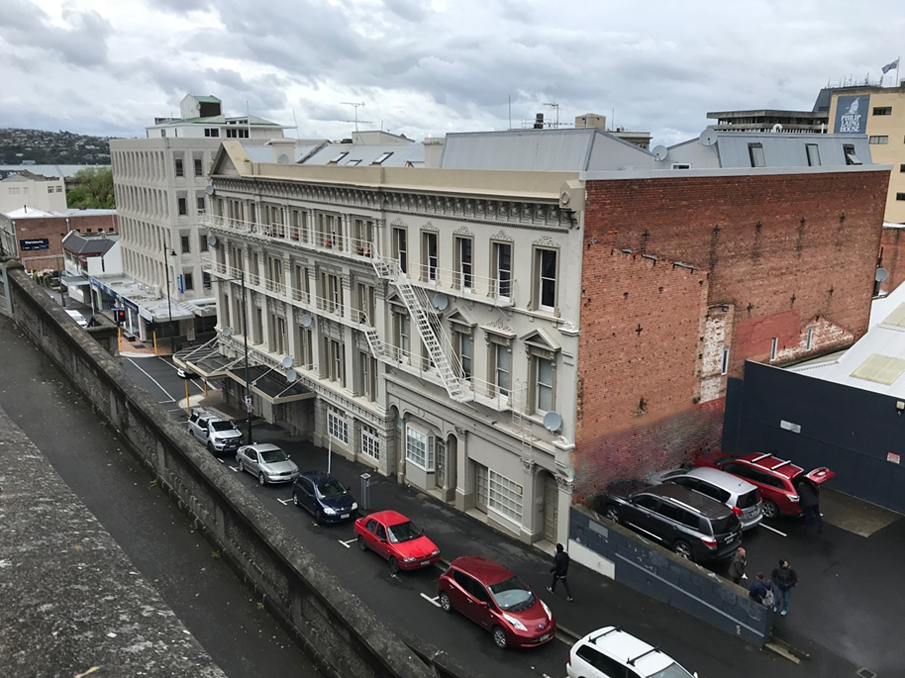
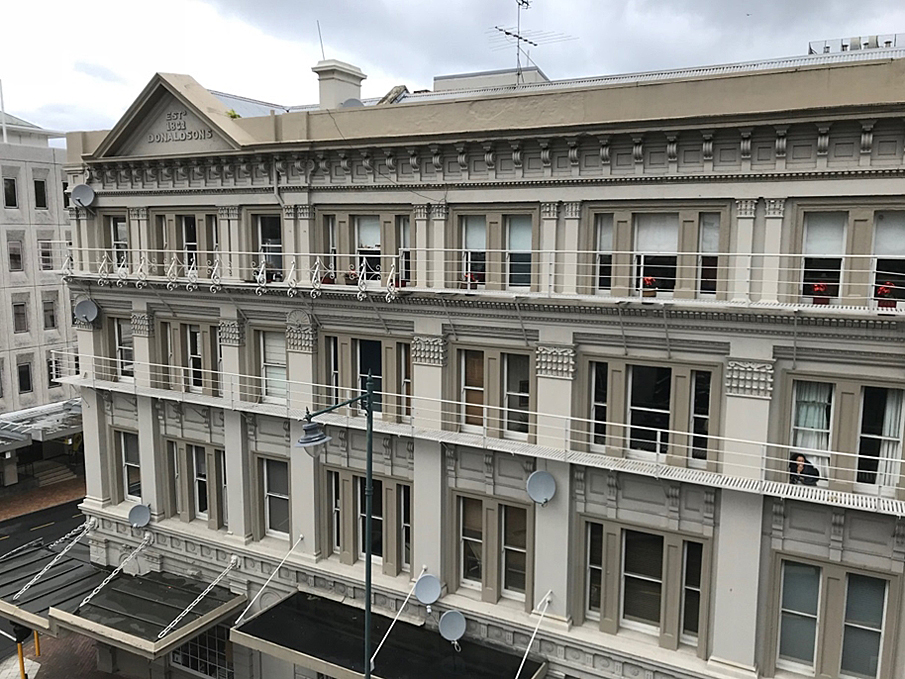
List Entry Information
Status
Listed
List Entry Status
Historic Place Category 2
Access
Private/No Public Access
List Number
3368
Date Entered
25th September 1986
Date of Effect
25th September 1986
City/District Council
Dunedin City
Region
Otago Region
Extent of List Entry
Extent includes the land described as Pt Sec 43 Blk IX TN of Dunedin (RT SRS 5764, RT OT428/66) and part of the land described as Legal Road, Otago Land District, and the building known as Excelsior Hotel (Former) thereon. Extent includes the verandah on Dowling and Princes Streets. Refer to the extent map tabled at the Rārangi Kōrero Committee meeting on 30 May 2019.
Legal description
Pt Sec 43 Blk IX TN of Dunedin (RT SRS 5764, RT OT428/66) and Legal Road, Otago Land District
Status
Listed
List Entry Status
Historic Place Category 2
Access
Private/No Public Access
List Number
3368
Date Entered
25th September 1986
Date of Effect
25th September 1986
City/District Council
Dunedin City
Region
Otago Region
Extent of List Entry
Extent includes the land described as Pt Sec 43 Blk IX TN of Dunedin (RT SRS 5764, RT OT428/66) and part of the land described as Legal Road, Otago Land District, and the building known as Excelsior Hotel (Former) thereon. Extent includes the verandah on Dowling and Princes Streets. Refer to the extent map tabled at the Rārangi Kōrero Committee meeting on 30 May 2019.
Legal description
Pt Sec 43 Blk IX TN of Dunedin (RT SRS 5764, RT OT428/66) and Legal Road, Otago Land District
Construction Professional
Name
Clayton, William Henry
Type
Architect
Biography
Born in Tasmania, Clayton (1823-1877) travelled to Europe with his family in 1842. He studied architecture in Brussells and was then articled to Sir John Rennie, engineer to the Admiralty, in London. He returned to Tasmania in 1848 and worked in private practice until he was appointed Government Surveyor in 1852. He resumed private practice in 1855 and was involved with surveying in the Launceston area. In 1857 he was elected an alderman on the Launceston Municipal Council. By the time Clayton immigrated to Dunedin in 1863 he had been responsible for the design of many buildings including churches, banks, a mechanics' institute, a theatre, steam and water mills, breweries, bridges, mansions and villas, in addition to being a land surveyor and road engineer. In 1864 he entered partnership with William Mason. Mason and Clayton were responsible for some important buildings in Dunedin including All Saints Church (1865) and The Exchange (former Post Office) (1865) as well as the Colonial Museum, Wellington (1865). These were two of the most prominent architects of their day in New Zealand. In 1869 Clayton became the first and only Colonial Architect and was responsible for the design of Post and Telegraph offices, courthouses, customhouses, Government department offices and ministerial residences. His acknowledged masterpiece is Government Buildings, Wellington (1876) a stone-simulated wooden building and the largest timber framed building in the Southern Hemisphere. Clayton was a prolific and highly accomplished architect both within the Public Service and in private practice, in New Zealand and Australia. See https://teara.govt.nz/en/biographies/2c20/clayton-william-henry
Name
Davey, H.M.
Type
Architect
Biography
No biography is currently available for this construction professional
Name
Davey, H.M.
Type
Engineer
Biography
No biography is currently available for this construction professional
Name
Robert Forrest
Type
Architect
Biography
Robert Forrest (c.1833-1919) was born in Hamilton, Scotland, and came to New Zealand in 1862. He became involved in building and carpentry, and by 1866 was engaged in some large contracts. He entered into partnership with David McGill, carrying on business as McGill and Forrest, contractors. The partnership completed many large projects including the City Hotel, the Bank of New Zealand at Port Chalmers, buildings at Otago University, the Southern Reservoir and a large wharf at Port Chalmers. In Ōamaru, they built a concrete building for the Loan and Mercantile Agency Company and superintended the construction of the mole. After Forrest retired from contracting, he worked as an architect. He designed the Union Brewery, Excelsior Hotel, the Otago Farmers’ Cooperative Association building, and major parts of Speights Brewery. He designed residences for prominent individuals, including Mr Speight, and Mr Greenslade (also of Speights Brewery), and Mr Dawson, of Duncan Street. Source: List Entry Report for the Temperance Hall (Former), DUNEDIN, List No. 9709, Heather Bauchop, 27 August 2019
Name
Unknown
Type
Builder
Biography
No biography is currently available for this construction professional
Name
Hislop, James (1859-1904)
Type
Architect
Biography
‘James Hislop (1859-1904) was born in Glasgow and came to New Zealand at a very early age. He was educated at North East Valley School and received his architectural training in the office of Mason and Wales. He also spent two years with the Public Works Department, as district manager of Nelson. In 1880 he entered into business with W.H. Terry who retired three years later. He established his own practice in Dunedin and later entered into a partnership with Edward Walter Walden. In 1889 Hislop designed and supervised the erection of the South Seas Exhibition among a number of prominent buildings both in Otago and elsewhere in the country.’ ‘Among the significant buildings designed by James Hislop, or by the Hislop and Walden partnership are Crown Milling Co. building, Miller Place, Dunedin (c.1880); New Zealand Steam Shipping Co. office, Dunedin; DIC, Christchurch; Evans and Co. Mill, Timaru; National Bank, George Street, Dunedin; Napier Abattoirs (1902); Hallenstein Building, The Octagon; Dunedin City Abattoirs.’ Hislop moved to Wellington around 1903, where he died as the result of an accident in 1904. Source: Heritage New Zealand Review Report for Ferntree Lodge, List No. 368, 27 Jun 2017, Heather Bauchop.
Name
Watson, Messrs
Type
Builder
Biography
No biography is currently available for this construction professional
Name
Walden, Edward Walter
Type
Architect
Biography
Walden was born (b.1870) in Dunedin and educated at Otago Boys' High School. He began his architectural career articled to James Hislop. He became a partner in the Dunedin firm of Hislop and Walden, and when Hislop died in 1902, he took over the firm. Walden was responsible for the first abattoirs erected in New Zealand, Hallenstein's Building on the Octagon, a church at Anderson's Bay and Levin and Company's Building, Dunedin. His son Eric practised architecture at Nelson.
Construction Details
Finish Year
1863
Type
Other
Description
Oriental Hotel commissioned by John Sibbald
Finish Year
1887
Type
Demolished - prior building
Description
Oriental Hotel demolished
Finish Year
1888
Type
Other
Description
Excelsior Hotel commissioned by John Donaldson
Finish Year
1898
Type
Addition
Description
Additions made
Finish Year
1924
Type
Refurbishment/renovation
Description
Major renovation and addition further west on Dowling Street
Finish Year
1995
Type
Refurbishment/renovation
Description
Extensive renovations to convert to apartments
Construction Professional
Name
Clayton, William Henry
Type
Architect
Biography
Born in Tasmania, Clayton (1823-1877) travelled to Europe with his family in 1842. He studied architecture in Brussells and was then articled to Sir John Rennie, engineer to the Admiralty, in London. He returned to Tasmania in 1848 and worked in private practice until he was appointed Government Surveyor in 1852. He resumed private practice in 1855 and was involved with surveying in the Launceston area. In 1857 he was elected an alderman on the Launceston Municipal Council. By the time Clayton immigrated to Dunedin in 1863 he had been responsible for the design of many buildings including churches, banks, a mechanics' institute, a theatre, steam and water mills, breweries, bridges, mansions and villas, in addition to being a land surveyor and road engineer. In 1864 he entered partnership with William Mason. Mason and Clayton were responsible for some important buildings in Dunedin including All Saints Church (1865) and The Exchange (former Post Office) (1865) as well as the Colonial Museum, Wellington (1865). These were two of the most prominent architects of their day in New Zealand. In 1869 Clayton became the first and only Colonial Architect and was responsible for the design of Post and Telegraph offices, courthouses, customhouses, Government department offices and ministerial residences. His acknowledged masterpiece is Government Buildings, Wellington (1876) a stone-simulated wooden building and the largest timber framed building in the Southern Hemisphere. Clayton was a prolific and highly accomplished architect both within the Public Service and in private practice, in New Zealand and Australia. See https://teara.govt.nz/en/biographies/2c20/clayton-william-henry
Name
Davey, H.M.
Type
Architect
Biography
No biography is currently available for this construction professional
Name
Davey, H.M.
Type
Engineer
Biography
No biography is currently available for this construction professional
Name
Robert Forrest
Type
Architect
Biography
Robert Forrest (c.1833-1919) was born in Hamilton, Scotland, and came to New Zealand in 1862. He became involved in building and carpentry, and by 1866 was engaged in some large contracts. He entered into partnership with David McGill, carrying on business as McGill and Forrest, contractors. The partnership completed many large projects including the City Hotel, the Bank of New Zealand at Port Chalmers, buildings at Otago University, the Southern Reservoir and a large wharf at Port Chalmers. In Ōamaru, they built a concrete building for the Loan and Mercantile Agency Company and superintended the construction of the mole. After Forrest retired from contracting, he worked as an architect. He designed the Union Brewery, Excelsior Hotel, the Otago Farmers’ Cooperative Association building, and major parts of Speights Brewery. He designed residences for prominent individuals, including Mr Speight, and Mr Greenslade (also of Speights Brewery), and Mr Dawson, of Duncan Street. Source: List Entry Report for the Temperance Hall (Former), DUNEDIN, List No. 9709, Heather Bauchop, 27 August 2019
Name
Unknown
Type
Builder
Biography
No biography is currently available for this construction professional
Name
Hislop, James (1859-1904)
Type
Architect
Biography
‘James Hislop (1859-1904) was born in Glasgow and came to New Zealand at a very early age. He was educated at North East Valley School and received his architectural training in the office of Mason and Wales. He also spent two years with the Public Works Department, as district manager of Nelson. In 1880 he entered into business with W.H. Terry who retired three years later. He established his own practice in Dunedin and later entered into a partnership with Edward Walter Walden. In 1889 Hislop designed and supervised the erection of the South Seas Exhibition among a number of prominent buildings both in Otago and elsewhere in the country.’ ‘Among the significant buildings designed by James Hislop, or by the Hislop and Walden partnership are Crown Milling Co. building, Miller Place, Dunedin (c.1880); New Zealand Steam Shipping Co. office, Dunedin; DIC, Christchurch; Evans and Co. Mill, Timaru; National Bank, George Street, Dunedin; Napier Abattoirs (1902); Hallenstein Building, The Octagon; Dunedin City Abattoirs.’ Hislop moved to Wellington around 1903, where he died as the result of an accident in 1904. Source: Heritage New Zealand Review Report for Ferntree Lodge, List No. 368, 27 Jun 2017, Heather Bauchop.
Name
Watson, Messrs
Type
Builder
Biography
No biography is currently available for this construction professional
Name
Walden, Edward Walter
Type
Architect
Biography
Walden was born (b.1870) in Dunedin and educated at Otago Boys' High School. He began his architectural career articled to James Hislop. He became a partner in the Dunedin firm of Hislop and Walden, and when Hislop died in 1902, he took over the firm. Walden was responsible for the first abattoirs erected in New Zealand, Hallenstein's Building on the Octagon, a church at Anderson's Bay and Levin and Company's Building, Dunedin. His son Eric practised architecture at Nelson.
Construction Details
Finish Year
1863
Type
Other
Description
Oriental Hotel commissioned by John Sibbald
Finish Year
1887
Type
Demolished - prior building
Description
Oriental Hotel demolished
Finish Year
1888
Type
Other
Description
Excelsior Hotel commissioned by John Donaldson
Finish Year
1898
Type
Addition
Description
Additions made
Finish Year
1924
Type
Refurbishment/renovation
Description
Major renovation and addition further west on Dowling Street
Finish Year
1995
Type
Refurbishment/renovation
Description
Extensive renovations to convert to apartments
Historical and Associated Iwi / Hapū / Whānau
Completion Date
16th May 2019
Report Written By
Sarah Gallagher
Information Sources
Cyclopedia of New Zealand, 1905
Cyclopedia Company, Industrial, descriptive, historical, biographical facts, figures, illustrations, Wellington, N.Z, 1897-1908, Vol. 4 Otago and Southland, Cyclopedia Company, Christchurch, 1905
Knight, H. & N. Wales, 1988
Hardwicke Knight and Niel Wales, Buildings of Dunedin: An Illustrated Architectural Guide to New Zealand's Victorian City, John McIndoe, Dunedin, 1988
Tod, 1984
Frank Tod, Pubs Galore: History of Dunedin Hotels 1848-1984, Historical Publications, Dunedin, 1984
Parker and Warburton, 2010
Simon Parker & Ken Warburton, Architecture Dunedin: A Guide to Dunedin Architecture from Parker Warburton Team Architects, Dunedin, 2010.
Other Information
This place was identified as significant under previous legislation with different information requirements. It remains significant under the current legislation. There is opportunity under our legislation and policies to add to this information. Further information about this place may be available from the Otago/Southland Office of Heritage New Zealand Pouhere Taonga. A fully referenced upgrade report is available on request from the Otago/Southland Office of Heritage New Zealand. Please note that entry on the New Zealand Heritage List/Rarangi Korero identifies only the heritage values of the property concerned, and should not be construed as advice on the state of the property, or as a comment of its soundness or safety, including in regard to earthquake risk, safety in the event of fire, or insanitary conditions.
Historical and Associated Iwi / Hapū / Whānau
Completion Date
16th May 2019
Report Written By
Sarah Gallagher
Information Sources
Cyclopedia of New Zealand, 1905
Cyclopedia Company, Industrial, descriptive, historical, biographical facts, figures, illustrations, Wellington, N.Z, 1897-1908, Vol. 4 Otago and Southland, Cyclopedia Company, Christchurch, 1905
Knight, H. & N. Wales, 1988
Hardwicke Knight and Niel Wales, Buildings of Dunedin: An Illustrated Architectural Guide to New Zealand's Victorian City, John McIndoe, Dunedin, 1988
Tod, 1984
Frank Tod, Pubs Galore: History of Dunedin Hotels 1848-1984, Historical Publications, Dunedin, 1984
Parker and Warburton, 2010
Simon Parker & Ken Warburton, Architecture Dunedin: A Guide to Dunedin Architecture from Parker Warburton Team Architects, Dunedin, 2010.
Other Information
This place was identified as significant under previous legislation with different information requirements. It remains significant under the current legislation. There is opportunity under our legislation and policies to add to this information. Further information about this place may be available from the Otago/Southland Office of Heritage New Zealand Pouhere Taonga. A fully referenced upgrade report is available on request from the Otago/Southland Office of Heritage New Zealand. Please note that entry on the New Zealand Heritage List/Rarangi Korero identifies only the heritage values of the property concerned, and should not be construed as advice on the state of the property, or as a comment of its soundness or safety, including in regard to earthquake risk, safety in the event of fire, or insanitary conditions.
Current Usages
Uses: Accommodation
Specific Usage: Complex of flats
Former Usages
General Usage: Accommodation
Specific Usage: Hotel
General Usage: Commemoration
Specific Usage: Accommodation House
Current Usages
Uses: Accommodation
Specific Usage: Complex of flats
Former Usages
General Usage: Accommodation
Specific Usage: Hotel
General Usage: Commemoration
Specific Usage: Accommodation House
Location
Get the latest heritage news, features and events delivered
straight to your inbox.
