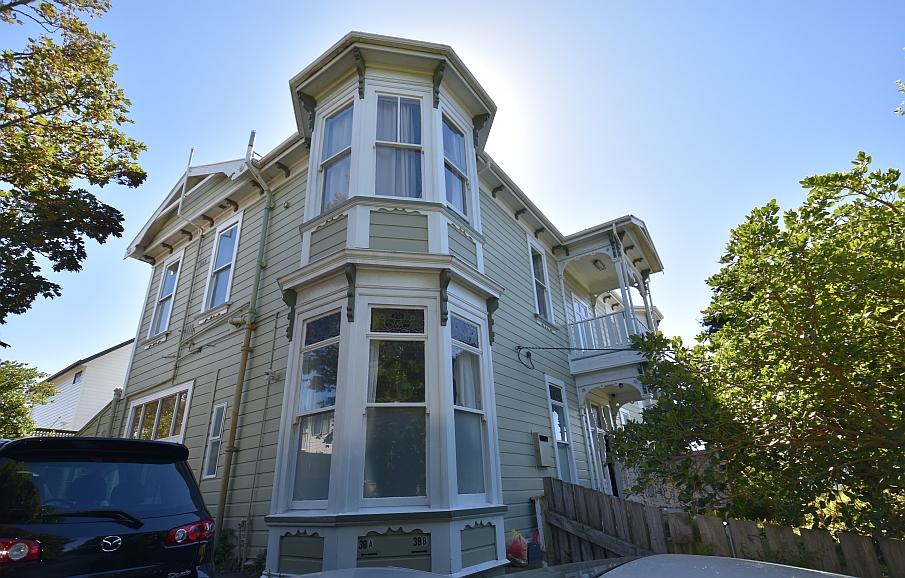
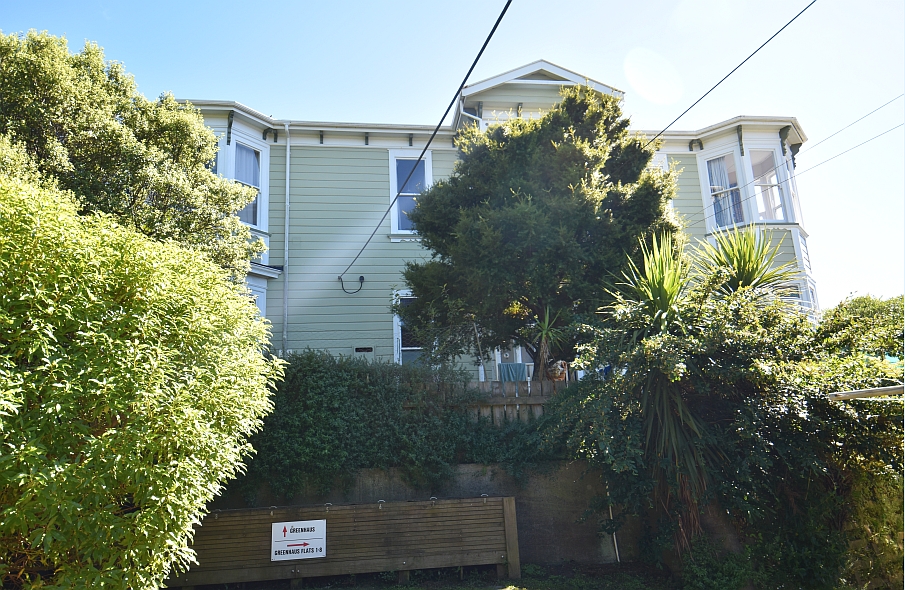
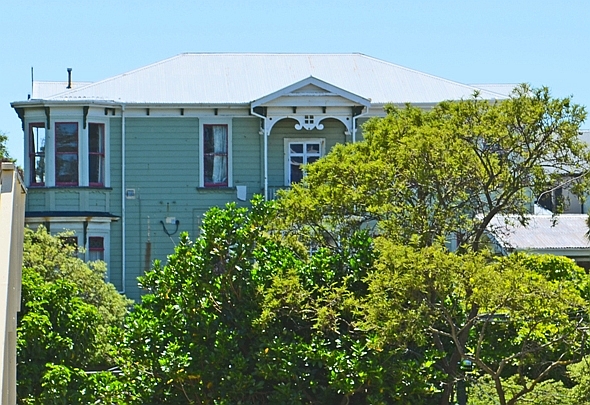
This house, a two-storey wooden dwelling situated in Colombo Street in Wellington’s suburb of Newtown, was likely to have been built as a family residence at the turn of the twentieth century. It has historical significance as a government-owned maternity hospital and later a long-standing alcohol and drug treatment centre. It has architectural significance as a representative example of a large early 1900s residence.
Māori connection to Te Whanganui-a-Tara reaches back to the oral traditions of the Polynesian navigator, Kupe. There were numerous pā and kainga around the Wellington region and Te Aro Pā was one of the largest Māori settlements in the region when European colonisation began in 1840. William Mein Smith laid out what became Newtown as town acres in the original plan devised by the New Zealand Company. The sparse largely European settlement of Newtown gave way to more intensive suburban development beginning in the 1870s. In 1904, horse-drawn cars were replaced by electric trams making the suburb affordable and convenient to commuting workers.
The building is located near the centre of a large block of residential buildings, many with established gardens. The architect and builder are not presently known, but it is believed that this house was originally a private residence, built to a relatively simple two-storey timber design, whose most prominent exterior features were the corner bay windows and a porch-balcony set beneath a projecting gable. The building has lead light windows, decorated ceilings and fretwork on the gable end and top of verandah posts.
The house has a historic connection to the development of midwifery in New Zealand. Major changes to its practices were legislated by the Midwives Act 1904, which required the registration of midwives. At this time a total of seven ‘St Helen hospitals’ were founded around New Zealand to provide subsidised maternity care for mothers and specialist training for the nurses and midwives who cared for them. Nurse, public servant and social reformer Grace Neill, as Assistant Inspector of Hospitals for the Department of Health, was instrumental in opening the first St Helens in New Zealand at Rintoul Street in Wellington on 29 May 1905. She was supported in this endeavour by then Prime Minister Richard Seddon. The venture was successful and the house was soon deemed too small, and in 1909 the hospital was moved to the Colombo Street building. However the building was soon found to be unsatisfactory as it could accommodate only fifteen mothers at any one time, and there was little space for the nurses and midwives, whose accommodation was on the other side of the street. These drawbacks led to the hospital moving again in 1912, this time to a purpose-built facility at Coromandel Street.
Although no records confirm it, from 1912 it is believed that the house returned to use as a private residence. It was sold in 1942, 1946 and again in 1947, and bought by the Wellington Hospital Board in 1950. In 1977 it found new purpose as centre for the Hospital’s addiction and rehabilitation services. From 1998 it was converted back to residential use by the Gateway Community Development Trust. In 2013 it was purchased by the Te Kainga Oranga Trust.
Modifications to the building were undertaken in 1967 and 1978, and it was re-clad in 2012. In 2018 it was converted to flats.
Māori connection to Te Whanganui-a-Tara reaches back to the oral traditions of the Polynesian navigator, Kupe. There were numerous pā and kainga around the Wellington region and Te Aro Pā was one of the largest Māori settlements in the region when European colonisation began in 1840. William Mein Smith laid out what became Newtown as town acres in the original plan devised by the New Zealand Company. The sparse largely European settlement of Newtown gave way to more intensive suburban development beginning in the 1870s. In 1904, horse-drawn cars were replaced by electric trams making the suburb affordable and convenient to commuting workers.
The building is located near the centre of a large block of residential buildings, many with established gardens. The architect and builder are not presently known, but it is believed that this house was originally a private residence, built to a relatively simple two-storey timber design, whose most prominent exterior features were the corner bay windows and a porch-balcony set beneath a projecting gable. The building has lead light windows, decorated ceilings and fretwork on the gable end and top of verandah posts.
The house has a historic connection to the development of midwifery in New Zealand. Major changes to its practices were legislated by the Midwives Act 1904, which required the registration of midwives. At this time a total of seven ‘St Helen hospitals’ were founded around New Zealand to provide subsidised maternity care for mothers and specialist training for the nurses and midwives who cared for them. Nurse, public servant and social reformer Grace Neill, as Assistant Inspector of Hospitals for the Department of Health, was instrumental in opening the first St Helens in New Zealand at Rintoul Street in Wellington on 29 May 1905. She was supported in this endeavour by then Prime Minister Richard Seddon. The venture was successful and the house was soon deemed too small, and in 1909 the hospital was moved to the Colombo Street building. However the building was soon found to be unsatisfactory as it could accommodate only fifteen mothers at any one time, and there was little space for the nurses and midwives, whose accommodation was on the other side of the street. These drawbacks led to the hospital moving again in 1912, this time to a purpose-built facility at Coromandel Street.
Although no records confirm it, from 1912 it is believed that the house returned to use as a private residence. It was sold in 1942, 1946 and again in 1947, and bought by the Wellington Hospital Board in 1950. In 1977 it found new purpose as centre for the Hospital’s addiction and rehabilitation services. From 1998 it was converted back to residential use by the Gateway Community Development Trust. In 2013 it was purchased by the Te Kainga Oranga Trust.
Modifications to the building were undertaken in 1967 and 1978, and it was re-clad in 2012. In 2018 it was converted to flats.