Quick links


Quick links
Quick links
Quick links
Quick links
Quick links
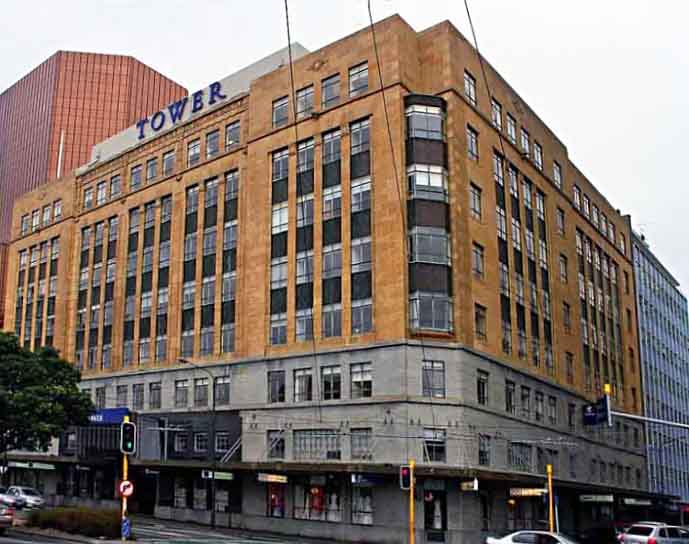
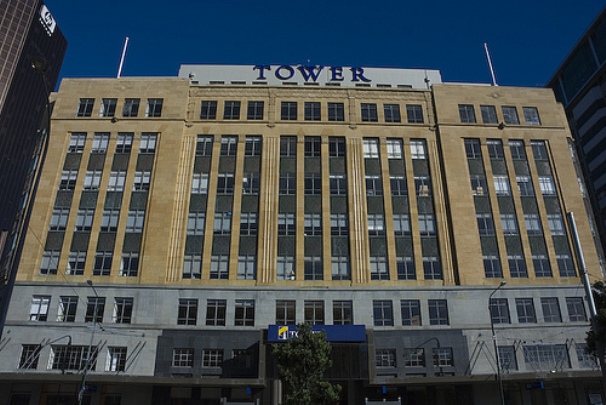
50-64 Customhouse Quay, 9 Brandon Street and 2-6 Panama Street, WELLINGTON
Private
Historic Place Category 2
List No. 3618
List Entry Information
Status
Listed
List Entry Status
Historic Place Category 2
Access
Private/No Public Access
List Number
3618
Date Entered
28th June 1984
Date of Effect
28th June 1984
City/District Council
Wellington City
Region
Wellington Region
Extent of List Entry
Extent includes the land described as Lot 1 DP 10633 (RT WN439/159), Wellington Land District and the building known as Government Life Insurance Head Office (Former) thereon.
Legal description
Lot 1 DP 10633 (RT WN439/159), Wellington Land District
Status
Listed
List Entry Status
Historic Place Category 2
Access
Private/No Public Access
List Number
3618
Date Entered
28th June 1984
Date of Effect
28th June 1984
City/District Council
Wellington City
Region
Wellington Region
Extent of List Entry
Extent includes the land described as Lot 1 DP 10633 (RT WN439/159), Wellington Land District and the building known as Government Life Insurance Head Office (Former) thereon.
Legal description
Lot 1 DP 10633 (RT WN439/159), Wellington Land District
Construction Professional
Name
Public Works Department
Type
Architect
Biography
No biography is currently available for this construction professional
Name
Mair, John Thomas
Type
Architect
Biography
John Thomas Mair (1876-1959) was born in Invercargill and began his career with the New Zealand Railways on the staff of the Office Engineer, George Troup. In 1906 he travelled to the United States of America where he studied architecture at the University of Pennsylvania. He then worked in the office of George B. Post in New York before travelling to England where he was admitted as an Associate of the Royal Institute of British Architects. He became a Fellow in 1940. On his return to New Zealand he entered private practice, one of his first buildings being the Presbyterian First Church, Invercargill (1915), a prominent building of Romanesque character. He then practised in Wellington, carrying out largely domestic commissions. In 1918 he was appointed Inspector of Military Hospitals by the Defence Department, and in 1920 he became architect to the Department of Education. Following the retirement of John Campbell in 1922, Mair was appointed Government Architect, a position which he held until his retirement in 1942. During this period he was responsible for a variety of buildings, including the Courthouse, Hamilton, the Post Office in High Street, Christchurch, Government Life Office and the Departmental Building, both in Wellington, and the Jean Batten Building, Auckland. Such buildings show a departure from tradition, with the emphasis on function, structure and volume as opposed to a stylistic treatment of the building fabric. A Fellow of the New Zealand Institute of Architects, Mair was made a Life Member in 1942. His son John Lindsay Mair also practised as an architect.
Construction Details
Start Year
2006
Type
Structural upgrade
Description
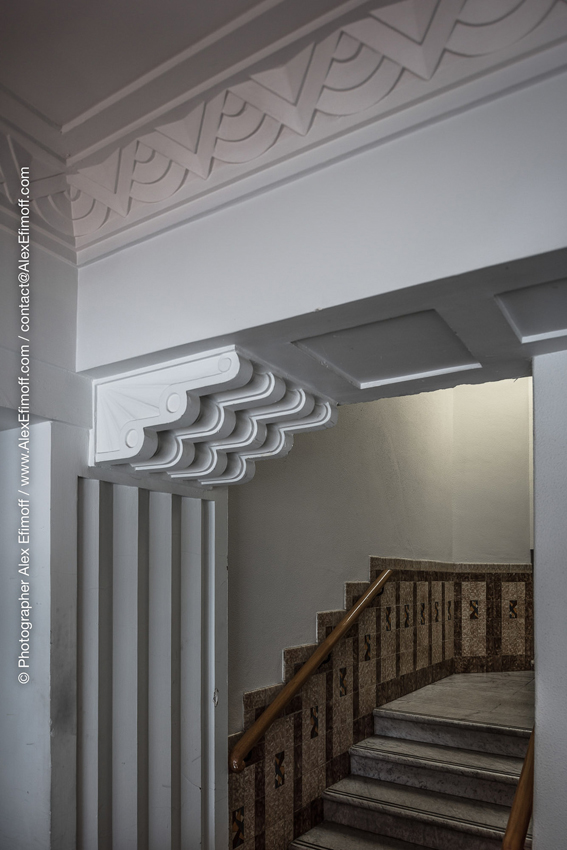
Structural upgrade of basement and carpark; restoration of façade, vestibule and stairs; rooftop additions.
Start Year
2014
Type
Restoration
Description
Restoration of original entrance (removal of 1980s canopy)
Start Year
1935
Finish Year
1939
Type
Original Construction
Start Year
2018
Type
Addition
Description
Installed two new cooling towers on roof top
Period
2018
Construction Professional
Name
Public Works Department
Type
Architect
Biography
No biography is currently available for this construction professional
Name
Mair, John Thomas
Type
Architect
Biography
John Thomas Mair (1876-1959) was born in Invercargill and began his career with the New Zealand Railways on the staff of the Office Engineer, George Troup. In 1906 he travelled to the United States of America where he studied architecture at the University of Pennsylvania. He then worked in the office of George B. Post in New York before travelling to England where he was admitted as an Associate of the Royal Institute of British Architects. He became a Fellow in 1940. On his return to New Zealand he entered private practice, one of his first buildings being the Presbyterian First Church, Invercargill (1915), a prominent building of Romanesque character. He then practised in Wellington, carrying out largely domestic commissions. In 1918 he was appointed Inspector of Military Hospitals by the Defence Department, and in 1920 he became architect to the Department of Education. Following the retirement of John Campbell in 1922, Mair was appointed Government Architect, a position which he held until his retirement in 1942. During this period he was responsible for a variety of buildings, including the Courthouse, Hamilton, the Post Office in High Street, Christchurch, Government Life Office and the Departmental Building, both in Wellington, and the Jean Batten Building, Auckland. Such buildings show a departure from tradition, with the emphasis on function, structure and volume as opposed to a stylistic treatment of the building fabric. A Fellow of the New Zealand Institute of Architects, Mair was made a Life Member in 1942. His son John Lindsay Mair also practised as an architect.
Construction Details
Start Year
2006
Type
Structural upgrade
Description
Structural upgrade of basement and carpark; restoration of façade, vestibule and stairs; rooftop additions.
Start Year
2014
Type
Restoration
Description
Restoration of original entrance (removal of 1980s canopy)
Start Year
1935
Finish Year
1939
Type
Original Construction
Start Year
2018
Type
Addition
Description
Installed two new cooling towers on roof top
Period
2018
Historical and Associated Iwi / Hapū / Whānau
Completion Date
16th March 2016
Report Written By
Karen Astwood
Information Sources
Evening Post
Evening Post, 27 Jun 1919, p.7.
Tower Insurance
‘History,’ Tower Insurance, accessed 1 December 2015, https://www.tower.co.nz/about-us/history
Other Information
This place was identified as significant under previous legislation with different information requirements. It remains significant under the current legislation. There is opportunity under our legislation and policies to add to this information. Further information about this place may be available from the Central Regional Office of Heritage New Zealand Pouhere Taonga. Please note that entry on the New Zealand Heritage List/Rarangi Korero identifies only the heritage values of the property concerned, and should not be construed as advice on the state of the property, or as a comment of its soundness or safety, including in regard to earthquake risk, safety in the event of fire, or insanitary conditions. A fully referenced upgrade report is available on request from the Central Region Office of Heritage New Zealand
Historical and Associated Iwi / Hapū / Whānau
Completion Date
16th March 2016
Report Written By
Karen Astwood
Information Sources
Evening Post
Evening Post, 27 Jun 1919, p.7.
Tower Insurance
‘History,’ Tower Insurance, accessed 1 December 2015, https://www.tower.co.nz/about-us/history
Other Information
This place was identified as significant under previous legislation with different information requirements. It remains significant under the current legislation. There is opportunity under our legislation and policies to add to this information. Further information about this place may be available from the Central Regional Office of Heritage New Zealand Pouhere Taonga. Please note that entry on the New Zealand Heritage List/Rarangi Korero identifies only the heritage values of the property concerned, and should not be construed as advice on the state of the property, or as a comment of its soundness or safety, including in regard to earthquake risk, safety in the event of fire, or insanitary conditions. A fully referenced upgrade report is available on request from the Central Region Office of Heritage New Zealand
Current Usages
Uses: Trade
Specific Usage: Office building/Offices
Uses: Trade
Specific Usage: Shop
Former Usages
General Usage: Government
Specific Usage: Government office building
General Usage: Government
Specific Usage: State Insurance Office
Current Usages
Uses: Trade
Specific Usage: Office building/Offices
Uses: Trade
Specific Usage: Shop
Former Usages
General Usage: Government
Specific Usage: Government office building
General Usage: Government
Specific Usage: State Insurance Office
Location
Get the latest heritage news, features and events delivered
straight to your inbox.
