DonateMembershipVisit Heritage
  • Tūrangawaewae
    Places
  • Tira Māori
    Māori Heritage
  • Poutairangahia
    Archaeology
  • Rauemi
    Resources
  • Mō Tātou
    About Us
  • New Zealand Heritage List
  • Nominate and submit
  • Explore the List
  • National Historic Landmarks
  • Plaques
  • Rainbow List Project
  • Lost heritage
  • Visit Heritage
  • Our properties
  • Turnbull House Project
  • Collections
  • Shop
  • Tohu Whenua
  • Tira Māori
  • Conserving Māori heritage
  • Marae built heritage
  • Māori heritage on the List
  • Hinemihi—Te Hokinga Mai
  • What is archaeology?
  • Is there a site on my property?
  • What are my legal requirements?
  • Affecting an archaeological site
  • Declaring an archaeological site
  • Archaeology FAQs
  • Archaeology Digital Library
  • Archaeology guidelines and templates
  • Resources
  • Funding
  • Publications
  • Sustainable management guides
  • Disaster recovery
  • Podcasts & digital resources
  • Education Hub
  • Conservation plans
  • About
  • Board
  • Māori Heritage Council
  • Senior Staff
  • Offices
  • Contact us
  • Careers
  • Covenants
  • Fast-track
  • Corporate documents
  • Currently consulting on
  • Our submissions
  • News
  • Covid-19 response
Quick links
Rārangi Kōrero | The List
Explore the List
National Historic Landmarks
Ngā Manawhenua o Aotearoa me ōna Kōrero Tūturu
Quick links
Tapuwae
A Vision for Places of Māori Heritage
Funding for Māori Heritage
Resources
Quick links
Archaeological Authority Portal
Applying for an archaeological authority
Archaeology FAQs
Browse the most frequently asked questions about archaeological authorities and the archaeological process.
Quick links
Quick links
News
News Keep up to date with Heritage New Zealand Pouhere Taonga
Membership
Membership Find out more and sign up today
DonateMembershipVisit Heritage
  • Tūrangawaewae
    Places
  • Tira Māori
    Māori Heritage
  • Poutairangahia
    Archaeology
  • Rauemi
    Resources
  • Mō Tātou
    About Us
  • New Zealand Heritage List
  • Nominate and submit
  • Explore the List
  • National Historic Landmarks
  • Plaques
  • Rainbow List Project
  • Lost heritage
  • Visit Heritage
  • Our properties
  • Turnbull House Project
  • Collections
  • Shop
  • Tohu Whenua
  • Tira Māori
  • Conserving Māori heritage
  • Marae built heritage
  • Māori heritage on the List
  • Hinemihi—Te Hokinga Mai
  • What is archaeology?
  • Is there a site on my property?
  • What are my legal requirements?
  • Affecting an archaeological site
  • Declaring an archaeological site
  • Archaeology FAQs
  • Archaeology Digital Library
  • Archaeology guidelines and templates
  • Resources
  • Funding
  • Publications
  • Sustainable management guides
  • Disaster recovery
  • Podcasts & digital resources
  • Education Hub
  • Conservation plans
  • About
  • Board
  • Māori Heritage Council
  • Senior Staff
  • Offices
  • Contact us
  • Careers
  • Covenants
  • Fast-track
  • Corporate documents
  • Currently consulting on
  • Our submissions
  • News
  • Covid-19 response
Quick links
Rārangi Kōrero | The List
Explore the List
National Historic Landmarks
Ngā Manawhenua o Aotearoa me ōna Kōrero Tūturu
Quick links
Tapuwae
A Vision for Places of Māori Heritage
Funding for Māori Heritage
Resources
Quick links
Archaeological Authority Portal
Applying for an archaeological authority
Archaeology FAQs
Browse the most frequently asked questions about archaeological authorities and the archaeological process.
Quick links
Quick links
News
News Keep up to date with Heritage New Zealand Pouhere Taonga
Membership
Membership Find out more and sign up today
  • Nominate and submit
  • National Historic Landmarks
  • Nominate and submit
  • National Historic Landmarks
  • Conserving Māori heritage
  • Marae built heritage
  • Conserving Māori heritage
  • Marae built heritage
  • Archaeological authorities
  • Archaeology Digital Library
  • Archaeological authorities
  • Archaeology Digital Library
  • All resources
  • Publications
  • Funding
  • All resources
  • Publications
  • Funding
  • FAQs
  • FAQs
Follow us on:
Places
  • Nominate and submit
  • National Historic Landmarks
Tira Māori
  • Conserving Māori heritage
  • Marae built heritage
Archaeology
  • Archaeological authorities
  • Archaeology Digital Library
Resources
  • All resources
  • Publications
  • Funding
FAQs
  • FAQs
Follow us on
HomePrivacyTerms and conditionsAbout this site
© Heritage New Zealand Pouhere Taonga 2026.
 
Crown Milling Company Building

Manor Place, DUNEDIN

Private

Historic Place Category 1

List No. 366

Quick links:
List GalleryLocationDetails
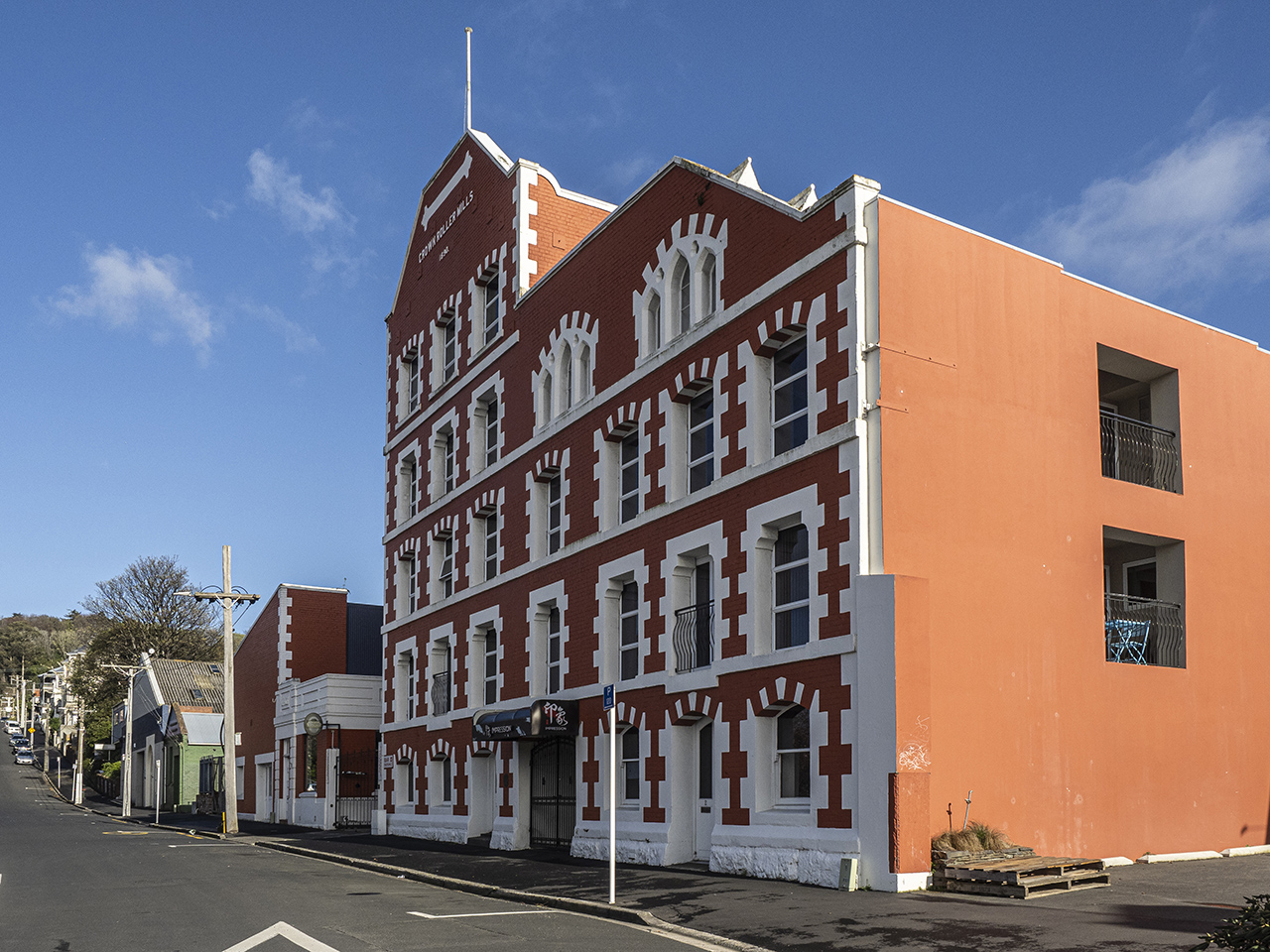
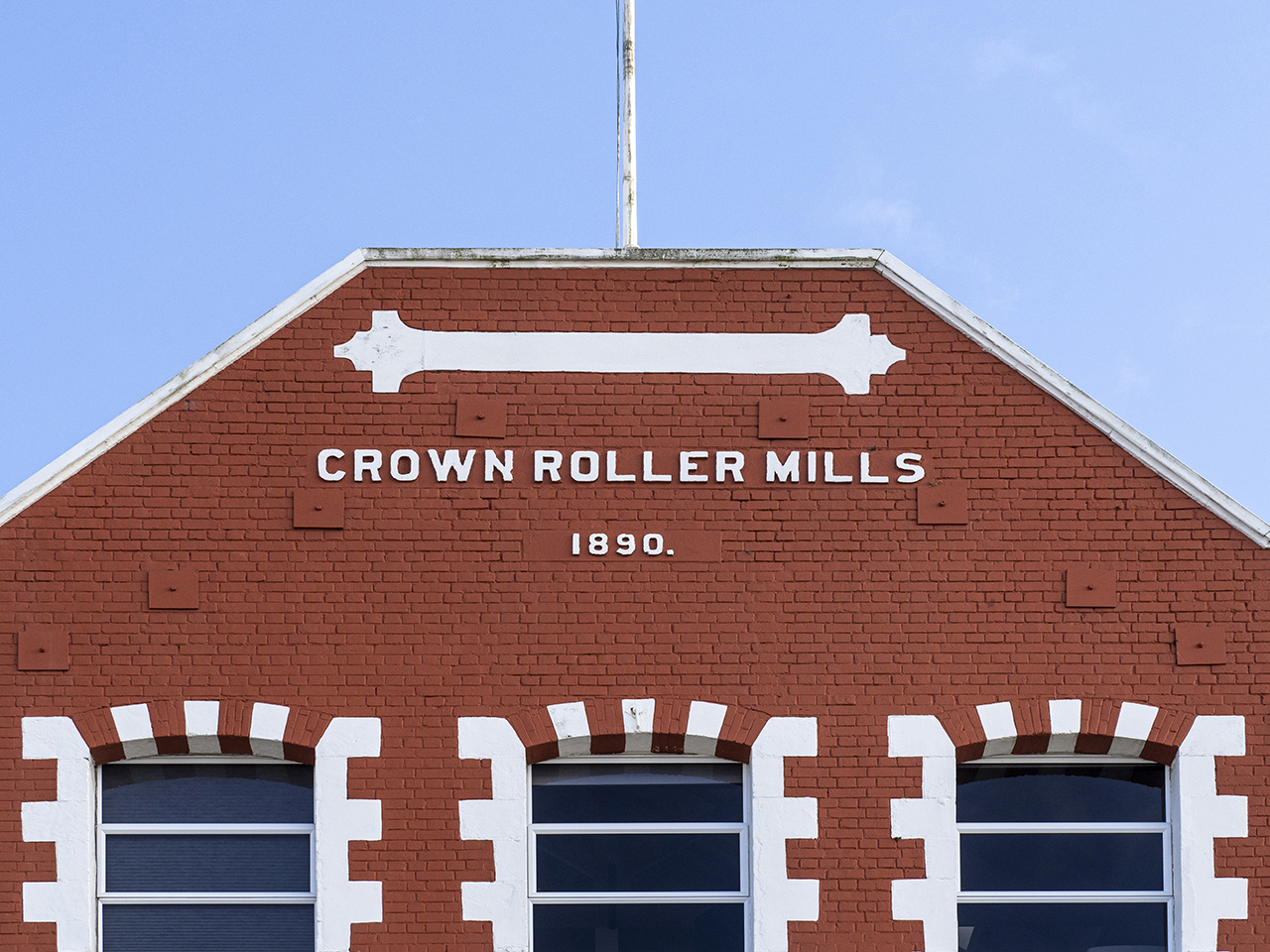
This very impressive industrial building known as the Crown Roller Mills was initially built in brick as a stone mill in 1867 by Anderson and Mouat and was extended and altered by James Anderson in 1878. Finally, in 1890 Robert Anderson and Company added two floors, the architect being James Hislop. The building has benefited greatly from these alterations and additions.

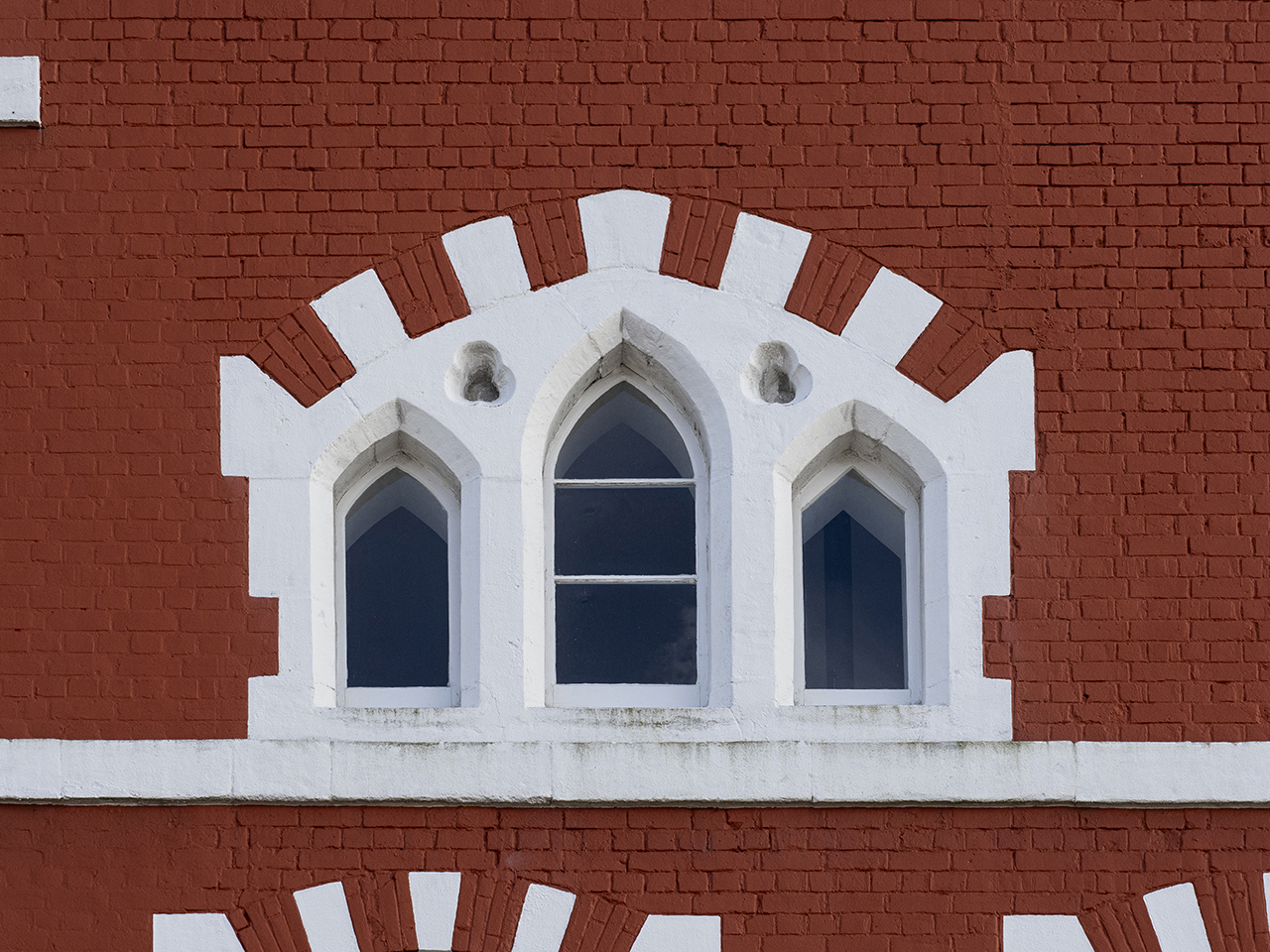
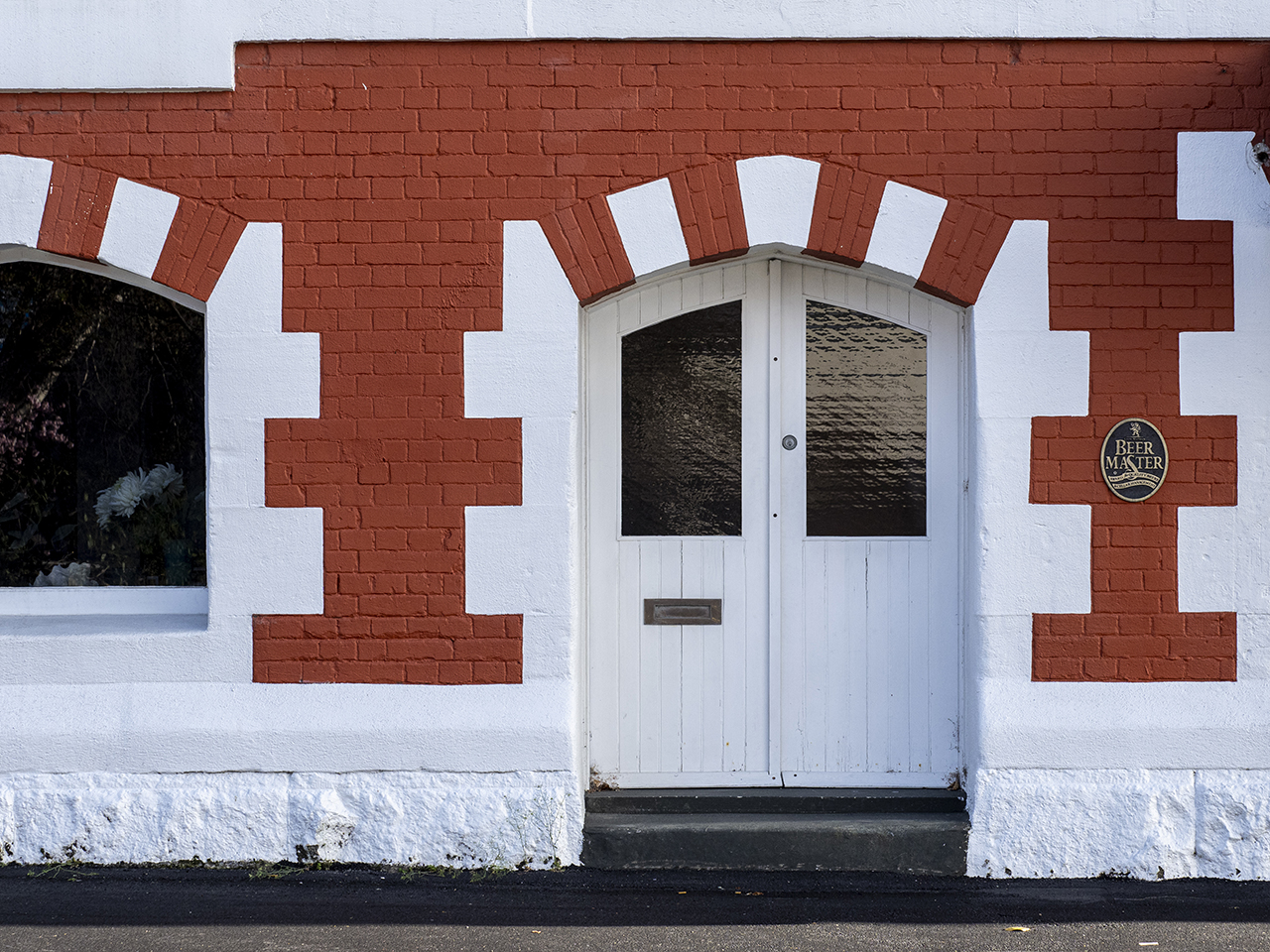
It is the lower two of the five storeys that in part give the building its distinctive flavour. The building reaches a peak on the left hand side of the façade and then drops away on the right to the third floor. The bold contrast between the brick and the cream Oamaru stone facings on the doors and windows is the other major highlight of the building. The façade is enriched by the variations in treatment of the windows which nevertheless still retain a strong overall unity.

This building, still in everyday use, is a functional and quite striking example of Victorian industrial architecture making a noteworthy contribution to the Dunedin townscape.
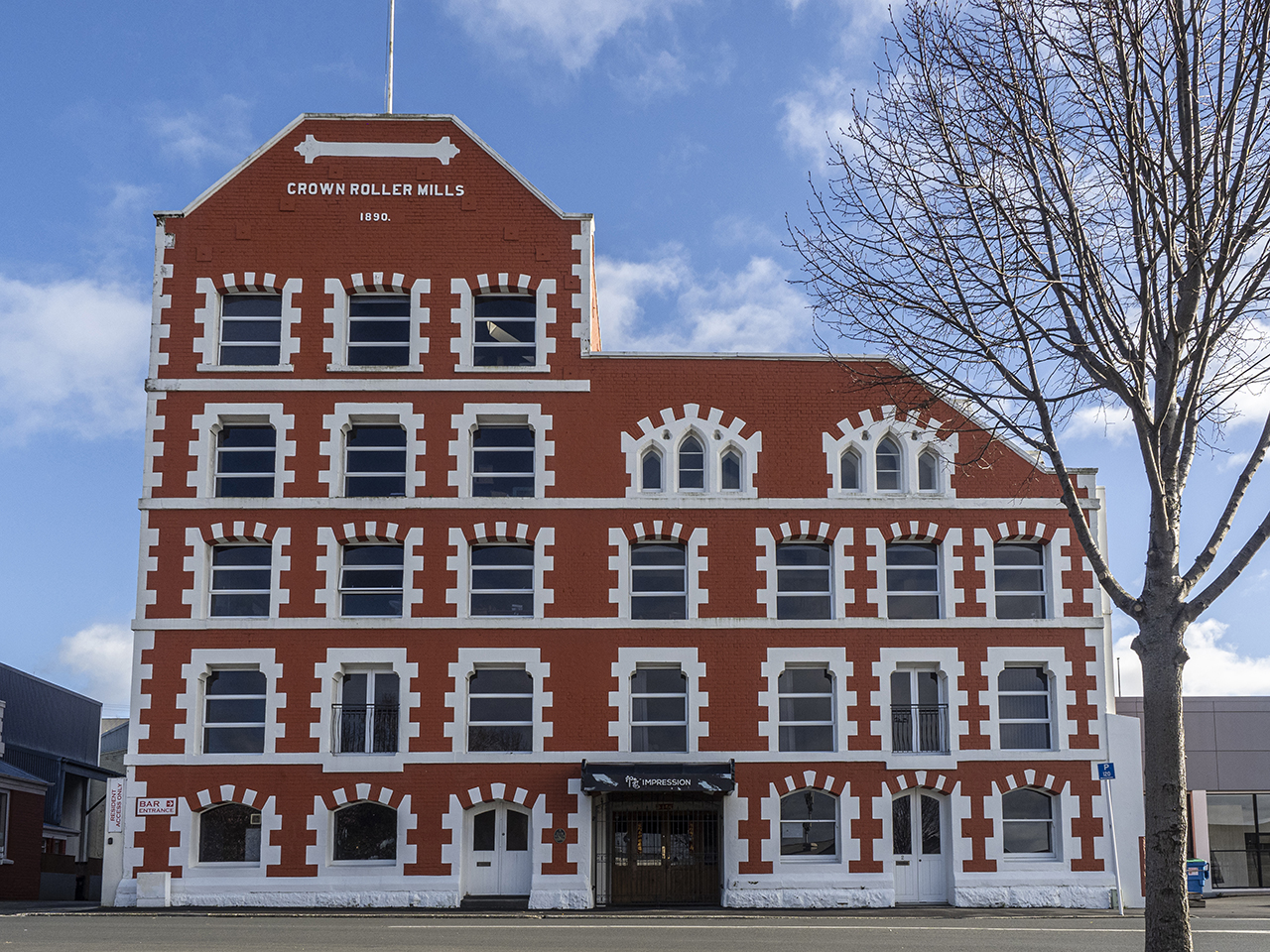
Crown Milling Company Building, Dunedin. CC BY Licence | Melanie J Dick | 31/10/2023 | Melanie J Dick
Crown Milling Company Building, Dunedin. Detail CC BY Licence | Melanie J Dick | 31/10/2023 | Melanie J Dick
Crown Milling Company Building, Dunedin. CC BY Licence | Melanie J Dick | 31/10/2023 | Melanie J Dick
Crown Milling Company Building, Dunedin. Detail CC BY Licence | Melanie J Dick | 31/10/2023 | Melanie J Dick

List Entry Information

Overview

Status
Listed

List Entry Status
Historic Place Category 1

Access
Private/No Public Access

List Number
366

Date Entered
6th September 1984

Date of Effect
6th September 1984

City/District Council
Dunedin City

Region
Otago Region

Legal description

All DP 1285, Lot 1 DP 9700

Detailed List Entry

Construction Professional

Name

Hislop, James (1859-1904)

Type

Architect

Biography

‘James Hislop (1859-1904) was born in Glasgow and came to New Zealand at a very early age. He was educated at North East Valley School and received his architectural training in the office of Mason and Wales. He also spent two years with the Public Works Department, as district manager of Nelson. In 1880 he entered into business with W.H. Terry who retired three years later. He established his own practice in Dunedin and later entered into a partnership with Edward Walter Walden. In 1889 Hislop designed and supervised the erection of the South Seas Exhibition among a number of prominent buildings both in Otago and elsewhere in the country.’ ‘Among the significant buildings designed by James Hislop, or by the Hislop and Walden partnership are Crown Milling Co. building, Miller Place, Dunedin (c.1880); New Zealand Steam Shipping Co. office, Dunedin; DIC, Christchurch; Evans and Co. Mill, Timaru; National Bank, George Street, Dunedin; Napier Abattoirs (1902); Hallenstein Building, The Octagon; Dunedin City Abattoirs.’ Hislop moved to Wellington around 1903, where he died as the result of an accident in 1904. Source: Heritage New Zealand Review Report for Ferntree Lodge, List No. 368, 27 Jun 2017, Heather Bauchop.

Construction Details

Start Year

1867

Type

Original Construction

Reference

Report Written By

This place was identified as significant under previous legislation with different information requirements. It remains significant under the current legislation. There is opportunity under our legislation and policies to add to this information. Further information about this place may be available from the Otago/Southland Office of Heritage New Zealand Pouhere Taonga. Please note that entry on the New Zealand Heritage List/Rarangi Korero identifies only the heritage values of the property concerned, and should not be construed as advice on the state of the property, or as a comment of its soundness or safety, including in regard to earthquake risk, safety in the event of fire, or insanitary conditions. This historic place was registered under the Historic Places Act 1980. The following text is the original citation considered by the NZHPT Board at the time of registration. Information in square brackets indicate modifications made after the paper was considered by the NZHPT Board.

Further Information

Current Usages

Former Usages

Themes

Web Links

Overview

Status

Listed

List Entry Status

Historic Place Category 1

Access

Private/No Public Access

List Number

366

Date Entered

6th September 1984

Date of Effect

6th September 1984

City/District Council

Dunedin City

Region

Otago Region

Legal description

All DP 1285, Lot 1 DP 9700

Status

Listed

List Entry Status

Historic Place Category 1

Access

Private/No Public Access

List Number

366

Date Entered

6th September 1984

Date of Effect

6th September 1984

City/District Council

Dunedin City

Region

Otago Region

Legal description

All DP 1285, Lot 1 DP 9700

Construction Information

Construction Professional

Name

Hislop, James (1859-1904)

Type

Architect

Biography

‘James Hislop (1859-1904) was born in Glasgow and came to New Zealand at a very early age. He was educated at North East Valley School and received his architectural training in the office of Mason and Wales. He also spent two years with the Public Works Department, as district manager of Nelson. In 1880 he entered into business with W.H. Terry who retired three years later. He established his own practice in Dunedin and later entered into a partnership with Edward Walter Walden. In 1889 Hislop designed and supervised the erection of the South Seas Exhibition among a number of prominent buildings both in Otago and elsewhere in the country.’ ‘Among the significant buildings designed by James Hislop, or by the Hislop and Walden partnership are Crown Milling Co. building, Miller Place, Dunedin (c.1880); New Zealand Steam Shipping Co. office, Dunedin; DIC, Christchurch; Evans and Co. Mill, Timaru; National Bank, George Street, Dunedin; Napier Abattoirs (1902); Hallenstein Building, The Octagon; Dunedin City Abattoirs.’ Hislop moved to Wellington around 1903, where he died as the result of an accident in 1904. Source: Heritage New Zealand Review Report for Ferntree Lodge, List No. 368, 27 Jun 2017, Heather Bauchop.

Construction Details

Start Year

1867

Type

Original Construction

Construction Professional

Name

Hislop, James (1859-1904)

Type

Architect

Biography

‘James Hislop (1859-1904) was born in Glasgow and came to New Zealand at a very early age. He was educated at North East Valley School and received his architectural training in the office of Mason and Wales. He also spent two years with the Public Works Department, as district manager of Nelson. In 1880 he entered into business with W.H. Terry who retired three years later. He established his own practice in Dunedin and later entered into a partnership with Edward Walter Walden. In 1889 Hislop designed and supervised the erection of the South Seas Exhibition among a number of prominent buildings both in Otago and elsewhere in the country.’ ‘Among the significant buildings designed by James Hislop, or by the Hislop and Walden partnership are Crown Milling Co. building, Miller Place, Dunedin (c.1880); New Zealand Steam Shipping Co. office, Dunedin; DIC, Christchurch; Evans and Co. Mill, Timaru; National Bank, George Street, Dunedin; Napier Abattoirs (1902); Hallenstein Building, The Octagon; Dunedin City Abattoirs.’ Hislop moved to Wellington around 1903, where he died as the result of an accident in 1904. Source: Heritage New Zealand Review Report for Ferntree Lodge, List No. 368, 27 Jun 2017, Heather Bauchop.

Construction Details

Start Year

1867

Type

Original Construction

Reference

Historical and Associated Iwi / Hapū / Whānau

Other Information

This place was identified as significant under previous legislation with different information requirements. It remains significant under the current legislation. There is opportunity under our legislation and policies to add to this information. Further information about this place may be available from the Otago/Southland Office of Heritage New Zealand Pouhere Taonga. Please note that entry on the New Zealand Heritage List/Rarangi Korero identifies only the heritage values of the property concerned, and should not be construed as advice on the state of the property, or as a comment of its soundness or safety, including in regard to earthquake risk, safety in the event of fire, or insanitary conditions. This historic place was registered under the Historic Places Act 1980. The following text is the original citation considered by the NZHPT Board at the time of registration. Information in square brackets indicate modifications made after the paper was considered by the NZHPT Board.

Historical and Associated Iwi / Hapū / Whānau

Other Information

This place was identified as significant under previous legislation with different information requirements. It remains significant under the current legislation. There is opportunity under our legislation and policies to add to this information. Further information about this place may be available from the Otago/Southland Office of Heritage New Zealand Pouhere Taonga. Please note that entry on the New Zealand Heritage List/Rarangi Korero identifies only the heritage values of the property concerned, and should not be construed as advice on the state of the property, or as a comment of its soundness or safety, including in regard to earthquake risk, safety in the event of fire, or insanitary conditions. This historic place was registered under the Historic Places Act 1980. The following text is the original citation considered by the NZHPT Board at the time of registration. Information in square brackets indicate modifications made after the paper was considered by the NZHPT Board.

Location

Loading
Stay up to date with Heritage this month