DonateMembershipVisit Heritage
  • Tūrangawaewae
    Places
  • Tira Māori
    Māori Heritage
  • Poutairangahia
    Archaeology
  • Rauemi
    Resources
  • Mō Tātou
    About Us
  • New Zealand Heritage List
  • Nominate and submit
  • Explore the List
  • National Historic Landmarks
  • Plaques
  • Rainbow List Project
  • Lost heritage
  • Visit Heritage
  • Our properties
  • Turnbull House Project
  • Collections
  • Shop
  • Tohu Whenua
  • Tira Māori
  • Conserving Māori heritage
  • Marae built heritage
  • Māori heritage on the List
  • Hinemihi—Te Hokinga Mai
  • What is archaeology?
  • Is there a site on my property?
  • What are my legal requirements?
  • Affecting an archaeological site
  • Declaring an archaeological site
  • Archaeology FAQs
  • Archaeology Digital Library
  • Archaeology guidelines and templates
  • Resources
  • Funding
  • Publications
  • Sustainable management guides
  • Disaster recovery
  • Podcasts & digital resources
  • Education Hub
  • Conservation plans
  • About
  • Board
  • Māori Heritage Council
  • Senior Staff
  • Offices
  • Contact us
  • Careers
  • Covenants
  • Fast-track
  • Corporate documents
  • Currently consulting on
  • Our submissions
  • News
  • Covid-19 response
Quick links
Rārangi Kōrero | The List
Explore the List
National Historic Landmarks
Ngā Manawhenua o Aotearoa me ōna Kōrero Tūturu
Quick links
Tapuwae
A Vision for Places of Māori Heritage
Funding for Māori Heritage
Resources
Quick links
Archaeological Authority Portal
Applying for an archaeological authority
Archaeology FAQs
Browse the most frequently asked questions about archaeological authorities and the archaeological process.
Quick links
Quick links
News
News Keep up to date with Heritage New Zealand Pouhere Taonga
Membership
Membership Find out more and sign up today
DonateMembershipVisit Heritage
  • Tūrangawaewae
    Places
  • Tira Māori
    Māori Heritage
  • Poutairangahia
    Archaeology
  • Rauemi
    Resources
  • Mō Tātou
    About Us
  • New Zealand Heritage List
  • Nominate and submit
  • Explore the List
  • National Historic Landmarks
  • Plaques
  • Rainbow List Project
  • Lost heritage
  • Visit Heritage
  • Our properties
  • Turnbull House Project
  • Collections
  • Shop
  • Tohu Whenua
  • Tira Māori
  • Conserving Māori heritage
  • Marae built heritage
  • Māori heritage on the List
  • Hinemihi—Te Hokinga Mai
  • What is archaeology?
  • Is there a site on my property?
  • What are my legal requirements?
  • Affecting an archaeological site
  • Declaring an archaeological site
  • Archaeology FAQs
  • Archaeology Digital Library
  • Archaeology guidelines and templates
  • Resources
  • Funding
  • Publications
  • Sustainable management guides
  • Disaster recovery
  • Podcasts & digital resources
  • Education Hub
  • Conservation plans
  • About
  • Board
  • Māori Heritage Council
  • Senior Staff
  • Offices
  • Contact us
  • Careers
  • Covenants
  • Fast-track
  • Corporate documents
  • Currently consulting on
  • Our submissions
  • News
  • Covid-19 response
Quick links
Rārangi Kōrero | The List
Explore the List
National Historic Landmarks
Ngā Manawhenua o Aotearoa me ōna Kōrero Tūturu
Quick links
Tapuwae
A Vision for Places of Māori Heritage
Funding for Māori Heritage
Resources
Quick links
Archaeological Authority Portal
Applying for an archaeological authority
Archaeology FAQs
Browse the most frequently asked questions about archaeological authorities and the archaeological process.
Quick links
Quick links
News
News Keep up to date with Heritage New Zealand Pouhere Taonga
Membership
Membership Find out more and sign up today
  • Places
  • Nominate and submit
  • National Historic Landmarks
  • Places
  • Nominate and submit
  • National Historic Landmarks
  • Tira Māori
  • Conserving Māori heritage
  • Marae built heritage
  • Tira Māori
  • Conserving Māori heritage
  • Marae built heritage
  • Archaeological authorities
  • Archaeology Digital Library
  • Archaeological authorities
  • Archaeology Digital Library
  • All resources
  • Publications
  • Funding
  • All resources
  • Publications
  • Funding
  • FAQs
  • FAQs
Follow us on:
Places
  • Places
  • Nominate and submit
  • National Historic Landmarks
Tira Māori
  • Tira Māori
  • Conserving Māori heritage
  • Marae built heritage
Archaeology
  • Archaeological authorities
  • Archaeology Digital Library
Resources
  • All resources
  • Publications
  • Funding
FAQs
  • FAQs
Follow us on
HomePrivacyTerms and conditionsAbout this site
© Heritage New Zealand Pouhere Taonga 2026.
 
Rolleston House

2 Gloucester Street and Rolleston Avenue, CHRISTCHURCH

Private

Historic Place Category 2

List No. 3729
Quick links:
List GalleryLocationDetails
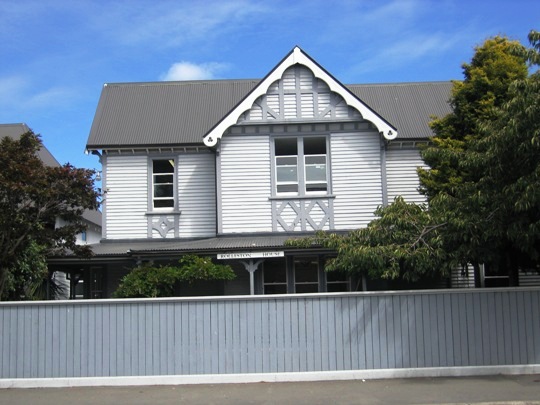
Constructed in 1893 as a two storeyed timber residence, the building known as Rolleston House on the corner of 2 Gloucester Street and Rolleston Avenue, Christchurch, has architectural significance as an example of the English Domestic Revival Style and has historical and social significance as one of the buildings that comprised Canterbury College’s first male hostel.

The block of land between Antigua Street (now Rolleston Avenue), Gloucester Street, Worcester Street and Montreal Street and was granted by the Crown to Church Property Trustees in 1856, and in 1873 Reverend John Raven became the owner of this block. After Raven’s death in 1886 the sections were sold and further divided. In early 1893 the north-west corner sections were purchased by Jessie Helen Bennett, wife of Arthur William Bennett. Designs for their house were prepared by architects Collins and Harman, and the house was built in 1893.

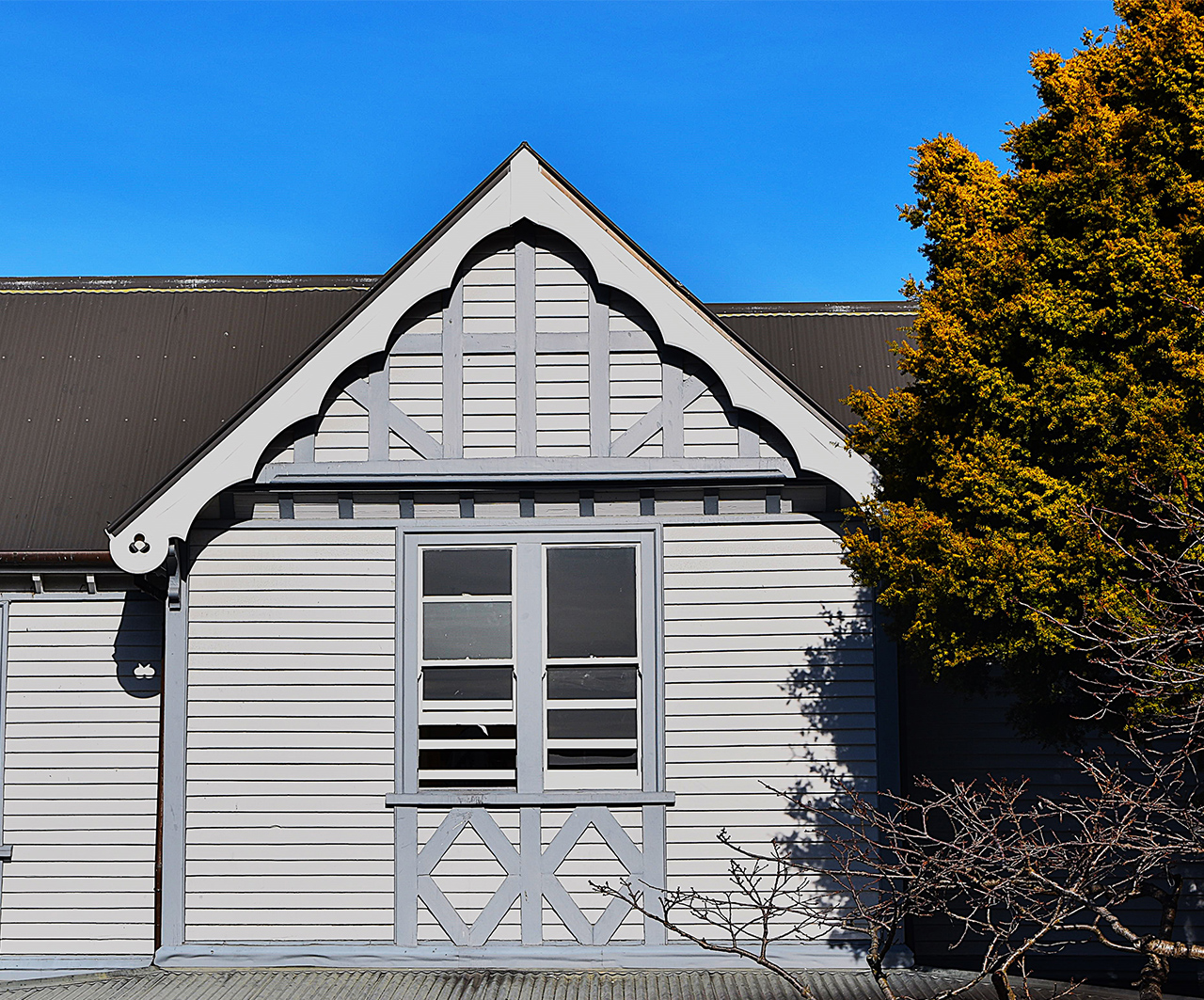
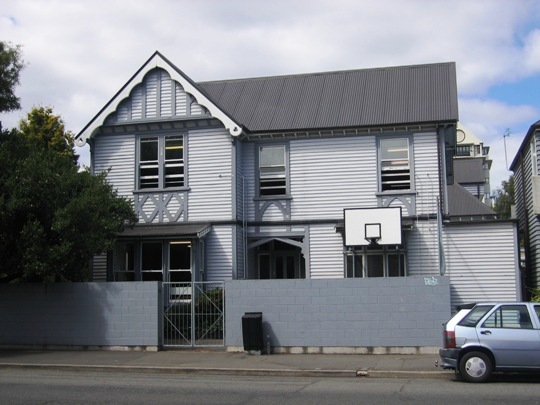
Surrounded by mature trees and a north- and west-fronting timber fence, Rolleston House is a typical late Victorian townhouse, with English Domestic Revival detailing, including half-timbering and overhangs in the gable ends. The fenestration is varied, including bay windows on the ground floor and single and paired sash windows on the first floor. The roof is corrugated steel. When the Bennetts put the house up for sale in September 1916, it was described as containing ‘10 spacious living rooms, also large hall, pantry, store-room, lavatories, cellar, bathroom, wide verandahs facing east, north and west …’.

The Bennetts lived at the corner house for over two decades. In 1914 A W Bennett was appointed Manager of the New Zealand Shipping Company and the following year the Bennetts shifted to Cashmere Hills. It appears that the Bennetts then let out the central city house, and Supreme Court Judge, John Denniston lived there for a year or two. In 1917 the Bennetts sold their ‘splendid two storied residence’ to engineer, Francis Oakley Shacklock. In 1919 Shacklock sold to the university, Canterbury College, where it was House Number 4 as part of a cluster of buildings collectively named Rolleston House and used as a hostel for male students. The Rolleston House hostel, named to honour the former superintendent of Canterbury who encouraged the university’s establishment, was run by a committee of students approved by the College. When the University of Canterbury relocated to a new campus at Ilam in the mid 1970s, Rolleston House was purchased by Christ’s College. It was initially converted into a flat, classrooms and the Clothing Pool and since 1983 this building has served Christ’s College as a day boy house, Rolleston House.
Rolleston House, Christchurch | Hanna Westley | 22/07/2025 | Heritage New Zealand Pouhere Taonga

List Entry Information

Overview

Status
Listed

List Entry Status
Historic Place Category 2

Access
Private/No Public Access

List Number
3729

Date Entered
6th September 1984

Date of Effect
6th September 1984

City/District Council
Christchurch City

Region
Canterbury Region

Extent of List Entry

Extent includes the land described as Pt Sec 365 Town of Christchurch (RT CB15F/1131), Canterbury Land District, and the building known as Rolleston House, thereon.

Legal description

Pt Sec 365 Town of Christchurch (RT CB15F/1131), Canterbury Land District

Detailed List Entry

Construction Professional

Name

Collins & Harman

Type

Architect

Biography

One of the two oldest architectural firms in New Zealand, Armson, Collins and Harman was established by William Barnett Armson in 1870. After serving his articles with Armson, John James Collins (1855-1933) bought the practice after the former's death in 1883 and subsequently took Richard Dacre Harman (1859-1927) into partnership four years later. Collins' son, John Goddard Collins (1886-1973), joined the firm in 1903. Armson, Collins and Harman was one of Christchurch's leading architectural practices in the early years of this century. Notable examples of the firm's work include the Christchurch Press Building (1909), Nazareth House (1909), the former Canterbury College Students Union (1927), the Nurses Memorial Chapel at Christchurch Public Hospital (1927) and the Sign of the Takahe (1936). Their domestic work includes Blue Cliffs Station Homestead (1889) and Meadowbank Homestead, Irwell. In 1928 the firm's name was simplified to Collins and Harman and the firm continues today as Collins Architects Ltd. With a versatility and competence that betrayed the practice's debt to Armson's skill and professionalism, Collins and Harman designed a wide variety of building types in a range of styles.

Reference

Completion Date

15th March 2017

Report Written By

Robyn Burgess

Information Sources

Hamilton, 1991 (2)

D Hamilton, Wells, R. The Buildings of Christ's College 1850-1990 Christchurch, 1991.

Report Written By

This place was identified as significant under previous legislation with different information requirements. It remains significant under the current legislation. There is opportunity under our legislation and policies to add to this information. Further information about this place may be available from the Southern Regional Office of Heritage New Zealand Pouhere Taonga. Please note that entry on the New Zealand Heritage List/Rarangi Korero identifies only the heritage values of the property concerned, and should not be construed as advice on the state of the property, or as a comment of its soundness or safety, including in regard to earthquake risk, safety in the event of fire, or insanitary conditions. A fully referenced upgrade report is available on request from the Southern Region Office of Heritage New Zealand.

Further Information

Current Usages

Uses: Civic Facilities

Specific Usage: Residential Buildings - other

Uses: Education

Specific Usage: Education - other

Former Usages

General Usage:: Accommodation

Specific Usage: House

Themes

Web Links

Overview

Status

Listed

List Entry Status

Historic Place Category 2

Access

Private/No Public Access

List Number

3729

Date Entered

6th September 1984

Date of Effect

6th September 1984

City/District Council

Christchurch City

Region

Canterbury Region

Extent of List Entry

Extent includes the land described as Pt Sec 365 Town of Christchurch (RT CB15F/1131), Canterbury Land District, and the building known as Rolleston House, thereon.

Legal description

Pt Sec 365 Town of Christchurch (RT CB15F/1131), Canterbury Land District

Status

Listed

List Entry Status

Historic Place Category 2

Access

Private/No Public Access

List Number

3729

Date Entered

6th September 1984

Date of Effect

6th September 1984

City/District Council

Christchurch City

Region

Canterbury Region

Extent of List Entry

Extent includes the land described as Pt Sec 365 Town of Christchurch (RT CB15F/1131), Canterbury Land District, and the building known as Rolleston House, thereon.

Legal description

Pt Sec 365 Town of Christchurch (RT CB15F/1131), Canterbury Land District

Construction Information

Construction Professional

Name

Collins & Harman

Type

Architect

Biography

One of the two oldest architectural firms in New Zealand, Armson, Collins and Harman was established by William Barnett Armson in 1870. After serving his articles with Armson, John James Collins (1855-1933) bought the practice after the former's death in 1883 and subsequently took Richard Dacre Harman (1859-1927) into partnership four years later. Collins' son, John Goddard Collins (1886-1973), joined the firm in 1903. Armson, Collins and Harman was one of Christchurch's leading architectural practices in the early years of this century. Notable examples of the firm's work include the Christchurch Press Building (1909), Nazareth House (1909), the former Canterbury College Students Union (1927), the Nurses Memorial Chapel at Christchurch Public Hospital (1927) and the Sign of the Takahe (1936). Their domestic work includes Blue Cliffs Station Homestead (1889) and Meadowbank Homestead, Irwell. In 1928 the firm's name was simplified to Collins and Harman and the firm continues today as Collins Architects Ltd. With a versatility and competence that betrayed the practice's debt to Armson's skill and professionalism, Collins and Harman designed a wide variety of building types in a range of styles.

Construction Professional

Name

Collins & Harman

Type

Architect

Biography

One of the two oldest architectural firms in New Zealand, Armson, Collins and Harman was established by William Barnett Armson in 1870. After serving his articles with Armson, John James Collins (1855-1933) bought the practice after the former's death in 1883 and subsequently took Richard Dacre Harman (1859-1927) into partnership four years later. Collins' son, John Goddard Collins (1886-1973), joined the firm in 1903. Armson, Collins and Harman was one of Christchurch's leading architectural practices in the early years of this century. Notable examples of the firm's work include the Christchurch Press Building (1909), Nazareth House (1909), the former Canterbury College Students Union (1927), the Nurses Memorial Chapel at Christchurch Public Hospital (1927) and the Sign of the Takahe (1936). Their domestic work includes Blue Cliffs Station Homestead (1889) and Meadowbank Homestead, Irwell. In 1928 the firm's name was simplified to Collins and Harman and the firm continues today as Collins Architects Ltd. With a versatility and competence that betrayed the practice's debt to Armson's skill and professionalism, Collins and Harman designed a wide variety of building types in a range of styles.

Reference

Historical and Associated Iwi / Hapū / Whānau

Completion Date

15th March 2017

Report Written By

Robyn Burgess

Information Sources

Hamilton, 1991 (2)

D Hamilton, Wells, R. The Buildings of Christ's College 1850-1990 Christchurch, 1991.

Other Information

This place was identified as significant under previous legislation with different information requirements. It remains significant under the current legislation. There is opportunity under our legislation and policies to add to this information. Further information about this place may be available from the Southern Regional Office of Heritage New Zealand Pouhere Taonga. Please note that entry on the New Zealand Heritage List/Rarangi Korero identifies only the heritage values of the property concerned, and should not be construed as advice on the state of the property, or as a comment of its soundness or safety, including in regard to earthquake risk, safety in the event of fire, or insanitary conditions. A fully referenced upgrade report is available on request from the Southern Region Office of Heritage New Zealand.

Historical and Associated Iwi / Hapū / Whānau

Completion Date

15th March 2017

Report Written By

Robyn Burgess

Information Sources

Hamilton, 1991 (2)

D Hamilton, Wells, R. The Buildings of Christ's College 1850-1990 Christchurch, 1991.

Other Information

This place was identified as significant under previous legislation with different information requirements. It remains significant under the current legislation. There is opportunity under our legislation and policies to add to this information. Further information about this place may be available from the Southern Regional Office of Heritage New Zealand Pouhere Taonga. Please note that entry on the New Zealand Heritage List/Rarangi Korero identifies only the heritage values of the property concerned, and should not be construed as advice on the state of the property, or as a comment of its soundness or safety, including in regard to earthquake risk, safety in the event of fire, or insanitary conditions. A fully referenced upgrade report is available on request from the Southern Region Office of Heritage New Zealand.

Further Information

Current Usages

Uses: Civic Facilities

Specific Usage: Residential Buildings - other

Uses: Education

Specific Usage: Education - other

Former Usages

General Usage: Accommodation

Specific Usage: House

Current Usages

Uses: Civic Facilities

Specific Usage: Residential Buildings - other

Uses: Education

Specific Usage: Education - other

Former Usages

General Usage: Accommodation

Specific Usage: House

Location

Loading
Stay up to date with Heritage this month