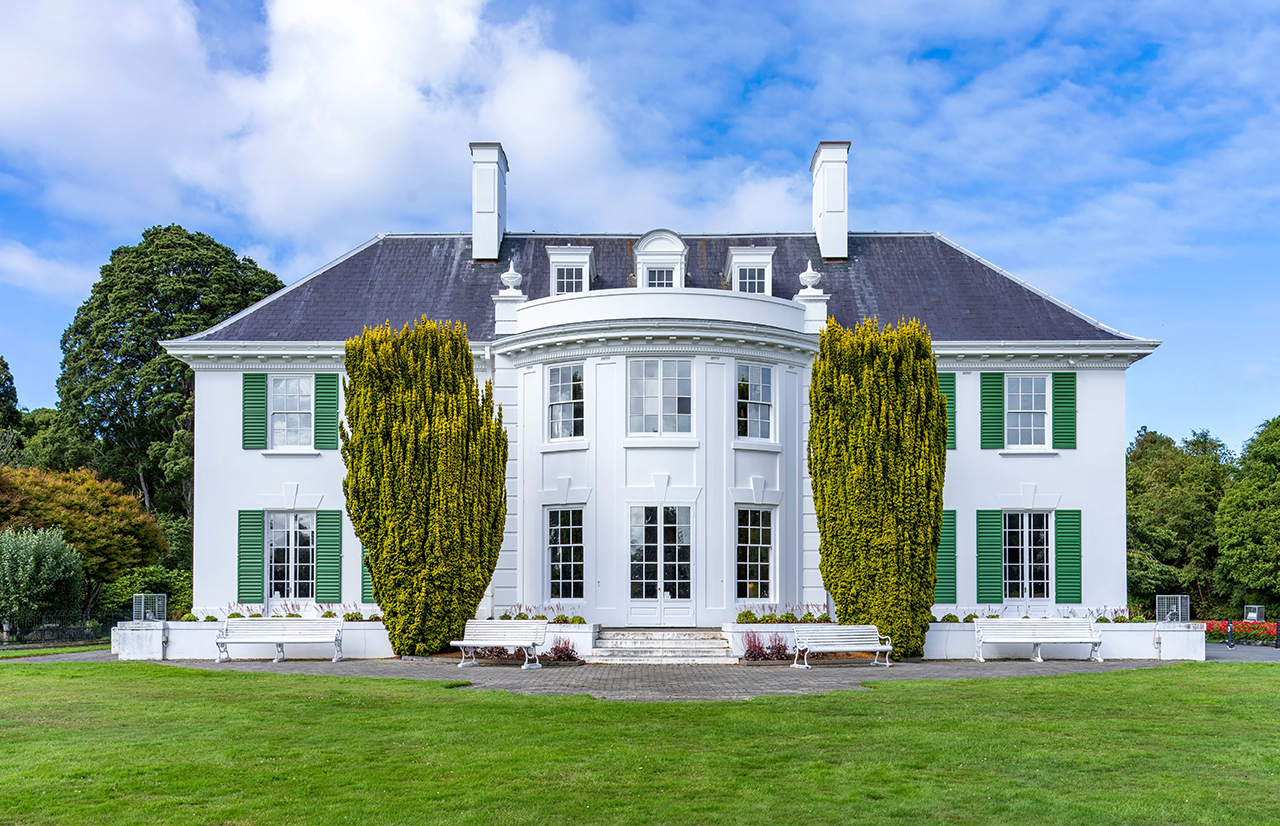
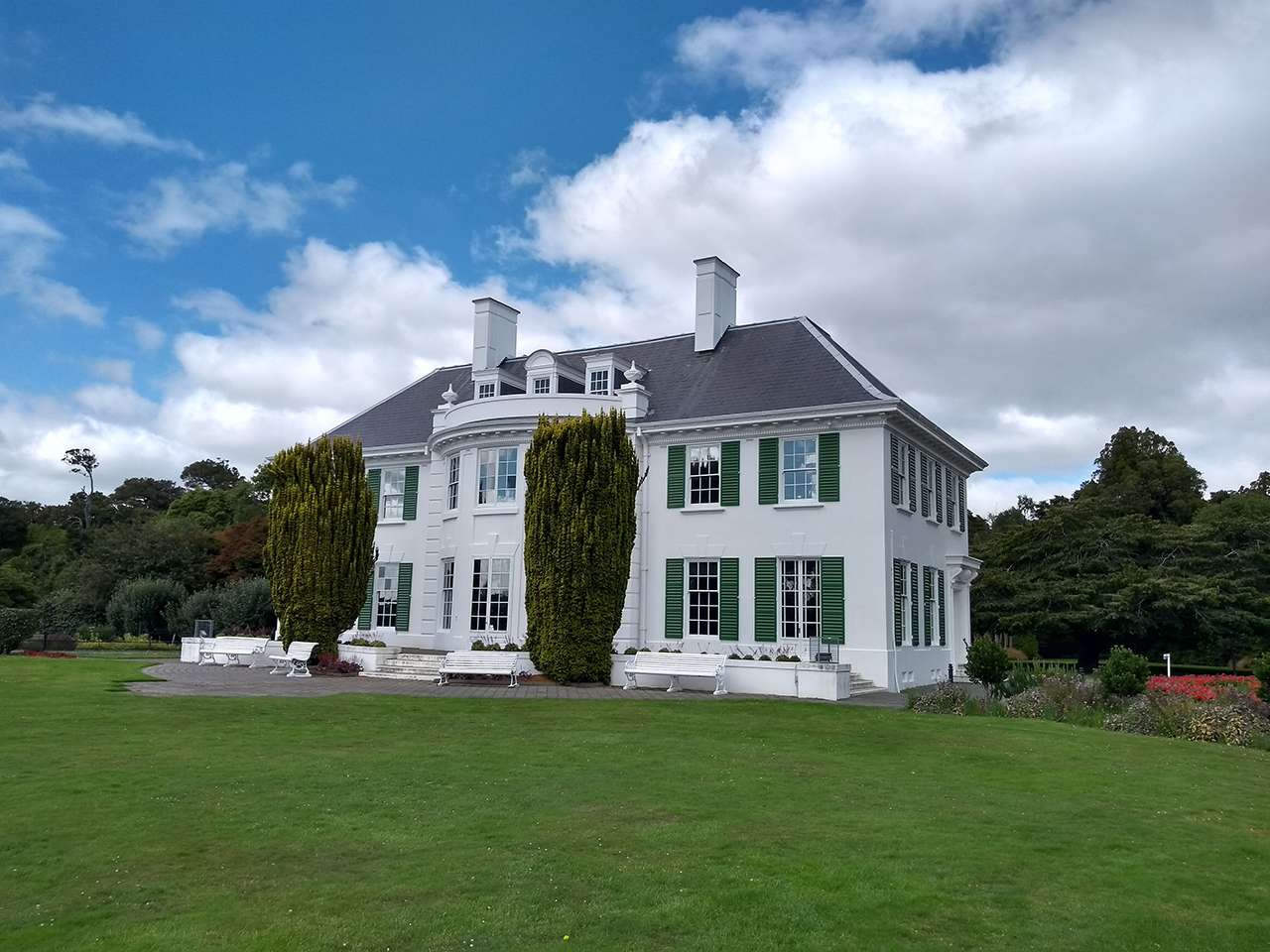
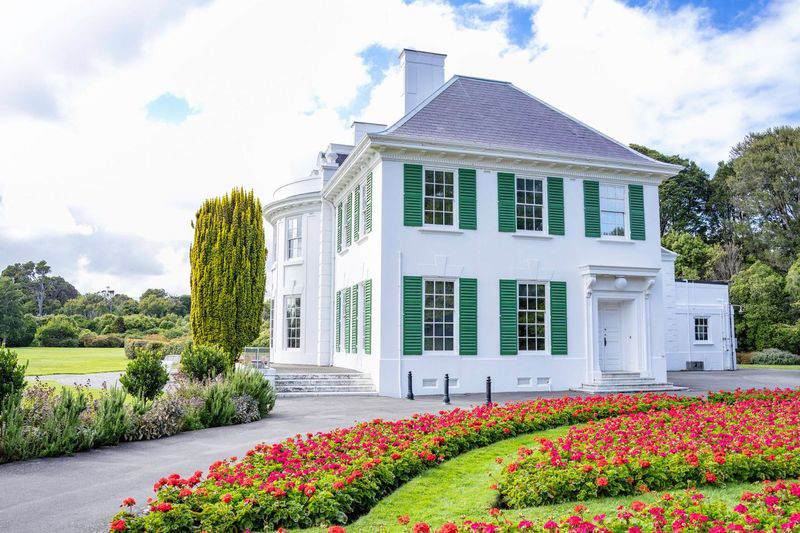
Anderson Park House, situated in extensive garden and bush clad grounds 7km north of Invercargill, was designed by Cecil Wood in the Neo-Georgian style in 1924. The house was built by Alf Ball for prominent local businessman Sir Robert Anderson as a home for his family. Anderson House has architectural, historical and social significance.
Anderson Park was originally named Victoria Park by the first Pākeha owner of the land, Kenneth McIvor, who arrived from Australia in 1859. The land passed to the McDougal family. Around 1910 it was divided into 120 hectare (300 acre) blocks, one of which was bought by Sir Robert Anderson (1866-1942), who built the large Neo-Georgian house now known as Anderson Park House, in 1924-1925. Anderson, a prominent businessman and local office-holder, was born in Queenstown and moved to Invercargill at the age of twelve, where he was employed as an office boy by the Southland Building Society. In 1898 he founded the mercantile firm of J.G. Ward & Co in conjunction with Sir Joseph Ward, and was subsequently involved in many other companies and community organisations. Anderson was knighted in 1930 for his contributions to business and community life.
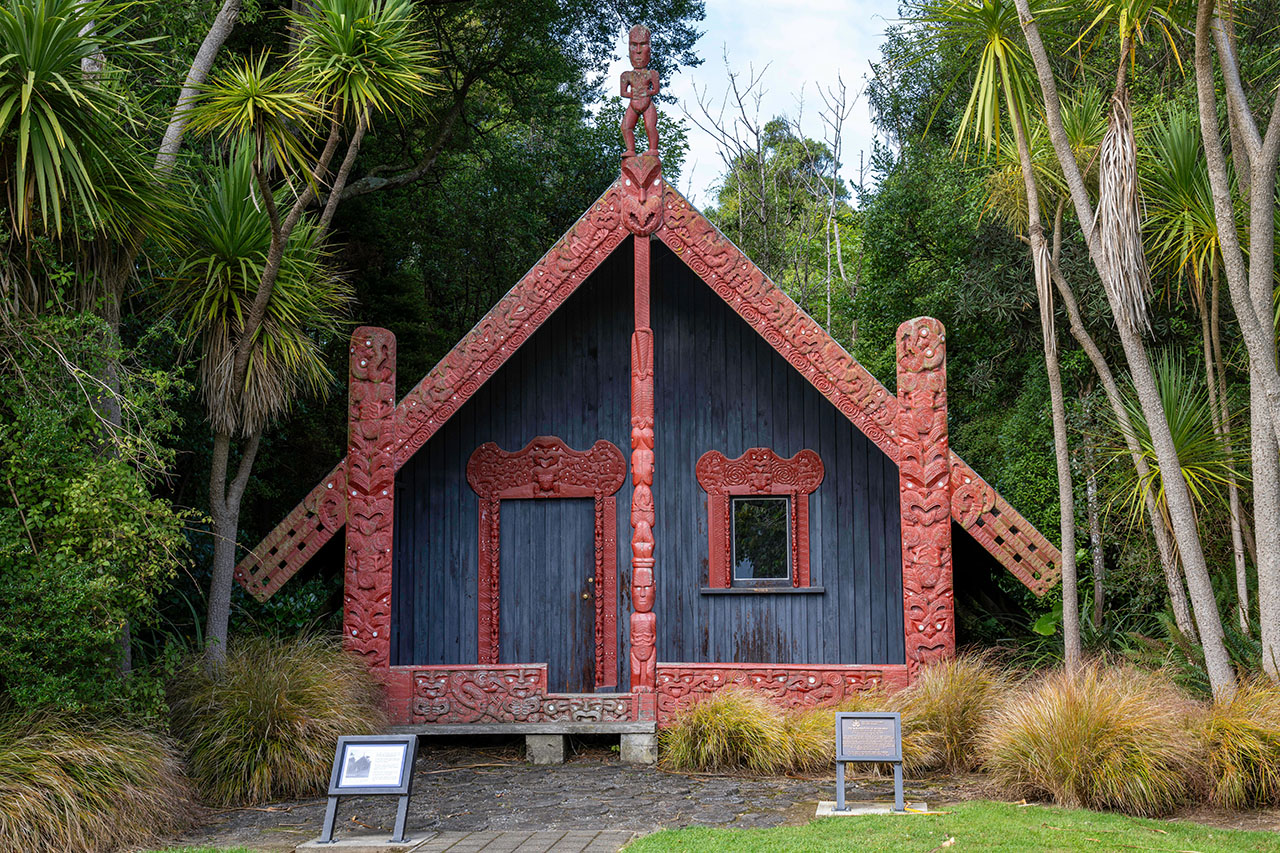
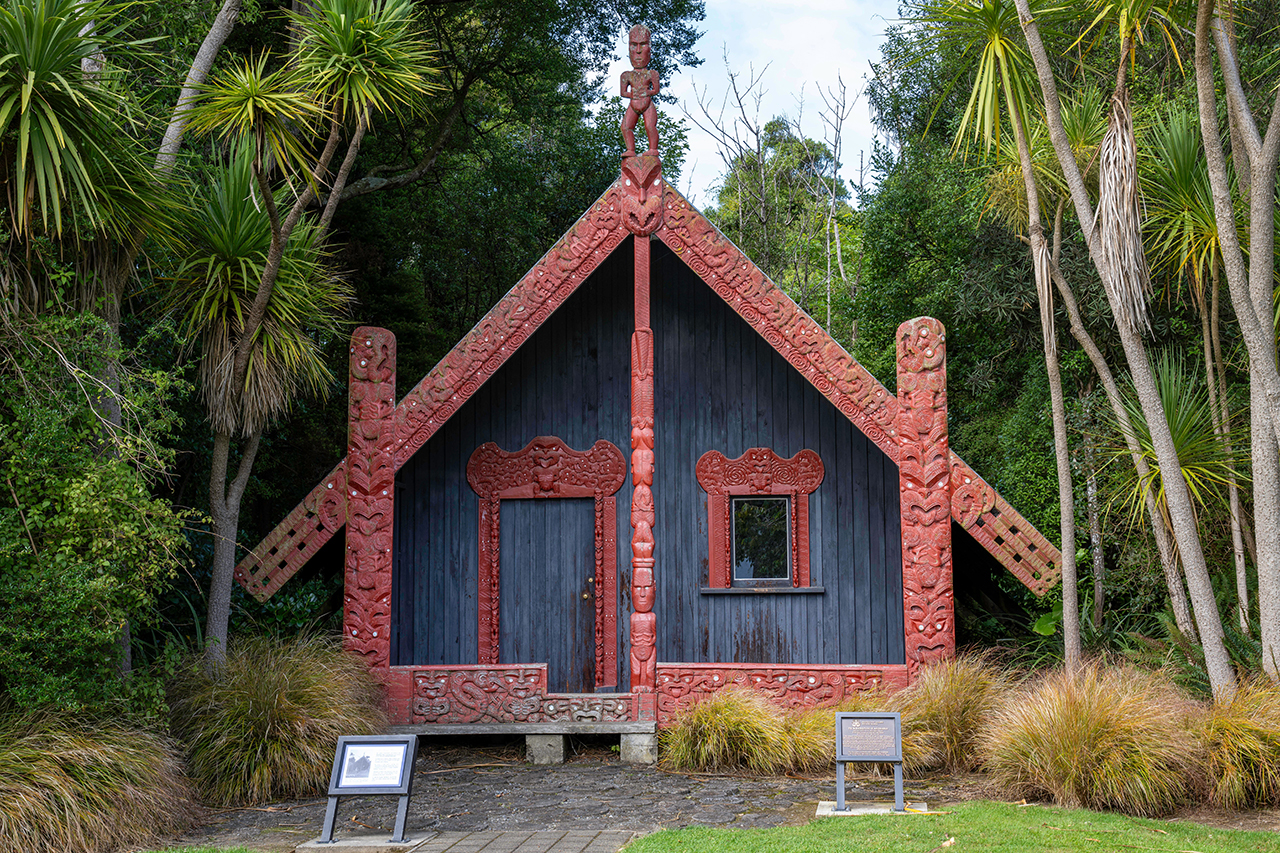
Anderson's house was designed by Cecil Wood, a Christchurch architect who was known for his neo-Georgian style houses during the 1920s. The revival of the Georgian style began in the 1880s in Britain, became part of the English vernacular tradition and was taken up by a number of Arts and Crafts architects, including Leonard Stokes (1858-1925), with whom Wood had worked while in Britain. In New Zealand the Neo-Georgian style was used for large houses from the 1910s. Wood's design for Anderson is L-shape in plan and was constructed in reinforced concrete. The exterior of the two-storey house was finished with white cement, whilst the interior was plastered. The cement was made with sand bought from Stewart Island in a ketch belonging to the builder, Alf Ball. In the centre of the main façade is a bay window that extends through the two storeys of the house. This is surmounted by a solid balustrade which is flanked at each end by a decorative urn. The neo-Georgian approach to design is evident in the symmetry of the main facade, the slightly flared hipped roof of Welsh slate, and the dormer windows. Blind windows on the south wall reference the removal of windows due to the window tax instituted in England in 1696. The main entrance to the house is situated on the right hand side, and leads into a wide hallway. Rimu and American maple is used extensively throughout the house and the interior walls were white plaster to set off the Anderson’s art collection. A small staircase off the upstairs hallway leads to the attic rooms, two of which still have some of their original wallpaper. The fireplaces in the Dickinson Room (former billiard room) and the Kirkby Room (former library) are Georgian replicas carved from Ōamaru stone. At the rear of the house is a Wharepuni, the carvings for which were created by Tene Waitere, Ngāti Tarāwhai and Te Arawa. The Anderson family used the Wharepuni for dances and according to one of Anderson's daughters, Mrs K.D. Kirby, the Wharepuni's 'sprung floor made it beautiful to dance in'.
The Andersons were collectors of art and artefacts and after Lady Anderson's death in 1951, the Andersons’s children donated the house and grounds to the city, a fulfilment of their parents’ wishes. Anderson House was known as the Invercargill Public Art until it was renamed Anderson Park Art Gallery in 1971; it held a collection of mainly New Zealand artworks which had been accumulated since 1951.
In January 2014 Anderson Park Art Gallery was closed due to its earthquake risk. In 2018 the Invercargill City Council approved works in its long-term plan, “to earthquake strengthen and improve the building, including upgrading the toilets and fire safety systems, and installing a lift, with a view to repurposing the house.” The house continues to be surrounded by 24 hectares (60 acres) of extensive lawns, garden and bush, which are maintained by the Invercargill City Council for use as a public park. Anderson House is significant as one of Wood's major Neo-Georgian domestic works and remains a memorial to the generosity of the Anderson family.
Anderson Park was originally named Victoria Park by the first Pākeha owner of the land, Kenneth McIvor, who arrived from Australia in 1859. The land passed to the McDougal family. Around 1910 it was divided into 120 hectare (300 acre) blocks, one of which was bought by Sir Robert Anderson (1866-1942), who built the large Neo-Georgian house now known as Anderson Park House, in 1924-1925. Anderson, a prominent businessman and local office-holder, was born in Queenstown and moved to Invercargill at the age of twelve, where he was employed as an office boy by the Southland Building Society. In 1898 he founded the mercantile firm of J.G. Ward & Co in conjunction with Sir Joseph Ward, and was subsequently involved in many other companies and community organisations. Anderson was knighted in 1930 for his contributions to business and community life.
Anderson's house was designed by Cecil Wood, a Christchurch architect who was known for his neo-Georgian style houses during the 1920s. The revival of the Georgian style began in the 1880s in Britain, became part of the English vernacular tradition and was taken up by a number of Arts and Crafts architects, including Leonard Stokes (1858-1925), with whom Wood had worked while in Britain. In New Zealand the Neo-Georgian style was used for large houses from the 1910s. Wood's design for Anderson is L-shape in plan and was constructed in reinforced concrete. The exterior of the two-storey house was finished with white cement, whilst the interior was plastered. The cement was made with sand bought from Stewart Island in a ketch belonging to the builder, Alf Ball. In the centre of the main façade is a bay window that extends through the two storeys of the house. This is surmounted by a solid balustrade which is flanked at each end by a decorative urn. The neo-Georgian approach to design is evident in the symmetry of the main facade, the slightly flared hipped roof of Welsh slate, and the dormer windows. Blind windows on the south wall reference the removal of windows due to the window tax instituted in England in 1696. The main entrance to the house is situated on the right hand side, and leads into a wide hallway. Rimu and American maple is used extensively throughout the house and the interior walls were white plaster to set off the Anderson’s art collection. A small staircase off the upstairs hallway leads to the attic rooms, two of which still have some of their original wallpaper. The fireplaces in the Dickinson Room (former billiard room) and the Kirkby Room (former library) are Georgian replicas carved from Ōamaru stone. At the rear of the house is a Wharepuni, the carvings for which were created by Tene Waitere, Ngāti Tarāwhai and Te Arawa. The Anderson family used the Wharepuni for dances and according to one of Anderson's daughters, Mrs K.D. Kirby, the Wharepuni's 'sprung floor made it beautiful to dance in'.
The Andersons were collectors of art and artefacts and after Lady Anderson's death in 1951, the Andersons’s children donated the house and grounds to the city, a fulfilment of their parents’ wishes. Anderson House was known as the Invercargill Public Art until it was renamed Anderson Park Art Gallery in 1971; it held a collection of mainly New Zealand artworks which had been accumulated since 1951.
In January 2014 Anderson Park Art Gallery was closed due to its earthquake risk. In 2018 the Invercargill City Council approved works in its long-term plan, “to earthquake strengthen and improve the building, including upgrading the toilets and fire safety systems, and installing a lift, with a view to repurposing the house.” The house continues to be surrounded by 24 hectares (60 acres) of extensive lawns, garden and bush, which are maintained by the Invercargill City Council for use as a public park. Anderson House is significant as one of Wood's major Neo-Georgian domestic works and remains a memorial to the generosity of the Anderson family.