DonateMembershipVisit Heritage
  • Tūrangawaewae
    Places
  • Tira Māori
    Māori Heritage
  • Poutairangahia
    Archaeology
  • Rauemi
    Resources
  • Mō Tātou
    About Us
  • New Zealand Heritage List
  • Nominate and submit
  • Explore the List
  • National Historic Landmarks
  • Plaques
  • Rainbow List Project
  • Lost heritage
  • Visit Heritage
  • Our properties
  • Turnbull House Project
  • Collections
  • Shop
  • Tohu Whenua
  • Tira Māori
  • Conserving Māori heritage
  • Marae built heritage
  • Māori heritage on the List
  • Hinemihi—Te Hokinga Mai
  • What is archaeology?
  • Is there a site on my property?
  • What are my legal requirements?
  • Affecting an archaeological site
  • Declaring an archaeological site
  • Archaeology FAQs
  • Archaeology Digital Library
  • Archaeology guidelines and templates
  • Resources
  • Funding
  • Publications
  • Sustainable management guides
  • Disaster recovery
  • Podcasts & digital resources
  • Education Hub
  • Conservation plans
  • About
  • Board
  • Māori Heritage Council
  • Senior Staff
  • Offices
  • Contact us
  • Careers
  • Covenants
  • Fast-track
  • Corporate documents
  • Currently consulting on
  • Our submissions
  • News
  • Covid-19 response
Quick links
Rārangi Kōrero | The List
Explore the List
National Historic Landmarks
Ngā Manawhenua o Aotearoa me ōna Kōrero Tūturu
Quick links
Tapuwae
A Vision for Places of Māori Heritage
Funding for Māori Heritage
Resources
Quick links
Archaeological Authority Portal
Applying for an archaeological authority
Archaeology FAQs
Browse the most frequently asked questions about archaeological authorities and the archaeological process.
Quick links
Quick links
News
News Keep up to date with Heritage New Zealand Pouhere Taonga
Membership
Membership Find out more and sign up today
DonateMembershipVisit Heritage
  • Tūrangawaewae
    Places
  • Tira Māori
    Māori Heritage
  • Poutairangahia
    Archaeology
  • Rauemi
    Resources
  • Mō Tātou
    About Us
  • New Zealand Heritage List
  • Nominate and submit
  • Explore the List
  • National Historic Landmarks
  • Plaques
  • Rainbow List Project
  • Lost heritage
  • Visit Heritage
  • Our properties
  • Turnbull House Project
  • Collections
  • Shop
  • Tohu Whenua
  • Tira Māori
  • Conserving Māori heritage
  • Marae built heritage
  • Māori heritage on the List
  • Hinemihi—Te Hokinga Mai
  • What is archaeology?
  • Is there a site on my property?
  • What are my legal requirements?
  • Affecting an archaeological site
  • Declaring an archaeological site
  • Archaeology FAQs
  • Archaeology Digital Library
  • Archaeology guidelines and templates
  • Resources
  • Funding
  • Publications
  • Sustainable management guides
  • Disaster recovery
  • Podcasts & digital resources
  • Education Hub
  • Conservation plans
  • About
  • Board
  • Māori Heritage Council
  • Senior Staff
  • Offices
  • Contact us
  • Careers
  • Covenants
  • Fast-track
  • Corporate documents
  • Currently consulting on
  • Our submissions
  • News
  • Covid-19 response
Quick links
Rārangi Kōrero | The List
Explore the List
National Historic Landmarks
Ngā Manawhenua o Aotearoa me ōna Kōrero Tūturu
Quick links
Tapuwae
A Vision for Places of Māori Heritage
Funding for Māori Heritage
Resources
Quick links
Archaeological Authority Portal
Applying for an archaeological authority
Archaeology FAQs
Browse the most frequently asked questions about archaeological authorities and the archaeological process.
Quick links
Quick links
News
News Keep up to date with Heritage New Zealand Pouhere Taonga
Membership
Membership Find out more and sign up today
  • Places
  • Nominate and submit
  • National Historic Landmarks
  • Places
  • Nominate and submit
  • National Historic Landmarks
  • Tira Māori
  • Conserving Māori heritage
  • Marae built heritage
  • Tira Māori
  • Conserving Māori heritage
  • Marae built heritage
  • Archaeological authorities
  • Archaeology Digital Library
  • Archaeological authorities
  • Archaeology Digital Library
  • All resources
  • Publications
  • Funding
  • All resources
  • Publications
  • Funding
  • FAQs
  • FAQs
Follow us on:
Places
  • Places
  • Nominate and submit
  • National Historic Landmarks
Tira Māori
  • Tira Māori
  • Conserving Māori heritage
  • Marae built heritage
Archaeology
  • Archaeological authorities
  • Archaeology Digital Library
Resources
  • All resources
  • Publications
  • Funding
FAQs
  • FAQs
Follow us on
HomePrivacyTerms and conditionsAbout this site
© Heritage New Zealand Pouhere Taonga 2026.
 
Post Office (Former)

2-10 Andrews Avenue and 151 High Street, LOWER HUTT

Private

Historic Place Category 2

List No. 4145

Quick links:
List GalleryLocationDetails
This large Moderne building was the third Post Office built in Lower Hutt, and was designed by the Government Architect, John Thomas Mair (1876-1959). The first post office in Lower Hutt was a small wooden building built on the corner of High Street and Laings Road in 1891. During the 1890s the role of the Postal and Telegraph Department expanded. Not only did the volume of mail it carried increase, but it also offered a far greater range of government services, such as a savings bank and the acceptance of licence fees, taxes, and local body rates. At the same the population of Lower Hutt grew. To cope with the increased demand on postal services, a two-storey masonry post office was built in 1906 to replace the wooden structure.

The 1920s and 1930s saw the rapid expansion of suburban development in the Hutt Valley, aided by the establishment of the Housing Construction Department in 1936. In that same year a town-planning scheme was adopted to control development. As part of planning for anticipated growth in the town of Lower Hutt, and to relieve future traffic congestion, land owned by the Catholic Church - then occupied by the Church of Sts Peter and Paul - was acquired by the Lower Hutt Borough Council in 1937 for a 'cross-street' between High Street and Dudley Street. It was called Andrews Avenue, and the north side of the street was set aside for the new and larger post office which is the subject of this registration.

The contract for the construction of the building was let to Messrs. W. M. Angus Ltd of Napier in July 1940, but it was not until a year later that the foundation stone was laid. In the meantime Lower Hutt became a city. On the day Lower Hutt's new status as a municipality was announced a picture of the proposed new post office was published in the Dominion newspaper. Further delays caused by shortages associated with the Second World War meant that the post office did not open until February 1943, and, even then, work still had to be completed on the upper storeys of the building.

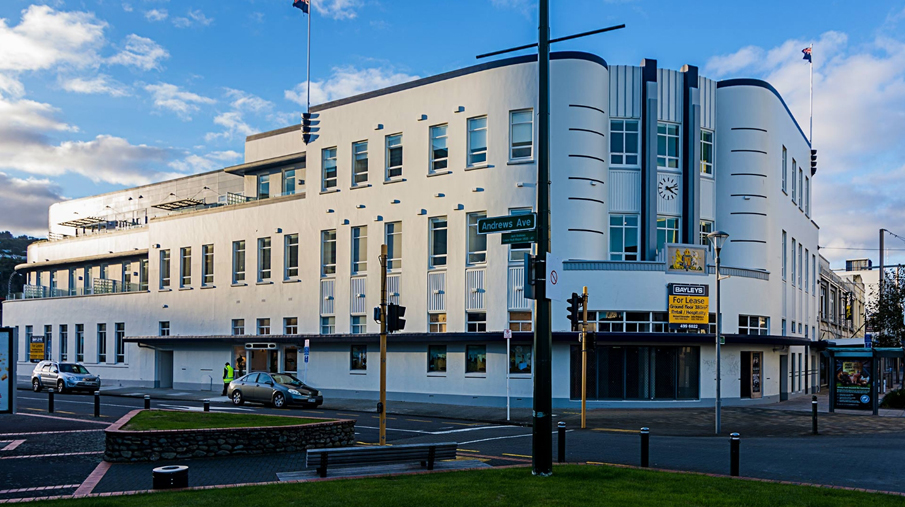
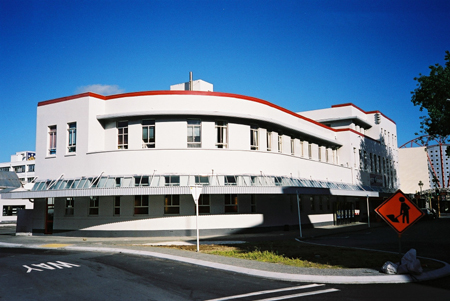
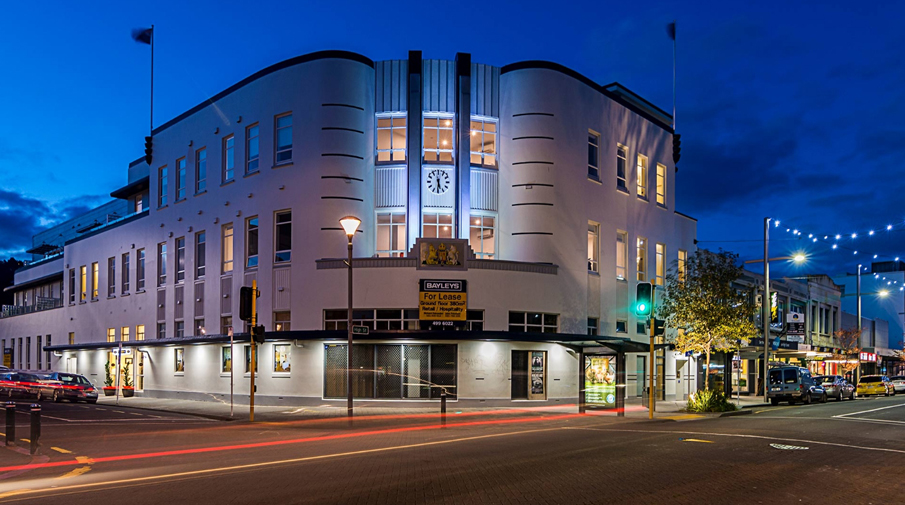
Mair's Moderne design, incorporating elements of Art Deco, was purpose-designed for its site. The building was never intended to be solely occupied by a post office. The ground floor was also planned to be used by the railways bus office, with other government offices occupying the top floors. However, this never eventuated. For around fifty years or so the principal occupant has been the Post Office (including the Post Savings Bank, and later Postbank). Other occupants have included solicitors, dentists, and photographers. Today New Zealand Post utilises the building for a sorting office and private boxes. The ground floor space facing the High Street has been let for commercial purposes.

The Post Office Building, Lower Hutt, is historically significant as a reminder of the phenomenal growth of Lower Hutt in the first decades of the twentieth century. It is also important for its association with the Government Architect, John Mair. Occupying a corner site, it is a well-known landmark on Lower Hutt's main street.
Post Office (Former), Lower Hutt. Image courtesy of nme.co.nz | © NME 2020
Post Office (Former), Lower Hutt | Helen McCracken | 25/11/2001 | Heritage New Zealand
Post Office (Former), Lower Hutt. Image courtesy of nme.co.nz | © NME 2020
Post Office (Former), Lower Hutt | Helen McCracken | 25/11/2001 | Heritage New Zealand

List Entry Information

Overview

Status
Listed

List Entry Status
Historic Place Category 2

Access
Private/No Public Access

List Number
4145

Date Entered
5th September 1985

Date of Effect
5th September 1985

City/District Council
Hutt City

Region
Wellington Region

Extent of List Entry

Extent of registration includes the land described as Lot 1 DP 90205 (RT WN57D/255) Wellington Land District, and the building known as Post Office (Former) thereon. Extent excludes the single-storey building along the north-east boundary.

Legal description

Lot 1 DP 90205 (RT WN57D/255), Wellington Land District

Detailed List Entry

Construction Professional

Name

Mair, John Thomas

Type

Architect

Biography

John Thomas Mair (1876-1959) was born in Invercargill and began his career with the New Zealand Railways on the staff of the Office Engineer, George Troup. In 1906 he travelled to the United States of America where he studied architecture at the University of Pennsylvania. He then worked in the office of George B. Post in New York before travelling to England where he was admitted as an Associate of the Royal Institute of British Architects. He became a Fellow in 1940. On his return to New Zealand he entered private practice, one of his first buildings being the Presbyterian First Church, Invercargill (1915), a prominent building of Romanesque character. He then practised in Wellington, carrying out largely domestic commissions. In 1918 he was appointed Inspector of Military Hospitals by the Defence Department, and in 1920 he became architect to the Department of Education. Following the retirement of John Campbell in 1922, Mair was appointed Government Architect, a position which he held until his retirement in 1942. During this period he was responsible for a variety of buildings, including the Courthouse, Hamilton, the Post Office in High Street, Christchurch, Government Life Office and the Departmental Building, both in Wellington, and the Jean Batten Building, Auckland. Such buildings show a departure from tradition, with the emphasis on function, structure and volume as opposed to a stylistic treatment of the building fabric. A Fellow of the New Zealand Institute of Architects, Mair was made a Life Member in 1942. His son John Lindsay Mair also practised as an architect.

Construction Details

Start Year

1941

Finish Year

1943

Type

Original Construction

Start Year

2000

Type

Modification

Description

Alterations for retail purposes

Construction Materials

The building is constructed of reinforced concrete with a cement plaster finish.

Reference

Completion Date

19th February 2002

Report Written By

Helen McCracken

Information Sources

Encyclopaedia of NZ, 1966

Encyclopaedia of New Zealand, Wellington, 1966

Evening Post

Evening Post, 27 Jun 1919, p.7.

Millar, 1972

David Millar, Once Upon a Village, a History of Lower Hutt, 1819-1965, Wellington, 1972

Report Written By

This place was identified as significant under previous legislation with different information requirements. It remains significant under the current legislation. There is opportunity under our legislation and policies to add to this information. Further information about this place may be available from the Central Regional Office of Heritage New Zealand Pouhere Taonga. Please note that entry on the New Zealand Heritage List/Rarangi Korero identifies only the heritage values of the property concerned, and should not be construed as advice on the state of the property, or as a comment of its soundness or safety, including in regard to earthquake risk, safety in the event of fire, or insanitary conditions.

Further Information

Current Usages

Uses: Communication

Specific Usage: Postal Sorting & Distribution Centre

Uses: Trade

Specific Usage: Office building/Offices

Uses: Trade

Specific Usage: Shop

Former Usages

General Usage:: Communication

Specific Usage: Post Office

General Usage:: Finance

Specific Usage: Bank

General Usage:: Health

Specific Usage: Dentist Surgery/ Dental Clinic

General Usage:: Trade

Specific Usage: Office building/Offices

Themes

Modern Movement

Web Links

Overview

Status

Listed

List Entry Status

Historic Place Category 2

Access

Private/No Public Access

List Number

4145

Date Entered

5th September 1985

Date of Effect

5th September 1985

City/District Council

Hutt City

Region

Wellington Region

Extent of List Entry

Extent of registration includes the land described as Lot 1 DP 90205 (RT WN57D/255) Wellington Land District, and the building known as Post Office (Former) thereon. Extent excludes the single-storey building along the north-east boundary.

Legal description

Lot 1 DP 90205 (RT WN57D/255), Wellington Land District

Status

Listed

List Entry Status

Historic Place Category 2

Access

Private/No Public Access

List Number

4145

Date Entered

5th September 1985

Date of Effect

5th September 1985

City/District Council

Hutt City

Region

Wellington Region

Extent of List Entry

Extent of registration includes the land described as Lot 1 DP 90205 (RT WN57D/255) Wellington Land District, and the building known as Post Office (Former) thereon. Extent excludes the single-storey building along the north-east boundary.

Legal description

Lot 1 DP 90205 (RT WN57D/255), Wellington Land District

Construction Information

Construction Professional

Name

Mair, John Thomas

Type

Architect

Biography

John Thomas Mair (1876-1959) was born in Invercargill and began his career with the New Zealand Railways on the staff of the Office Engineer, George Troup. In 1906 he travelled to the United States of America where he studied architecture at the University of Pennsylvania. He then worked in the office of George B. Post in New York before travelling to England where he was admitted as an Associate of the Royal Institute of British Architects. He became a Fellow in 1940. On his return to New Zealand he entered private practice, one of his first buildings being the Presbyterian First Church, Invercargill (1915), a prominent building of Romanesque character. He then practised in Wellington, carrying out largely domestic commissions. In 1918 he was appointed Inspector of Military Hospitals by the Defence Department, and in 1920 he became architect to the Department of Education. Following the retirement of John Campbell in 1922, Mair was appointed Government Architect, a position which he held until his retirement in 1942. During this period he was responsible for a variety of buildings, including the Courthouse, Hamilton, the Post Office in High Street, Christchurch, Government Life Office and the Departmental Building, both in Wellington, and the Jean Batten Building, Auckland. Such buildings show a departure from tradition, with the emphasis on function, structure and volume as opposed to a stylistic treatment of the building fabric. A Fellow of the New Zealand Institute of Architects, Mair was made a Life Member in 1942. His son John Lindsay Mair also practised as an architect.

Construction Details

Start Year

1941

Finish Year

1943

Type

Original Construction

Start Year

2000

startYearCirca

Type

Modification

Description

Alterations for retail purposes

Construction Materials

The building is constructed of reinforced concrete with a cement plaster finish.

Construction Professional

Name

Mair, John Thomas

Type

Architect

Biography

John Thomas Mair (1876-1959) was born in Invercargill and began his career with the New Zealand Railways on the staff of the Office Engineer, George Troup. In 1906 he travelled to the United States of America where he studied architecture at the University of Pennsylvania. He then worked in the office of George B. Post in New York before travelling to England where he was admitted as an Associate of the Royal Institute of British Architects. He became a Fellow in 1940. On his return to New Zealand he entered private practice, one of his first buildings being the Presbyterian First Church, Invercargill (1915), a prominent building of Romanesque character. He then practised in Wellington, carrying out largely domestic commissions. In 1918 he was appointed Inspector of Military Hospitals by the Defence Department, and in 1920 he became architect to the Department of Education. Following the retirement of John Campbell in 1922, Mair was appointed Government Architect, a position which he held until his retirement in 1942. During this period he was responsible for a variety of buildings, including the Courthouse, Hamilton, the Post Office in High Street, Christchurch, Government Life Office and the Departmental Building, both in Wellington, and the Jean Batten Building, Auckland. Such buildings show a departure from tradition, with the emphasis on function, structure and volume as opposed to a stylistic treatment of the building fabric. A Fellow of the New Zealand Institute of Architects, Mair was made a Life Member in 1942. His son John Lindsay Mair also practised as an architect.

Construction Details

Start Year

1941

Finish Year

1943

Type

Original Construction

Start Year

2000

startYearCirca

Type

Modification

Description

Alterations for retail purposes

Construction Materials

The building is constructed of reinforced concrete with a cement plaster finish.

Reference

Historical and Associated Iwi / Hapū / Whānau

Completion Date

19th February 2002

Report Written By

Helen McCracken

Information Sources

Encyclopaedia of NZ, 1966

Encyclopaedia of New Zealand, Wellington, 1966

Evening Post

Evening Post, 27 Jun 1919, p.7.

Millar, 1972

David Millar, Once Upon a Village, a History of Lower Hutt, 1819-1965, Wellington, 1972

Other Information

This place was identified as significant under previous legislation with different information requirements. It remains significant under the current legislation. There is opportunity under our legislation and policies to add to this information. Further information about this place may be available from the Central Regional Office of Heritage New Zealand Pouhere Taonga. Please note that entry on the New Zealand Heritage List/Rarangi Korero identifies only the heritage values of the property concerned, and should not be construed as advice on the state of the property, or as a comment of its soundness or safety, including in regard to earthquake risk, safety in the event of fire, or insanitary conditions.

Historical and Associated Iwi / Hapū / Whānau

Completion Date

19th February 2002

Report Written By

Helen McCracken

Information Sources

Encyclopaedia of NZ, 1966

Encyclopaedia of New Zealand, Wellington, 1966

Evening Post

Evening Post, 27 Jun 1919, p.7.

Millar, 1972

David Millar, Once Upon a Village, a History of Lower Hutt, 1819-1965, Wellington, 1972

Other Information

This place was identified as significant under previous legislation with different information requirements. It remains significant under the current legislation. There is opportunity under our legislation and policies to add to this information. Further information about this place may be available from the Central Regional Office of Heritage New Zealand Pouhere Taonga. Please note that entry on the New Zealand Heritage List/Rarangi Korero identifies only the heritage values of the property concerned, and should not be construed as advice on the state of the property, or as a comment of its soundness or safety, including in regard to earthquake risk, safety in the event of fire, or insanitary conditions.

Further Information

Current Usages

Uses: Communication

Specific Usage: Postal Sorting & Distribution Centre

Uses: Trade

Specific Usage: Office building/Offices

Uses: Trade

Specific Usage: Shop

Former Usages

General Usage: Communication

Specific Usage: Post Office

General Usage: Finance

Specific Usage: Bank

General Usage: Health

Specific Usage: Dentist Surgery/ Dental Clinic

General Usage: Trade

Specific Usage: Office building/Offices

Themes

Modern Movement

Current Usages

Uses: Communication

Specific Usage: Postal Sorting & Distribution Centre

Uses: Trade

Specific Usage: Office building/Offices

Uses: Trade

Specific Usage: Shop

Former Usages

General Usage: Communication

Specific Usage: Post Office

General Usage: Finance

Specific Usage: Bank

General Usage: Health

Specific Usage: Dentist Surgery/ Dental Clinic

General Usage: Trade

Specific Usage: Office building/Offices

Themes

Modern Movement

Location

Loading
Stay up to date with Heritage this month