DonateSupporterVisit Heritage
  • Tūrangawaewae
    Places
  • Tira Māori
    Māori Heritage
  • Poutairangahia
    Archaeology
  • Rauemi
    Resources
  • Mō Tātou
    About Us
  • New Zealand Heritage List
  • Nominate and submit
  • Explore the List
  • National Historic Landmarks
  • Plaques
  • Rainbow List Project
  • Lost heritage
  • Visit Heritage
  • Our properties
  • Turnbull House Project
  • Collections
  • Shop
  • Tohu Whenua
  • Tira Māori
  • Conserving Māori heritage
  • Marae built heritage
  • Māori heritage on the List
  • Hinemihi—Te Hokinga Mai
  • What is archaeology?
  • Is there a site on my property?
  • What are my legal requirements?
  • Affecting an archaeological site
  • Declaring an archaeological site
  • Archaeology FAQs
  • Archaeology Digital Library
  • Archaeology guidelines and templates
  • Resources
  • Funding
  • Publications
  • Sustainable management guides
  • Disaster recovery
  • Podcasts & digital resources
  • Education Hub
  • Conservation plans
  • About
  • Board
  • Māori Heritage Council
  • Senior Staff
  • Offices
  • Contact us
  • Careers
  • Covenants
  • Fast-track
  • Corporate documents
  • Currently consulting on
  • Our submissions
  • News
  • Covid-19 response
Quick links
Rārangi Kōrero | The List
Explore the List
National Historic Landmarks
Ngā Manawhenua o Aotearoa me ōna Kōrero Tūturu
Quick links
Tapuwae
A Vision for Places of Māori Heritage
Funding for Māori Heritage
Resources
Quick links
Archaeological Authority Portal
Applying for an archaeological authority
Archaeology FAQs
Browse the most frequently asked questions about archaeological authorities and the archaeological process.
Quick links
Quick links
Contact us
Offices
DonateSupporterVisit Heritage
  • Tūrangawaewae
    Places
  • Tira Māori
    Māori Heritage
  • Poutairangahia
    Archaeology
  • Rauemi
    Resources
  • Mō Tātou
    About Us
  • New Zealand Heritage List
  • Nominate and submit
  • Explore the List
  • National Historic Landmarks
  • Plaques
  • Rainbow List Project
  • Lost heritage
  • Visit Heritage
  • Our properties
  • Turnbull House Project
  • Collections
  • Shop
  • Tohu Whenua
  • Tira Māori
  • Conserving Māori heritage
  • Marae built heritage
  • Māori heritage on the List
  • Hinemihi—Te Hokinga Mai
  • What is archaeology?
  • Is there a site on my property?
  • What are my legal requirements?
  • Affecting an archaeological site
  • Declaring an archaeological site
  • Archaeology FAQs
  • Archaeology Digital Library
  • Archaeology guidelines and templates
  • Resources
  • Funding
  • Publications
  • Sustainable management guides
  • Disaster recovery
  • Podcasts & digital resources
  • Education Hub
  • Conservation plans
  • About
  • Board
  • Māori Heritage Council
  • Senior Staff
  • Offices
  • Contact us
  • Careers
  • Covenants
  • Fast-track
  • Corporate documents
  • Currently consulting on
  • Our submissions
  • News
  • Covid-19 response
Quick links
Rārangi Kōrero | The List
Explore the List
National Historic Landmarks
Ngā Manawhenua o Aotearoa me ōna Kōrero Tūturu
Quick links
Tapuwae
A Vision for Places of Māori Heritage
Funding for Māori Heritage
Resources
Quick links
Archaeological Authority Portal
Applying for an archaeological authority
Archaeology FAQs
Browse the most frequently asked questions about archaeological authorities and the archaeological process.
Quick links
Quick links
Contact us
Offices
  • Places
  • Nominate and submit
  • National Historic Landmarks
  • Places
  • Nominate and submit
  • National Historic Landmarks
  • Tira Māori
  • Conserving Māori heritage
  • Marae built heritage
  • Tira Māori
  • Conserving Māori heritage
  • Marae built heritage
  • Archaeological authorities
  • Archaeology Digital Library
  • Archaeological authorities
  • Archaeology Digital Library
  • All resources
  • Publications
  • Funding
  • All resources
  • Publications
  • Funding
  • FAQs
  • FAQs
Follow us on:
Places
  • Places
  • Nominate and submit
  • National Historic Landmarks
Tira Māori
  • Tira Māori
  • Conserving Māori heritage
  • Marae built heritage
Archaeology
  • Archaeological authorities
  • Archaeology Digital Library
Resources
  • All resources
  • Publications
  • Funding
FAQs
  • FAQs
Follow us on
HomePrivacyTerms and conditionsAbout this site
© Heritage New Zealand Pouhere Taonga 2026.
 
Regent Theatre

17 The Octagon, DUNEDIN

Private

Historic Place Category 1

List No. 4363

Quick links:
List GalleryLocationDetails
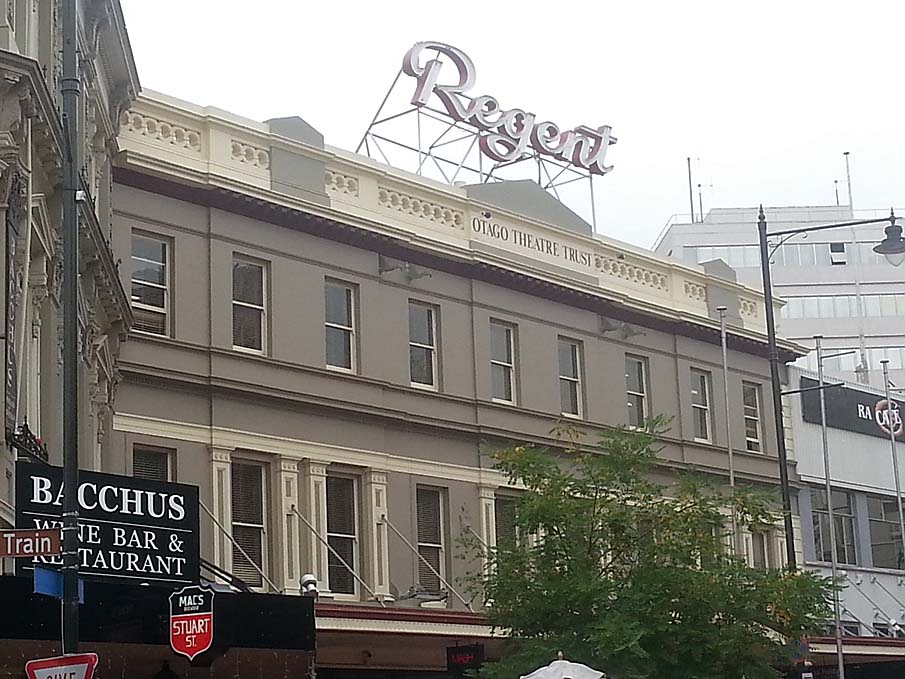
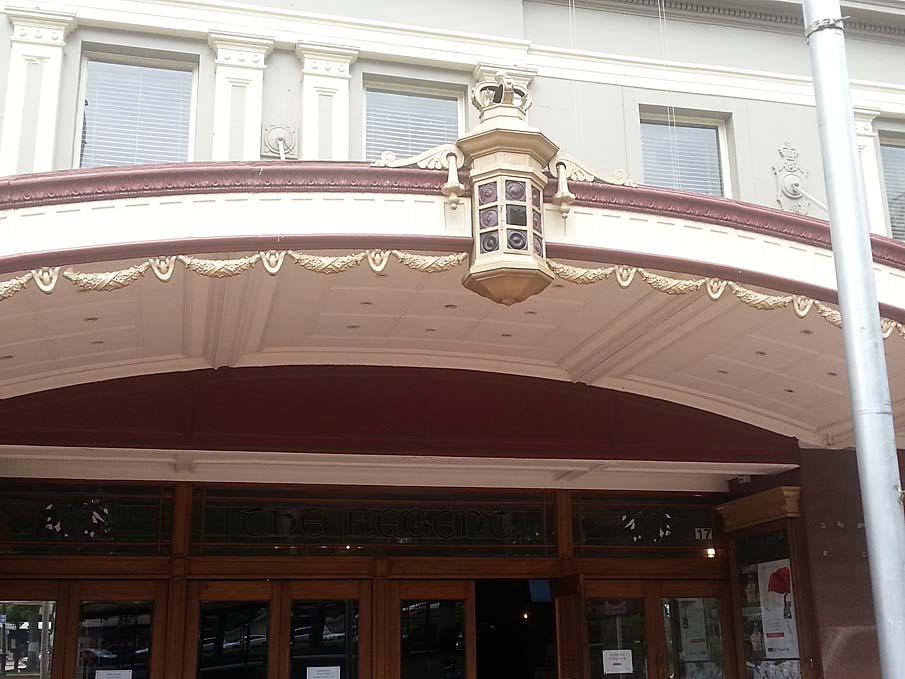
Regent Theatre, Dunedin. CC BY 4.0 Image courtesy of commons.wikimedia.org | L Maule | 18/02/2021 | L Maule - Wikimedia Commons
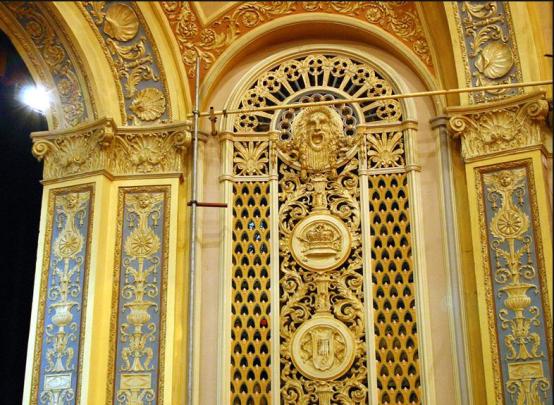
Regents Theatre, Dunedin. Interior. Image courtesy of www.flickr.com | Derek Smith - travelling-light | 07/10/2004 | Derek Smith - travelling-light
Regent Theatre, Dunedin. CC BY 4.0 Image courtesy of commons.wikimedia.org | L Maule | 18/02/2021 | L Maule - Wikimedia Commons
Regents Theatre, Dunedin. Interior. Image courtesy of www.flickr.com | Derek Smith - travelling-light | 07/10/2004 | Derek Smith - travelling-light

List Entry Information

Overview

Status
Listed

List Entry Status
Historic Place Category 1

Access
Private/No Public Access

List Number
4363

Date Entered
26th November 1987

Date of Effect
26th November 1987

City/District Council
Dunedin City

Region
Otago Region

Detailed List Entry
Significance

Historic Significance

Historical Significance or Value The façade of the theatre was in existence by 1904 and is probably the original façade of a large rooming and shop building of the 1880s. The shops included Mrs Harrison's popular restaurant, and the rooms were let to middle-income workers. A bricked-up fireplace in a downstairs office indicates that part of the original building is still within the structure. The land was owned in the 1920s by Mr F G Duncan, a Dunedin solicitor, who became chairman of the Regent Theatre Company which built the theatre auditorium behind the frontage. Though built to promote the new film industry, the stage was used immediately for visiting performers such as Clara Bow and for local groups such as the Otago School of Dancing. The building fell into disuse with the decline in film audiences in the 1960s and was taken over by the Otago Theatre Trust in 1972. The Dunedin City Corporation and Kerridge Odeon, the recent owners of the building, helped substantially, but the main funding for refurbishing the building has come from the citizen of Dunedin by private subscription. The trust has developed the stage area to improve it as a venue for live theatre and kept the building in use. They have maintained and not modified the ornate interior and maintained the large seating capacity of about 1800 seats. This is a building which the public of Dunedin have voted with their purses and feet to retain.

Physical Significance

ARCHITECTURAL SIGNIFICANCE: One of the best interiors of this period in Otago.

Construction Professional

Name

White, James Hodge

Type

Architect

Biography

J H White (1896-1970) was born in Dunedin and educated in Tasmania but returned to Dunedin to undertake his early training with a local architectural firm. Having served overseas during World War One, White was awarded a British Army Scholarship and subsequently attended the London School of Architecture for three years. He graduated with honours, winning the gold medal of the International Victory Scholarship (1921). Following his return to New Zealand White undertook a study tour of the United States with fellow architect Horace Massey before settling in Dunedin, where he entered into a brief partnership with Leslie Coombes (1925-6). Coombes & White won the national competition for the design of the Southland War Memorial which was erected in Invercargill, but soon afterwards the partnership was dissolved and in 1927 White joined forces with another Dunedin architect, Eric Miller (1896-1948). Miller & White became architects to the University of Otago, won the national design competition for the Auckland Residential Methodist College and also designed the Regent Theatre, Dunedin, the Willi Fels Wing of the Otago Museum (c.1929), and numerous other commercial, ecclesiastical and residential buildings in Dunedin. James White was the principal designer of the firm and it was in this capacity that he designed the St John Ambulance building in York Place and the New Zealand Road Services Passenger Station in Rattray Street (1939) which is also in the Art Deco style. After Eric Miller's death White entered partnership with Ian Dunn, who had been with the practice since 1933. The firm then became known as Miller, White & Dunn. This practice won the national competition for the design of the Canterbury Museum extensions in 1951. James White retired five years before his death in 1970 and today the firm is continued by his son Geoffrey in partnership with Rodney Dalziel.

Construction Details

Start Year

1928

Type

Original Construction

Description

1928 for the interior but the façade is much older and dates back to the 1800s.

Construction Materials

Materials of the interior are concrete, plaster and varnished wood. The wide fan-shaped proscenium allows excellent viewing from all parts of the theatre. The ornate plaster work of the ceiling and proscenium is matched by the elegance of design of the galleries and staircases.

Notable Features

The highly decorated theatre interior.

Physical Description

ARCHITECTURAL DESCRIPTION (Style): 1920-1930s Hollywood ornate. MODIFICATIONS: The public part of the interior has been little modified since the Theatre Trust took it over, but the stage has been enlarged and the back stage area rebuilt to provide better accommodation for live performances.

Reference

Information Sources

Otago Theatre Trust

Trust records, publications by the Otago Theatre Trust.

Report Written By

This historic place was registered under the Historic Places Act 1980. This report includes the text from the original Building Classification Committee report considered by the NZHPT Board at the time of registration. Please note that entry on the New Zealand Heritage List/Rarangi Korero identifies only the heritage values of the property concerned, and should not be construed as advice on the state of the property, or as a comment of its soundness or safety, including in regard to earthquake risk, safety in the event of fire, or insanitary conditions.

Further Information

Current Usages

Former Usages

General Usage:: Civic Facilities

Specific Usage: Opera House

General Usage:: Civic Facilities

Specific Usage: Theatre

Themes

Web Links

Overview

Status

Listed

List Entry Status

Historic Place Category 1

Access

Private/No Public Access

List Number

4363

Date Entered

26th November 1987

Date of Effect

26th November 1987

City/District Council

Dunedin City

Region

Otago Region

Status

Listed

List Entry Status

Historic Place Category 1

Access

Private/No Public Access

List Number

4363

Date Entered

26th November 1987

Date of Effect

26th November 1987

City/District Council

Dunedin City

Region

Otago Region

Significance

Why is this place significant?

Historic Significance

Historical Significance or Value The façade of the theatre was in existence by 1904 and is probably the original façade of a large rooming and shop building of the 1880s. The shops included Mrs Harrison's popular restaurant, and the rooms were let to middle-income workers. A bricked-up fireplace in a downstairs office indicates that part of the original building is still within the structure. The land was owned in the 1920s by Mr F G Duncan, a Dunedin solicitor, who became chairman of the Regent Theatre Company which built the theatre auditorium behind the frontage. Though built to promote the new film industry, the stage was used immediately for visiting performers such as Clara Bow and for local groups such as the Otago School of Dancing. The building fell into disuse with the decline in film audiences in the 1960s and was taken over by the Otago Theatre Trust in 1972. The Dunedin City Corporation and Kerridge Odeon, the recent owners of the building, helped substantially, but the main funding for refurbishing the building has come from the citizen of Dunedin by private subscription. The trust has developed the stage area to improve it as a venue for live theatre and kept the building in use. They have maintained and not modified the ornate interior and maintained the large seating capacity of about 1800 seats. This is a building which the public of Dunedin have voted with their purses and feet to retain.

Physical Significance

ARCHITECTURAL SIGNIFICANCE: One of the best interiors of this period in Otago.

Why is this place significant?

Historic Significance

Historical Significance or Value The façade of the theatre was in existence by 1904 and is probably the original façade of a large rooming and shop building of the 1880s. The shops included Mrs Harrison's popular restaurant, and the rooms were let to middle-income workers. A bricked-up fireplace in a downstairs office indicates that part of the original building is still within the structure. The land was owned in the 1920s by Mr F G Duncan, a Dunedin solicitor, who became chairman of the Regent Theatre Company which built the theatre auditorium behind the frontage. Though built to promote the new film industry, the stage was used immediately for visiting performers such as Clara Bow and for local groups such as the Otago School of Dancing. The building fell into disuse with the decline in film audiences in the 1960s and was taken over by the Otago Theatre Trust in 1972. The Dunedin City Corporation and Kerridge Odeon, the recent owners of the building, helped substantially, but the main funding for refurbishing the building has come from the citizen of Dunedin by private subscription. The trust has developed the stage area to improve it as a venue for live theatre and kept the building in use. They have maintained and not modified the ornate interior and maintained the large seating capacity of about 1800 seats. This is a building which the public of Dunedin have voted with their purses and feet to retain.

Physical Significance

ARCHITECTURAL SIGNIFICANCE: One of the best interiors of this period in Otago.

Construction Information

Construction Professional

Name

White, James Hodge

Type

Architect

Biography

J H White (1896-1970) was born in Dunedin and educated in Tasmania but returned to Dunedin to undertake his early training with a local architectural firm. Having served overseas during World War One, White was awarded a British Army Scholarship and subsequently attended the London School of Architecture for three years. He graduated with honours, winning the gold medal of the International Victory Scholarship (1921). Following his return to New Zealand White undertook a study tour of the United States with fellow architect Horace Massey before settling in Dunedin, where he entered into a brief partnership with Leslie Coombes (1925-6). Coombes & White won the national competition for the design of the Southland War Memorial which was erected in Invercargill, but soon afterwards the partnership was dissolved and in 1927 White joined forces with another Dunedin architect, Eric Miller (1896-1948). Miller & White became architects to the University of Otago, won the national design competition for the Auckland Residential Methodist College and also designed the Regent Theatre, Dunedin, the Willi Fels Wing of the Otago Museum (c.1929), and numerous other commercial, ecclesiastical and residential buildings in Dunedin. James White was the principal designer of the firm and it was in this capacity that he designed the St John Ambulance building in York Place and the New Zealand Road Services Passenger Station in Rattray Street (1939) which is also in the Art Deco style. After Eric Miller's death White entered partnership with Ian Dunn, who had been with the practice since 1933. The firm then became known as Miller, White & Dunn. This practice won the national competition for the design of the Canterbury Museum extensions in 1951. James White retired five years before his death in 1970 and today the firm is continued by his son Geoffrey in partnership with Rodney Dalziel.

Construction Details

Start Year

1928

Type

Original Construction

Description

1928 for the interior but the façade is much older and dates back to the 1800s.

Construction Materials

Materials of the interior are concrete, plaster and varnished wood. The wide fan-shaped proscenium allows excellent viewing from all parts of the theatre. The ornate plaster work of the ceiling and proscenium is matched by the elegance of design of the galleries and staircases.

Notable Features

The highly decorated theatre interior.

Construction Professional

Name

White, James Hodge

Type

Architect

Biography

J H White (1896-1970) was born in Dunedin and educated in Tasmania but returned to Dunedin to undertake his early training with a local architectural firm. Having served overseas during World War One, White was awarded a British Army Scholarship and subsequently attended the London School of Architecture for three years. He graduated with honours, winning the gold medal of the International Victory Scholarship (1921). Following his return to New Zealand White undertook a study tour of the United States with fellow architect Horace Massey before settling in Dunedin, where he entered into a brief partnership with Leslie Coombes (1925-6). Coombes & White won the national competition for the design of the Southland War Memorial which was erected in Invercargill, but soon afterwards the partnership was dissolved and in 1927 White joined forces with another Dunedin architect, Eric Miller (1896-1948). Miller & White became architects to the University of Otago, won the national design competition for the Auckland Residential Methodist College and also designed the Regent Theatre, Dunedin, the Willi Fels Wing of the Otago Museum (c.1929), and numerous other commercial, ecclesiastical and residential buildings in Dunedin. James White was the principal designer of the firm and it was in this capacity that he designed the St John Ambulance building in York Place and the New Zealand Road Services Passenger Station in Rattray Street (1939) which is also in the Art Deco style. After Eric Miller's death White entered partnership with Ian Dunn, who had been with the practice since 1933. The firm then became known as Miller, White & Dunn. This practice won the national competition for the design of the Canterbury Museum extensions in 1951. James White retired five years before his death in 1970 and today the firm is continued by his son Geoffrey in partnership with Rodney Dalziel.

Construction Details

Start Year

1928

Type

Original Construction

Description

1928 for the interior but the façade is much older and dates back to the 1800s.

Construction Materials

Materials of the interior are concrete, plaster and varnished wood. The wide fan-shaped proscenium allows excellent viewing from all parts of the theatre. The ornate plaster work of the ceiling and proscenium is matched by the elegance of design of the galleries and staircases.

Notable Features

The highly decorated theatre interior.

Physical Description

ARCHITECTURAL DESCRIPTION (Style): 1920-1930s Hollywood ornate. MODIFICATIONS: The public part of the interior has been little modified since the Theatre Trust took it over, but the stage has been enlarged and the back stage area rebuilt to provide better accommodation for live performances.

ARCHITECTURAL DESCRIPTION (Style): 1920-1930s Hollywood ornate. MODIFICATIONS: The public part of the interior has been little modified since the Theatre Trust took it over, but the stage has been enlarged and the back stage area rebuilt to provide better accommodation for live performances.

Reference

Historical and Associated Iwi / Hapū / Whānau

Information Sources

Otago Theatre Trust

Trust records, publications by the Otago Theatre Trust.

Other Information

This historic place was registered under the Historic Places Act 1980. This report includes the text from the original Building Classification Committee report considered by the NZHPT Board at the time of registration. Please note that entry on the New Zealand Heritage List/Rarangi Korero identifies only the heritage values of the property concerned, and should not be construed as advice on the state of the property, or as a comment of its soundness or safety, including in regard to earthquake risk, safety in the event of fire, or insanitary conditions.

Historical and Associated Iwi / Hapū / Whānau

Information Sources

Otago Theatre Trust

Trust records, publications by the Otago Theatre Trust.

Other Information

This historic place was registered under the Historic Places Act 1980. This report includes the text from the original Building Classification Committee report considered by the NZHPT Board at the time of registration. Please note that entry on the New Zealand Heritage List/Rarangi Korero identifies only the heritage values of the property concerned, and should not be construed as advice on the state of the property, or as a comment of its soundness or safety, including in regard to earthquake risk, safety in the event of fire, or insanitary conditions.

Further Information

Former Usages

General Usage: Civic Facilities

Specific Usage: Opera House

General Usage: Civic Facilities

Specific Usage: Theatre

Former Usages

General Usage: Civic Facilities

Specific Usage: Opera House

General Usage: Civic Facilities

Specific Usage: Theatre

Location

Loading
Sign up to hear more

Get the latest heritage news, features and events delivered
straight to your inbox.

Subscribe