



List Entry Information
Status
Listed
List Entry Status
Historic Place Category 1
Access
Private/No Public Access
List Number
4375
Date Entered
26th November 1987
Date of Effect
26th November 1987
City/District Council
Dunedin City
Region
Otago Region
Extent of List Entry
Extent includes the land described as Sec 27, Pt Sec 28 Blk LV DP 679 (RTs OT37657 and OT55980), Otago Land District, and the building known as the New Zealand Insurance Company Building (Former) thereon, and its fittings and fixtures.
Legal description
Sec 27, Pt Sec 28 Blk LV DP 679 (RTs OT37657 and OT55980), Otago Land District
Status
Listed
List Entry Status
Historic Place Category 1
Access
Private/No Public Access
List Number
4375
Date Entered
26th November 1987
Date of Effect
26th November 1987
City/District Council
Dunedin City
Region
Otago Region
Extent of List Entry
Extent includes the land described as Sec 27, Pt Sec 28 Blk LV DP 679 (RTs OT37657 and OT55980), Otago Land District, and the building known as the New Zealand Insurance Company Building (Former) thereon, and its fittings and fixtures.
Legal description
Sec 27, Pt Sec 28 Blk LV DP 679 (RTs OT37657 and OT55980), Otago Land District
Why is this place significant?
Historic Significance
Historical Significance or Value The New Zealand Insurance Company was formed in Auckland in 1859 after a particularly bad fire swept through the town in 1858.It was the first underwriting company to be formed in the colony and its instigator was an Auckland solicitor, Thomas Russell. The directors were a group of Auckland businessmen concerned about their property. Branches were opened in Napier, New Plymouth, Wellington, Christchurch and Dunedin in 1861 - and in London. (Overseas expansion was rapid). Within five years the firm had outstripped the New Zealand branches of British companies operating in the colony. In 1885 it took out a 21 year lease on a section of the massive reclamation belonging to the Otago Harbour Board which stretched along the commercial frontage of the city from Queens Gardens to the Oval. On this important corner section NZI built its prestigious offices for the thriving goldfields city of Dunedin. It is a relatively large building for its period, being three stories high rather than the more usual two stories, and is a major building by Mason's partner, Nathanial Wales. The building has been recently renovated by Nigel L Brook, its new owner, and its office space brought up-market. Mr Brook was given an NZHPT award of merit by the Otago Regional Committee at its AGM 1987.
Physical Significance
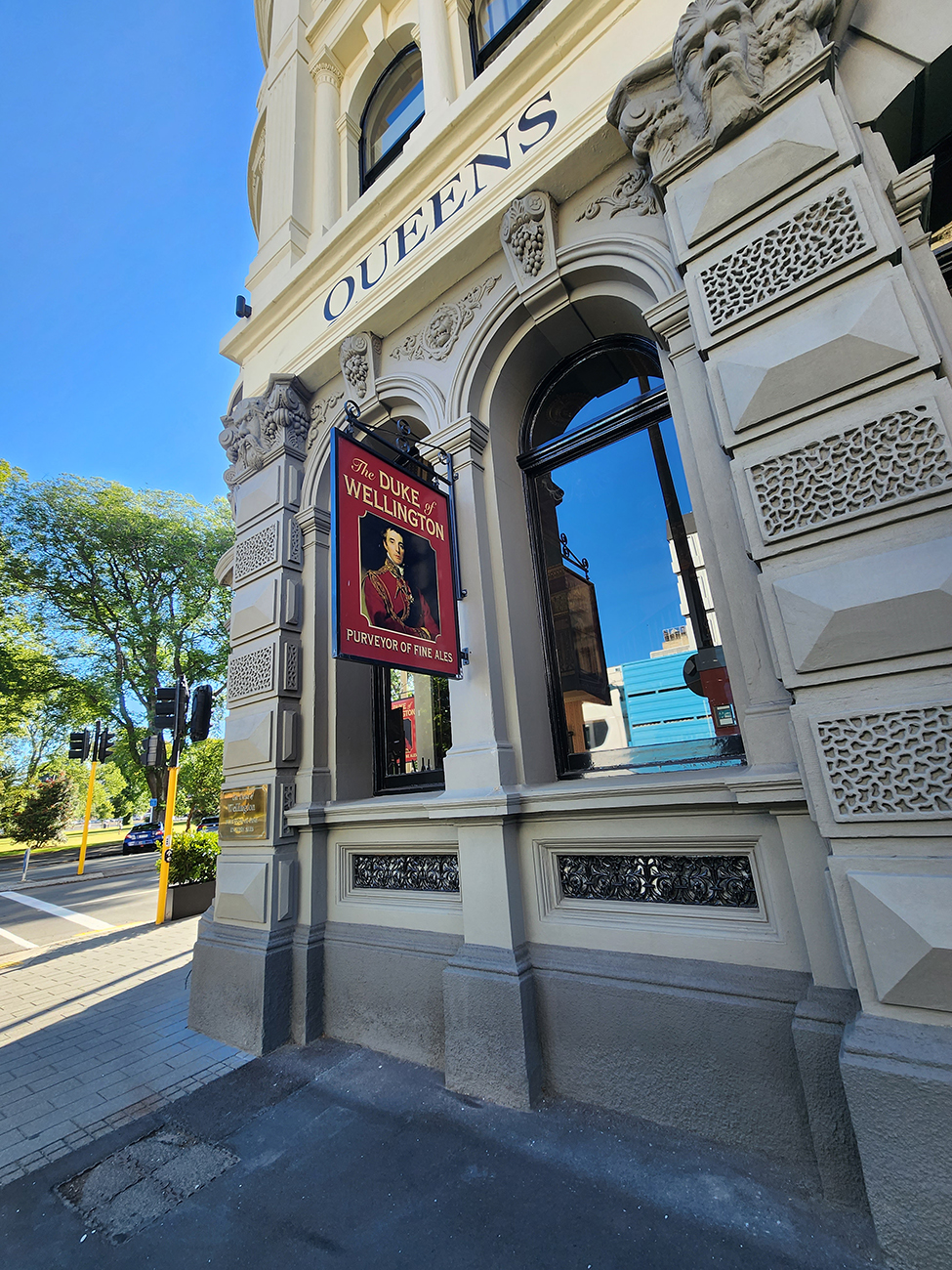
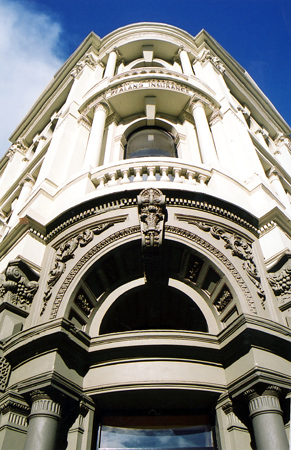
ARCHITECTURAL SIGNIFICANCE: The classical effect is obtained by repetition of fairly simple classical pilasters of three different designs linked by cornices at each level. TOWNSCAPE/LANDMARK SIGNIFICANCE: An important façade within the Queens Gardens Conservation Area, forming an important grouping with Airport House and the Gresham Hotel block further along Rattray Street.
Why is this place significant?
Historic Significance
Historical Significance or Value The New Zealand Insurance Company was formed in Auckland in 1859 after a particularly bad fire swept through the town in 1858.It was the first underwriting company to be formed in the colony and its instigator was an Auckland solicitor, Thomas Russell. The directors were a group of Auckland businessmen concerned about their property. Branches were opened in Napier, New Plymouth, Wellington, Christchurch and Dunedin in 1861 - and in London. (Overseas expansion was rapid). Within five years the firm had outstripped the New Zealand branches of British companies operating in the colony. In 1885 it took out a 21 year lease on a section of the massive reclamation belonging to the Otago Harbour Board which stretched along the commercial frontage of the city from Queens Gardens to the Oval. On this important corner section NZI built its prestigious offices for the thriving goldfields city of Dunedin. It is a relatively large building for its period, being three stories high rather than the more usual two stories, and is a major building by Mason's partner, Nathanial Wales. The building has been recently renovated by Nigel L Brook, its new owner, and its office space brought up-market. Mr Brook was given an NZHPT award of merit by the Otago Regional Committee at its AGM 1987.
Physical Significance
ARCHITECTURAL SIGNIFICANCE: The classical effect is obtained by repetition of fairly simple classical pilasters of three different designs linked by cornices at each level. TOWNSCAPE/LANDMARK SIGNIFICANCE: An important façade within the Queens Gardens Conservation Area, forming an important grouping with Airport House and the Gresham Hotel block further along Rattray Street.
Construction Professional
Name
Wales, Nathaniel Young Armstrong
Type
Architect
Biography
Wales was born in Northumberland, England, and educated at Jedburgh, Scotland. He immigrated to Australia in 1854 and found employment as a carpenter working on the buildings for the first exhibition held in Melbourne. He arrived in Dunedin about 1863, and was a clerk of works for William Mason on the old Bank of New Zealand Building (1862-64), the Post Office Building (1864-68) and the Port Chalmers Graving Dock (1868-72). Wales entered partnership with William Mason in 1871. The firm of Mason and Wales was responsible for many fine buildings in Dunedin including Bishopscourt (1873), St Matthew's Church (1873), Government Life Insurance Building (1897) and Wains Hotel (1878). Wales had military and political interests and was a Member of Parliament for some years. He occupied a seat on the Dunedin Harbour Board and was a Dunedin City Councillor. In 1895 he was elected Mayor of Dunedin. In 1900 he was elected a Fellow of the Royal Institute of British Architects. Nathaniel Wales worked for William Mason as a clerk of works during the 1860s on the old Bank of New Zealand building and on the Post Office building which became the Stock Exchange. He also had the thankless task of being clerk of works to the Port Chalmers Dry dock. Wales began work on his own as an architect untrained, and asked Mason to come back from retirement to enable him to join his firm which became Mason and Wales in 1871 at a time when Wales was building the first part of the Iona Union church at Port Chalmers. Mason retied for good in 1874 and Wales became the senior partner in the firm. Wales designed the Campbell Park Homestead in 1876 and received the commission for the stables about 1878, along with some cottages for the farm labourers. One of his notable buildings is his own big house at 38 Belgrave Crescent (1870), built of stone quarried from the site.
Construction Details
Start Year
1886
Type
Original Construction
Construction Materials
The walls of the building are plastered brick with Oamaru stone for the decorative work. The roof is still covered with slates. The new building, when opened in 1886, had a handsome classical façade with ornate pilasters around doors and windows beneath heavy cornices. The parapet along the roof line originally had four triangular pediments with balustraded panels between them. The wider pillars have been moulded in alternate bolstered and reticulated blocks. The interior is not entirely modernised and the ornate plaster ceilings are still present. The main staircase retains a massive marble newel post and wooden wall panelling.
Notable Features
Its classical façade.
Construction Professional
Name
Wales, Nathaniel Young Armstrong
Type
Architect
Biography
Wales was born in Northumberland, England, and educated at Jedburgh, Scotland. He immigrated to Australia in 1854 and found employment as a carpenter working on the buildings for the first exhibition held in Melbourne. He arrived in Dunedin about 1863, and was a clerk of works for William Mason on the old Bank of New Zealand Building (1862-64), the Post Office Building (1864-68) and the Port Chalmers Graving Dock (1868-72). Wales entered partnership with William Mason in 1871. The firm of Mason and Wales was responsible for many fine buildings in Dunedin including Bishopscourt (1873), St Matthew's Church (1873), Government Life Insurance Building (1897) and Wains Hotel (1878). Wales had military and political interests and was a Member of Parliament for some years. He occupied a seat on the Dunedin Harbour Board and was a Dunedin City Councillor. In 1895 he was elected Mayor of Dunedin. In 1900 he was elected a Fellow of the Royal Institute of British Architects. Nathaniel Wales worked for William Mason as a clerk of works during the 1860s on the old Bank of New Zealand building and on the Post Office building which became the Stock Exchange. He also had the thankless task of being clerk of works to the Port Chalmers Dry dock. Wales began work on his own as an architect untrained, and asked Mason to come back from retirement to enable him to join his firm which became Mason and Wales in 1871 at a time when Wales was building the first part of the Iona Union church at Port Chalmers. Mason retied for good in 1874 and Wales became the senior partner in the firm. Wales designed the Campbell Park Homestead in 1876 and received the commission for the stables about 1878, along with some cottages for the farm labourers. One of his notable buildings is his own big house at 38 Belgrave Crescent (1870), built of stone quarried from the site.
Construction Details
Start Year
1886
Type
Original Construction
Construction Materials
The walls of the building are plastered brick with Oamaru stone for the decorative work. The roof is still covered with slates. The new building, when opened in 1886, had a handsome classical façade with ornate pilasters around doors and windows beneath heavy cornices. The parapet along the roof line originally had four triangular pediments with balustraded panels between them. The wider pillars have been moulded in alternate bolstered and reticulated blocks. The interior is not entirely modernised and the ornate plaster ceilings are still present. The main staircase retains a massive marble newel post and wooden wall panelling.
Notable Features
Its classical façade.
ARCHITECTURAL DESCRIPTION (Style): The style is classical renaissance. MODIFICATIONS: The exterior is little modified except for the removal of the balustraded parapets and the removal of the NZI emblem of two kiwis under a tree fern from above the main door. (The emblem, which is a massive casting, is in the reception area of the new NZI Dunedin office, Manse Street). A new name, Queens Gardens Court, has been painted on the building.
ARCHITECTURAL DESCRIPTION (Style): The style is classical renaissance. MODIFICATIONS: The exterior is little modified except for the removal of the balustraded parapets and the removal of the NZI emblem of two kiwis under a tree fern from above the main door. (The emblem, which is a massive casting, is in the reception area of the new NZI Dunedin office, Manse Street). A new name, Queens Gardens Court, has been painted on the building.
Historical and Associated Iwi / Hapū / Whānau
Information Sources
Galer, 1982
L. Galer, Bricks and Mortar, Allied Press Ltd, Dunedin, 1982.
New Zealand Insurance Company, 1959
New Zealand Insurance Company, Bold Century: 1859-1959, Auckland, 1959
Other Information
This historic place was registered under the Historic Places Act 1980. This report includes the text from the original Building Classification Committee report considered by the NZHPT Board at the time of registration. Please note that entry on the New Zealand Heritage List/Rarangi Korero identifies only the heritage values of the property concerned, and should not be construed as advice on the state of the property, or as a comment of its soundness or safety, including in regard to earthquake risk, safety in the event of fire, or insanitary conditions.
Historical and Associated Iwi / Hapū / Whānau
Information Sources
Galer, 1982
L. Galer, Bricks and Mortar, Allied Press Ltd, Dunedin, 1982.
New Zealand Insurance Company, 1959
New Zealand Insurance Company, Bold Century: 1859-1959, Auckland, 1959
Other Information
This historic place was registered under the Historic Places Act 1980. This report includes the text from the original Building Classification Committee report considered by the NZHPT Board at the time of registration. Please note that entry on the New Zealand Heritage List/Rarangi Korero identifies only the heritage values of the property concerned, and should not be construed as advice on the state of the property, or as a comment of its soundness or safety, including in regard to earthquake risk, safety in the event of fire, or insanitary conditions.
Former Usages
General Usage: Trade
Specific Usage: Office building/Offices
Former Usages
General Usage: Trade
Specific Usage: Office building/Offices
