

The building was erected in 1858 by sawmiller Abraham Firth to service the families of timber workers and flax cutters in the area. At that time Te Aute was highly inaccessible and it took five days for supplies to arrive from Port Ahuriri.
In 1860 a road was constructed through Te Aute, linking Napier and Waipukurau. A regular coach service was introduced shortly after and the store also became a coaching stop, allowing horses to be changed and passengers to take refreshment. By the early 1870s however, the construction of the Napier-Wellington railway had rendered this service obsolete.
The building went through several changes of ownership until 1888 when it was bought by Mrs C R Gundrie. The store was to remain in the hands of the Gundrie family for three generations, passing on Mrs Gundrie's death in 1914 to her daughter Flora and then in 1951 to her grand-daughter Jessie Osborne.
Over the years the store became a focal point for the local community, providing services such as a lending library.
In later years the shop acted as a museum as much as a store with people coming in to admire its many mementoes and samples of goods long since out of production. The store finally closed in 1982 after 124 years of continuous use. In 1986 the building was put up for sale and is at present still on the market.
List Entry Information
Status
Listed
List Entry Status
Historic Place Category 1
Access
Private/No Public Access
List Number
4411
Date Entered
28th June 1990
Date of Effect
28th June 1990
City/District Council
Hastings District
Region
Hawke's Bay Region
Extent of List Entry
Extent of registration includes the land described as Te Koroki 2 Blk (RT HB86/127), Hawkes Bay Land District and the building known as Te Aute Store (Former) thereon. All other buildings on the land are excluded from the registration.
Legal description
Te Koroki 2 Blk (RT HB86/127), Hawkes Bay Land District
Status
Listed
List Entry Status
Historic Place Category 1
Access
Private/No Public Access
List Number
4411
Date Entered
28th June 1990
Date of Effect
28th June 1990
City/District Council
Hastings District
Region
Hawke's Bay Region
Extent of List Entry
Extent of registration includes the land described as Te Koroki 2 Blk (RT HB86/127), Hawkes Bay Land District and the building known as Te Aute Store (Former) thereon. All other buildings on the land are excluded from the registration.
Legal description
Te Koroki 2 Blk (RT HB86/127), Hawkes Bay Land District
Why is this place significant?
Historic Significance
Historical Significance or Value Before its closure in 1982 the Te Aute store was reported to be the longest continuing single business in a wooden building in New Zealand. The building dates back to the opening up of the local area for European settlement and was a focal point for the small community from the beginning. It is closely associated with the Gundrie family who lived in the house and ran the store for three generations. Because of this continuity and the absence of any significant modernisation over the years, the store has taken on considerable historic interest as a surviving example of a nineteenth century country store.
Physical Significance
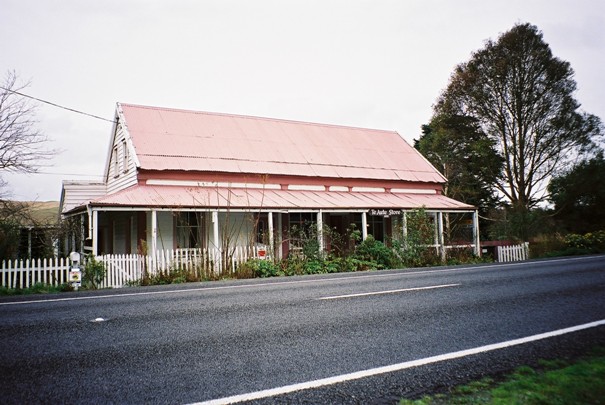
ARCHITECTURAL QUALITY: The former Te Aute Store and house is an important example of colonial architecture of the 1850s when this part of Hawkes Bay was still being settled by Europeans. It is in virtually original condition and even has its initial shingle roof hidden under the later corrugated iron. The interior fittings of the shop such as the shelves and counters date from the nineteenth century and form a rare reminder of the layout of such stores during that period. TOWNSCAPE/LANDMARK VALUE: The building relates well to the adjacent 1889 schoolhouse. Situated close to the road, with its white picket fence and old English style garden, it forms an attractive frontage on State Highway Two.
Why is this place significant?
Historic Significance
Historical Significance or Value Before its closure in 1982 the Te Aute store was reported to be the longest continuing single business in a wooden building in New Zealand. The building dates back to the opening up of the local area for European settlement and was a focal point for the small community from the beginning. It is closely associated with the Gundrie family who lived in the house and ran the store for three generations. Because of this continuity and the absence of any significant modernisation over the years, the store has taken on considerable historic interest as a surviving example of a nineteenth century country store.
Physical Significance
ARCHITECTURAL QUALITY: The former Te Aute Store and house is an important example of colonial architecture of the 1850s when this part of Hawkes Bay was still being settled by Europeans. It is in virtually original condition and even has its initial shingle roof hidden under the later corrugated iron. The interior fittings of the shop such as the shelves and counters date from the nineteenth century and form a rare reminder of the layout of such stores during that period. TOWNSCAPE/LANDMARK VALUE: The building relates well to the adjacent 1889 schoolhouse. Situated close to the road, with its white picket fence and old English style garden, it forms an attractive frontage on State Highway Two.
Construction Professional
Name
Firth, Abraham
Type
Builder
Biography
Abraham Firth was a partner in the sawmilling firm Firth and Gundrie of Ormondville. He built a house at Te Aute and a store within it to service the local pioneer workforce who had difficulty obtaining supplies in such a remote area.
Construction Details
Start Year
1858
Type
Original Construction
Construction Materials
Piles were totara, now replaced by concrete. Timber frame; weatherboard cladding. Native timber used including kauri, some hard adzed, tawa and matai. Original shingle roof under present corrugated galvanised iron roof.
Notable Features
Kauri counters and fittings. Staircase in house. Intact shingle roof.
Construction Professional
Name
Firth, Abraham
Type
Builder
Biography
Abraham Firth was a partner in the sawmilling firm Firth and Gundrie of Ormondville. He built a house at Te Aute and a store within it to service the local pioneer workforce who had difficulty obtaining supplies in such a remote area.
Construction Details
Start Year
1858
Type
Original Construction
Construction Materials
Piles were totara, now replaced by concrete. Timber frame; weatherboard cladding. Native timber used including kauri, some hard adzed, tawa and matai. Original shingle roof under present corrugated galvanised iron roof.
Notable Features
Kauri counters and fittings. Staircase in house. Intact shingle roof.
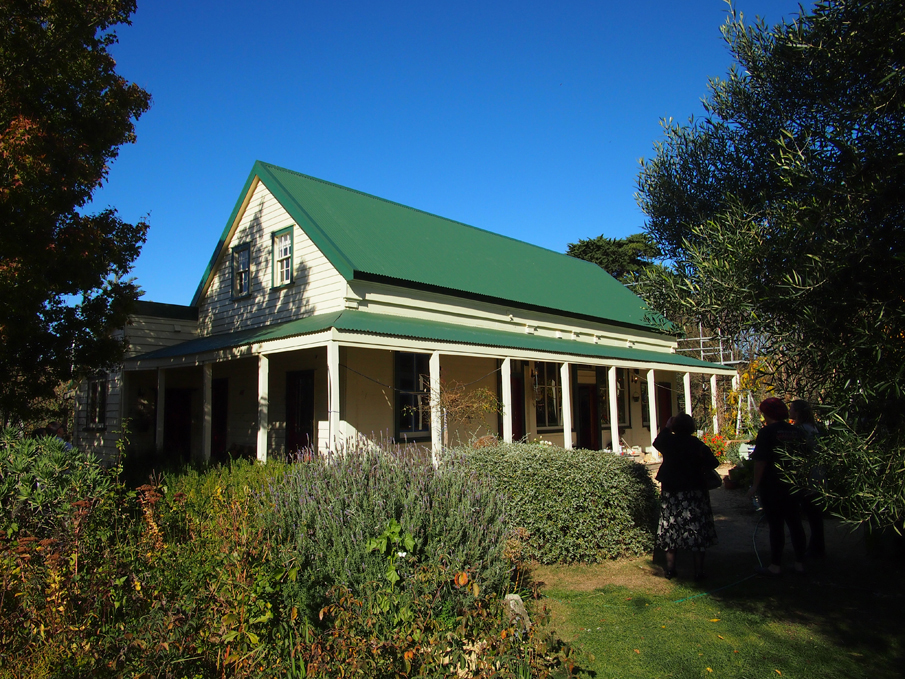
ARCHITECTURAL DESCRIPTION: This simple colonial building has thirteen rooms. It has a pitched roof containing rooms lit by windows in the gables at each end. A full length verandah supported on plain posts faces the highway and returns around one corner. There is a lean-to attached at the rear. The store occupies the large, central room at the front of the building and preserves the layout of a late nineteenth century general store. The counters and the shelves which rise up to the ceiling are all of kauri. The main counter is a single piece of timber four metres long, a metre wide and 0.08 metres thick. The house contains a fine staircase from the 1850s and fireplaces from a slightly later period. MODIFICATIONS: Lean-to added to back of building soon after construction. Original shingle roof covered in by one of corrugated iron at an early date. c.1974 - electric power installed. Exterior renovations carried out since 1982.
ARCHITECTURAL DESCRIPTION: This simple colonial building has thirteen rooms. It has a pitched roof containing rooms lit by windows in the gables at each end. A full length verandah supported on plain posts faces the highway and returns around one corner. There is a lean-to attached at the rear. The store occupies the large, central room at the front of the building and preserves the layout of a late nineteenth century general store. The counters and the shelves which rise up to the ceiling are all of kauri. The main counter is a single piece of timber four metres long, a metre wide and 0.08 metres thick. The house contains a fine staircase from the 1850s and fireplaces from a slightly later period. MODIFICATIONS: Lean-to added to back of building soon after construction. Original shingle roof covered in by one of corrugated iron at an early date. c.1974 - electric power installed. Exterior renovations carried out since 1982.
Historical and Associated Iwi / Hapū / Whānau
Public NZAA Number
V22/580
Information Sources
New Zealand Historic Places Trust (NZHPT)
New Zealand Historic Places Trust
New Zealand Women's Weekly
New Zealand Women's Weekly
Historic Places in New Zealand
Historic Places in New Zealand
MacGregor, 1975
M MacGregor. Pioneer Trails of Hawkes Bay, Reed, 1975
Other Information
This historic place was registered under the Historic Places Act 1980. This report includes the text from the original Building Classification Committee report considered by the NZHPT Board at the time of registration. Please note that entry on the New Zealand Heritage List/Rarangi Korero identifies only the heritage values of the property concerned, and should not be construed as advice on the state of the property, or as a comment of its soundness or safety, including in regard to earthquake risk, safety in the event of fire, or insanitary conditions.
Historical and Associated Iwi / Hapū / Whānau
Public NZAA Number
V22/580
Information Sources
New Zealand Historic Places Trust (NZHPT)
New Zealand Historic Places Trust
New Zealand Women's Weekly
New Zealand Women's Weekly
Historic Places in New Zealand
Historic Places in New Zealand
MacGregor, 1975
M MacGregor. Pioneer Trails of Hawkes Bay, Reed, 1975
Other Information
This historic place was registered under the Historic Places Act 1980. This report includes the text from the original Building Classification Committee report considered by the NZHPT Board at the time of registration. Please note that entry on the New Zealand Heritage List/Rarangi Korero identifies only the heritage values of the property concerned, and should not be construed as advice on the state of the property, or as a comment of its soundness or safety, including in regard to earthquake risk, safety in the event of fire, or insanitary conditions.
Current Usages
Uses: Accommodation
Specific Usage: House
Former Usages
General Usage: Civic Facilities
Specific Usage: Museum
General Usage: Trade
Specific Usage: Shop
Current Usages
Uses: Accommodation
Specific Usage: House
Former Usages
General Usage: Civic Facilities
Specific Usage: Museum
General Usage: Trade
Specific Usage: Shop
