DonateMembershipVisit Heritage
  • Tūrangawaewae
    Places
  • Tira Māori
    Māori Heritage
  • Poutairangahia
    Archaeology
  • Rauemi
    Resources
  • Mō Tātou
    About Us
  • New Zealand Heritage List
  • Nominate and submit
  • Explore the List
  • National Historic Landmarks
  • Plaques
  • Rainbow List Project
  • Lost heritage
  • Visit Heritage
  • Our properties
  • Turnbull House Project
  • Collections
  • Shop
  • Tohu Whenua
  • Tira Māori
  • Conserving Māori heritage
  • Marae built heritage
  • Māori heritage on the List
  • Hinemihi—Te Hokinga Mai
  • What is archaeology?
  • Is there a site on my property?
  • What are my legal requirements?
  • Affecting an archaeological site
  • Declaring an archaeological site
  • Archaeology FAQs
  • Archaeology Digital Library
  • Archaeology guidelines and templates
  • Resources
  • Funding
  • Publications
  • Sustainable management guides
  • Disaster recovery
  • Podcasts & digital resources
  • Education Hub
  • Conservation plans
  • About
  • Board
  • Māori Heritage Council
  • Senior Staff
  • Offices
  • Contact us
  • Careers
  • Covenants
  • Fast-track
  • Corporate documents
  • Currently consulting on
  • Our submissions
  • News
  • Covid-19 response
Quick links
Rārangi Kōrero | The List
Explore the List
National Historic Landmarks
Ngā Manawhenua o Aotearoa me ōna Kōrero Tūturu
Quick links
Tapuwae
A Vision for Places of Māori Heritage
Funding for Māori Heritage
Resources
Quick links
Archaeological Authority Portal
Applying for an archaeological authority
Archaeology FAQs
Browse the most frequently asked questions about archaeological authorities and the archaeological process.
Quick links
Quick links
News
News Keep up to date with Heritage New Zealand Pouhere Taonga
Membership
Membership Find out more and sign up today
DonateMembershipVisit Heritage
  • Tūrangawaewae
    Places
  • Tira Māori
    Māori Heritage
  • Poutairangahia
    Archaeology
  • Rauemi
    Resources
  • Mō Tātou
    About Us
  • New Zealand Heritage List
  • Nominate and submit
  • Explore the List
  • National Historic Landmarks
  • Plaques
  • Rainbow List Project
  • Lost heritage
  • Visit Heritage
  • Our properties
  • Turnbull House Project
  • Collections
  • Shop
  • Tohu Whenua
  • Tira Māori
  • Conserving Māori heritage
  • Marae built heritage
  • Māori heritage on the List
  • Hinemihi—Te Hokinga Mai
  • What is archaeology?
  • Is there a site on my property?
  • What are my legal requirements?
  • Affecting an archaeological site
  • Declaring an archaeological site
  • Archaeology FAQs
  • Archaeology Digital Library
  • Archaeology guidelines and templates
  • Resources
  • Funding
  • Publications
  • Sustainable management guides
  • Disaster recovery
  • Podcasts & digital resources
  • Education Hub
  • Conservation plans
  • About
  • Board
  • Māori Heritage Council
  • Senior Staff
  • Offices
  • Contact us
  • Careers
  • Covenants
  • Fast-track
  • Corporate documents
  • Currently consulting on
  • Our submissions
  • News
  • Covid-19 response
Quick links
Rārangi Kōrero | The List
Explore the List
National Historic Landmarks
Ngā Manawhenua o Aotearoa me ōna Kōrero Tūturu
Quick links
Tapuwae
A Vision for Places of Māori Heritage
Funding for Māori Heritage
Resources
Quick links
Archaeological Authority Portal
Applying for an archaeological authority
Archaeology FAQs
Browse the most frequently asked questions about archaeological authorities and the archaeological process.
Quick links
Quick links
News
News Keep up to date with Heritage New Zealand Pouhere Taonga
Membership
Membership Find out more and sign up today
  • Nominate and submit
  • National Historic Landmarks
  • Nominate and submit
  • National Historic Landmarks
  • Conserving Māori heritage
  • Marae built heritage
  • Conserving Māori heritage
  • Marae built heritage
  • Archaeological authorities
  • Archaeology Digital Library
  • Archaeological authorities
  • Archaeology Digital Library
  • All resources
  • Publications
  • Funding
  • All resources
  • Publications
  • Funding
  • FAQs
  • FAQs
Follow us on:
Places
  • Nominate and submit
  • National Historic Landmarks
Tira Māori
  • Conserving Māori heritage
  • Marae built heritage
Archaeology
  • Archaeological authorities
  • Archaeology Digital Library
Resources
  • All resources
  • Publications
  • Funding
FAQs
  • FAQs
Follow us on
HomePrivacyTerms and conditionsAbout this site
© Heritage New Zealand Pouhere Taonga 2026.
 
Bank of New Zealand Building

114-116 High Street & Gordon Street, DANNEVIRKE

Private

Historic Place Category 1

List No. 4416

Quick links:
List GalleryLocationDetails
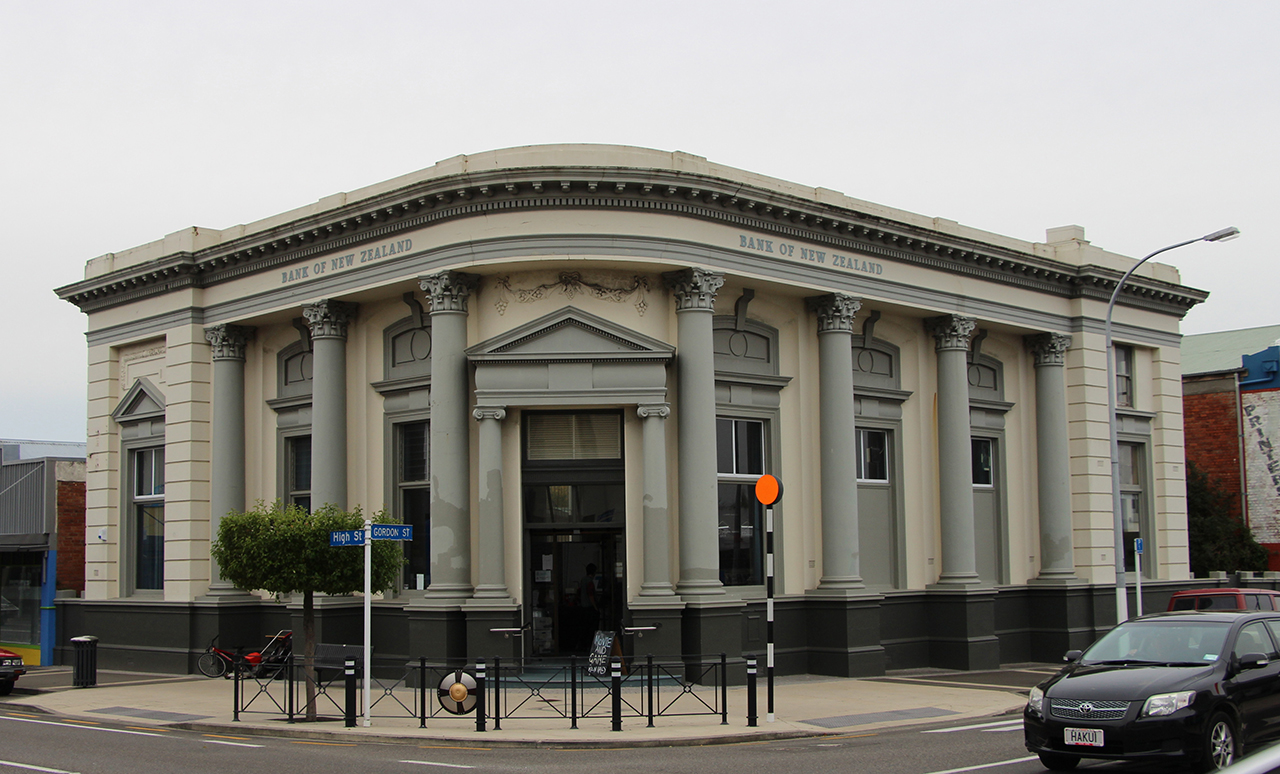
Bank of New Zealand Building, Dannevirke. CC BY-SA 4.0 Image courtesy of commons.wikimedia.org | Michal Klajban | 10/05/2016 | Michal Klajban - Wikimedia Commons
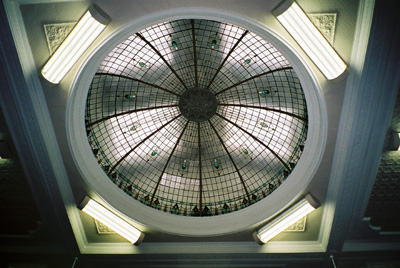
Bank of New Zealand Building, Dannevirke. Stained glass dome | Rebecca O'Brien | 11/06/2003 | Heritage New Zealand Pouhere Taonga
Bank of New Zealand Building, Dannevirke. CC BY-SA 4.0 Image courtesy of commons.wikimedia.org | Michal Klajban | 10/05/2016 | Michal Klajban - Wikimedia Commons
Bank of New Zealand Building, Dannevirke. Stained glass dome | Rebecca O'Brien | 11/06/2003 | Heritage New Zealand Pouhere Taonga

List Entry Information

Overview

Status
Listed

List Entry Status
Historic Place Category 1

Access
Private/No Public Access

List Number
4416

Date Entered
16th November 1989

Date of Effect
16th November 1989

City/District Council
Tararua District

Region
Horizons (Manawatū-Whanganui) Region

Legal description

Lot 1 DP 3030

Detailed List Entry
Significance

Historic Significance

Historical Significance or Value This historic place was registered under the Historic Places Act 1980. This report includes the text from the original Building Classification Committee report considered by the NZHPT Board at the time of registration. This bank has contributed much to the commercial history of the area. Dannevirke was the sixth office to be opened by the Bank of New Zealand in Hawkes Bay on 23 March 1887. The bank became an agency in 1892 and finally in July 1900, a branch. It played a significant role in servicing the commercial needs of the surrounding district. In addition this building has survived several serious earthquakes.

Physical Significance

This historic place was registered under the Historic Places Act 1980. This report includes the text from the original Building Classification Committee report considered by the NZHPT Board at the time of registration. ARCHITECTURAL SIGNIFICANCE: The bank has an appropriately Classical design for what was one of the town's principal commercial buildings. Of the seventeen Charlesworth banks this is one of his most impressive. This is a fine architectural statement in a prosperous small town in a rich pastoral and agricultural district. TOWNSCAPE/LANDMARK SIGNIFICANCE: With its prominent corner siting it makes an important visual statement of commercial stability.

Construction Professional

Name

Charlesworth, Joshua

Type

Architect

Biography

Charlesworth (1861-1925) was born in Yorkshire and the first record of his practice in Wellington was in the New Zealand Post Office Directory of 1885-87. He won a competition for the design of the Home for the Aged and Needy in June, 1887, and in the same year won another for the design of the Nelson Town Hall. Charlesworth set up practice in Wellington in his early twenties, designing many institutional buildings and showing command of the revival styles of architecture. His work includes the Wellington Town Hall (1901), Brancepeth Station Homestead addition, Wairarapa (1905), Te Aro Post Office (1908), St Hilda's Church, Upper Hutt (1909), and seventeen branch banks for the Bank of New Zealand, situated throughout the country (1907-17). Charlesworth was elected a Fellow of the New Zealand Institute of Architects in 1905, and became a life member of the Institute. He was its vice-president in 1909-10, and was the first chairman of a society of architects which was formed in 1912. Charlesworth also belonged to the Yorkshire Society in Wellington and was its president for many years.

Construction Details

Type

Modification

Description

The interior of the banking chamber was completely renovated

Period

Late 1930s

Start Year

1982

Type

Modification

Description

The interior was again refurbished and living quarters upstairs were incorporated in a staff room, storage and toilets

Start Year

1915

Type

Original Construction

Construction Materials

Brick, plastered with cement. Corrugated iron roof and pressed zinc ceiling.

Notable Features

The dome The zinc embossed panels Leadlight windows above stairs

Physical Description

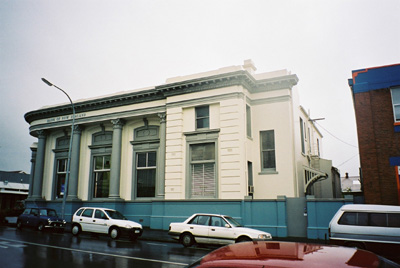
This historic place was registered under the Historic Places Act 1980. This report includes the text from the original Building Classification Committee report considered by the NZHPT Board at the time of registration. ARCHITECTURAL DESCRIPTION (STYLE): The Bank of New Zealand Dannevirke is a two storeyed building originally with the bank on the ground floor and living quarters for the manager upstairs. It is designed in a Classical style typical of New Zealand bank buildings of the period. The main facades incorporate Corinthian columns, while the main doorway is flanked with Ionic columns. The banking chamber is lit by a large dome, which is in turn complemented by the patterned ceiling. It is not certain who was responsible for the design and execution of the glasswork. The lower part of the walls are finished with smooth plaster while the top third is clad with embossed zinc. The banking counters are constructed of rimu. Upstairs in the former manager's quarters there are two large sash lead light windows, one above the first landing and the other above the second. These windows are intricately decorated and add interest to an otherwise plain staircase. The embossed ceilings have approximately seven different designs. The fire places have been boarded up.

Reference

Completion Date

29th April 1989

Information Sources

Fearnley, 1977

Charles Fearnley, Early Wellington Churches, Wellington, 1977

Wellington Regional Council

Wellington Regional Council

Hill, 1976

M Hill, New Zealand Architecture, NZ Architectural School Publications 1976

Griffin, 1987

R H Griffin, Dannevirke 1887-1987 A BNZ Century

Report Written By

A copy of this report is available from the NZHPT Central region office Please note that entry on the New Zealand Heritage List/Rarangi Korero identifies only the heritage values of the property concerned, and should not be construed as advice on the state of the property, or as a comment of its soundness or safety, including in regard to earthquake risk, safety in the event of fire, or insanitary conditions.

Further Information

Current Usages

Former Usages

General Usage:: Finance

Specific Usage: Bank

Themes

Web Links

Overview

Status

Listed

List Entry Status

Historic Place Category 1

Access

Private/No Public Access

List Number

4416

Date Entered

16th November 1989

Date of Effect

16th November 1989

City/District Council

Tararua District

Region

Horizons (Manawatū-Whanganui) Region

Legal description

Lot 1 DP 3030

Status

Listed

List Entry Status

Historic Place Category 1

Access

Private/No Public Access

List Number

4416

Date Entered

16th November 1989

Date of Effect

16th November 1989

City/District Council

Tararua District

Region

Horizons (Manawatū-Whanganui) Region

Legal description

Lot 1 DP 3030

Significance

Why is this place significant?

Historic Significance

Historical Significance or Value This historic place was registered under the Historic Places Act 1980. This report includes the text from the original Building Classification Committee report considered by the NZHPT Board at the time of registration. This bank has contributed much to the commercial history of the area. Dannevirke was the sixth office to be opened by the Bank of New Zealand in Hawkes Bay on 23 March 1887. The bank became an agency in 1892 and finally in July 1900, a branch. It played a significant role in servicing the commercial needs of the surrounding district. In addition this building has survived several serious earthquakes.

Physical Significance

This historic place was registered under the Historic Places Act 1980. This report includes the text from the original Building Classification Committee report considered by the NZHPT Board at the time of registration. ARCHITECTURAL SIGNIFICANCE: The bank has an appropriately Classical design for what was one of the town's principal commercial buildings. Of the seventeen Charlesworth banks this is one of his most impressive. This is a fine architectural statement in a prosperous small town in a rich pastoral and agricultural district. TOWNSCAPE/LANDMARK SIGNIFICANCE: With its prominent corner siting it makes an important visual statement of commercial stability.

Why is this place significant?

Historic Significance

Historical Significance or Value This historic place was registered under the Historic Places Act 1980. This report includes the text from the original Building Classification Committee report considered by the NZHPT Board at the time of registration. This bank has contributed much to the commercial history of the area. Dannevirke was the sixth office to be opened by the Bank of New Zealand in Hawkes Bay on 23 March 1887. The bank became an agency in 1892 and finally in July 1900, a branch. It played a significant role in servicing the commercial needs of the surrounding district. In addition this building has survived several serious earthquakes.

Physical Significance

This historic place was registered under the Historic Places Act 1980. This report includes the text from the original Building Classification Committee report considered by the NZHPT Board at the time of registration. ARCHITECTURAL SIGNIFICANCE: The bank has an appropriately Classical design for what was one of the town's principal commercial buildings. Of the seventeen Charlesworth banks this is one of his most impressive. This is a fine architectural statement in a prosperous small town in a rich pastoral and agricultural district. TOWNSCAPE/LANDMARK SIGNIFICANCE: With its prominent corner siting it makes an important visual statement of commercial stability.

Construction Information

Construction Professional

Name

Charlesworth, Joshua

Type

Architect

Biography

Charlesworth (1861-1925) was born in Yorkshire and the first record of his practice in Wellington was in the New Zealand Post Office Directory of 1885-87. He won a competition for the design of the Home for the Aged and Needy in June, 1887, and in the same year won another for the design of the Nelson Town Hall. Charlesworth set up practice in Wellington in his early twenties, designing many institutional buildings and showing command of the revival styles of architecture. His work includes the Wellington Town Hall (1901), Brancepeth Station Homestead addition, Wairarapa (1905), Te Aro Post Office (1908), St Hilda's Church, Upper Hutt (1909), and seventeen branch banks for the Bank of New Zealand, situated throughout the country (1907-17). Charlesworth was elected a Fellow of the New Zealand Institute of Architects in 1905, and became a life member of the Institute. He was its vice-president in 1909-10, and was the first chairman of a society of architects which was formed in 1912. Charlesworth also belonged to the Yorkshire Society in Wellington and was its president for many years.

Construction Details

Type

Modification

Description

The interior of the banking chamber was completely renovated

Period

Late 1930s

Start Year

1982

Type

Modification

Description

The interior was again refurbished and living quarters upstairs were incorporated in a staff room, storage and toilets

Start Year

1915

Type

Original Construction

Construction Materials

Brick, plastered with cement. Corrugated iron roof and pressed zinc ceiling.

Notable Features

The dome The zinc embossed panels Leadlight windows above stairs

Construction Professional

Name

Charlesworth, Joshua

Type

Architect

Biography

Charlesworth (1861-1925) was born in Yorkshire and the first record of his practice in Wellington was in the New Zealand Post Office Directory of 1885-87. He won a competition for the design of the Home for the Aged and Needy in June, 1887, and in the same year won another for the design of the Nelson Town Hall. Charlesworth set up practice in Wellington in his early twenties, designing many institutional buildings and showing command of the revival styles of architecture. His work includes the Wellington Town Hall (1901), Brancepeth Station Homestead addition, Wairarapa (1905), Te Aro Post Office (1908), St Hilda's Church, Upper Hutt (1909), and seventeen branch banks for the Bank of New Zealand, situated throughout the country (1907-17). Charlesworth was elected a Fellow of the New Zealand Institute of Architects in 1905, and became a life member of the Institute. He was its vice-president in 1909-10, and was the first chairman of a society of architects which was formed in 1912. Charlesworth also belonged to the Yorkshire Society in Wellington and was its president for many years.

Construction Details

Type

Modification

Description

The interior of the banking chamber was completely renovated

Period

Late 1930s

Start Year

1982

Type

Modification

Description

The interior was again refurbished and living quarters upstairs were incorporated in a staff room, storage and toilets

Start Year

1915

Type

Original Construction

Construction Materials

Brick, plastered with cement. Corrugated iron roof and pressed zinc ceiling.

Notable Features

The dome The zinc embossed panels Leadlight windows above stairs

Physical Description

This historic place was registered under the Historic Places Act 1980. This report includes the text from the original Building Classification Committee report considered by the NZHPT Board at the time of registration. ARCHITECTURAL DESCRIPTION (STYLE): The Bank of New Zealand Dannevirke is a two storeyed building originally with the bank on the ground floor and living quarters for the manager upstairs. It is designed in a Classical style typical of New Zealand bank buildings of the period. The main facades incorporate Corinthian columns, while the main doorway is flanked with Ionic columns. The banking chamber is lit by a large dome, which is in turn complemented by the patterned ceiling. It is not certain who was responsible for the design and execution of the glasswork. The lower part of the walls are finished with smooth plaster while the top third is clad with embossed zinc. The banking counters are constructed of rimu. Upstairs in the former manager's quarters there are two large sash lead light windows, one above the first landing and the other above the second. These windows are intricately decorated and add interest to an otherwise plain staircase. The embossed ceilings have approximately seven different designs. The fire places have been boarded up.

This historic place was registered under the Historic Places Act 1980. This report includes the text from the original Building Classification Committee report considered by the NZHPT Board at the time of registration. ARCHITECTURAL DESCRIPTION (STYLE): The Bank of New Zealand Dannevirke is a two storeyed building originally with the bank on the ground floor and living quarters for the manager upstairs. It is designed in a Classical style typical of New Zealand bank buildings of the period. The main facades incorporate Corinthian columns, while the main doorway is flanked with Ionic columns. The banking chamber is lit by a large dome, which is in turn complemented by the patterned ceiling. It is not certain who was responsible for the design and execution of the glasswork. The lower part of the walls are finished with smooth plaster while the top third is clad with embossed zinc. The banking counters are constructed of rimu. Upstairs in the former manager's quarters there are two large sash lead light windows, one above the first landing and the other above the second. These windows are intricately decorated and add interest to an otherwise plain staircase. The embossed ceilings have approximately seven different designs. The fire places have been boarded up.

Reference

Historical and Associated Iwi / Hapū / Whānau

Completion Date

29th April 1989

Information Sources

Fearnley, 1977

Charles Fearnley, Early Wellington Churches, Wellington, 1977

Wellington Regional Council

Wellington Regional Council

Hill, 1976

M Hill, New Zealand Architecture, NZ Architectural School Publications 1976

Griffin, 1987

R H Griffin, Dannevirke 1887-1987 A BNZ Century

Other Information

A copy of this report is available from the NZHPT Central region office Please note that entry on the New Zealand Heritage List/Rarangi Korero identifies only the heritage values of the property concerned, and should not be construed as advice on the state of the property, or as a comment of its soundness or safety, including in regard to earthquake risk, safety in the event of fire, or insanitary conditions.

Historical and Associated Iwi / Hapū / Whānau

Completion Date

29th April 1989

Information Sources

Fearnley, 1977

Charles Fearnley, Early Wellington Churches, Wellington, 1977

Wellington Regional Council

Wellington Regional Council

Hill, 1976

M Hill, New Zealand Architecture, NZ Architectural School Publications 1976

Griffin, 1987

R H Griffin, Dannevirke 1887-1987 A BNZ Century

Other Information

A copy of this report is available from the NZHPT Central region office Please note that entry on the New Zealand Heritage List/Rarangi Korero identifies only the heritage values of the property concerned, and should not be construed as advice on the state of the property, or as a comment of its soundness or safety, including in regard to earthquake risk, safety in the event of fire, or insanitary conditions.

Further Information

Former Usages

General Usage: Finance

Specific Usage: Bank

Former Usages

General Usage: Finance

Specific Usage: Bank

Location

Loading
Stay up to date with Heritage this month
