DonateMembershipVisit Heritage
  • Tūrangawaewae
    Places
  • Tira Māori
    Māori Heritage
  • Poutairangahia
    Archaeology
  • Rauemi
    Resources
  • Mō Tātou
    About Us
  • New Zealand Heritage List
  • Nominate and submit
  • Explore the List
  • National Historic Landmarks
  • Plaques
  • Rainbow List Project
  • Lost heritage
  • Visit Heritage
  • Our properties
  • Turnbull House Project
  • Collections
  • Shop
  • Tohu Whenua
  • Tira Māori
  • Conserving Māori heritage
  • Marae built heritage
  • Māori heritage on the List
  • Hinemihi—Te Hokinga Mai
  • What is archaeology?
  • Is there a site on my property?
  • What are my legal requirements?
  • Affecting an archaeological site
  • Declaring an archaeological site
  • Archaeology FAQs
  • Archaeology Digital Library
  • Archaeology guidelines and templates
  • Resources
  • Funding
  • Publications
  • Sustainable management guides
  • Disaster recovery
  • Podcasts & digital resources
  • Education Hub
  • Conservation plans
  • About
  • Board
  • Māori Heritage Council
  • Senior Staff
  • Offices
  • Contact us
  • Careers
  • Covenants
  • Fast-track
  • Corporate documents
  • Currently consulting on
  • Our submissions
  • News
  • Covid-19 response
Quick links
Rārangi Kōrero | The List
Explore the List
National Historic Landmarks
Ngā Manawhenua o Aotearoa me ōna Kōrero Tūturu
Quick links
Tapuwae
A Vision for Places of Māori Heritage
Funding for Māori Heritage
Resources
Quick links
Archaeological Authority Portal
Applying for an archaeological authority
Archaeology FAQs
Browse the most frequently asked questions about archaeological authorities and the archaeological process.
Quick links
Quick links
News
News Keep up to date with Heritage New Zealand Pouhere Taonga
Membership
Membership Find out more and sign up today
DonateMembershipVisit Heritage
  • Tūrangawaewae
    Places
  • Tira Māori
    Māori Heritage
  • Poutairangahia
    Archaeology
  • Rauemi
    Resources
  • Mō Tātou
    About Us
  • New Zealand Heritage List
  • Nominate and submit
  • Explore the List
  • National Historic Landmarks
  • Plaques
  • Rainbow List Project
  • Lost heritage
  • Visit Heritage
  • Our properties
  • Turnbull House Project
  • Collections
  • Shop
  • Tohu Whenua
  • Tira Māori
  • Conserving Māori heritage
  • Marae built heritage
  • Māori heritage on the List
  • Hinemihi—Te Hokinga Mai
  • What is archaeology?
  • Is there a site on my property?
  • What are my legal requirements?
  • Affecting an archaeological site
  • Declaring an archaeological site
  • Archaeology FAQs
  • Archaeology Digital Library
  • Archaeology guidelines and templates
  • Resources
  • Funding
  • Publications
  • Sustainable management guides
  • Disaster recovery
  • Podcasts & digital resources
  • Education Hub
  • Conservation plans
  • About
  • Board
  • Māori Heritage Council
  • Senior Staff
  • Offices
  • Contact us
  • Careers
  • Covenants
  • Fast-track
  • Corporate documents
  • Currently consulting on
  • Our submissions
  • News
  • Covid-19 response
Quick links
Rārangi Kōrero | The List
Explore the List
National Historic Landmarks
Ngā Manawhenua o Aotearoa me ōna Kōrero Tūturu
Quick links
Tapuwae
A Vision for Places of Māori Heritage
Funding for Māori Heritage
Resources
Quick links
Archaeological Authority Portal
Applying for an archaeological authority
Archaeology FAQs
Browse the most frequently asked questions about archaeological authorities and the archaeological process.
Quick links
Quick links
News
News Keep up to date with Heritage New Zealand Pouhere Taonga
Membership
Membership Find out more and sign up today
  • Places
  • Nominate and submit
  • National Historic Landmarks
  • Places
  • Nominate and submit
  • National Historic Landmarks
  • Tira Māori
  • Conserving Māori heritage
  • Marae built heritage
  • Tira Māori
  • Conserving Māori heritage
  • Marae built heritage
  • Archaeological authorities
  • Archaeology Digital Library
  • Archaeological authorities
  • Archaeology Digital Library
  • All resources
  • Publications
  • Funding
  • All resources
  • Publications
  • Funding
  • FAQs
  • FAQs
Follow us on:
Places
  • Places
  • Nominate and submit
  • National Historic Landmarks
Tira Māori
  • Tira Māori
  • Conserving Māori heritage
  • Marae built heritage
Archaeology
  • Archaeological authorities
  • Archaeology Digital Library
Resources
  • All resources
  • Publications
  • Funding
FAQs
  • FAQs
Follow us on
HomePrivacyTerms and conditionsAbout this site
© Heritage New Zealand Pouhere Taonga 2026.
 
Mohaka Viaduct

Palmerston North to Gisborne Railway, Mohaka River, RAUPUNGA

Private

Historic Place Category 1

List No. 4418
Quick links:
List GalleryLocationDetails
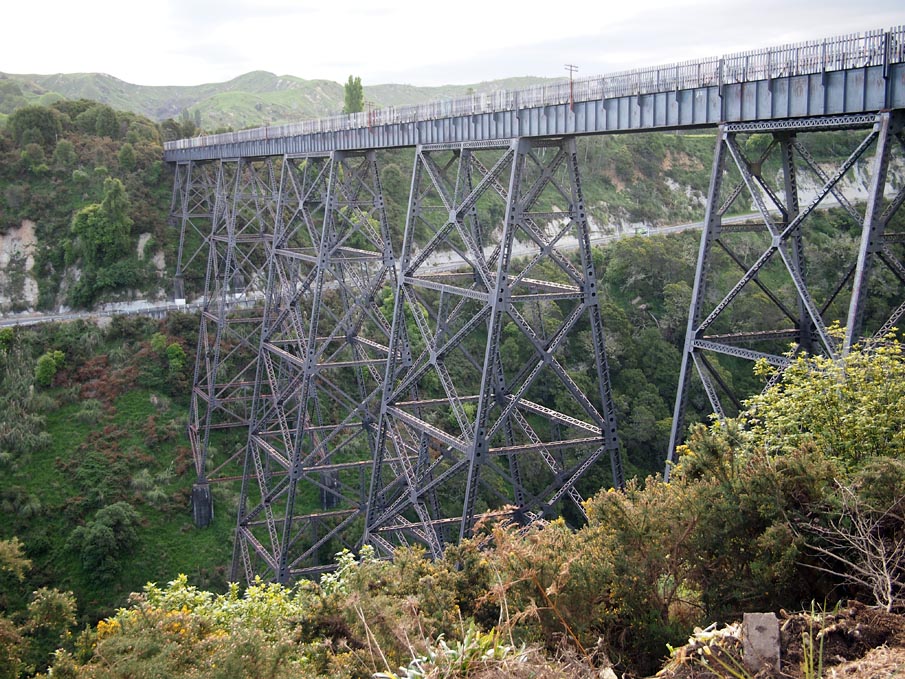
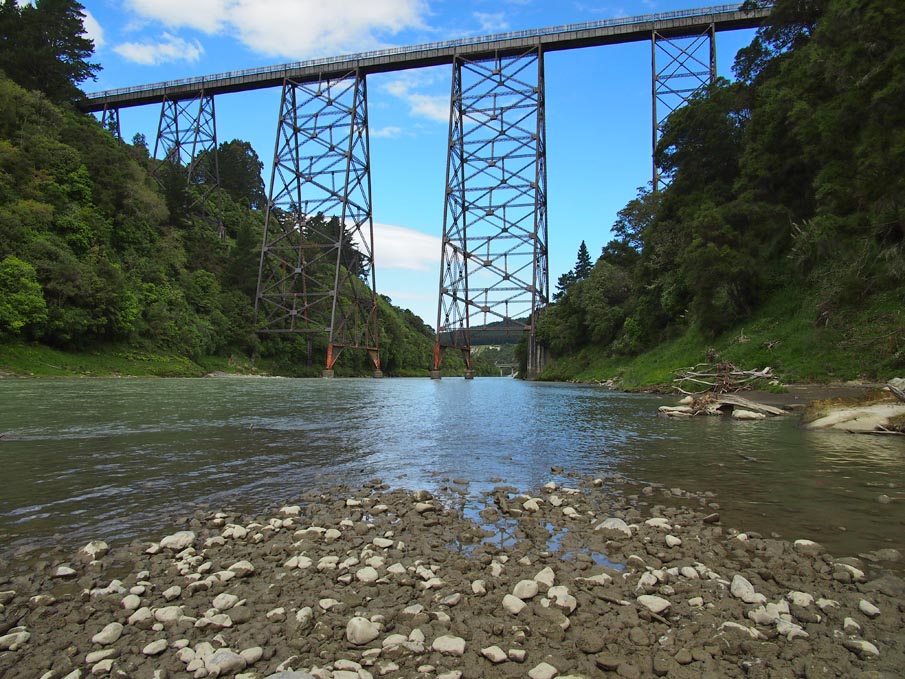
The Mohaka Viaduct was built over the Mohaka River, near Raupunga, Wairoa, between 1930 and 1937. It soars nearly one hundred metres above the river surface and is the tallest viaduct in Australasia

From at least the late nineteenth century there had been attempts to construct a railway connecting Gisborne with Napier. The difficult terrain between the two settlements made the New Zealand Government, the principal investor in the country's railway network, reluctant to invest money on such a project. In addition, Maori landowners were unwilling to sell their land for the railway. In 1900 a railway league was formed to advocate for lines to Auckland via Rotorua and a line connecting Wellington to Wairoa. It was not until 1911 that the latter line was approved and work began in 1912. Construction on the new railway was halted during the First World War. During the 1920s further delays were caused by a debate on whether to go by the coastal route or inland. Finally in about 1928 a decision was made to build the railway along the coastal route and work recommenced.

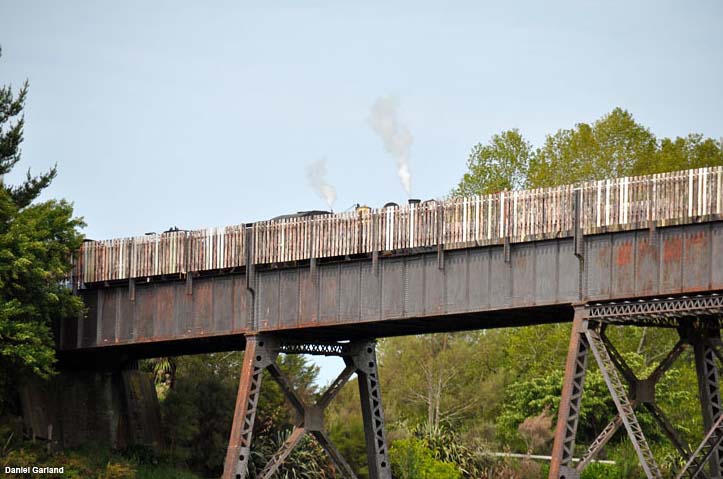
The Mohaka Viaduct was designed by New Zealand-born engineer John E. L. Cull (1878-1943). Educated in Christchurch and London, Cull had held various positions including university lecturer and assisting local bodies, before being appointed in 1914 as the first designing engineer for the Public Works Department. Cull's design for the viaduct called for a bridge 277 metres in length, 95 metres high, supported by five piers/towers. To protect the viaduct and the trains from the wind, a stout windbreak was designed to be placed above the girders. Cull resigned in 1929 and William Newnham (1888-1974), who had previously been employed by Public Works as assistant to the design engineer, took over the project. (Newnham was later appointed Engineer-in-Chief and Under Secretary of Public Works in 1941.)

In 1931 the Railways Board, the body that controlled the construction of railway throughout New Zealand, recommended that, due to the economic conditions brought on by the Great Depression, work on the track be stopped. By this stage the foundations of the viaduct had been completed, and the iron and steelwork, which had been prefabricated at the Railways Department workshops, Tauranga, had been transported to the site.

In 1935 the first Labour Government was elected. Labour saw the State as having a key role in reinvigorating the economy through government initiated public works. In 1936 the government introduced the Government Railways Amendment Act ending the Railways Board, and from 1 April 1936 control of the railways reverted to the government through the Minister of Railways. Work on the Napier-Wairoa-Gisborne line was resumed in that same year. On 31 June 1937, at a ceremony attended by the Minister of Railways, the Leader of the House of Representatives, and a number of community dignitaries, the Minster of Public Works, Robert Semple (1873-1958) drove that last spike in on the viaduct. The remaining line between Wairoa and Gisborne was not completed until August 1942. The line was officially handed over by Public Works to the New Zealand Railways Department on 1 February 1943.

The Mohaka Viaduct has great technical significance as the tallest viaduct in Australasia. It is an impressive engineering feat constructed of prefabricated steel components made by the Public Works Department. Constructed largely in the wake of the Depression, the Mohaka Viaduct was an important factor in the completion of the railway line, which opened up Northern Hawke's Bay and Poverty Bay, reducing the isolation of Wairoa and, to a lesser extent, Gisborne. Sited above the Mohaka River and above State Highway 2, this imposing viaduct is a renowned local landmark.
Mohaka Viaduct, Napier-Wairoa Railway, Raupunga | Karen Astwood | 16/10/2017 | Heritage New Zealand
Mohaka Viaduct. October 2012. Image courtesy of www.flickr.com | Daniel Garland | Daniel Garland
Mohaka Viaduct, Napier-Wairoa Railway, Raupunga | Karen Astwood | 16/10/2017 | Heritage New Zealand
Mohaka Viaduct. October 2012. Image courtesy of www.flickr.com | Daniel Garland | Daniel Garland

List Entry Information

Overview

Status
Listed

List Entry Status
Historic Place Category 1

Access
Private/No Public Access

List Number
4418

Date Entered
28th June 1990

Date of Effect
28th June 1990

City/District Council
Wairoa District

Region
Hawke's Bay Region

Extent of List Entry

Extent includes part of the land described as Railway Land (NZ Gazette 1926, p.2348), Hawke’s Bay Land District and the structure known as the Mohaka Viaduct thereon, including its abutments. Refer to the extent map tabled at the Rārangi Kōrero meeting on 9 November 2017.

Legal description

Railway Land (NZ Gazette 1926, p.2348), Hawke’s Bay Land District

Detailed List Entry
Significance

Cultural Significance

Sited above the Mohaka River and above State Highway 2, this imposing viaduct is a renowned local landmark.

Historic Significance

Historical Significance or Value Constructed largely in the wake of the Depression, the Mohaka Viaduct was an important factor in the completion of the railway line, which opened up Northern Hawke's Bay and Poverty Bay reducing the isolation of Wairoa and, to a lesser extent, Gisborne.

Physical Significance

The Mohaka Viaduct is significant in that at a height of 95 metres above the Mohaka River it is the tallest viaduct in Australiasia. It is an impressive engineering feat constructed of mild steel components prefabricated at the Public Works Department Workshops at Mount Maunganui, near Tauranga. The prefabrication of steel bridge at a base workshop was practised in New Zealand from the 1880s.

Construction Professional

Name

Cull, John Ernest Lelliott

Type

Architect

Biography

Born in Christchurch in 1878, John Ernest Lelliott Cull studied at Canterbury University College before taking his degree in England. He began his professional career with Cutten Bros in 1898 in the field of dredge design. He was then a member of the staff of Canterbury University College (1902-06) and was frequently consulted by local bodies on engineering matters. He became assistant engineer to the Auckland Drainage Board and was involved with mining and local body work in that region. This was followed by a period as inspecting engineer to the Auckland Harbour Board. In 1914 he was employed by the Public Works Department. He was the department's first designing engineer and held this position until 1920, during which time he was responsible for the design of the Mohaka Viaduct. In 1929 he took up the chair of Civil Engineering at Canterbury University College, remaining there until his retirement in 1941. Professor Cull was Chairman of the Building Regional Committee set up following the 1931 Napier earthquake to draw up standards for earthquake resistant building in the affected area. This committee drafted standard specifications for buildings likely to be erected in earthquake prone areas. Cull served as president of the New Zealand Institution of Engineers. He died in 1943.

Construction Details

Start Year

1937

Type

Original Construction

Notable Features

Tallest viaduct in Australasia. Wooden windbreak.

Reference

Completion Date

21st November 2002

Report Written By

Helen McCracken

Information Sources

Bellamy, 1961

A. C. Bellamy, 'The Napier to Gisborne Railway', Wanganui, April 1961, Wanganui

Evening Post

Evening Post, 27 Jun 1919, p.7.

Wilson, 1961

James Wilson, Notes on Railway Bridges in New Zealand, New Zealand Railways Department, 1961

Hawke's Bay Daily Herald

Hawke's Bay Daily Herald

Leitch, 1988

David Leitch and Bob Stott, New Zealand Railways: The First 125 Years, Auckland, 1988

New Zealand Railway Magazine

The New Zealand Railway Magazine

Troup, 1973

Gordon Troup (ed), Steel Roads of New Zealand: An Illustrated Survey, A H & A W Reed, Wellington, 1973.

Report Written By

This place was identified as significant under previous legislation with different information requirements. It remains significant under the current legislation. There is opportunity under our legislation and policies to add to this information. Further information about this place may be available from the Central Regional Office of Heritage New Zealand Pouhere Taonga. Please note that entry on the New Zealand Heritage List/Rarangi Korero identifies only the heritage values of the property concerned, and should not be construed as advice on the state of the property, or as a comment of its soundness or safety, including in regard to earthquake risk, safety in the event of fire, or insanitary conditions.

Further Information

Current Usages

Uses: Transport

Specific Usage: Bridge/ Viaduct

Former Usages

General Usage:: Transport

Specific Usage: Bridge/ Viaduct

Themes

Web Links

description: Engineering NZ Heritage

url: https://www.engineeringnz.org/our-work/heritage/heritage-records/mohaka-viaduct/

Overview

Status

Listed

List Entry Status

Historic Place Category 1

Access

Private/No Public Access

List Number

4418

Date Entered

28th June 1990

Date of Effect

28th June 1990

City/District Council

Wairoa District

Region

Hawke's Bay Region

Extent of List Entry

Extent includes part of the land described as Railway Land (NZ Gazette 1926, p.2348), Hawke’s Bay Land District and the structure known as the Mohaka Viaduct thereon, including its abutments. Refer to the extent map tabled at the Rārangi Kōrero meeting on 9 November 2017.

Legal description

Railway Land (NZ Gazette 1926, p.2348), Hawke’s Bay Land District

Status

Listed

List Entry Status

Historic Place Category 1

Access

Private/No Public Access

List Number

4418

Date Entered

28th June 1990

Date of Effect

28th June 1990

City/District Council

Wairoa District

Region

Hawke's Bay Region

Extent of List Entry

Extent includes part of the land described as Railway Land (NZ Gazette 1926, p.2348), Hawke’s Bay Land District and the structure known as the Mohaka Viaduct thereon, including its abutments. Refer to the extent map tabled at the Rārangi Kōrero meeting on 9 November 2017.

Legal description

Railway Land (NZ Gazette 1926, p.2348), Hawke’s Bay Land District

Significance

Why is this place significant?

Cultural Significance

Sited above the Mohaka River and above State Highway 2, this imposing viaduct is a renowned local landmark.

Historic Significance

Historical Significance or Value Constructed largely in the wake of the Depression, the Mohaka Viaduct was an important factor in the completion of the railway line, which opened up Northern Hawke's Bay and Poverty Bay reducing the isolation of Wairoa and, to a lesser extent, Gisborne.

Physical Significance

The Mohaka Viaduct is significant in that at a height of 95 metres above the Mohaka River it is the tallest viaduct in Australiasia. It is an impressive engineering feat constructed of mild steel components prefabricated at the Public Works Department Workshops at Mount Maunganui, near Tauranga. The prefabrication of steel bridge at a base workshop was practised in New Zealand from the 1880s.

Why is this place significant?

Cultural Significance

Sited above the Mohaka River and above State Highway 2, this imposing viaduct is a renowned local landmark.

Historic Significance

Historical Significance or Value Constructed largely in the wake of the Depression, the Mohaka Viaduct was an important factor in the completion of the railway line, which opened up Northern Hawke's Bay and Poverty Bay reducing the isolation of Wairoa and, to a lesser extent, Gisborne.

Physical Significance

The Mohaka Viaduct is significant in that at a height of 95 metres above the Mohaka River it is the tallest viaduct in Australiasia. It is an impressive engineering feat constructed of mild steel components prefabricated at the Public Works Department Workshops at Mount Maunganui, near Tauranga. The prefabrication of steel bridge at a base workshop was practised in New Zealand from the 1880s.

Construction Information

Construction Professional

Name

Cull, John Ernest Lelliott

Type

Architect

Biography

Born in Christchurch in 1878, John Ernest Lelliott Cull studied at Canterbury University College before taking his degree in England. He began his professional career with Cutten Bros in 1898 in the field of dredge design. He was then a member of the staff of Canterbury University College (1902-06) and was frequently consulted by local bodies on engineering matters. He became assistant engineer to the Auckland Drainage Board and was involved with mining and local body work in that region. This was followed by a period as inspecting engineer to the Auckland Harbour Board. In 1914 he was employed by the Public Works Department. He was the department's first designing engineer and held this position until 1920, during which time he was responsible for the design of the Mohaka Viaduct. In 1929 he took up the chair of Civil Engineering at Canterbury University College, remaining there until his retirement in 1941. Professor Cull was Chairman of the Building Regional Committee set up following the 1931 Napier earthquake to draw up standards for earthquake resistant building in the affected area. This committee drafted standard specifications for buildings likely to be erected in earthquake prone areas. Cull served as president of the New Zealand Institution of Engineers. He died in 1943.

Construction Details

Start Year

1937

Type

Original Construction

Notable Features

Tallest viaduct in Australasia. Wooden windbreak.

Construction Professional

Name

Cull, John Ernest Lelliott

Type

Architect

Biography

Born in Christchurch in 1878, John Ernest Lelliott Cull studied at Canterbury University College before taking his degree in England. He began his professional career with Cutten Bros in 1898 in the field of dredge design. He was then a member of the staff of Canterbury University College (1902-06) and was frequently consulted by local bodies on engineering matters. He became assistant engineer to the Auckland Drainage Board and was involved with mining and local body work in that region. This was followed by a period as inspecting engineer to the Auckland Harbour Board. In 1914 he was employed by the Public Works Department. He was the department's first designing engineer and held this position until 1920, during which time he was responsible for the design of the Mohaka Viaduct. In 1929 he took up the chair of Civil Engineering at Canterbury University College, remaining there until his retirement in 1941. Professor Cull was Chairman of the Building Regional Committee set up following the 1931 Napier earthquake to draw up standards for earthquake resistant building in the affected area. This committee drafted standard specifications for buildings likely to be erected in earthquake prone areas. Cull served as president of the New Zealand Institution of Engineers. He died in 1943.

Construction Details

Start Year

1937

Type

Original Construction

Notable Features

Tallest viaduct in Australasia. Wooden windbreak.

Reference

Historical and Associated Iwi / Hapū / Whānau

Completion Date

21st November 2002

Report Written By

Helen McCracken

Information Sources

Bellamy, 1961

A. C. Bellamy, 'The Napier to Gisborne Railway', Wanganui, April 1961, Wanganui

Evening Post

Evening Post, 27 Jun 1919, p.7.

Wilson, 1961

James Wilson, Notes on Railway Bridges in New Zealand, New Zealand Railways Department, 1961

Hawke's Bay Daily Herald

Hawke's Bay Daily Herald

Leitch, 1988

David Leitch and Bob Stott, New Zealand Railways: The First 125 Years, Auckland, 1988

New Zealand Railway Magazine

The New Zealand Railway Magazine

Troup, 1973

Gordon Troup (ed), Steel Roads of New Zealand: An Illustrated Survey, A H & A W Reed, Wellington, 1973.

Other Information

This place was identified as significant under previous legislation with different information requirements. It remains significant under the current legislation. There is opportunity under our legislation and policies to add to this information. Further information about this place may be available from the Central Regional Office of Heritage New Zealand Pouhere Taonga. Please note that entry on the New Zealand Heritage List/Rarangi Korero identifies only the heritage values of the property concerned, and should not be construed as advice on the state of the property, or as a comment of its soundness or safety, including in regard to earthquake risk, safety in the event of fire, or insanitary conditions.

Historical and Associated Iwi / Hapū / Whānau

Completion Date

21st November 2002

Report Written By

Helen McCracken

Information Sources

Bellamy, 1961

A. C. Bellamy, 'The Napier to Gisborne Railway', Wanganui, April 1961, Wanganui

Evening Post

Evening Post, 27 Jun 1919, p.7.

Wilson, 1961

James Wilson, Notes on Railway Bridges in New Zealand, New Zealand Railways Department, 1961

Hawke's Bay Daily Herald

Hawke's Bay Daily Herald

Leitch, 1988

David Leitch and Bob Stott, New Zealand Railways: The First 125 Years, Auckland, 1988

New Zealand Railway Magazine

The New Zealand Railway Magazine

Troup, 1973

Gordon Troup (ed), Steel Roads of New Zealand: An Illustrated Survey, A H & A W Reed, Wellington, 1973.

Other Information

This place was identified as significant under previous legislation with different information requirements. It remains significant under the current legislation. There is opportunity under our legislation and policies to add to this information. Further information about this place may be available from the Central Regional Office of Heritage New Zealand Pouhere Taonga. Please note that entry on the New Zealand Heritage List/Rarangi Korero identifies only the heritage values of the property concerned, and should not be construed as advice on the state of the property, or as a comment of its soundness or safety, including in regard to earthquake risk, safety in the event of fire, or insanitary conditions.

Further Information

Current Usages

Uses: Transport

Specific Usage: Bridge/ Viaduct

Former Usages

General Usage: Transport

Specific Usage: Bridge/ Viaduct

Web Links

description: Engineering NZ Heritage

url: https://www.engineeringnz.org/our-work/heritage/heritage-records/mohaka-viaduct/

Current Usages

Uses: Transport

Specific Usage: Bridge/ Viaduct

Former Usages

General Usage: Transport

Specific Usage: Bridge/ Viaduct

Web Links

description: Engineering NZ Heritage

url: https://www.engineeringnz.org/our-work/heritage/heritage-records/mohaka-viaduct/

Location

Loading
Stay up to date with Heritage this month