

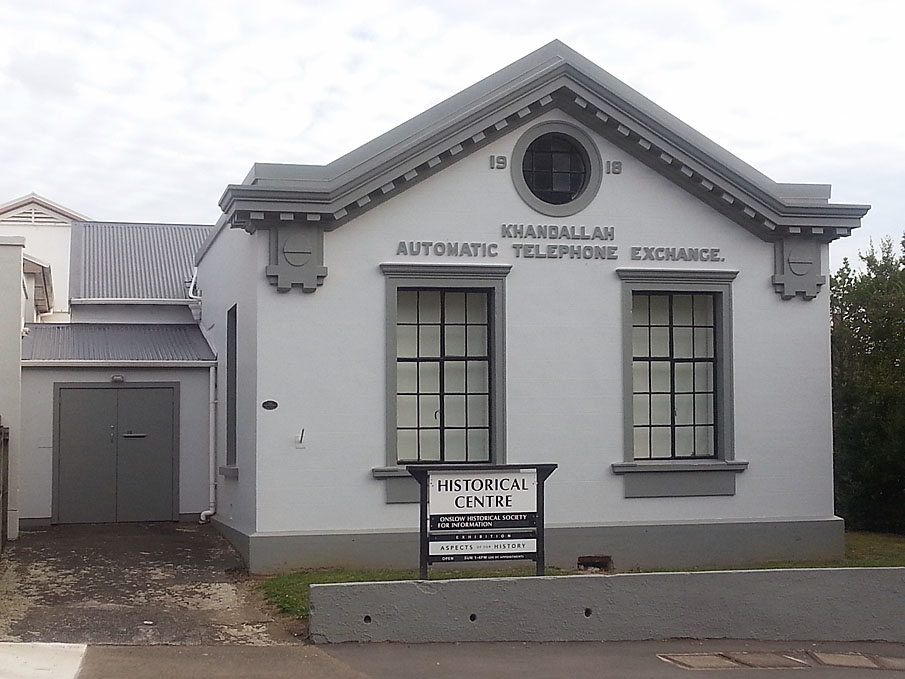
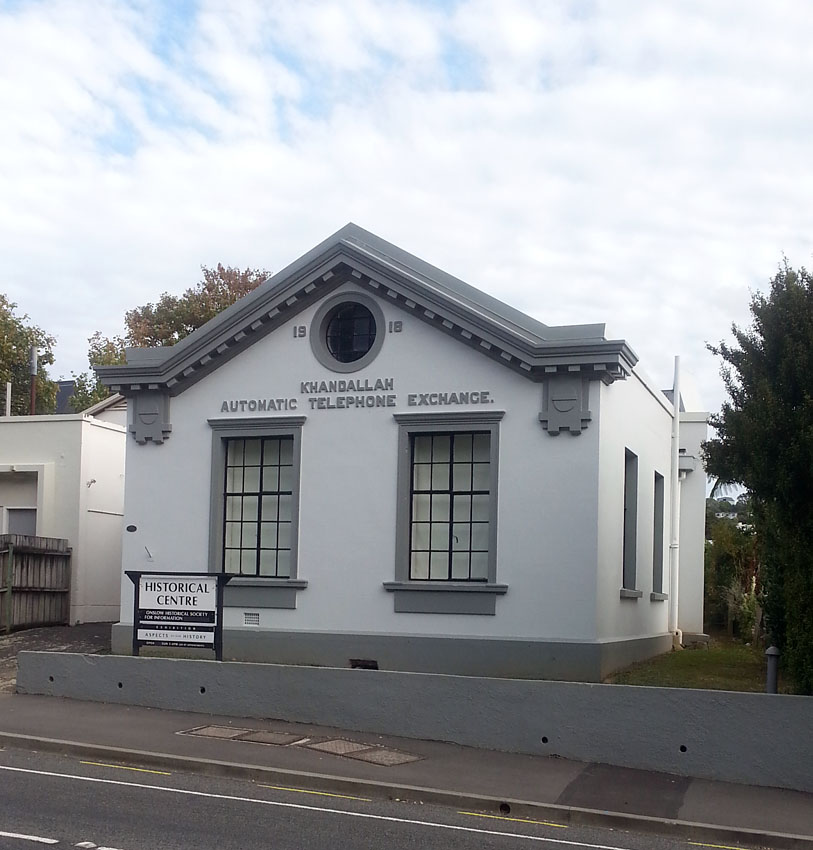
The Khandallah Automatic Telephone Exchange was designed in 1918 and completed in 1921. The exchange was connected on 30 June 1922. It had forty lines, and the automatic rotary switchboard was powered by a 48 hour electric battery.
The number of subscribers grew rapidly and the switchboard space was extended in 1925. By 1945 there were 400 one party lines and in 1951 a new exchange was designed to cope with increased usage.
The Khandallah Automatic Telephone Exchange's rotary machinery was rendered redundant by the New Zealand Post Office's introduction of the electronic Stored Programme Control (SPC) system there in October, 1984.
List Entry Information
Status
Listed
List Entry Status
Historic Place Category 1
Access
Private/No Public Access
List Number
4425
Date Entered
19th April 1990
Date of Effect
19th April 1990
City/District Council
Wellington City
Region
Wellington Region
Extent of List Entry
Extent includes the land described as Sec 1 SO 26390 (RT WN36B/456), Wellington Land District, and the building known as Khandallah Automatic Telephone Exchange (Former) thereon.
Legal description
Sec 1 SO 26390 (RT WN36B/456), Wellington Land District
Status
Listed
List Entry Status
Historic Place Category 1
Access
Private/No Public Access
List Number
4425
Date Entered
19th April 1990
Date of Effect
19th April 1990
City/District Council
Wellington City
Region
Wellington Region
Extent of List Entry
Extent includes the land described as Sec 1 SO 26390 (RT WN36B/456), Wellington Land District, and the building known as Khandallah Automatic Telephone Exchange (Former) thereon.
Legal description
Sec 1 SO 26390 (RT WN36B/456), Wellington Land District
Why is this place significant?
Historic Significance
Historical Significance or Value This historic place was registered under the Historic Places Act 1980. This report includes the text from the original Building Classification Committee report considered by the NZHPT Board at the time of registration. The former Khandallah Automatic Telephone Exchange was the first important public building to be built in Khandallah after World War I. Following modifications in 1925 the structure has survived unaltered, making it the oldest original automatic exchange in New Zealand. It is predated by the Hamilton Automatic Telephone Exchange (1916) but the latter has been extensively altered.
Physical Significance
This historic place was registered under the Historic Places Act 1980. This report includes the text from the original Building Classification Committee report considered by the NZHPT Board at the time of registration. ARCHITECTURAL QUALITY: Seldom used in the design of industrial buildings, the Georgian style has been successfully employed in the former Khandallah Automatic Telephone Exchange. The proportioning and detailing is compatible with the suburban environment while the restrained decoration is suitable for a small scale industrial building. The building reflects the growing popularity of Georgian Revival architecture in New Zealand particularly after World War I. Campbell abandoned his long-favoured Baroque style for this more modest approach. TOWNSCAPE/LANDMARK VALUE: This small-scale building is relatively unobtrusive in its residential setting.
Why is this place significant?
Historic Significance
Historical Significance or Value This historic place was registered under the Historic Places Act 1980. This report includes the text from the original Building Classification Committee report considered by the NZHPT Board at the time of registration. The former Khandallah Automatic Telephone Exchange was the first important public building to be built in Khandallah after World War I. Following modifications in 1925 the structure has survived unaltered, making it the oldest original automatic exchange in New Zealand. It is predated by the Hamilton Automatic Telephone Exchange (1916) but the latter has been extensively altered.
Physical Significance
This historic place was registered under the Historic Places Act 1980. This report includes the text from the original Building Classification Committee report considered by the NZHPT Board at the time of registration. ARCHITECTURAL QUALITY: Seldom used in the design of industrial buildings, the Georgian style has been successfully employed in the former Khandallah Automatic Telephone Exchange. The proportioning and detailing is compatible with the suburban environment while the restrained decoration is suitable for a small scale industrial building. The building reflects the growing popularity of Georgian Revival architecture in New Zealand particularly after World War I. Campbell abandoned his long-favoured Baroque style for this more modest approach. TOWNSCAPE/LANDMARK VALUE: This small-scale building is relatively unobtrusive in its residential setting.
Construction Professional
Name
Mair, John Thomas
Type
Architect
Biography
John Thomas Mair (1876-1959) was born in Invercargill and began his career with the New Zealand Railways on the staff of the Office Engineer, George Troup. In 1906 he travelled to the United States of America where he studied architecture at the University of Pennsylvania. He then worked in the office of George B. Post in New York before travelling to England where he was admitted as an Associate of the Royal Institute of British Architects. He became a Fellow in 1940. On his return to New Zealand he entered private practice, one of his first buildings being the Presbyterian First Church, Invercargill (1915), a prominent building of Romanesque character. He then practised in Wellington, carrying out largely domestic commissions. In 1918 he was appointed Inspector of Military Hospitals by the Defence Department, and in 1920 he became architect to the Department of Education. Following the retirement of John Campbell in 1922, Mair was appointed Government Architect, a position which he held until his retirement in 1942. During this period he was responsible for a variety of buildings, including the Courthouse, Hamilton, the Post Office in High Street, Christchurch, Government Life Office and the Departmental Building, both in Wellington, and the Jean Batten Building, Auckland. Such buildings show a departure from tradition, with the emphasis on function, structure and volume as opposed to a stylistic treatment of the building fabric. A Fellow of the New Zealand Institute of Architects, Mair was made a Life Member in 1942. His son John Lindsay Mair also practised as an architect.
Name
Campbell, John
Type
Architect
Biography
John Campbell (1857-1942) served his articles under John Gordon (c1835-1912) in Glasgow. He arrived in Dunedin in 1882 and after a brief period as a draughtsman with Mason and Wales joined the Dunedin branch of the Public Works Department in 1883. His first known work, an unbuilt design for the Dunedin Railway Station, reveals an early interest in Baroque architecture. In November 1888 Campbell was transferred to Wellington where in 1889 he took up the position of draughtsman in charge of the Public Buildings Division of the Public Works Department. He remained in charge of the design of government buildings throughout New Zealand until his retirement in 1922, becoming in 1909 the first person to hold the position of Government Architect. Government architecture designed under his aegis evidences a change in style from Queen Anne to Edwardian Baroque. His best-known Queen Anne design is the Dunedin Police Station (1895-8), modelled on Richard Norman Shaw's New Scotland Yard (1887-90). Among his most exuberant Edwardian Baroque buildings is the Public Trust Office, Wellington (1905-09). Although Campbell designed the Dunedin Law Courts (1899-1902) in the Gothic style with a Scottish Baronial inflection, he established Edwardian Baroque as the government style for police stations, courthouses and post offices throughout New Zealand. In 1911 Campbell won the nation-wide architectural competition for the design of Parliament Buildings, Wellington. Although only partially completed, Parliament House is the crowning achievement of Campbell's career.
Construction Details
Type
Modification
Description
Two masonry walls removed from original switchroom
Start Year
1922
Type
Original Construction
Start Year
1925
Type
Addition
Description
Extension to south of original building
Construction Materials
Foundation and floor, concrete, Walls, cavity brick, plastered. Roof, timber frame, corrugated iron.
Notable Features
Original rotary automatic equipment is still intact in the old switchroom though no longer operational.
Construction Professional
Name
Mair, John Thomas
Type
Architect
Biography
John Thomas Mair (1876-1959) was born in Invercargill and began his career with the New Zealand Railways on the staff of the Office Engineer, George Troup. In 1906 he travelled to the United States of America where he studied architecture at the University of Pennsylvania. He then worked in the office of George B. Post in New York before travelling to England where he was admitted as an Associate of the Royal Institute of British Architects. He became a Fellow in 1940. On his return to New Zealand he entered private practice, one of his first buildings being the Presbyterian First Church, Invercargill (1915), a prominent building of Romanesque character. He then practised in Wellington, carrying out largely domestic commissions. In 1918 he was appointed Inspector of Military Hospitals by the Defence Department, and in 1920 he became architect to the Department of Education. Following the retirement of John Campbell in 1922, Mair was appointed Government Architect, a position which he held until his retirement in 1942. During this period he was responsible for a variety of buildings, including the Courthouse, Hamilton, the Post Office in High Street, Christchurch, Government Life Office and the Departmental Building, both in Wellington, and the Jean Batten Building, Auckland. Such buildings show a departure from tradition, with the emphasis on function, structure and volume as opposed to a stylistic treatment of the building fabric. A Fellow of the New Zealand Institute of Architects, Mair was made a Life Member in 1942. His son John Lindsay Mair also practised as an architect.
Name
Campbell, John
Type
Architect
Biography
John Campbell (1857-1942) served his articles under John Gordon (c1835-1912) in Glasgow. He arrived in Dunedin in 1882 and after a brief period as a draughtsman with Mason and Wales joined the Dunedin branch of the Public Works Department in 1883. His first known work, an unbuilt design for the Dunedin Railway Station, reveals an early interest in Baroque architecture. In November 1888 Campbell was transferred to Wellington where in 1889 he took up the position of draughtsman in charge of the Public Buildings Division of the Public Works Department. He remained in charge of the design of government buildings throughout New Zealand until his retirement in 1922, becoming in 1909 the first person to hold the position of Government Architect. Government architecture designed under his aegis evidences a change in style from Queen Anne to Edwardian Baroque. His best-known Queen Anne design is the Dunedin Police Station (1895-8), modelled on Richard Norman Shaw's New Scotland Yard (1887-90). Among his most exuberant Edwardian Baroque buildings is the Public Trust Office, Wellington (1905-09). Although Campbell designed the Dunedin Law Courts (1899-1902) in the Gothic style with a Scottish Baronial inflection, he established Edwardian Baroque as the government style for police stations, courthouses and post offices throughout New Zealand. In 1911 Campbell won the nation-wide architectural competition for the design of Parliament Buildings, Wellington. Although only partially completed, Parliament House is the crowning achievement of Campbell's career.
Construction Details
Type
Modification
Description
Two masonry walls removed from original switchroom
Start Year
1922
Type
Original Construction
Start Year
1925
Type
Addition
Description
Extension to south of original building
Construction Materials
Foundation and floor, concrete, Walls, cavity brick, plastered. Roof, timber frame, corrugated iron.
Notable Features
Original rotary automatic equipment is still intact in the old switchroom though no longer operational.
This historic place was registered under the Historic Places Act 1980. This report includes the text from the original Building Classification Committee report considered by the NZHPT Board at the time of registration. ARCHITECTURAL DESCRIPTION: This single storey building is Georgian in style. The principal facade has an open-bed pediment while dentils add a Classical flavour. The ends of the gable are supported by highly original corbels. Georgian elements of the facade include a central circular feature window and regular fenestration. The five large windows are embellished with plaster dressings. The building is named and dated. The gable of the principal facade is echoed on the west facade by a second simpler gable which defines the 1925 extension. To the east and south the original building is largely hidden by the 1951 extension which now houses the telecommunication systems. The original building encompasses the old switchroom. Much of the original rotary automatic equipment is still intact though no longer operational.
This historic place was registered under the Historic Places Act 1980. This report includes the text from the original Building Classification Committee report considered by the NZHPT Board at the time of registration. ARCHITECTURAL DESCRIPTION: This single storey building is Georgian in style. The principal facade has an open-bed pediment while dentils add a Classical flavour. The ends of the gable are supported by highly original corbels. Georgian elements of the facade include a central circular feature window and regular fenestration. The five large windows are embellished with plaster dressings. The building is named and dated. The gable of the principal facade is echoed on the west facade by a second simpler gable which defines the 1925 extension. To the east and south the original building is largely hidden by the 1951 extension which now houses the telecommunication systems. The original building encompasses the old switchroom. Much of the original rotary automatic equipment is still intact though no longer operational.
Historical and Associated Iwi / Hapū / Whānau
Completion Date
20th November 1989
Information Sources
Bremner, 1987
J. Bremner, Wellington's Northern Suburbs 1919-1945, (Onslow Historical Society: Wellington), 1987
McLintock, 1966
An Encyclopedia of New Zealand, Government Printer, Wellington, 1966
Onslow Historian
Onslow Historian
Robinson, 1964
Howard Robinson, A History of the Post Office in New Zealand, RE Owen, Government Printer, Wellington, 1964
Ministry of Works and Development
Ministry of Works and Development
Barton, 1987 (2)
PL Barton, Proposal for Classification, Buildings Classification Committee Report, "Khandallah Automatic Telephone Exchange", September 1987
Watters, 1973
Alexander Francis Watters, New Zealand Telegraph and Telephone Offices, Postal History Society of New Zealand Inc, Auckland, 1973
Other Information
A copy of this report is available from the NZHPT Central region office Please note that entry on the New Zealand Heritage List/Rarangi Korero identifies only the heritage values of the property concerned, and should not be construed as advice on the state of the property, or as a comment of its soundness or safety, including in regard to earthquake risk, safety in the event of fire, or insanitary conditions. This historic place was registered under the Historic Places Act 1980. This report includes the text from the original Building Classification Committee report considered by the NZHPT Board at the time of registration.
Historical and Associated Iwi / Hapū / Whānau
Completion Date
20th November 1989
Information Sources
Bremner, 1987
J. Bremner, Wellington's Northern Suburbs 1919-1945, (Onslow Historical Society: Wellington), 1987
McLintock, 1966
An Encyclopedia of New Zealand, Government Printer, Wellington, 1966
Onslow Historian
Onslow Historian
Robinson, 1964
Howard Robinson, A History of the Post Office in New Zealand, RE Owen, Government Printer, Wellington, 1964
Ministry of Works and Development
Ministry of Works and Development
Barton, 1987 (2)
PL Barton, Proposal for Classification, Buildings Classification Committee Report, "Khandallah Automatic Telephone Exchange", September 1987
Watters, 1973
Alexander Francis Watters, New Zealand Telegraph and Telephone Offices, Postal History Society of New Zealand Inc, Auckland, 1973
Other Information
A copy of this report is available from the NZHPT Central region office Please note that entry on the New Zealand Heritage List/Rarangi Korero identifies only the heritage values of the property concerned, and should not be construed as advice on the state of the property, or as a comment of its soundness or safety, including in regard to earthquake risk, safety in the event of fire, or insanitary conditions. This historic place was registered under the Historic Places Act 1980. This report includes the text from the original Building Classification Committee report considered by the NZHPT Board at the time of registration.
Former Usages
General Usage: Communication
Specific Usage: Telephone Exchange
Former Usages
General Usage: Communication
Specific Usage: Telephone Exchange
Location
Sign up to hear more
Get the latest heritage news, features and events delivered
straight to your inbox.
