

White advertised a 'Modern Hotel furnished in the latest style, 'commanding a full view of the harbour' and suitable for 'Families, Tourists and the Travelling Public generally'. At this period Devonport, which was the terminus of the main road northwards from Auckland city to which it was linked by passenger, and later, vehicular ferries, was expanding rapidly and the waterfront was an extremely popular setting for sports and recreation. The terms 'esplanade', 'parade' and 'strand' contributed to a readily identifiable imitation of the English seaside resorts such as Brighton, Eastbourne or Scarborough.
List Entry Information
Status
Listed
List Entry Status
Historic Place Category 1
Access
Private/No Public Access
List Number
4481
Date Entered
15th February 1990
Date of Effect
15th February 1990
City/District Council
Auckland Council
Region
Auckland Council
Extent of List Entry
Extent includes the land described as Sec 2 SO 473763 (RT 668168), North Auckland Land District, and the building known as Esplanade Hotel thereon.
Legal description
Sec 2 SO 473763 (RT 668168), North Auckland Land District
Status
Listed
List Entry Status
Historic Place Category 1
Access
Private/No Public Access
List Number
4481
Date Entered
15th February 1990
Date of Effect
15th February 1990
City/District Council
Auckland Council
Region
Auckland Council
Extent of List Entry
Extent includes the land described as Sec 2 SO 473763 (RT 668168), North Auckland Land District, and the building known as Esplanade Hotel thereon.
Legal description
Sec 2 SO 473763 (RT 668168), North Auckland Land District
Why is this place significant?
Historic Significance
Historical Significance or Value This historic place was registered under the Historic Places Act 1980. This report includes the text from the original Building Classification Committee report considered by the NZHPT Board at the time of registration. The Esplanade hotel has been associated with Devonport's recreation and tourism for over 80 years and is one of the area's best loved buildings. It has been a prominent landmark since its construction.
Physical Significance
This historic place was registered under the Historic Places Act 1980. This report includes the text from the original Building Classification Committee report considered by the NZHPT Board at the time of registration. ARCHITECTURAL QUALITY: During the late Victorian and Edwardian age seaside resorts became popular holiday destinations and large hotels were built along waterfront promenades. The balcony above the entrance, the siting of the lounge to overlook the promenade and the pale-coloured plaster facade were also features of the design of English seaside hotels such as those at Eastbourne and Brighton. The unusual shape of the plan stems from the shape of the allotment on which the building stands and it makes good use of a corner site to provide picturesque views. The design of the Esplanade contrasts that of most earlier New Zealand hotels which were built on coach routes to accommodate travellers, not holiday makers. Few large hotels survive from the turn of the century and the fine, ornate facade of the Esplanade is particularly rare. TOWNSCAPE/LANDMARK VALUE: The Esplanade occupies a prominent corner site on the Devonport waterfront. It is visible to vessels travelling across the harbour and to shipping coming into the Waitemata from further afield. The facades contribute greatly to the commercial frontage along the western side of Victoria Road.
Why is this place significant?
Historic Significance
Historical Significance or Value This historic place was registered under the Historic Places Act 1980. This report includes the text from the original Building Classification Committee report considered by the NZHPT Board at the time of registration. The Esplanade hotel has been associated with Devonport's recreation and tourism for over 80 years and is one of the area's best loved buildings. It has been a prominent landmark since its construction.
Physical Significance
This historic place was registered under the Historic Places Act 1980. This report includes the text from the original Building Classification Committee report considered by the NZHPT Board at the time of registration. ARCHITECTURAL QUALITY: During the late Victorian and Edwardian age seaside resorts became popular holiday destinations and large hotels were built along waterfront promenades. The balcony above the entrance, the siting of the lounge to overlook the promenade and the pale-coloured plaster facade were also features of the design of English seaside hotels such as those at Eastbourne and Brighton. The unusual shape of the plan stems from the shape of the allotment on which the building stands and it makes good use of a corner site to provide picturesque views. The design of the Esplanade contrasts that of most earlier New Zealand hotels which were built on coach routes to accommodate travellers, not holiday makers. Few large hotels survive from the turn of the century and the fine, ornate facade of the Esplanade is particularly rare. TOWNSCAPE/LANDMARK VALUE: The Esplanade occupies a prominent corner site on the Devonport waterfront. It is visible to vessels travelling across the harbour and to shipping coming into the Waitemata from further afield. The facades contribute greatly to the commercial frontage along the western side of Victoria Road.
Construction Professional
Name
Bartley, Edward
Type
Architect
Biography
Edward Bartley was born in Jersey in 1839, and educated in the Channel Islands where he learned techniques of the building trade from his father, an architect and builder. Bartley immigrated to New Zealand with his elder brother Robert, also an architect, while still in his teens. They eventually settled in Devonport, Auckland. Initially Edward was in the building trade but later he practised solely as an architect. He was at one time vice-president of the Auckland Institute of Architects and was also Diocesan Architect for the Church of England. Amongst Bartley's most notable works were his ecclesiastical buildings including St John's Church, Ponsonby (1881), St David's Church, Symonds Street (1880), Holy Trinity Church, Devonport, and the Synagogue (1884). He was also responsible for the Opera House (1884) and Auckland Savings Bank, Queen Street (1884).
Construction Details
Start Year
1902
Finish Year
1903
Type
Original Construction
Construction Materials
Load bearing brick walls; timber roof framing with corrugated iron cladding.
Notable Features
Corner site and the unusual shape of the design stemming from the allotment on which it is constructed.
Construction Professional
Name
Bartley, Edward
Type
Architect
Biography
Edward Bartley was born in Jersey in 1839, and educated in the Channel Islands where he learned techniques of the building trade from his father, an architect and builder. Bartley immigrated to New Zealand with his elder brother Robert, also an architect, while still in his teens. They eventually settled in Devonport, Auckland. Initially Edward was in the building trade but later he practised solely as an architect. He was at one time vice-president of the Auckland Institute of Architects and was also Diocesan Architect for the Church of England. Amongst Bartley's most notable works were his ecclesiastical buildings including St John's Church, Ponsonby (1881), St David's Church, Symonds Street (1880), Holy Trinity Church, Devonport, and the Synagogue (1884). He was also responsible for the Opera House (1884) and Auckland Savings Bank, Queen Street (1884).
Construction Details
Start Year
1902
Finish Year
1903
Type
Original Construction
Construction Materials
Load bearing brick walls; timber roof framing with corrugated iron cladding.
Notable Features
Corner site and the unusual shape of the design stemming from the allotment on which it is constructed.
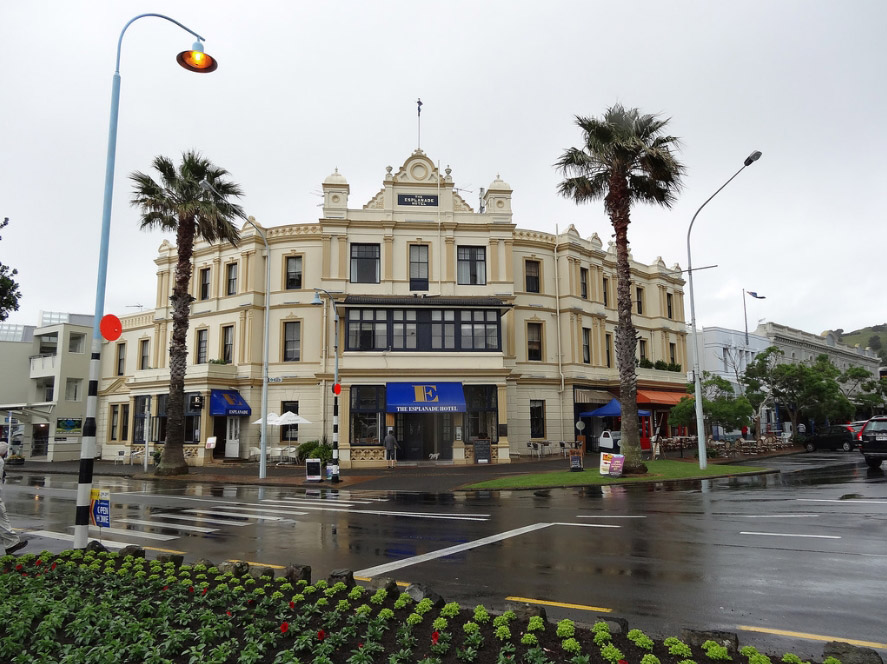
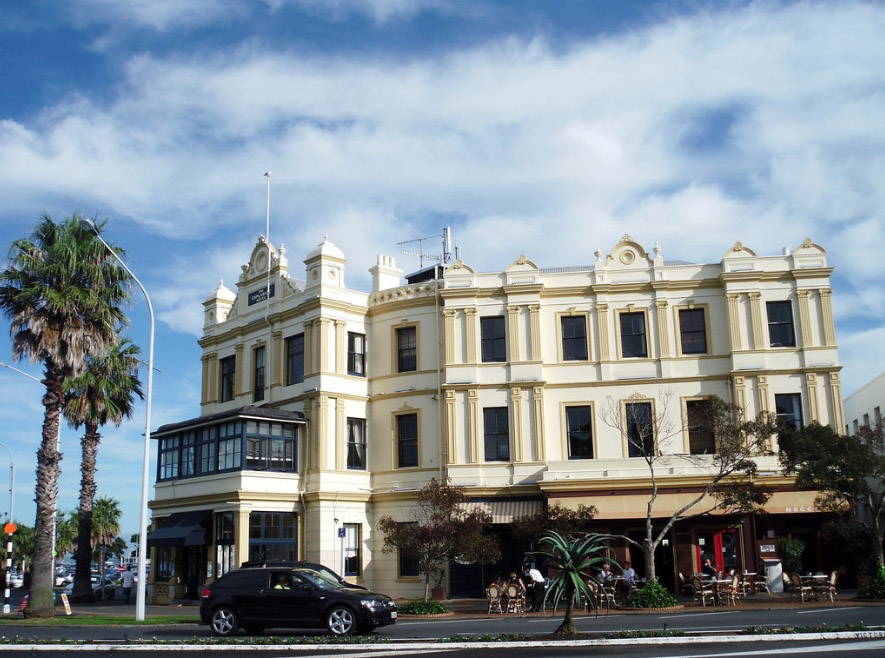
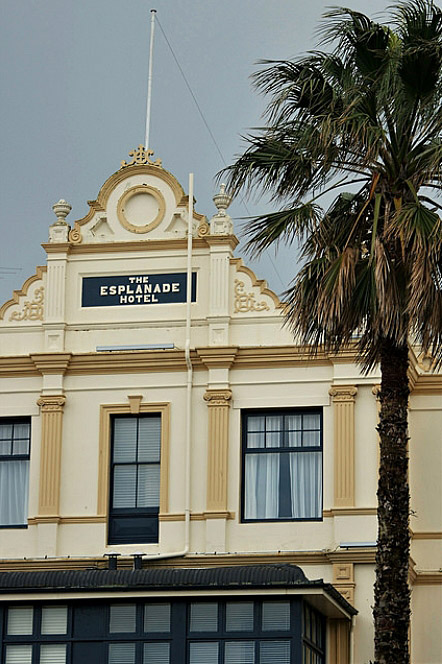
This historic place was registered under the Historic Places Act 1980. This report includes the text from the original Building Classification Committee report considered by the NZHPT Board at the time of registration. ARCHITECTURAL DESCRIPTION: This refined Edwardian Baroque hotel consists of three separate, slightly projecting pavilions - one main central portion and two wings. The identically ornamental wings of five bays and three bays respectively, closely echo, in decoration and form, the central pavilion. Prominent features of the building are the heavily ornamented parapets. The central pavilion has cupola-crowned projections flanking a central gable embellished by elaborately decorated plasterwork, including urns. Variations of these motifs are repeated on the other pavilions. Pilasters, plain or fluted, and double-hung sash windows, with keystones or moulding complete the decoration on the upper floors. On the ground floor, three glazed bays, one with a verandah, are separated by plastered walls rendered to resemble masonry. Above the middle bay is a balcony, now glazed. MODIFICATIONS: The building originally had two-storeyed verandahs on each of the three fronts. The verandah on the Victoria Road facade has been entirely removed as has the upper section of the Queens Parade one. The upper part on the splayed-corner between them has been glazed.
This historic place was registered under the Historic Places Act 1980. This report includes the text from the original Building Classification Committee report considered by the NZHPT Board at the time of registration. ARCHITECTURAL DESCRIPTION: This refined Edwardian Baroque hotel consists of three separate, slightly projecting pavilions - one main central portion and two wings. The identically ornamental wings of five bays and three bays respectively, closely echo, in decoration and form, the central pavilion. Prominent features of the building are the heavily ornamented parapets. The central pavilion has cupola-crowned projections flanking a central gable embellished by elaborately decorated plasterwork, including urns. Variations of these motifs are repeated on the other pavilions. Pilasters, plain or fluted, and double-hung sash windows, with keystones or moulding complete the decoration on the upper floors. On the ground floor, three glazed bays, one with a verandah, are separated by plastered walls rendered to resemble masonry. Above the middle bay is a balcony, now glazed. MODIFICATIONS: The building originally had two-storeyed verandahs on each of the three fronts. The verandah on the Victoria Road facade has been entirely removed as has the upper section of the Queens Parade one. The upper part on the splayed-corner between them has been glazed.
Historical and Associated Iwi / Hapū / Whānau
Completion Date
10th October 1989
Information Sources
Auckland Star
Auckland Star
Western Leader
Western Leader
Wises Post Office Directories
Wises Post Office Directories
Musgrove, 1986
Sydney Musgrove (ed), The Hundred of Devonport: A Centennial History, Devonport, 1986.
New Zealand Herald
New Zealand Herald, 12 July 1932, p. 6; 28 September 1933, p. 6.
Devonport Borough Council
Devonport Golden Jubilee Booklet, 1876-1936, Devonport Borough Council, 1936, Auck.Pub.Lib.
New Shore Times Advertiser
New Shore Times Advertiser
Other Information
A copy of this report is available from the NZHPT Northern Region Office Please note that entry on the New Zealand Heritage List/Rarangi Korero identifies only the heritage values of the property concerned, and should not be construed as advice on the state of the property, or as a comment of its soundness or safety, including in regard to earthquake risk, safety in the event of fire, or insanitary conditions. This historic place was registered under the Historic Places Act 1980. This report includes the text from the original Building Classification Committee report considered by the NZHPT Board at the time of registration.
Historical and Associated Iwi / Hapū / Whānau
Completion Date
10th October 1989
Information Sources
Auckland Star
Auckland Star
Western Leader
Western Leader
Wises Post Office Directories
Wises Post Office Directories
Musgrove, 1986
Sydney Musgrove (ed), The Hundred of Devonport: A Centennial History, Devonport, 1986.
New Zealand Herald
New Zealand Herald, 12 July 1932, p. 6; 28 September 1933, p. 6.
Devonport Borough Council
Devonport Golden Jubilee Booklet, 1876-1936, Devonport Borough Council, 1936, Auck.Pub.Lib.
New Shore Times Advertiser
New Shore Times Advertiser
Other Information
A copy of this report is available from the NZHPT Northern Region Office Please note that entry on the New Zealand Heritage List/Rarangi Korero identifies only the heritage values of the property concerned, and should not be construed as advice on the state of the property, or as a comment of its soundness or safety, including in regard to earthquake risk, safety in the event of fire, or insanitary conditions. This historic place was registered under the Historic Places Act 1980. This report includes the text from the original Building Classification Committee report considered by the NZHPT Board at the time of registration.
Former Usages
General Usage: Accommodation
Specific Usage: Hotel
Web Links
description: Luxury boutique hotel accommodation
Former Usages
General Usage: Accommodation
Specific Usage: Hotel
Web Links
description: Luxury boutique hotel accommodation
Location
Sign up to hear more
Get the latest heritage news, features and events delivered
straight to your inbox.
