

List Entry Information
Status
Listed
List Entry Status
Historic Place Category 1
Access
Private/No Public Access
List Number
4581
Date Entered
21st September 1989
Date of Effect
21st September 1989
City/District Council
Auckland Council
Region
Auckland Council
Legal description
Lot 1/2 Allot 36, Section 8, AK RT No. 58/300 DP No. 242
Status
Listed
List Entry Status
Historic Place Category 1
Access
Private/No Public Access
List Number
4581
Date Entered
21st September 1989
Date of Effect
21st September 1989
City/District Council
Auckland Council
Region
Auckland Council
Legal description
Lot 1/2 Allot 36, Section 8, AK RT No. 58/300 DP No. 242
Why is this place significant?
Historic Significance
Historical Significance or Value 50 Ponsonby Road has been used as a private dwelling, a private hospital, a boarding house, residence and doctor's surgery and as a hostel. In recent years it has been an elegant restaurant and is now used by its present owners as offices. The building has not had any associations with great historic events or famous people.
Physical Significance
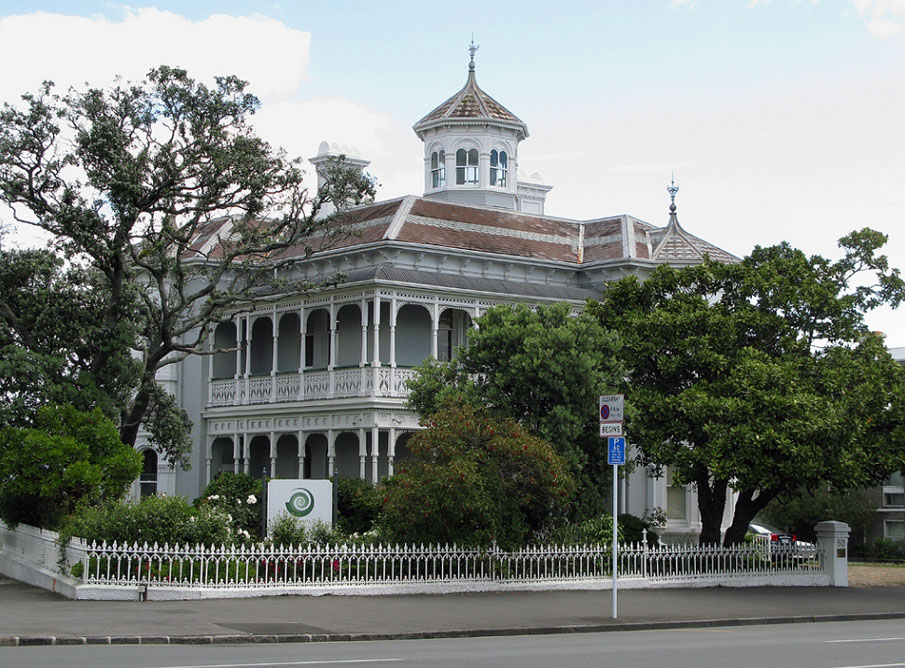
ARCHITECTURAL SIGNIFICANCE: This house is a particularly fine example of a style of domestic architecture now rare in Auckland. The site, size and extensive use of decoration mark this as one of Auckland's most substantial late Victorian houses. It shares much in common with the former merchant's houses on Princes Street. The cast iron decoration on the verandahs is some of the finest in Auckland. TOWNSCAPE/LANDMARK SIGNIFICANCE: The house is on a corner site on a wide road that runs along a ridge and its verandahs, ornate iron lace and belvedere make it highly visible to the passerby. The house shares its grounds with four attractive trees listed by the Auckland City Council in the District Scheme.
Why is this place significant?
Historic Significance
Historical Significance or Value 50 Ponsonby Road has been used as a private dwelling, a private hospital, a boarding house, residence and doctor's surgery and as a hostel. In recent years it has been an elegant restaurant and is now used by its present owners as offices. The building has not had any associations with great historic events or famous people.
Physical Significance
ARCHITECTURAL SIGNIFICANCE: This house is a particularly fine example of a style of domestic architecture now rare in Auckland. The site, size and extensive use of decoration mark this as one of Auckland's most substantial late Victorian houses. It shares much in common with the former merchant's houses on Princes Street. The cast iron decoration on the verandahs is some of the finest in Auckland. TOWNSCAPE/LANDMARK SIGNIFICANCE: The house is on a corner site on a wide road that runs along a ridge and its verandahs, ornate iron lace and belvedere make it highly visible to the passerby. The house shares its grounds with four attractive trees listed by the Auckland City Council in the District Scheme.
Construction Details
Start Year
1893
Type
Original Construction
Start Year
1952
Finish Year
1953
Type
Modification
Description
Various see Physical Description for details
Start Year
1971
Type
Modification
Description
A bedroom was added to the rear of the house when it became a Baptist Hostel for Alcoholics.
Start Year
1981
Type
Modification
Description
Various see Physical Description for details
Finish Year
2013
Type
Additional building added to site
Description
New two-storey structure adjoining the house as part of the full refurbishment/renovation
Construction Materials
Roof, slate lead flashed, timber framed. Chimneys; plastered brick. Exterior wall structure; double skin brick, plastered. Interior wall structure; 100mm timber frame. Ceilings; timber. Floors; tongue and groove rimu. Foundations; continuous concrete walls and concrete piles.
Notable Features
The verandahs, cast iron lace and belvedere.
Construction Details
Start Year
1893
Type
Original Construction
Start Year
1952
Finish Year
1953
Type
Modification
Description
Various see Physical Description for details
Start Year
1971
Type
Modification
Description
A bedroom was added to the rear of the house when it became a Baptist Hostel for Alcoholics.
Start Year
1981
Type
Modification
Description
Various see Physical Description for details
Finish Year
2013
Type
Additional building added to site
Description
New two-storey structure adjoining the house as part of the full refurbishment/renovation
Construction Materials
Roof, slate lead flashed, timber framed. Chimneys; plastered brick. Exterior wall structure; double skin brick, plastered. Interior wall structure; 100mm timber frame. Ceilings; timber. Floors; tongue and groove rimu. Foundations; continuous concrete walls and concrete piles.
Notable Features
The verandahs, cast iron lace and belvedere.
ARCHITECTURAL DESCRIPTION (STYLE): This is a large, two storeyed villa with wide verandahs on both floors. It is principally Italianate in style. An attractive octagonal belvedere, echoing the form of the two bay windows, sits atop the house. The large verandah features fine decorative valences and balustrades on both storeys. Most of the bay window arches which contain double hung sash windows spring from pilasters with Corinthian capitals. The hipped roof has slate tiles while corrugated iron covers the short snub-nosed verandah. The bays and belvedere are topped by decorative iron lightning conductors. The interior of the house has been much modified but the fine ceramic floor tiles in the vestibule, some doors and fireplaces and the wooden ceilings upstairs are original. MODIFICATIONS: 1952-53, Architect: R.A. Nicol (1) Ground floor verandah, Crummer Road side, filled in to become a staffroom; a window was removed and a door fitted. (2) Similarly, the upstairs verandah, Crummer Road side, was also filled in and became part of a dormitory. (3) Access stairs to the first floor were added on to the rear of the building. (4) Dr Drury's living room became a staff lounge with access cut through the wall by the fireplace to what had been Dr Drury's surgery, waiting room and office. This area became Staff bedrooms. (5) A wall was removed between bedrooms 3 and 4 to make one large dormitory. (6) The sunroom became a lavatory block and bedroom 5 became a bathroom. (7) A fire escape was added to the wall of bedroom 1 (now a dormitory). 1971: A bedroom was added to the rear of the house when it became a Baptist Hostel for Alcoholics. 1981, Architect: John E. Cooper & Associates The property was redeveloped as a restaurant with further modifications: (1) The filled in verandahs were reopened. (2) The walls were removed in the 'Surgery' so that staff bedrooms became a large open room.
ARCHITECTURAL DESCRIPTION (STYLE): This is a large, two storeyed villa with wide verandahs on both floors. It is principally Italianate in style. An attractive octagonal belvedere, echoing the form of the two bay windows, sits atop the house. The large verandah features fine decorative valences and balustrades on both storeys. Most of the bay window arches which contain double hung sash windows spring from pilasters with Corinthian capitals. The hipped roof has slate tiles while corrugated iron covers the short snub-nosed verandah. The bays and belvedere are topped by decorative iron lightning conductors. The interior of the house has been much modified but the fine ceramic floor tiles in the vestibule, some doors and fireplaces and the wooden ceilings upstairs are original. MODIFICATIONS: 1952-53, Architect: R.A. Nicol (1) Ground floor verandah, Crummer Road side, filled in to become a staffroom; a window was removed and a door fitted. (2) Similarly, the upstairs verandah, Crummer Road side, was also filled in and became part of a dormitory. (3) Access stairs to the first floor were added on to the rear of the building. (4) Dr Drury's living room became a staff lounge with access cut through the wall by the fireplace to what had been Dr Drury's surgery, waiting room and office. This area became Staff bedrooms. (5) A wall was removed between bedrooms 3 and 4 to make one large dormitory. (6) The sunroom became a lavatory block and bedroom 5 became a bathroom. (7) A fire escape was added to the wall of bedroom 1 (now a dormitory). 1971: A bedroom was added to the rear of the house when it became a Baptist Hostel for Alcoholics. 1981, Architect: John E. Cooper & Associates The property was redeveloped as a restaurant with further modifications: (1) The filled in verandahs were reopened. (2) The walls were removed in the 'Surgery' so that staff bedrooms became a large open room.
Historical and Associated Iwi / Hapū / Whānau
Information Sources
Dixon, 1978
Roger Dixon & Stefan Muthesius, 'Victorian Architecture', London, 1978
Easdale, 1980
N. Easdale, Five Gentlemen's Residences in Princes Street Auckland: The Occupants and Their Enterprises 1875-1900, Auckland, 1980
Stone, 1991
R. C. J. Stone, The Making of Russell McVeigh: The First 125 Years of the Practice of Russell McVeigh McKenzie Bartleet & Co. 1863-1988, Auckland, 1991
Salmond, 1986
Jeremy Salmond, Old New Zealand Houses 1800-1940, Auckland, 1986, Reed Methuen
Stacpoole, 1976
John Stacpoole, Colonial Architecture in New Zealand, Wellington, 1976
Phillips, 1983
J Phillips & C Maclean, In Light of the Past, 1983
Auckland Directories
Auckland Directories
Hitchock, 1954
Henry-Russell Hitchock, Early Victorian Architecture in Britain, Volumes I & II, London, 1954
Auckland City Council
Auckland City Council
Fletcher, 1948
B. Fletcher, A History of Architecture on the Comparative Method, London 1948
Journal of the Society of Architectural Historians
Journal of the Society of Architectural Historians
Other Information
Received an award in the New Zealand Institute of Architect's 2013 Architecture Awards (Auckland branch) This historic place was registered under the Historic Places Act 1980. This report includes the text from the original Building Classification Committee report considered by the NZHPT Board at the time of registration. Please note that entry on the New Zealand Heritage List/Rarangi Korero identifies only the heritage values of the property concerned, and should not be construed as advice on the state of the property, or as a comment of its soundness or safety, including in regard to earthquake risk, safety in the event of fire, or insanitary conditions.
Historical and Associated Iwi / Hapū / Whānau
Information Sources
Dixon, 1978
Roger Dixon & Stefan Muthesius, 'Victorian Architecture', London, 1978
Easdale, 1980
N. Easdale, Five Gentlemen's Residences in Princes Street Auckland: The Occupants and Their Enterprises 1875-1900, Auckland, 1980
Stone, 1991
R. C. J. Stone, The Making of Russell McVeigh: The First 125 Years of the Practice of Russell McVeigh McKenzie Bartleet & Co. 1863-1988, Auckland, 1991
Salmond, 1986
Jeremy Salmond, Old New Zealand Houses 1800-1940, Auckland, 1986, Reed Methuen
Stacpoole, 1976
John Stacpoole, Colonial Architecture in New Zealand, Wellington, 1976
Phillips, 1983
J Phillips & C Maclean, In Light of the Past, 1983
Auckland Directories
Auckland Directories
Hitchock, 1954
Henry-Russell Hitchock, Early Victorian Architecture in Britain, Volumes I & II, London, 1954
Auckland City Council
Auckland City Council
Fletcher, 1948
B. Fletcher, A History of Architecture on the Comparative Method, London 1948
Journal of the Society of Architectural Historians
Journal of the Society of Architectural Historians
Other Information
Received an award in the New Zealand Institute of Architect's 2013 Architecture Awards (Auckland branch) This historic place was registered under the Historic Places Act 1980. This report includes the text from the original Building Classification Committee report considered by the NZHPT Board at the time of registration. Please note that entry on the New Zealand Heritage List/Rarangi Korero identifies only the heritage values of the property concerned, and should not be construed as advice on the state of the property, or as a comment of its soundness or safety, including in regard to earthquake risk, safety in the event of fire, or insanitary conditions.
Current Usages
Uses: Trade
Specific Usage: Office building/Offices
Former Usages
General Usage: Accommodation
Specific Usage: House
Current Usages
Uses: Trade
Specific Usage: Office building/Offices
Former Usages
General Usage: Accommodation
Specific Usage: House
