Quick links


Quick links
Quick links
Quick links
Quick links
Quick links
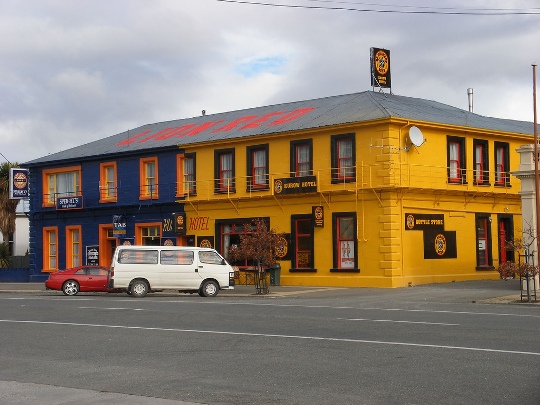
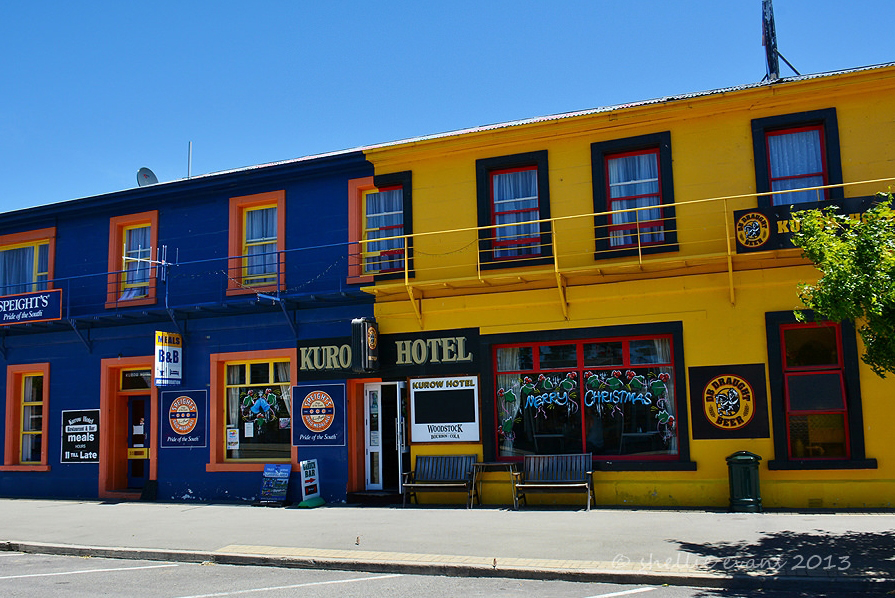
55 Bledisloe Street, KUROW
Private
Historic Place Category 2
List No. 4893
List Entry Information
Status
Listed
List Entry Status
Historic Place Category 2
Access
Private/No Public Access
List Number
4893
Date Entered
25th September 1986
Date of Effect
25th September 1986
City/District Council
Waitaki District
Region
Canterbury Region
Extent of List Entry
Extent includes the land described as Pt Secs 5-6 Blk XIV Town of Kurow (RT OT352/4), Otago Land District, and the building known as Kurow Hotel thereon.
Legal description
Pt Secs 5-6 Blk XIV Town of Kurow (RT OT352/4), Otago Land District
Status
Listed
List Entry Status
Historic Place Category 2
Access
Private/No Public Access
List Number
4893
Date Entered
25th September 1986
Date of Effect
25th September 1986
City/District Council
Waitaki District
Region
Canterbury Region
Extent of List Entry
Extent includes the land described as Pt Secs 5-6 Blk XIV Town of Kurow (RT OT352/4), Otago Land District, and the building known as Kurow Hotel thereon.
Legal description
Pt Secs 5-6 Blk XIV Town of Kurow (RT OT352/4), Otago Land District
Construction Professional
Name
Forrester, John Meggett
Type
Architect
Biography
John Meggett Forrester (1866-1965) grew up in Oamaru where his father Thomas Forrester (1838-1907) was practising as an architect. Having been educated at Oamaru Grammar School, he entered the architectural profession and in 1890 took over his father's practice, Forrester and Lemon, following the death of John Lemon (1828-90). He was responsible for the Oamaru Opera House (1907), the Borough Council building, the World War I Memorial and the Waitaki Boys High School Hall of Memories, all in Oamaru. In 1919 he was joined in partnership by Ivan Steenson and he retired in 1931. Forrester was prominent in Oamaru public life. He was a Justice of the Peace for many years, an Oamaru Borough Councillor (1913-33) and Mayor of Oamaru (1931-33). When he died in 1965 he left a bequest for the establishment of an Art Gallery in North Otago. The Forrester Gallery was opened in 1983 in the former Bank of New South Wales building.
Construction Details
Start Year
1905
Type
Original Construction
Description
Reinstatement after fire
Type
Addition
Description
Hotel extended
Period
Prior to 1940s
Construction Professional
Name
Forrester, John Meggett
Type
Architect
Biography
John Meggett Forrester (1866-1965) grew up in Oamaru where his father Thomas Forrester (1838-1907) was practising as an architect. Having been educated at Oamaru Grammar School, he entered the architectural profession and in 1890 took over his father's practice, Forrester and Lemon, following the death of John Lemon (1828-90). He was responsible for the Oamaru Opera House (1907), the Borough Council building, the World War I Memorial and the Waitaki Boys High School Hall of Memories, all in Oamaru. In 1919 he was joined in partnership by Ivan Steenson and he retired in 1931. Forrester was prominent in Oamaru public life. He was a Justice of the Peace for many years, an Oamaru Borough Councillor (1913-33) and Mayor of Oamaru (1931-33). When he died in 1965 he left a bequest for the establishment of an Art Gallery in North Otago. The Forrester Gallery was opened in 1983 in the former Bank of New South Wales building.
Construction Details
Start Year
1905
Type
Original Construction
Description
Reinstatement after fire
Type
Addition
Description
Hotel extended
Period
Prior to 1940s
Historical and Associated Iwi / Hapū / Whānau
Completion Date
20th December 2016
Report Written By
Heather Bauchop
Information Sources
Cyclopedia of New Zealand, 1905
Cyclopedia Company, Industrial, descriptive, historical, biographical facts, figures, illustrations, Wellington, N.Z, 1897-1908, Vol. 4 Otago and Southland, Cyclopedia Company, Christchurch, 1905
Other Information
This place was identified as significant under previous legislation with different information requirements. It remains significant under the current legislation. There is opportunity under our legislation and policies to add to this information. Further information about this place may be available from the Otago/Southland Office of Heritage New Zealand Pouhere Taonga. Please note that entry on the New Zealand Heritage List/Rarangi Korero identifies only the heritage values of the property concerned, and should not be construed as advice on the state of the property, or as a comment of its soundness or safety, including in regard to earthquake risk, safety in the event of fire, or insanitary conditions. A fully referenced upgrade report is available on request from the Otago/Southland Area Office of Heritage New Zealand.
Historical and Associated Iwi / Hapū / Whānau
Completion Date
20th December 2016
Report Written By
Heather Bauchop
Information Sources
Cyclopedia of New Zealand, 1905
Cyclopedia Company, Industrial, descriptive, historical, biographical facts, figures, illustrations, Wellington, N.Z, 1897-1908, Vol. 4 Otago and Southland, Cyclopedia Company, Christchurch, 1905
Other Information
This place was identified as significant under previous legislation with different information requirements. It remains significant under the current legislation. There is opportunity under our legislation and policies to add to this information. Further information about this place may be available from the Otago/Southland Office of Heritage New Zealand Pouhere Taonga. Please note that entry on the New Zealand Heritage List/Rarangi Korero identifies only the heritage values of the property concerned, and should not be construed as advice on the state of the property, or as a comment of its soundness or safety, including in regard to earthquake risk, safety in the event of fire, or insanitary conditions. A fully referenced upgrade report is available on request from the Otago/Southland Area Office of Heritage New Zealand.
Current Usages
Uses: Accommodation
Specific Usage: Hotel
Current Usages
Uses: Accommodation
Specific Usage: Hotel
Location
Get the latest heritage news, features and events delivered
straight to your inbox.
