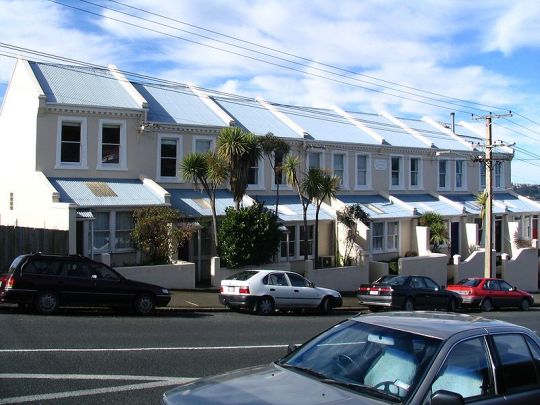
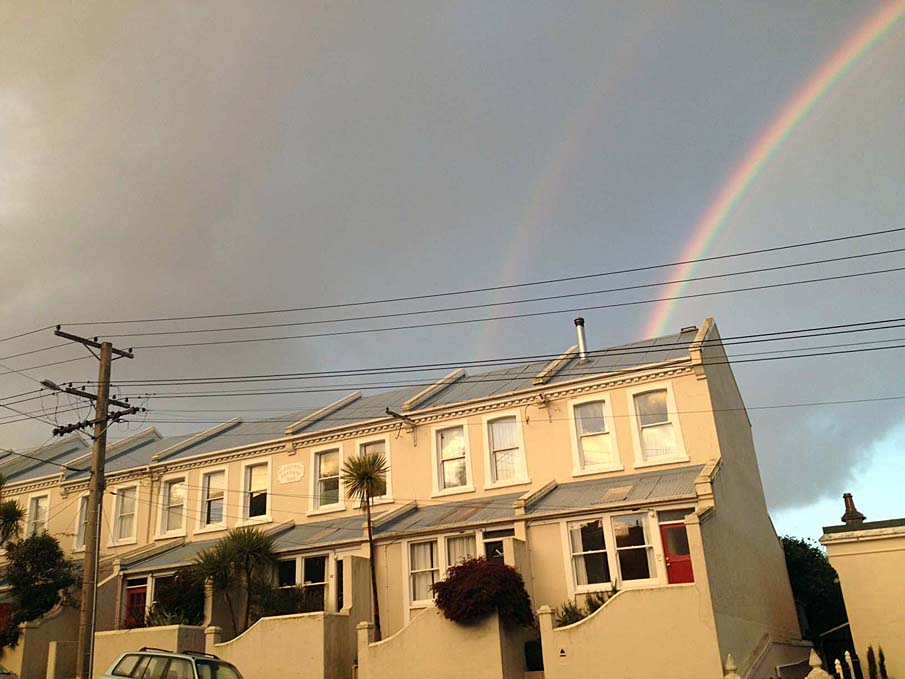
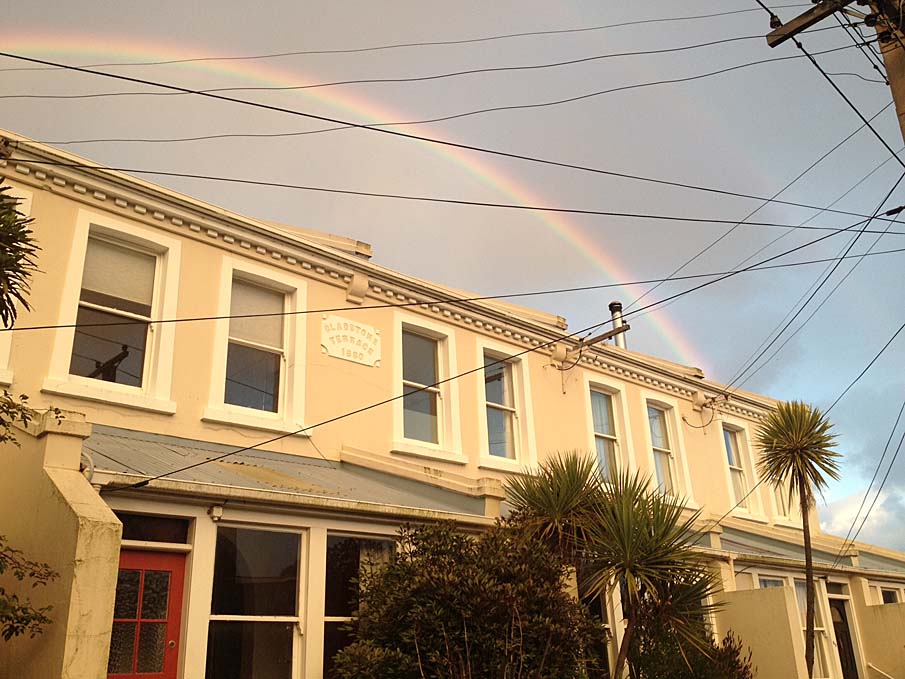
Gladstone Terrace is a row of seven terrace houses built in 1880. In a highly tenanted area, the Gladstone Terrace houses provided much needed rentable housing and has both architectural and historical significance as a representative of a nineteenth century working class terrace and investment housing by local Dunedin trades and businessmen.
Both iwi history and archaeological evidence show Māori occupation in the Ōtākou / Otago region since the 12th century. Today, Kāi Tahu mana whenua is recognised over a large part of Te Wai Pounamu. Kāti Māmoe and Waitaha shared occupation are always acknowledged. The hapū Kāi Te Pahi, Kāti Moki, and Kāti Taoka still maintain their presence and responsibility as kaitiaki in this region. While there were no permanent settlements around Melville/Walker Street, the area near the Toitū Tauraka waka at the bottom of High Street (List No. 9774) was known as Ōtepoti.
Gladstone Terrace is a row of seven terrace houses built in Melville Street in 1880 for Alexander Cairns. The Gladstone Terrace houses are representative of one of the types of working-class housing that developed in the nineteenth century and are also an example of investment housing, built for rental accommodation. Many large employers had industrial premises at the southern end of town and there was demand for worker accommodation in the area. Cairns lived in a two-storey house of his own on a section behind the terrace site. He also owned a row of cottages facing Carroll Street and by 1885 he had at least 110 residential tenants. It is thought the terrace was named after William Gladstone, the Prime Minister of Britain, who was re-elected the year the houses were built.
Cairns was born in Perthshire, Scotland and had trained initially as a stonemason and then became a brick and tile maker. His health declined so he decided to try his luck in the colonies and arrived in Australia in 1852 where he started an iron trade. He moved to Dunedin in 1861 and originally started an ironmongery and produce dealing in Princes Street. Later Cairns became a contractor where he oversaw the wooden portion of the Rattray Street Jetty construction in 1864-1865. He was appointed Superintendent of Works at the Otago Provincial Council in 1867 and oversaw the work of Maitland and Pitt Street cuttings using prison labour. After a stint working in Australia with reclamation, irrigation and railway construction he returned to Dunedin and was a city councillor for South Ward elected in 1884. He was a staunch advocate for temperance and was quoted saying hotels “were hells upon earth”.
Gladstone Terrace is a representative of working-class housing in England which remained uncommon in Dunedin as urban crowding was not a quality that settlers wished to emulate in New Zealand. The houses were advertised to let as “healthy and convenient”, perhaps to offset people’s fears of the cramped and dirty ‘Old World’ terrace style housing.
Following Cairns death in 1891 his large property was subject to a mortgagee sale. In 1893 it was purchased by John Carroll who also started as a stonemason and was a fellow councillor of Cairns. Carroll arrived in New Zealand during the goldrush and was successful on the gold diggings on the Shotover River. However, unlike Cairns he began the business in Dunedin as a publican, his first hotel was built on the corner of the Octagon and George Streets in 1864. Carroll was elected to the Dunedin City Council in 1869 and in 1890 he became Dunedin’s first Roman Catholic Mayor. Walker Street was renamed Carroll Street in 1916 after him and the Carroll family remained in the area until 1965.
The Gladstone Terraces were originally constructed of 9-inch-thick brick and were later plastered. The original roof material is unknown but the Terrace houses did have iron rooves for many years until replaced with current steel roof in 1985. The original builder is unknown. The lean-to sections at the front of the houses face the street, and at least one was used as a shop originally. Internal alterations to the houses began in 1883 and in 1918 alterations were made to all seven houses under John Carroll’s ownership. Staircases have been removed in most of the houses as with the chimneys, which presumably were removed in the 1985 modifications. During the 1960s most of the rental properties owned by Carroll in the area ceased to be under one owner. Since 1986 Gladstone Terrace are owned by separately under unit titles.
Both iwi history and archaeological evidence show Māori occupation in the Ōtākou / Otago region since the 12th century. Today, Kāi Tahu mana whenua is recognised over a large part of Te Wai Pounamu. Kāti Māmoe and Waitaha shared occupation are always acknowledged. The hapū Kāi Te Pahi, Kāti Moki, and Kāti Taoka still maintain their presence and responsibility as kaitiaki in this region. While there were no permanent settlements around Melville/Walker Street, the area near the Toitū Tauraka waka at the bottom of High Street (List No. 9774) was known as Ōtepoti.
Gladstone Terrace is a row of seven terrace houses built in Melville Street in 1880 for Alexander Cairns. The Gladstone Terrace houses are representative of one of the types of working-class housing that developed in the nineteenth century and are also an example of investment housing, built for rental accommodation. Many large employers had industrial premises at the southern end of town and there was demand for worker accommodation in the area. Cairns lived in a two-storey house of his own on a section behind the terrace site. He also owned a row of cottages facing Carroll Street and by 1885 he had at least 110 residential tenants. It is thought the terrace was named after William Gladstone, the Prime Minister of Britain, who was re-elected the year the houses were built.
Cairns was born in Perthshire, Scotland and had trained initially as a stonemason and then became a brick and tile maker. His health declined so he decided to try his luck in the colonies and arrived in Australia in 1852 where he started an iron trade. He moved to Dunedin in 1861 and originally started an ironmongery and produce dealing in Princes Street. Later Cairns became a contractor where he oversaw the wooden portion of the Rattray Street Jetty construction in 1864-1865. He was appointed Superintendent of Works at the Otago Provincial Council in 1867 and oversaw the work of Maitland and Pitt Street cuttings using prison labour. After a stint working in Australia with reclamation, irrigation and railway construction he returned to Dunedin and was a city councillor for South Ward elected in 1884. He was a staunch advocate for temperance and was quoted saying hotels “were hells upon earth”.
Gladstone Terrace is a representative of working-class housing in England which remained uncommon in Dunedin as urban crowding was not a quality that settlers wished to emulate in New Zealand. The houses were advertised to let as “healthy and convenient”, perhaps to offset people’s fears of the cramped and dirty ‘Old World’ terrace style housing.
Following Cairns death in 1891 his large property was subject to a mortgagee sale. In 1893 it was purchased by John Carroll who also started as a stonemason and was a fellow councillor of Cairns. Carroll arrived in New Zealand during the goldrush and was successful on the gold diggings on the Shotover River. However, unlike Cairns he began the business in Dunedin as a publican, his first hotel was built on the corner of the Octagon and George Streets in 1864. Carroll was elected to the Dunedin City Council in 1869 and in 1890 he became Dunedin’s first Roman Catholic Mayor. Walker Street was renamed Carroll Street in 1916 after him and the Carroll family remained in the area until 1965.
The Gladstone Terraces were originally constructed of 9-inch-thick brick and were later plastered. The original roof material is unknown but the Terrace houses did have iron rooves for many years until replaced with current steel roof in 1985. The original builder is unknown. The lean-to sections at the front of the houses face the street, and at least one was used as a shop originally. Internal alterations to the houses began in 1883 and in 1918 alterations were made to all seven houses under John Carroll’s ownership. Staircases have been removed in most of the houses as with the chimneys, which presumably were removed in the 1985 modifications. During the 1960s most of the rental properties owned by Carroll in the area ceased to be under one owner. Since 1986 Gladstone Terrace are owned by separately under unit titles.