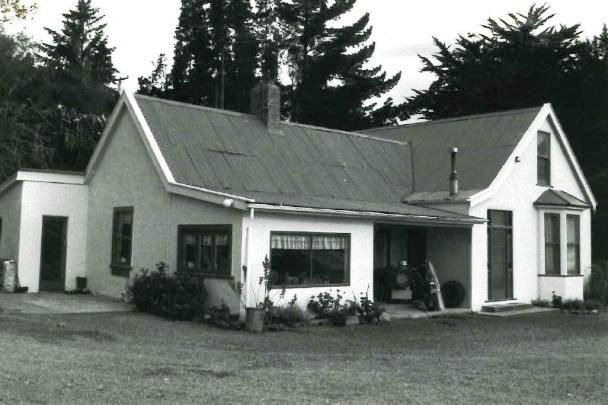
The Taieri Plain is noted for its early European domestic dwellings associated with the establishment of the small settlements such as Woodside, East Taieri, North Taieri, West Taieri and Outram. Bellfield, East Taieri can be seen as part of this tapestry of settlements which forms part of the wider historical landscape of the Taieri Plain. The house is historically and architecturally significant due to its age and connection with the Allan family who Allanton was named after.
From its source, the Taiari River flows almost entirely around Pātearoa (the Rock & Pillar Range) before discharging into Te Tai-o-Āraiteuru (the Otago coastline). Tradition tells us the Taiari and its various waterways was created by the taniwha Makaka who is immortalised as Pukemakamaka / Saddle Hill. Kāi Tahu ki Otago used all areas of the Taiari / Taieri Plain as evidenced by the hundreds of mahika kai sites associated with the numerous waterways, lakes and wetlands in the area, which was one of the most significant food baskets of the Otago region. The Ōwhiro Stream, formerly known as Scrogg’s Creek, flows across the Taieri Plain into the Taieri River near the Allanton township, west of Mosgiel. The name Ōwhiro was used to denote the eastern part of the Taiari plain.
After arriving in Dunedin on the ship Philip Laing on 15 April 1848, Rev Thomas Burns first visited the Taieri Plain in 1849 describing it as, “a truly magnificent plain”. Before arriving in New Zealand, Burns purchased rural sections on behalf of the Lay Association of the Free Church of Scotland (established 1845) Trustees and supporters, and he chose a large majority from the plain. The first road from Dunedin was constructed in 1849, and with this farms and houses began to be constructed along this road. Burns made multiple visits out to the Taieri Plain from 1849-1852 in which he recorded the people he visited.
John Allan and his wife Agnes had travelled to New Zealand on the ship New Zealand in 1842 living in Nelson before travelling to Dunedin. Two of their daughters moved to Otago with their husbands and their son, who had been working in Thomas Kettle’s survey party, sent favourable reports to his parents of the area. After his arrival in 1844 on the Sarah Ann, John Allan took up his residence at Anderson’s Bay. He remained there for two years before taking up land at East Taieri in 1850, where Alexander McKay had preceded him in 1849. John Allan named his farm ‘Bellfield’, a name suggested by his wife, probably from her Ayrshire home. In the family history it is recorded that the first building was erected on the crown of a ridge about 180 metres below the main road. “This house consisted of clay or sod walls, thatched roof, and earth floor. In the summer months of 1853-54, Robert Murray, a carpenter from Tokomairiro, built the present Bellfield house on the Main South Road, from the timber sawn by John Allan jr., and his pit-mate Thomas Hastie (later a noted sheep shearer), in the Saddle Hill bush”. The Valuation Roll, however, records a differing date, noting it as 33 years old in 1897 thereby dating it to 1864. The dwelling then is recorded as having a further significant addition in 1882.
The Allans were one of the early European families on the Plain and along with the Todd’s (Johnstone Farmhouse, List No. 7146), McKay’s (Dunrobin, List No. 5242), Callandar’s (Springbank, List No. 5241 and Springbank View, List No. 5234), and the Oughton’s (Janefield, List no. 4736). These early settlers worked hard to establish an existence, and many were heavily involved in all aspects of the early life including agricultural societies, Provincial Council and especially the establishment of the Presbyterian Church. John Allan became very involved in the Presbyterian Church of Otago and was the first elder of the Taieri Church (1854) as well as being a Presbytery member in Otago. The first Session and Deacons’ Court meetings were held at the Allan’s house on May 15, 1854. Mt Allan and Allanton are named after the family.
After his father’s death in August 1863, John Allan Jnr succeeded to Bellfield, where his mother, Agnes, remained until her death in 1891 aged 96. In 1864 he laid out a township on a section that at that time formed a part of Bellfield. This township, fronting the Main South Road, was named by his mother, ‘Riccarton’, after a place in Ayrshire, Scotland. Immediately after, he built a store, to which he moved into, leaving his mother in charge of Bellfield, and lived for a time in the store, until he bought an existing small store and turned it into a house to live in. His children were recorded as being born at Bellfield.
In 1881 John Allan lost his wife suddenly, at the age of 38 years, leaving a family of nine children. A few months later further tragedy struck with his eldest son, John, 18, accidentally fell through an open skylight from the upper floor onto some brass rods in the drapery business where he worked, and was killed.
In December 1893, his eldest daughter, Jane Blackie, who had charge of the house from the time of her mother’s death, passed away suddenly from heart failure, caused by former rheumatic fever. After an illness of some duration, John himself died in January 1901, at the age of sixty-nine years. The land was then subdivided. Thomas Grimmell, builder, became the owner in 1909 and then sold to Donald Williamson in 1912 who sold it in 1924.
The house is a large L shaped villa built in weatherboard with a roof in corrugated steel. There is minimal ornamentation. Gables, small panes in dormer windows, elaborate barge boards and lattice work on verandahs were characteristic of the era 1860s. While family history denotes an 1853 date for the building, there is documentary evidence to support the date of 1864 which also matches the style. A later addition, mentioned in one comment on a photo, was added in 1882.
From its source, the Taiari River flows almost entirely around Pātearoa (the Rock & Pillar Range) before discharging into Te Tai-o-Āraiteuru (the Otago coastline). Tradition tells us the Taiari and its various waterways was created by the taniwha Makaka who is immortalised as Pukemakamaka / Saddle Hill. Kāi Tahu ki Otago used all areas of the Taiari / Taieri Plain as evidenced by the hundreds of mahika kai sites associated with the numerous waterways, lakes and wetlands in the area, which was one of the most significant food baskets of the Otago region. The Ōwhiro Stream, formerly known as Scrogg’s Creek, flows across the Taieri Plain into the Taieri River near the Allanton township, west of Mosgiel. The name Ōwhiro was used to denote the eastern part of the Taiari plain.
After arriving in Dunedin on the ship Philip Laing on 15 April 1848, Rev Thomas Burns first visited the Taieri Plain in 1849 describing it as, “a truly magnificent plain”. Before arriving in New Zealand, Burns purchased rural sections on behalf of the Lay Association of the Free Church of Scotland (established 1845) Trustees and supporters, and he chose a large majority from the plain. The first road from Dunedin was constructed in 1849, and with this farms and houses began to be constructed along this road. Burns made multiple visits out to the Taieri Plain from 1849-1852 in which he recorded the people he visited.
John Allan and his wife Agnes had travelled to New Zealand on the ship New Zealand in 1842 living in Nelson before travelling to Dunedin. Two of their daughters moved to Otago with their husbands and their son, who had been working in Thomas Kettle’s survey party, sent favourable reports to his parents of the area. After his arrival in 1844 on the Sarah Ann, John Allan took up his residence at Anderson’s Bay. He remained there for two years before taking up land at East Taieri in 1850, where Alexander McKay had preceded him in 1849. John Allan named his farm ‘Bellfield’, a name suggested by his wife, probably from her Ayrshire home. In the family history it is recorded that the first building was erected on the crown of a ridge about 180 metres below the main road. “This house consisted of clay or sod walls, thatched roof, and earth floor. In the summer months of 1853-54, Robert Murray, a carpenter from Tokomairiro, built the present Bellfield house on the Main South Road, from the timber sawn by John Allan jr., and his pit-mate Thomas Hastie (later a noted sheep shearer), in the Saddle Hill bush”. The Valuation Roll, however, records a differing date, noting it as 33 years old in 1897 thereby dating it to 1864. The dwelling then is recorded as having a further significant addition in 1882.
The Allans were one of the early European families on the Plain and along with the Todd’s (Johnstone Farmhouse, List No. 7146), McKay’s (Dunrobin, List No. 5242), Callandar’s (Springbank, List No. 5241 and Springbank View, List No. 5234), and the Oughton’s (Janefield, List no. 4736). These early settlers worked hard to establish an existence, and many were heavily involved in all aspects of the early life including agricultural societies, Provincial Council and especially the establishment of the Presbyterian Church. John Allan became very involved in the Presbyterian Church of Otago and was the first elder of the Taieri Church (1854) as well as being a Presbytery member in Otago. The first Session and Deacons’ Court meetings were held at the Allan’s house on May 15, 1854. Mt Allan and Allanton are named after the family.
After his father’s death in August 1863, John Allan Jnr succeeded to Bellfield, where his mother, Agnes, remained until her death in 1891 aged 96. In 1864 he laid out a township on a section that at that time formed a part of Bellfield. This township, fronting the Main South Road, was named by his mother, ‘Riccarton’, after a place in Ayrshire, Scotland. Immediately after, he built a store, to which he moved into, leaving his mother in charge of Bellfield, and lived for a time in the store, until he bought an existing small store and turned it into a house to live in. His children were recorded as being born at Bellfield.
In 1881 John Allan lost his wife suddenly, at the age of 38 years, leaving a family of nine children. A few months later further tragedy struck with his eldest son, John, 18, accidentally fell through an open skylight from the upper floor onto some brass rods in the drapery business where he worked, and was killed.
In December 1893, his eldest daughter, Jane Blackie, who had charge of the house from the time of her mother’s death, passed away suddenly from heart failure, caused by former rheumatic fever. After an illness of some duration, John himself died in January 1901, at the age of sixty-nine years. The land was then subdivided. Thomas Grimmell, builder, became the owner in 1909 and then sold to Donald Williamson in 1912 who sold it in 1924.
The house is a large L shaped villa built in weatherboard with a roof in corrugated steel. There is minimal ornamentation. Gables, small panes in dormer windows, elaborate barge boards and lattice work on verandahs were characteristic of the era 1860s. While family history denotes an 1853 date for the building, there is documentary evidence to support the date of 1864 which also matches the style. A later addition, mentioned in one comment on a photo, was added in 1882.