Quick links


Quick links
Quick links
Quick links
Quick links
Quick links
Otahuna
224 Rhodes Road, TAI TAPU
Private
Historic Place Category 1
List No. 5327
Quick links:
List GalleryLocationDetails
224 Rhodes Road, TAI TAPU
Private
Historic Place Category 1
List No. 5327
List Entry Information
Status
Listed
List Entry Status
Historic Place Category 1
Access
Private/No Public Access
List Number
5327
Date Entered
17th September 1992
Date of Effect
17th September 1992
City/District Council
Selwyn District
Region
Canterbury Region
Extent of List Entry
Extent includes the land described as Lots 1 and 2, DP 301691 (RTs 6976 and 6977), Canterbury Land District and the buildings/structures known as the stables (former) and walled courtyard, hay barn (former), brick appleshed, pig sty (former), game house (former) and stone vegetable shed (former) associated with the Otahuna homestead thereon, and its fittings and fixtures, and the daffodil lawn (Refer to map and photographs below for further information).
Legal description
Lots 1 and 2, DP 301691 (RTs 6976 and 6977), Canterbury Land District
Status
Listed
List Entry Status
Historic Place Category 1
Access
Private/No Public Access
List Number
5327
Date Entered
17th September 1992
Date of Effect
17th September 1992
City/District Council
Selwyn District
Region
Canterbury Region
Extent of List Entry
Extent includes the land described as Lots 1 and 2, DP 301691 (RTs 6976 and 6977), Canterbury Land District and the buildings/structures known as the stables (former) and walled courtyard, hay barn (former), brick appleshed, pig sty (former), game house (former) and stone vegetable shed (former) associated with the Otahuna homestead thereon, and its fittings and fixtures, and the daffodil lawn (Refer to map and photographs below for further information).
Legal description
Lots 1 and 2, DP 301691 (RTs 6976 and 6977), Canterbury Land District
Why is this place significant?
Historic Significance
Historical Significance or Value This historic place was registered under the Historic Places Act 1980. The following text is from the original Building Classification Committee report considered by the NZHPT Board at the time of registration. Otahuna was built for Robert Rhodes, who was a prominent member of the community, MP, and benefactor for the local region. There is a connection between the Rhodes family, and Frederick Strouts, Otahuna's architect. Strouts was responsible for several residences and buildings for the Rhodes family, as well as other buildings constructed as memorials to members of the family. In near original condition, Otahuna serves to illustrate the luxurious lifestyle of Canterbury's aristocracy in the late nineteenth and early twentieth centuries.
Physical Significance
This historic place was registered under the Historic Places Act 1980. The following text is from the original Building Classification Committee report considered by the NZHPT Board at the time of registration. ARCHITECTURAL QUALITY: Otahuna is one of the largest and most complete Queen Anne house in New Zealand. The house is remarkably original in both materials, and some decor and furnishings. The quality of design and workmanship is exemplary. Many of the interior rooms are spectacular, whilst the exterior presents a picturesque appearance in the sixteen acres of garden. Otahuna is a fine example of the work of Strouts, one of New Zealand's notable colonial architects. Otahuna is one of his finest works. Characteristic of the Queen Anne style is the romantic asymmetry, variety of window treatments and the use of shingles and stucco to provide a contrast in surface texture. TOWNSCAPE/LANDMARK VALUE: Otahuna is a magnificent example of the Queen Anne style, and the grand house is set in sixteen acres of garden. The trees were planted to complement and highlight features of the natural landscape.
Why is this place significant?
Historic Significance
Historical Significance or Value This historic place was registered under the Historic Places Act 1980. The following text is from the original Building Classification Committee report considered by the NZHPT Board at the time of registration. Otahuna was built for Robert Rhodes, who was a prominent member of the community, MP, and benefactor for the local region. There is a connection between the Rhodes family, and Frederick Strouts, Otahuna's architect. Strouts was responsible for several residences and buildings for the Rhodes family, as well as other buildings constructed as memorials to members of the family. In near original condition, Otahuna serves to illustrate the luxurious lifestyle of Canterbury's aristocracy in the late nineteenth and early twentieth centuries.
Physical Significance
This historic place was registered under the Historic Places Act 1980. The following text is from the original Building Classification Committee report considered by the NZHPT Board at the time of registration. ARCHITECTURAL QUALITY: Otahuna is one of the largest and most complete Queen Anne house in New Zealand. The house is remarkably original in both materials, and some decor and furnishings. The quality of design and workmanship is exemplary. Many of the interior rooms are spectacular, whilst the exterior presents a picturesque appearance in the sixteen acres of garden. Otahuna is a fine example of the work of Strouts, one of New Zealand's notable colonial architects. Otahuna is one of his finest works. Characteristic of the Queen Anne style is the romantic asymmetry, variety of window treatments and the use of shingles and stucco to provide a contrast in surface texture. TOWNSCAPE/LANDMARK VALUE: Otahuna is a magnificent example of the Queen Anne style, and the grand house is set in sixteen acres of garden. The trees were planted to complement and highlight features of the natural landscape.
Construction Professional
Name
Strouts, Frederick
Type
Architect
Biography
It is thought that Frederick Strouts (1834-1919) was born at Hothfield, Kent, England in 1834. He trained as an architect with John Whichcord and Son in Maidstone and then under the partnership of Arthur Ashpitel and John Whichcord junior. He arrived in New Zealand in 1859 and set up business in Christchurch with his future brother-in-law as 'General Importers & Ironmongers, Architects, Surveyors & Land Agents'. Strouts and his family returned to England, in 1868, where Strouts was elected an associate of the Royal Institute of British Architects. Upon his return to New Zealand Strouts resumed his architectural practice. He became noted for his houses, which he designed for the elite of Canterbury, including a number for Robert Heaton Rhodes. In 1871 he was appointed supervising architect for the Church of St Michael and All Angels.Two years later he acquired the commission for the Canterbury Club, after W.B. Armson fell ill. Other commissions included the former Lyttelton Harbour Board building (1880) and the Rhodes Convalescent Home in Cashmere (1885--87). He is described as being a versatile and prolific architect, and one who helped to raise the professional status of architecture in Canterbury. One of his most notable Canterbury buildings was Ivey Hall, now refurbished as part of Lincoln University. Strouts seems to have retired from practice in 1905. He died in Christchurch on 18 December 1919. (Jonathan Mane-Wheoki, 'Strouts, Frederick 1834-1919' in Dictionary of New Zealand Biography, Vol 2, 1870-1900, Wellington 1993)
Name
Jamieson, J & W
Type
Builder
Biography
Samuel Jamieson established the Jamieson's building and contracting business in 1864 at Canterbury. His sons James and William were innovative and progressive builders. They were the first in New Zealand, for example, to use steam cranes for lifting heavy masonry during the construction of the Cathedral of the Blessed Sacrament (1901-5). They were also responsible for the Christchurch Press Company building (completed 1909) and Government Buildings, Cathedral Square (1909-13). J and W Jamieson Ltd was acknowledged to be one of the leading building firms in New Zealand in and around the turn of the century.
Construction Details
Start Year
1894
Type
Designed
Start Year
1894
Finish Year
1895
Type
Original Construction
Description
Foundations started 1894. Finished early 1895
Start Year
1905
startYearCirca
Type
Modification
Description
Addition to billiard room - raised section with fireplace at south end.
Start Year
1930
startYearCirca
Type
Modification
Description
West wall, ground floor, living room: two sash windows replaced by a bay window. West wall, master bedroom: oriel window replaced by a balcony.
Start Year
1975
startYearCirca
Finish Year
1980
finishYearCirca
Type
Modification
Description
Kitchen modernisation. Two aluminium windows inserted, section of east wall moved. Original kitchen converted to a family dining room. New kitchen installed in former butler's pantry and servants dining room.
Construction Materials
Timber shingles and lapped weatherboards, slate roof, brick chimneys.
Notable Features
Sir Robert Heaton Rhodes was noted for his interest in horticulture and the vast informal garden he established at Otahuna was one of the major attractions of the estate. He planted numerous trees, including silver birches, pines, and a fine collection of oaks, as well as shrubberies of rhododendrons and azaleas. A large lake was created in front of the house, with two bridges leading to an island in the middle. The more formal parts of the garden included a rose garden, a 'Dutch garden', and a vegetable garden that provided food for the house. Rhodes became one of the foremost breeders of daffodils in New Zealand and the bulbs were naturalised in the paddocks beyond the garden. From 1928 to 1954 'Daffodil Days' were held every year, to raise money for charity. These open days proved popular with the Canterbury public and thousands took the opportunity to visit Otahuna. The public library at Tai Tapu (1932), also registered by the New Zealand Historic Places Trust/Pouhere Taonga, was financed from the proceeds of the Daffodil Days. The Daffodil Days were revived in 1995 as part of the celebrations of Otahuna's centenary and continued to run on a bi-annual basis until 1999, with thousands of locals taking the opportunity to visit the grounds. The substantial stables at Otahuna were built around three sides of a walled courtyard, with a two-storeyed hay barn behind. These were later converted into sleeping quarters. Other buildings on the property include a brick appleshed, pig sty, game house and stone vegetable shed.
Construction Professional
Name
Strouts, Frederick
Type
Architect
Biography
It is thought that Frederick Strouts (1834-1919) was born at Hothfield, Kent, England in 1834. He trained as an architect with John Whichcord and Son in Maidstone and then under the partnership of Arthur Ashpitel and John Whichcord junior. He arrived in New Zealand in 1859 and set up business in Christchurch with his future brother-in-law as 'General Importers & Ironmongers, Architects, Surveyors & Land Agents'. Strouts and his family returned to England, in 1868, where Strouts was elected an associate of the Royal Institute of British Architects. Upon his return to New Zealand Strouts resumed his architectural practice. He became noted for his houses, which he designed for the elite of Canterbury, including a number for Robert Heaton Rhodes. In 1871 he was appointed supervising architect for the Church of St Michael and All Angels.Two years later he acquired the commission for the Canterbury Club, after W.B. Armson fell ill. Other commissions included the former Lyttelton Harbour Board building (1880) and the Rhodes Convalescent Home in Cashmere (1885--87). He is described as being a versatile and prolific architect, and one who helped to raise the professional status of architecture in Canterbury. One of his most notable Canterbury buildings was Ivey Hall, now refurbished as part of Lincoln University. Strouts seems to have retired from practice in 1905. He died in Christchurch on 18 December 1919. (Jonathan Mane-Wheoki, 'Strouts, Frederick 1834-1919' in Dictionary of New Zealand Biography, Vol 2, 1870-1900, Wellington 1993)
Name
Jamieson, J & W
Type
Builder
Biography
Samuel Jamieson established the Jamieson's building and contracting business in 1864 at Canterbury. His sons James and William were innovative and progressive builders. They were the first in New Zealand, for example, to use steam cranes for lifting heavy masonry during the construction of the Cathedral of the Blessed Sacrament (1901-5). They were also responsible for the Christchurch Press Company building (completed 1909) and Government Buildings, Cathedral Square (1909-13). J and W Jamieson Ltd was acknowledged to be one of the leading building firms in New Zealand in and around the turn of the century.
Construction Details
Start Year
1894
Type
Designed
Start Year
1894
Finish Year
1895
Type
Original Construction
Description
Foundations started 1894. Finished early 1895
Start Year
1905
startYearCirca
Type
Modification
Description
Addition to billiard room - raised section with fireplace at south end.
Start Year
1930
startYearCirca
Type
Modification
Description
West wall, ground floor, living room: two sash windows replaced by a bay window. West wall, master bedroom: oriel window replaced by a balcony.
Start Year
1975
startYearCirca
Finish Year
1980
finishYearCirca
Type
Modification
Description
Kitchen modernisation. Two aluminium windows inserted, section of east wall moved. Original kitchen converted to a family dining room. New kitchen installed in former butler's pantry and servants dining room.
Construction Materials
Timber shingles and lapped weatherboards, slate roof, brick chimneys.
Notable Features
Sir Robert Heaton Rhodes was noted for his interest in horticulture and the vast informal garden he established at Otahuna was one of the major attractions of the estate. He planted numerous trees, including silver birches, pines, and a fine collection of oaks, as well as shrubberies of rhododendrons and azaleas. A large lake was created in front of the house, with two bridges leading to an island in the middle. The more formal parts of the garden included a rose garden, a 'Dutch garden', and a vegetable garden that provided food for the house. Rhodes became one of the foremost breeders of daffodils in New Zealand and the bulbs were naturalised in the paddocks beyond the garden. From 1928 to 1954 'Daffodil Days' were held every year, to raise money for charity. These open days proved popular with the Canterbury public and thousands took the opportunity to visit Otahuna. The public library at Tai Tapu (1932), also registered by the New Zealand Historic Places Trust/Pouhere Taonga, was financed from the proceeds of the Daffodil Days. The Daffodil Days were revived in 1995 as part of the celebrations of Otahuna's centenary and continued to run on a bi-annual basis until 1999, with thousands of locals taking the opportunity to visit the grounds. The substantial stables at Otahuna were built around three sides of a walled courtyard, with a two-storeyed hay barn behind. These were later converted into sleeping quarters. Other buildings on the property include a brick appleshed, pig sty, game house and stone vegetable shed.
This historic place was registered under the Historic Places Act 1980. The following text is from the original Building Classification Committee report considered by the NZHPT Board at the time of registration. DESCRIPTION: Otahuna was built in 1895 for Sir Robert Heaton Rhodes (1861-1956) and his initials appear in a pedimented plaster panel inset on the building's exterior north wall. Rhodes was a leading member of one of Canterbury's pioneer families. Born at Purau, Banks Peninsula, Rhodes trained as a lawyer and went on to become MP for Ellesmere from 1899 to 1925. Rhodes married Jessie Cooper Clarke in 1891 and built Otahuna shortly after. He subsequently developed a paternal interest in the nearby village of Tai Tapu. He built the Anglican church in Tai Tapu as a memorial to his wife who died in 1929, and donated the land on which the local library was built. The latter building was paid for by the sale of daffodils from Rhodes' estate. In 1914 Rhodes gave 14 acres of land to the City of Christchurch for the extension of the Summit Road and he is also remembered for his keen interest in gardening.
This historic place was registered under the Historic Places Act 1980. The following text is from the original Building Classification Committee report considered by the NZHPT Board at the time of registration. DESCRIPTION: Otahuna was built in 1895 for Sir Robert Heaton Rhodes (1861-1956) and his initials appear in a pedimented plaster panel inset on the building's exterior north wall. Rhodes was a leading member of one of Canterbury's pioneer families. Born at Purau, Banks Peninsula, Rhodes trained as a lawyer and went on to become MP for Ellesmere from 1899 to 1925. Rhodes married Jessie Cooper Clarke in 1891 and built Otahuna shortly after. He subsequently developed a paternal interest in the nearby village of Tai Tapu. He built the Anglican church in Tai Tapu as a memorial to his wife who died in 1929, and donated the land on which the local library was built. The latter building was paid for by the sale of daffodils from Rhodes' estate. In 1914 Rhodes gave 14 acres of land to the City of Christchurch for the extension of the Summit Road and he is also remembered for his keen interest in gardening.
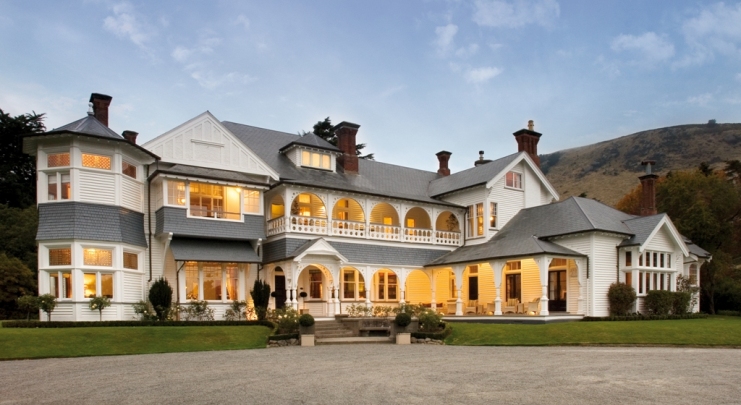
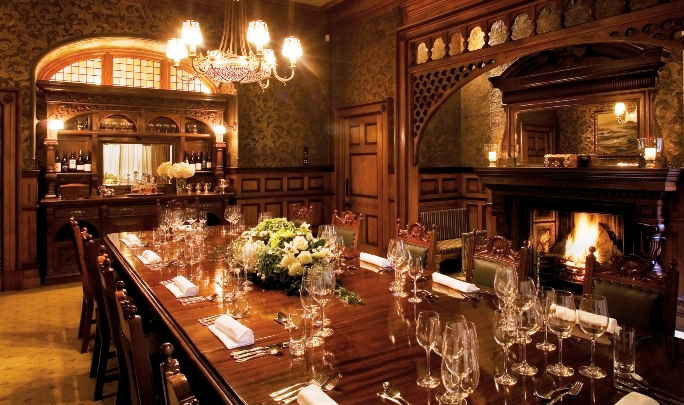
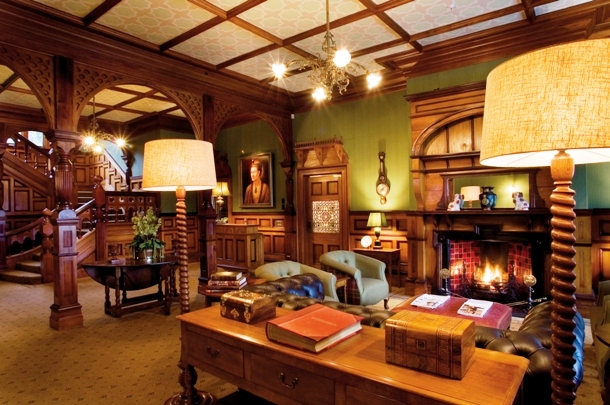
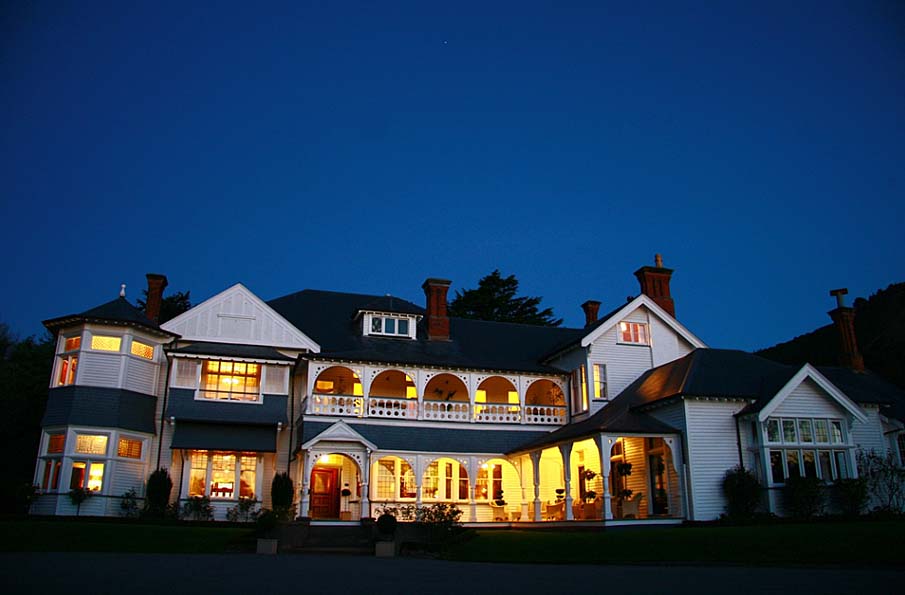
This historic place was registered under the Historic Places Act 1980. The following text is from the original Building Classification Committee report considered by the NZHPT Board at the time of registration. ARCHITECTURAL DESCRIPTION: Otahuna is a two-and-a half storey wooden residence designed in the Queen Anne style with shingle style overtones. Clad in lapped weatherboards and timber shingles, with a slate roof, the house has three principal elevations which feature an asymmetrical arrangement of different window types and gabled bays. Tall brick chimneys punctuate the picturesque roofline of the building and a special decorative feature of the north elevation is the external chimney breast, rising the full height of the wall, which bears a pedimented plaster panel inset with Rhodes' initials and another giving the year in which Otahuna was erected. Half-timbering and stucco provide further variations in surface texture. The house is approached from the east and the principal rooms on both the ground and first floors are arranged around a two-storey verandah. Between the family rooms in the northern part of the house and the service rooms in the south, the billiard room opens off a verandah which runs perpendicular to the main axis of the house (north-south). A single storey service wing containing the laundry, washhouse, woodshed, meat room, dairy and other ancillary rooms terminates the south end of the building. The most spectacular rooms inside Otahuna are the entrance hall, living room, dining room and billiard room which are in near original condition. Pressed zinc ceiling panels in the hall and dining room, leaded fanlights in geometric patterns, a blue and white silk carpet in the living room, the dining room's original elephant hide chairs and sofa, and the open timber ceiling of the billiard room, are just some of the most notable features of this grandiose building. From the entrance hall the main staircase rises in four flights to a large landing off which seven bedrooms, two bathrooms and a study open, before a change in floor level indicates the move into the servants' wing which contains three more bedrooms and various service rooms. By the back stairs on this floor is a toilet and chamber pot sluice which empties on the ground floor, and above this part of the house are a trunk store, another two bedrooms and the loft. MODIFICATIONS: c.1905 Addition to billiard room - raised section with fireplace at south end. c.1930 West wall, ground floor, living room: two sash windows replaced by a bay window. West wall, master bedroom: oriel window replaced by a balcony. c.1975-80 Kitchen modernisation. Two aluminium windows inserted, section of east wall moved. Original kitchen converted to a family dining room. New kitchen installed in former butler's pantry and servants dining room.
This historic place was registered under the Historic Places Act 1980. The following text is from the original Building Classification Committee report considered by the NZHPT Board at the time of registration. ARCHITECTURAL DESCRIPTION: Otahuna is a two-and-a half storey wooden residence designed in the Queen Anne style with shingle style overtones. Clad in lapped weatherboards and timber shingles, with a slate roof, the house has three principal elevations which feature an asymmetrical arrangement of different window types and gabled bays. Tall brick chimneys punctuate the picturesque roofline of the building and a special decorative feature of the north elevation is the external chimney breast, rising the full height of the wall, which bears a pedimented plaster panel inset with Rhodes' initials and another giving the year in which Otahuna was erected. Half-timbering and stucco provide further variations in surface texture. The house is approached from the east and the principal rooms on both the ground and first floors are arranged around a two-storey verandah. Between the family rooms in the northern part of the house and the service rooms in the south, the billiard room opens off a verandah which runs perpendicular to the main axis of the house (north-south). A single storey service wing containing the laundry, washhouse, woodshed, meat room, dairy and other ancillary rooms terminates the south end of the building. The most spectacular rooms inside Otahuna are the entrance hall, living room, dining room and billiard room which are in near original condition. Pressed zinc ceiling panels in the hall and dining room, leaded fanlights in geometric patterns, a blue and white silk carpet in the living room, the dining room's original elephant hide chairs and sofa, and the open timber ceiling of the billiard room, are just some of the most notable features of this grandiose building. From the entrance hall the main staircase rises in four flights to a large landing off which seven bedrooms, two bathrooms and a study open, before a change in floor level indicates the move into the servants' wing which contains three more bedrooms and various service rooms. By the back stairs on this floor is a toilet and chamber pot sluice which empties on the ground floor, and above this part of the house are a trunk store, another two bedrooms and the loft. MODIFICATIONS: c.1905 Addition to billiard room - raised section with fireplace at south end. c.1930 West wall, ground floor, living room: two sash windows replaced by a bay window. West wall, master bedroom: oriel window replaced by a balcony. c.1975-80 Kitchen modernisation. Two aluminium windows inserted, section of east wall moved. Original kitchen converted to a family dining room. New kitchen installed in former butler's pantry and servants dining room.
Historical and Associated Iwi / Hapū / Whānau
Completion Date
30th May 2002
Report Written By
Melanie Lovell-Smith
Information Sources
Apperley, 1989
Richard Apperley, Robert Irving and Peter Reynolds, A Pictorial Guide to Identifying Australian Architecture: Styles and Terms from 1788 to the Present, Sydney, 1989
Dictionary of New Zealand Biography
Dictionary of New Zealand Biography
Rice, 2001
Geoffrey Rice, Heaton Rhodes of Otahuna: the Illustrated Biography, Christchurch, 2001
Strongman, 1984
Thelma Strongman, The Gardens of Canterbury: A History, Wellington, 1984
Historic Places in New Zealand
Historic Places in New Zealand
Other Information
This historic place was registered under the Historic Places Act 1980. This report includes the text from the original Building Classification Committee report considered by the NZHPT Board at the time of registration. Please note that entry on the New Zealand Heritage List/Rarangi Korero identifies only the heritage values of the property concerned, and should not be construed as advice on the state of the property, or as a comment of its soundness or safety, including in regard to earthquake risk, safety in the event of fire, or insanitary conditions.
Historical and Associated Iwi / Hapū / Whānau
Completion Date
30th May 2002
Report Written By
Melanie Lovell-Smith
Information Sources
Apperley, 1989
Richard Apperley, Robert Irving and Peter Reynolds, A Pictorial Guide to Identifying Australian Architecture: Styles and Terms from 1788 to the Present, Sydney, 1989
Dictionary of New Zealand Biography
Dictionary of New Zealand Biography
Rice, 2001
Geoffrey Rice, Heaton Rhodes of Otahuna: the Illustrated Biography, Christchurch, 2001
Strongman, 1984
Thelma Strongman, The Gardens of Canterbury: A History, Wellington, 1984
Historic Places in New Zealand
Historic Places in New Zealand
Other Information
This historic place was registered under the Historic Places Act 1980. This report includes the text from the original Building Classification Committee report considered by the NZHPT Board at the time of registration. Please note that entry on the New Zealand Heritage List/Rarangi Korero identifies only the heritage values of the property concerned, and should not be construed as advice on the state of the property, or as a comment of its soundness or safety, including in regard to earthquake risk, safety in the event of fire, or insanitary conditions.
Current Usages
Uses: Accommodation
Specific Usage: House
Former Usages
General Usage: Accommodation
Specific Usage: House
Web Links
description:
Current Usages
Uses: Accommodation
Specific Usage: House
Former Usages
General Usage: Accommodation
Specific Usage: House
Web Links
description:
Location
Get the latest heritage news, features and events delivered
straight to your inbox.
