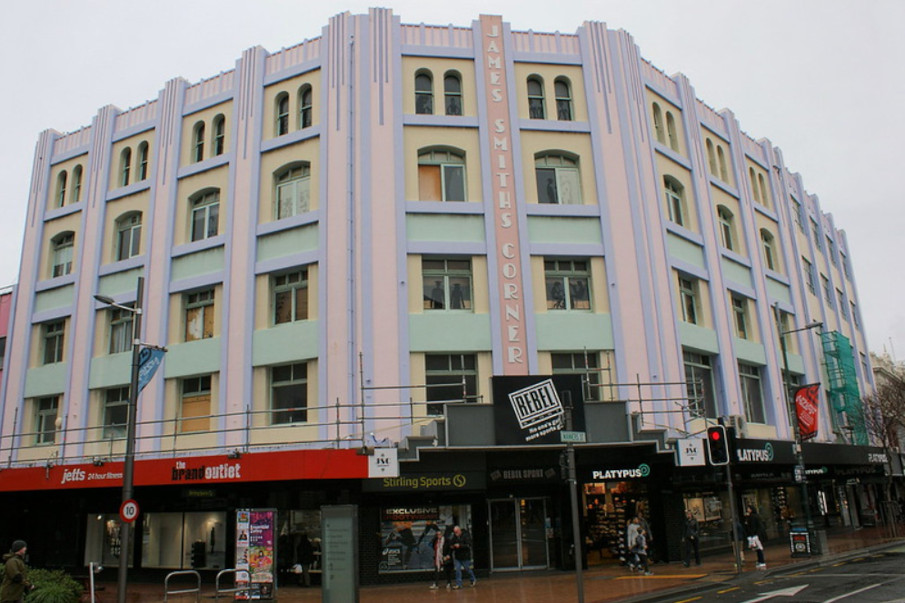
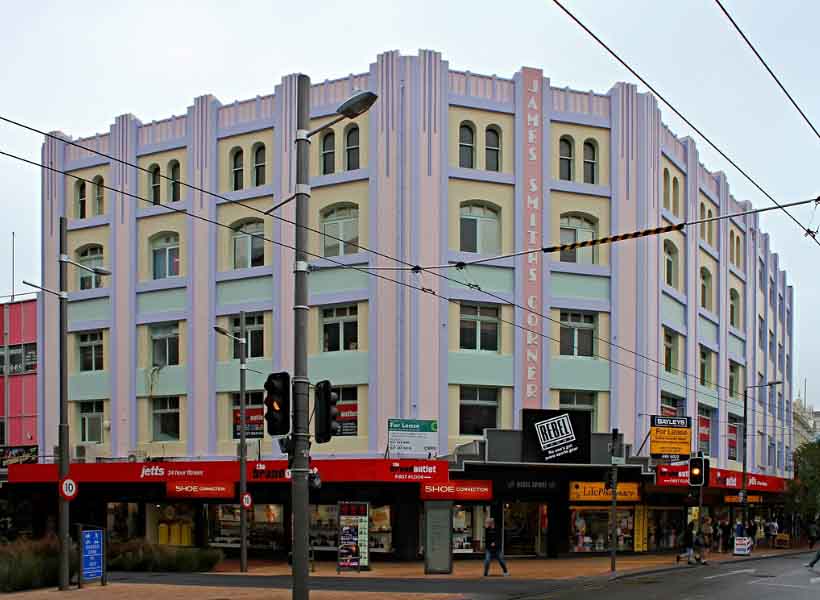
The former James Smith Ltd Department Store building, located on a prominent corner of Cuba Street and Manners Street, represents five stages of alteration and additions from its initial construction in 1907. The corner section, with its façade remodelled in 1932, has particular architectural and aesthetic value as a striking Art Deco commercial building in the Wellington CBD. The complex also contributes to the social and historical heritage values of the Cuba Street Historic Area (List No. 7209), as the premises of a longstanding, popular department store in a notable commercial precinct.
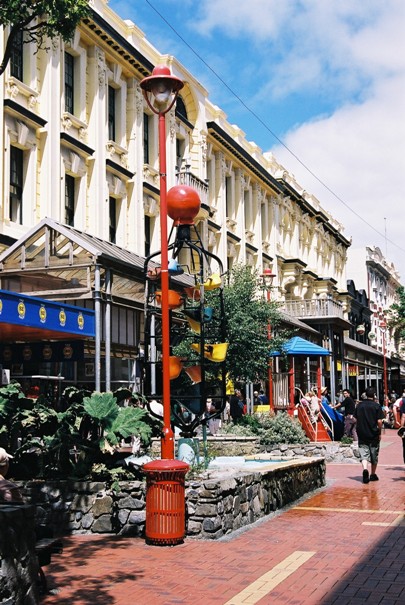
Early inhabitants of Te Whanganui-ā-Tara were primarily iwi of Kurahaupō waka descent. By the late eighteenth century, Ngāti Ira of Hawke’s Bay had migrated south and intermarried with Ngāi Tara. Upheaval in the 1820s and 1830s prompted taua (war parties) and heke (migration) south into Wellington. Iwi associated with these heke include Te Ātiawa, Ngāti Toa, and Ngāti Tama. In 1824, Te Aro Pā (List No. 7771) was built on the foreshore by Ngāti Mutunga, with Taranaki iwi and Ngāti Ruanui subsequently occupying it. In 1844, a deed was signed which effectively brought Te Aro Pā into the New Zealand Company’s purchase. In 1840, William Mein Smith, company surveyor, laid out the town plan. Cuba Street itself is located on what would have been cultivation land for Te Aro Kāinga. The street, named for the New Zealand Company Ship which arrived in Te Whanganui-a-Tara in January 1840, began to be developed in the 1840s.
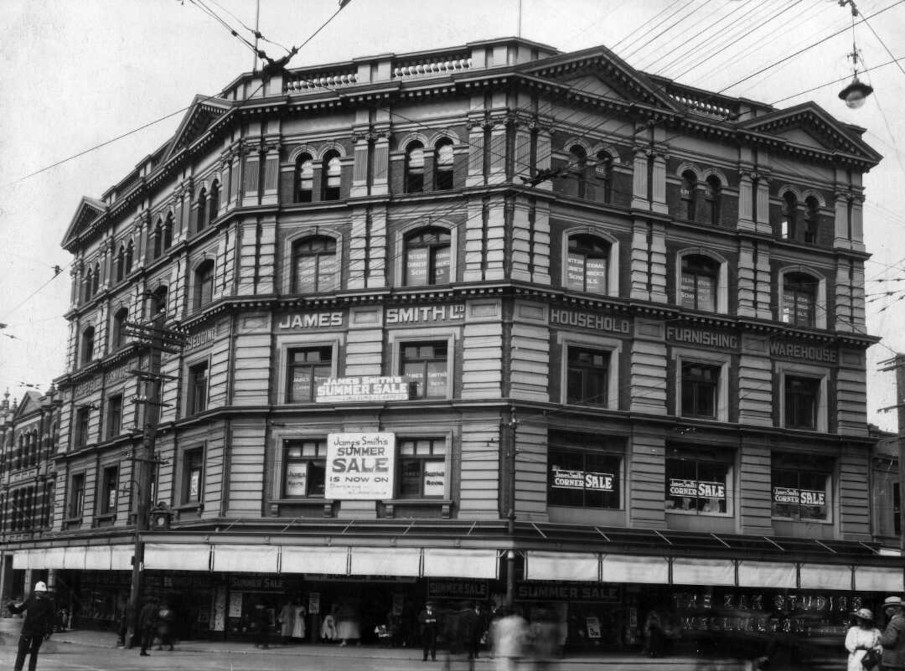
The James Smith Ltd corner building was originally built for George Winder, an importer of Ironmongery who had traded from the site since 1897. Its solid masonry construction, steel beams, and cast-iron columns were designed to accommodate weighty merchandise. The original 1907 façade was Edwardian in style, designed by architects Penty & Blake and built by Martin, Hurrell & Snaddon. In 1920, James Smith Ltd, a prosperous drapery business who had since 1866 occupied various premises on Cuba Street, purchased Winder’s building and in 1927 expanded into a new addition to the rear. The current Art Deco corner facade is the result of remodelling in 1932. Designed by J.M. Dawson & King architects, its geometric elements, including the stepped parapet, vertical pilasters, and fluted frieze strongly contribute to the building’s streetscape value. Other details include recessed windows, of which there are three distinct arches - round, segmental, and flat - as well as the prominent inscription ‘James Smiths Corner’ which runs down the centre of the middle pilaster.
Another extension to the corner building was added on Manners Street in 1934, designed by Joseph Dawson. Though simpler than the corner building, it has similar Art Deco features. The eastern wall of the original corner building was demolished to accommodate this addition. Two adjacent three-storey buildings at 49-61 Cuba Street were built in 1964 and 1965; Mitchell & Mitchell’s original mosaic tile façades have since been changed to a colourful modern cladding.
James Smith Ltd operated as a department store at this location until 1993. During its operation, it was a well-regarded establishment by Wellingtonians, with many people forming sentimental connections with the store - notably, the annual Christmas parades it sponsored. A stint as a market in the 1990s resolved into the establishment of permanent retail spaces for various tenants. As of 2022, the buildings continue to house retail and a gym on the lower levels, and accommodation and office spaces on the upper floors, along with hospitality venues occupying the basement level.