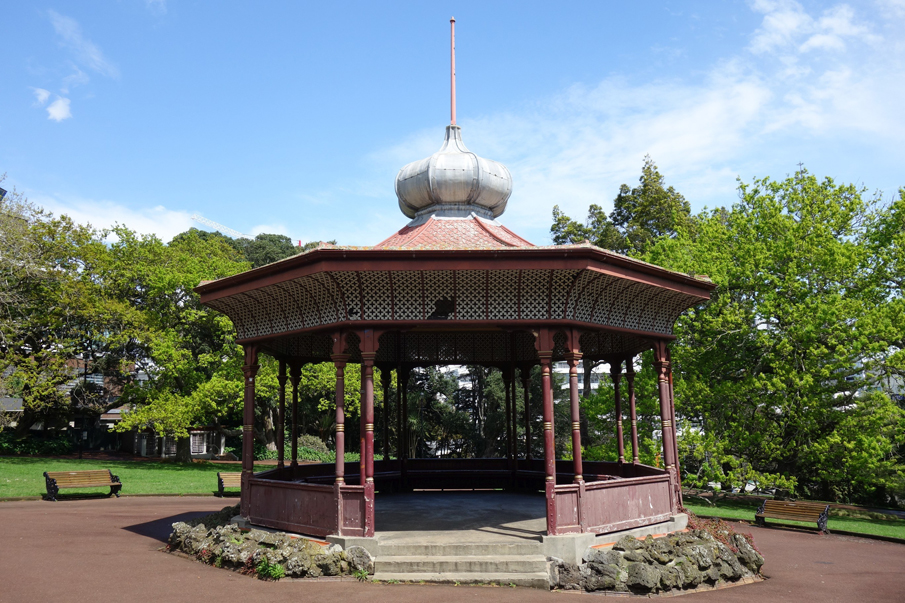
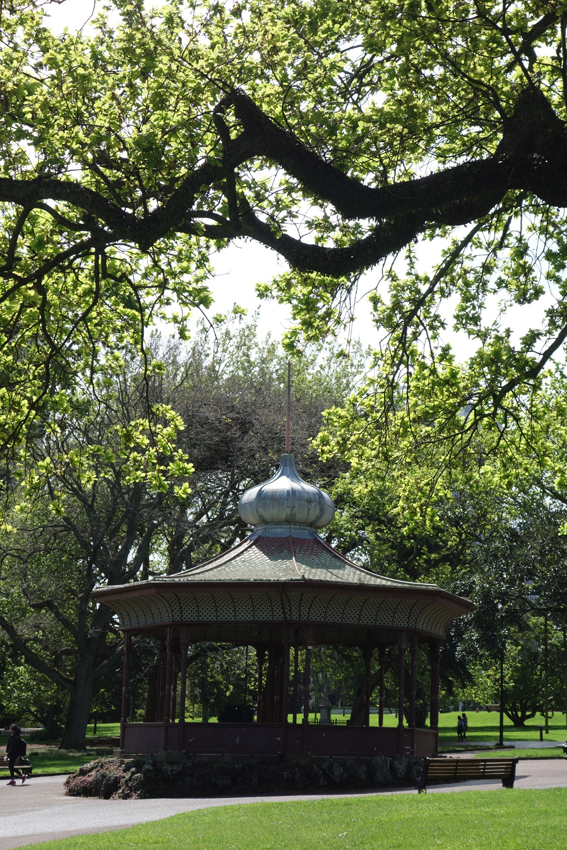
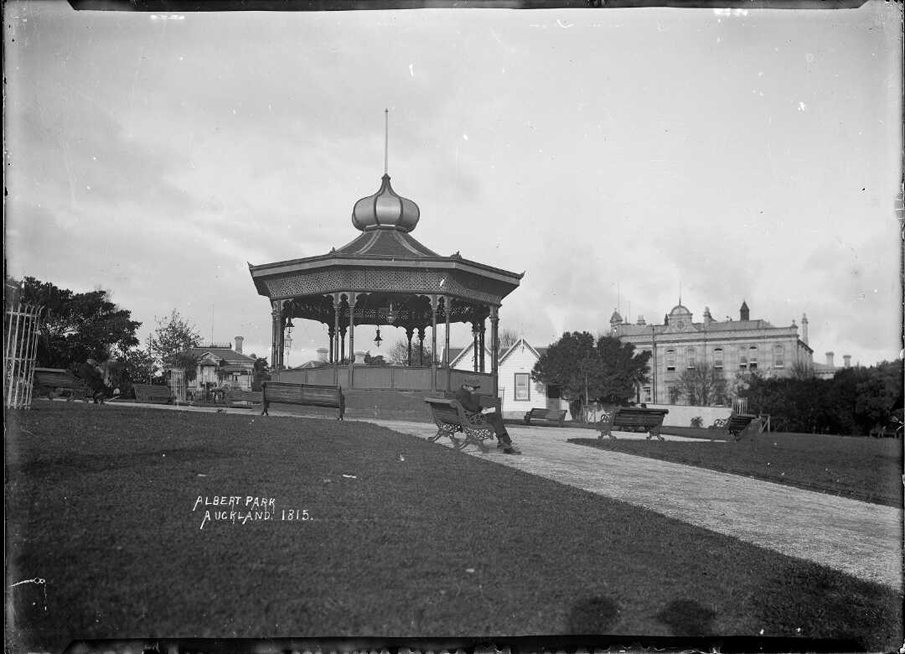
Completed in early 1901, the Albert Park Bandstand is believed to be the oldest surviving band rotunda in the Auckland region. Located in Albert Park - central Auckland’s premier venue for promenades and other genteel recreation in the late nineteenth and early twentieth centuries - the ornate, timber structure directly reflects New Zealand’s ties with the British Empire, as well as the popularity of brass band entertainment in the early 1900s. In addition to being employed for open-air concerts, it formed a centrepiece for notable public gatherings such as those associated with the coronation and death of British monarchs, prime ministerial visits and other major civic events. In the late 1960s and 1970s, it became a focus for counter-cultural activity including as a venue for contemporary bands and protest action. Still used for public recreation and musical events, it remains an integral part of a landscape of high historical and cultural importance in Albert Park and the broader Symonds Street ridge.
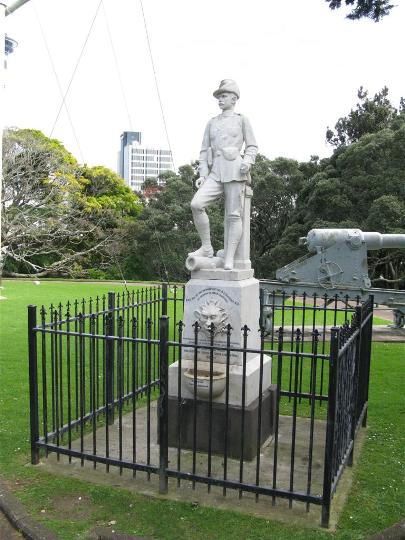
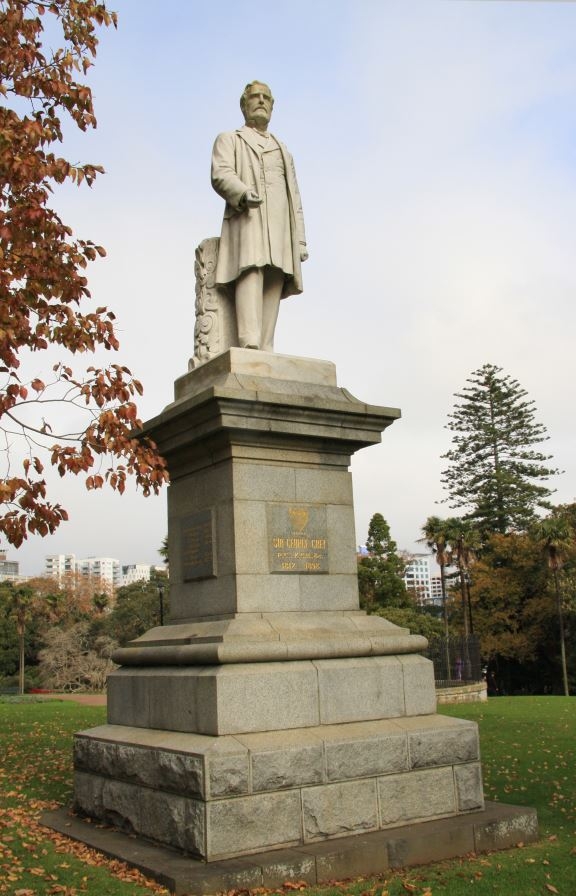
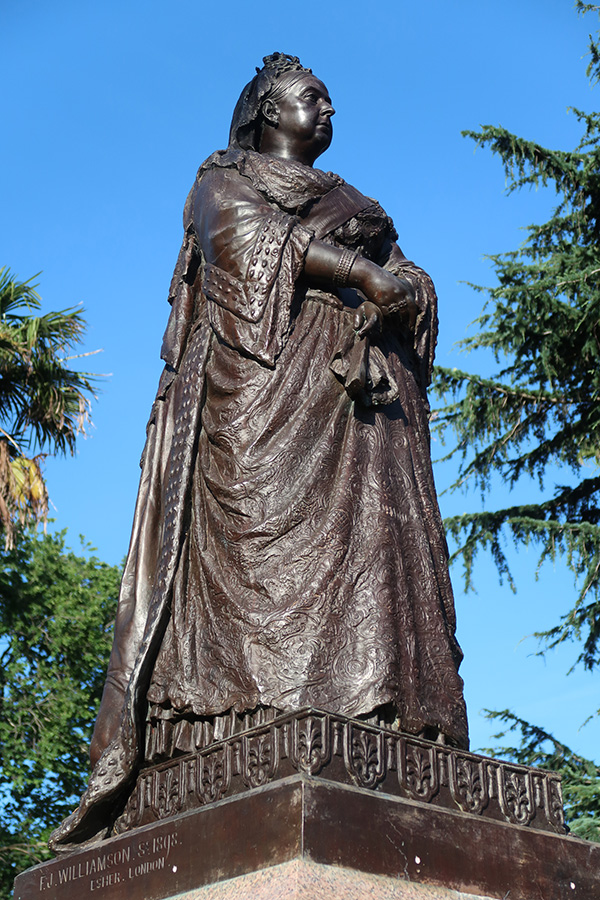
Successive iwi groups, including Te Waiōhua and Ngāti Whātua, occupied the Waihorotiu area prior to European arrival. After Auckland was established as New Zealand’s capital in the 1840s, land on the Symonds Street ridge became the centre of New Zealand’s colonial administration, with much of the site of the current Albert Park lying within the country’s largest British military installation - the Albert Barracks. Following transfer of the capital to Wellington (1865) and removal of the fortification (early 1870s), the barracks site was repurposed as an élite residential area with Albert Park laid out over its western part (1881-2). The park grounds were beautified with trees and monuments that, among other functions, emphasised the colony’s connections with other parts of the British Empire. Early structures included a small bandstand, an architectural form popular in Britain for the performance of brass bands that contributed to the ‘reforming potential of parks’ by playing concerts of a culturally uplifting or wholesome nature. In 1899, this bandstand was replaced by a statue of Queen Victoria (List No. 633, Category 1 historic place), prompting moves to create a much grander, covered rotunda nearby.
The new bandstand was built in 1900-01. Consciously positioned with a direct sightline to Victoria’s statue and the park fountain, it appears to have been designed by - or under the supervision of - A.A. Wrigg, who oversaw several important projects as City Engineer. The ornate, octagonal structure incorporated a distinctive oriental-influenced roof with onion cupola and flagpole; cove-moulding of perforated zinc; and a gas chandelier enabling concerts to be held at night. It was surrounded by a flower bed and two concentric paths containing garden seats donated by prominent citizens and organisations. Erected in part of the park designated for public address, the structure was envisaged to be employed for gatherings ‘under suitable regulations’ at a time when street meetings were prohibited.
The rotunda’s first recorded use, in February 1901, was for a memorial service mourning the death of Queen Victoria, led by the city’s religious leaders and attended by thousands of citizens. Other gatherings included a service at the coronation of King Edward VII (1902); meetings linked with the temperance movement; and a large civic farewell to Mayor Arthur Myers in 1909. The bandstand also formed the centrepiece of a reception for Prime Minister Joseph Ward on his return from the First Imperial Conference in London (1909). In 1910, up to 8,000 people gathered to hear the Mayor L. J. Bagnall read the proclamation of George V as King from the rotunda.
The structure was regularly used by brass bands, early concerts attracting crowds of 3,000-6,000. In 1914, electric ceiling lights replaced the gas chandelier, improving visibility for musicians. Concerts were evidently suspended during fears of invasion in the Second World War (1939-45), when slit trenches for civilian shelter were dug around the bandstand in 1941-3. From the late 1960s, the rotunda became a focus for counter-cultural activities, including during the Liberation of Albert Park (1969), subsequent ‘Jumping Sundays’ and events featuring notable contemporary New Zealand bands such as Hello Sailor and Dragon in 1975. Major conservation of the bandstand was undertaken in 2003, facilitating its ongoing use for public recreation and special events in the park.
Successive iwi groups, including Te Waiōhua and Ngāti Whātua, occupied the Waihorotiu area prior to European arrival. After Auckland was established as New Zealand’s capital in the 1840s, land on the Symonds Street ridge became the centre of New Zealand’s colonial administration, with much of the site of the current Albert Park lying within the country’s largest British military installation - the Albert Barracks. Following transfer of the capital to Wellington (1865) and removal of the fortification (early 1870s), the barracks site was repurposed as an élite residential area with Albert Park laid out over its western part (1881-2). The park grounds were beautified with trees and monuments that, among other functions, emphasised the colony’s connections with other parts of the British Empire. Early structures included a small bandstand, an architectural form popular in Britain for the performance of brass bands that contributed to the ‘reforming potential of parks’ by playing concerts of a culturally uplifting or wholesome nature. In 1899, this bandstand was replaced by a statue of Queen Victoria (List No. 633, Category 1 historic place), prompting moves to create a much grander, covered rotunda nearby.
The new bandstand was built in 1900-01. Consciously positioned with a direct sightline to Victoria’s statue and the park fountain, it appears to have been designed by - or under the supervision of - A.A. Wrigg, who oversaw several important projects as City Engineer. The ornate, octagonal structure incorporated a distinctive oriental-influenced roof with onion cupola and flagpole; cove-moulding of perforated zinc; and a gas chandelier enabling concerts to be held at night. It was surrounded by a flower bed and two concentric paths containing garden seats donated by prominent citizens and organisations. Erected in part of the park designated for public address, the structure was envisaged to be employed for gatherings ‘under suitable regulations’ at a time when street meetings were prohibited.
The rotunda’s first recorded use, in February 1901, was for a memorial service mourning the death of Queen Victoria, led by the city’s religious leaders and attended by thousands of citizens. Other gatherings included a service at the coronation of King Edward VII (1902); meetings linked with the temperance movement; and a large civic farewell to Mayor Arthur Myers in 1909. The bandstand also formed the centrepiece of a reception for Prime Minister Joseph Ward on his return from the First Imperial Conference in London (1909). In 1910, up to 8,000 people gathered to hear the Mayor L. J. Bagnall read the proclamation of George V as King from the rotunda.
The structure was regularly used by brass bands, early concerts attracting crowds of 3,000-6,000. In 1914, electric ceiling lights replaced the gas chandelier, improving visibility for musicians. Concerts were evidently suspended during fears of invasion in the Second World War (1939-45), when slit trenches for civilian shelter were dug around the bandstand in 1941-3. From the late 1960s, the rotunda became a focus for counter-cultural activities, including during the Liberation of Albert Park (1969), subsequent ‘Jumping Sundays’ and events featuring notable contemporary New Zealand bands such as Hello Sailor and Dragon in 1975. Major conservation of the bandstand was undertaken in 2003, facilitating its ongoing use for public recreation and special events in the park.