DonateMembershipVisit Heritage
  • Tūrangawaewae
    Places
  • Tira Māori
    Māori Heritage
  • Poutairangahia
    Archaeology
  • Rauemi
    Resources
  • Mō Tātou
    About Us
  • New Zealand Heritage List
  • Nominate and submit
  • Explore the List
  • National Historic Landmarks
  • Plaques
  • Rainbow List Project
  • Lost heritage
  • Visit Heritage
  • Our properties
  • Turnbull House Project
  • Collections
  • Shop
  • Tohu Whenua
  • Tira Māori
  • Conserving Māori heritage
  • Marae built heritage
  • Māori heritage on the List
  • Hinemihi—Te Hokinga Mai
  • What is archaeology?
  • Is there a site on my property?
  • What are my legal requirements?
  • Affecting an archaeological site
  • Declaring an archaeological site
  • Archaeology FAQs
  • Archaeology Digital Library
  • Archaeology guidelines and templates
  • Resources
  • Funding
  • Publications
  • Sustainable management guides
  • Disaster recovery
  • Podcasts & digital resources
  • Education Hub
  • Conservation plans
  • About
  • Board
  • Māori Heritage Council
  • Senior Staff
  • Offices
  • Contact us
  • Careers
  • Covenants
  • Fast-track
  • Corporate documents
  • Currently consulting on
  • Our submissions
  • News
  • Covid-19 response
Quick links
Rārangi Kōrero | The List
Explore the List
National Historic Landmarks
Ngā Manawhenua o Aotearoa me ōna Kōrero Tūturu
Quick links
Tapuwae
A Vision for Places of Māori Heritage
Funding for Māori Heritage
Resources
Quick links
Archaeological Authority Portal
Applying for an archaeological authority
Archaeology FAQs
Browse the most frequently asked questions about archaeological authorities and the archaeological process.
Quick links
Quick links
News
News Keep up to date with Heritage New Zealand Pouhere Taonga
Membership
Membership Find out more and sign up today
DonateMembershipVisit Heritage
  • Tūrangawaewae
    Places
  • Tira Māori
    Māori Heritage
  • Poutairangahia
    Archaeology
  • Rauemi
    Resources
  • Mō Tātou
    About Us
  • New Zealand Heritage List
  • Nominate and submit
  • Explore the List
  • National Historic Landmarks
  • Plaques
  • Rainbow List Project
  • Lost heritage
  • Visit Heritage
  • Our properties
  • Turnbull House Project
  • Collections
  • Shop
  • Tohu Whenua
  • Tira Māori
  • Conserving Māori heritage
  • Marae built heritage
  • Māori heritage on the List
  • Hinemihi—Te Hokinga Mai
  • What is archaeology?
  • Is there a site on my property?
  • What are my legal requirements?
  • Affecting an archaeological site
  • Declaring an archaeological site
  • Archaeology FAQs
  • Archaeology Digital Library
  • Archaeology guidelines and templates
  • Resources
  • Funding
  • Publications
  • Sustainable management guides
  • Disaster recovery
  • Podcasts & digital resources
  • Education Hub
  • Conservation plans
  • About
  • Board
  • Māori Heritage Council
  • Senior Staff
  • Offices
  • Contact us
  • Careers
  • Covenants
  • Fast-track
  • Corporate documents
  • Currently consulting on
  • Our submissions
  • News
  • Covid-19 response
Quick links
Rārangi Kōrero | The List
Explore the List
National Historic Landmarks
Ngā Manawhenua o Aotearoa me ōna Kōrero Tūturu
Quick links
Tapuwae
A Vision for Places of Māori Heritage
Funding for Māori Heritage
Resources
Quick links
Archaeological Authority Portal
Applying for an archaeological authority
Archaeology FAQs
Browse the most frequently asked questions about archaeological authorities and the archaeological process.
Quick links
Quick links
News
News Keep up to date with Heritage New Zealand Pouhere Taonga
Membership
Membership Find out more and sign up today
  • Places
  • Nominate and submit
  • National Historic Landmarks
  • Places
  • Nominate and submit
  • National Historic Landmarks
  • Tira Māori
  • Conserving Māori heritage
  • Marae built heritage
  • Tira Māori
  • Conserving Māori heritage
  • Marae built heritage
  • Archaeological authorities
  • Archaeology Digital Library
  • Archaeological authorities
  • Archaeology Digital Library
  • All resources
  • Publications
  • Funding
  • All resources
  • Publications
  • Funding
  • FAQs
  • FAQs
Follow us on:
Places
  • Places
  • Nominate and submit
  • National Historic Landmarks
Tira Māori
  • Tira Māori
  • Conserving Māori heritage
  • Marae built heritage
Archaeology
  • Archaeological authorities
  • Archaeology Digital Library
Resources
  • All resources
  • Publications
  • Funding
FAQs
  • FAQs
Follow us on
HomePrivacyTerms and conditionsAbout this site
© Heritage New Zealand Pouhere Taonga 2026.
 
Swan's Arch

Central Park Drive, Henderson, AUCKLAND

Public

Historic Place Category 2

List No. 5429

Quick links:
List GalleryLocationDetails
DESCRIPTION:
Swan's Arch and its builder remain an enigma despite having been the subject of several articles on local history.

Henry Charles Swan was born at Gateshead, near Newcastle, England about 1856. Swan's father's profession is not known although it is suggested that he was a major shareholder in the London and Great Eastern Railway Company. Swan, a solicitor by profession, joined the Newcastle law firm of Arnott and Swan as a partner in 1880, where he remained in practice at least until 1891 and probably until 1895.

The exact year of Swan and wife Edith's arrival in New Zealand is not known. In November 1989 [1898] Swan purchased sixty-nine acres bordering the Henderson Creek. In 1915 he subdivided his land, keeping just thirteen acres for his own use.

In 1901 he left Devonport where he and his wife had settled, and went to live permanently at Henderson Creek on his yacht Awatea. The yacht was purchased by Swan in 1900 with the intention, it is believed, of making a solo voyage around the world. After preparation and provisioning in February 1901 Swan was farewelled by his wife and friends, but sailed to Henderson Creed instead. Mrs Swan continued to live at Devonport until her death in 1940.

Once settled in Henderson, Swan resumed an interest in botany and fruit growing. His efforts were mainly directed to experimentation on combating fruit pests and propagating new species but he did not regard the orchard as a commercial proposition. Swan dug caves and tunnels into the banks of the creek where apples were stored. The orchard and caves system is believed to have been destroyed by floods during the spring of 1929. A brick cellar built by Swan between 1921 and 1927 (which survives a few metres away from the arch) is believed to have been Swan's fireproof library. Swan's hut had previously been destroyed by a bush fire in about 1921.

An obituary for Swan refers to the brick arch only as "a remarkable arch of masonry" fashioned with bricks and mortar. It reported that Swan was also building a special pond for teaching children to swim although this was never completed. The son of an adjoining land owner recalls that the arch was the head of what was planned to be a swimming pool and that bricks lined the bottom to the mid-point where Swan intended building a fountain, although the work was never completed.

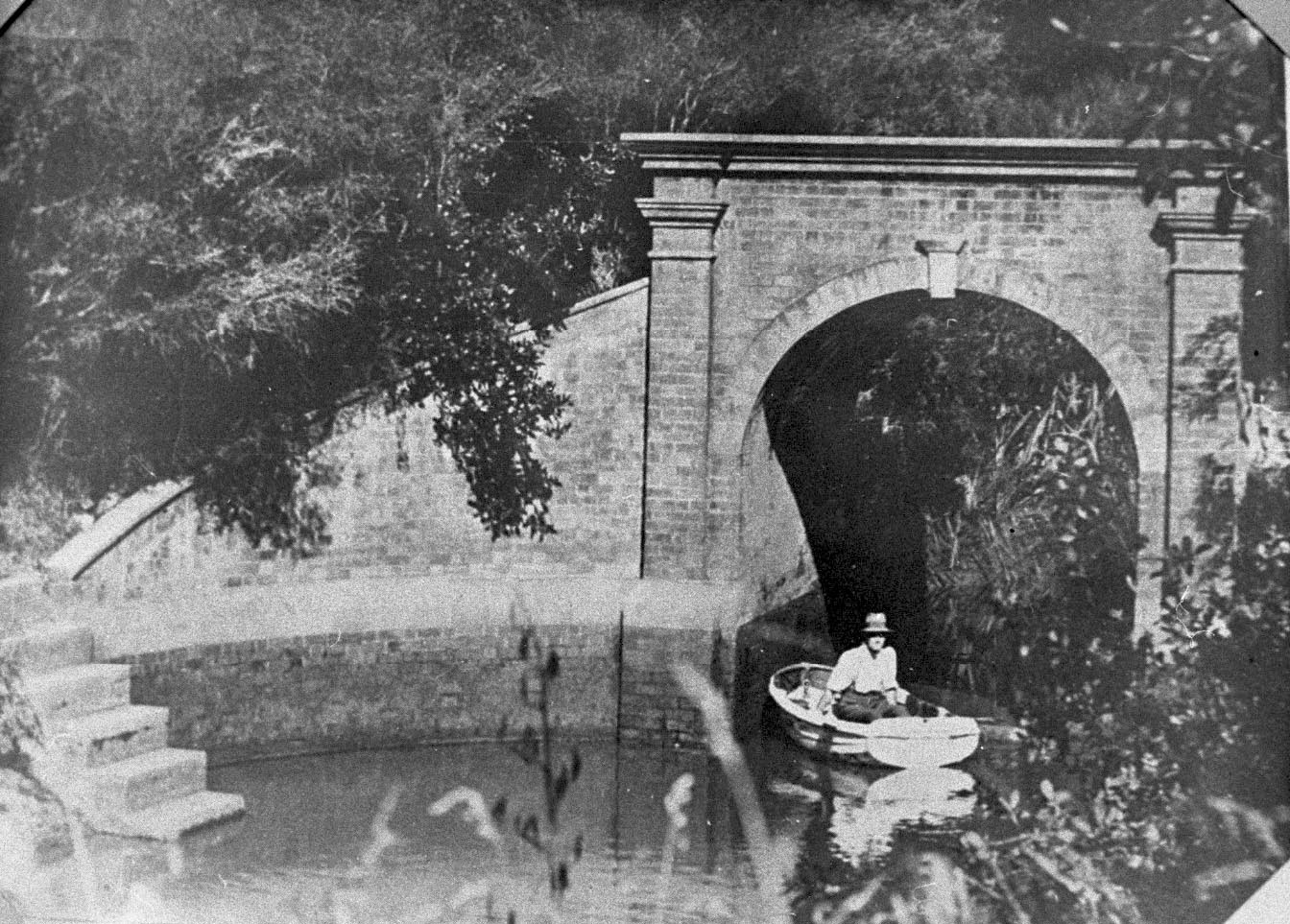
Likely to have been built progressively during the first thirty years of this century, the exact date of the arch's construction is not known. It was already in existence prior to 1923 according to the date of a photograph, the accuracy of which cannot be verified.

Swan is remembered as a learned but retiring person interested in theology and astronomy, a recluse. He was Chairman of the Plumer Domain Board, however, from its inception in 1907 until 1923 when the Henderson Town Board assumed administrative responsibility for the Domain. The exact extent of Swan's involvement as Domain Board Chairman is not known. A man of education and a former law practitioner, but by nature extremely retiring, Swan may have been but titular head.
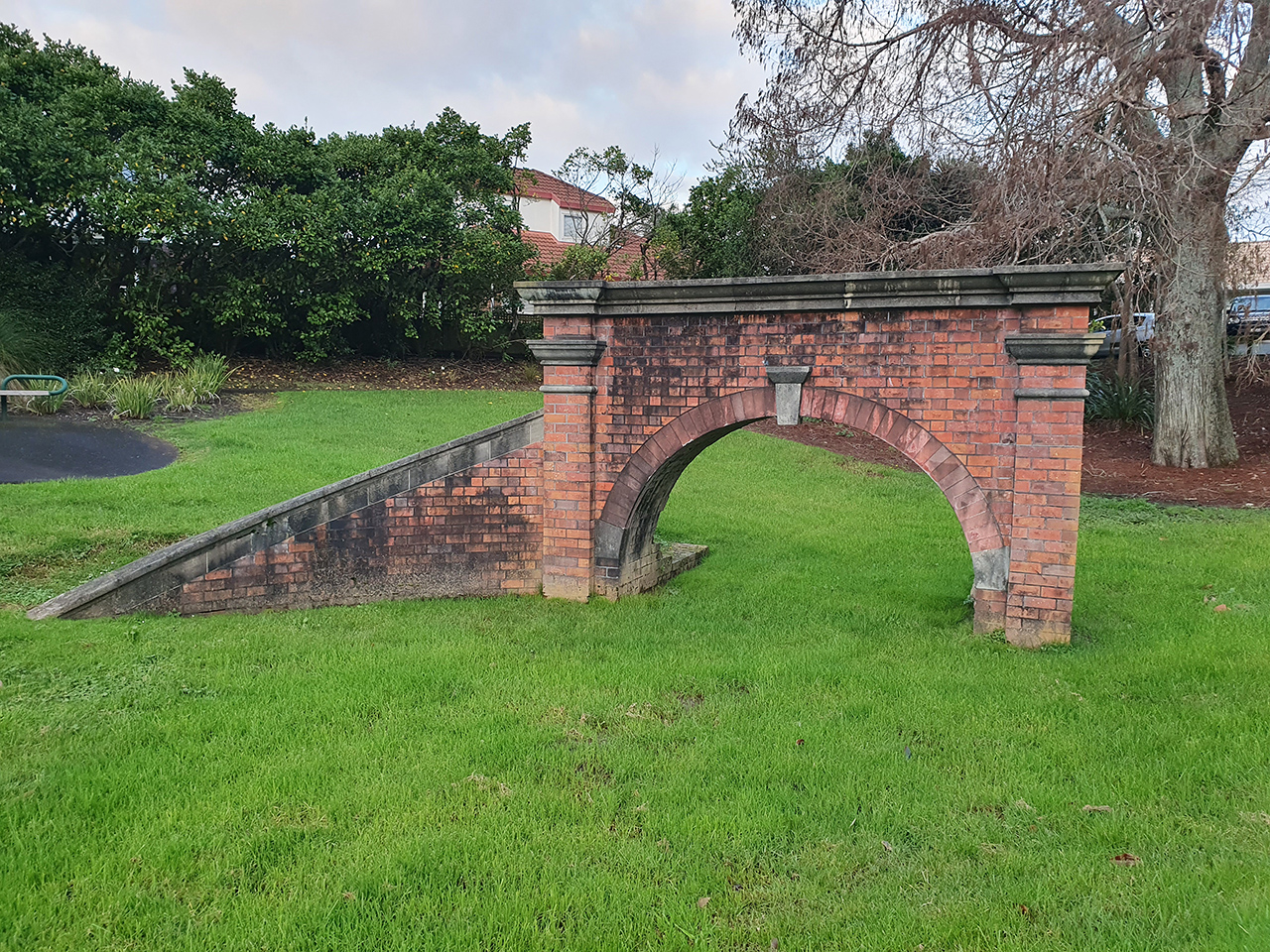
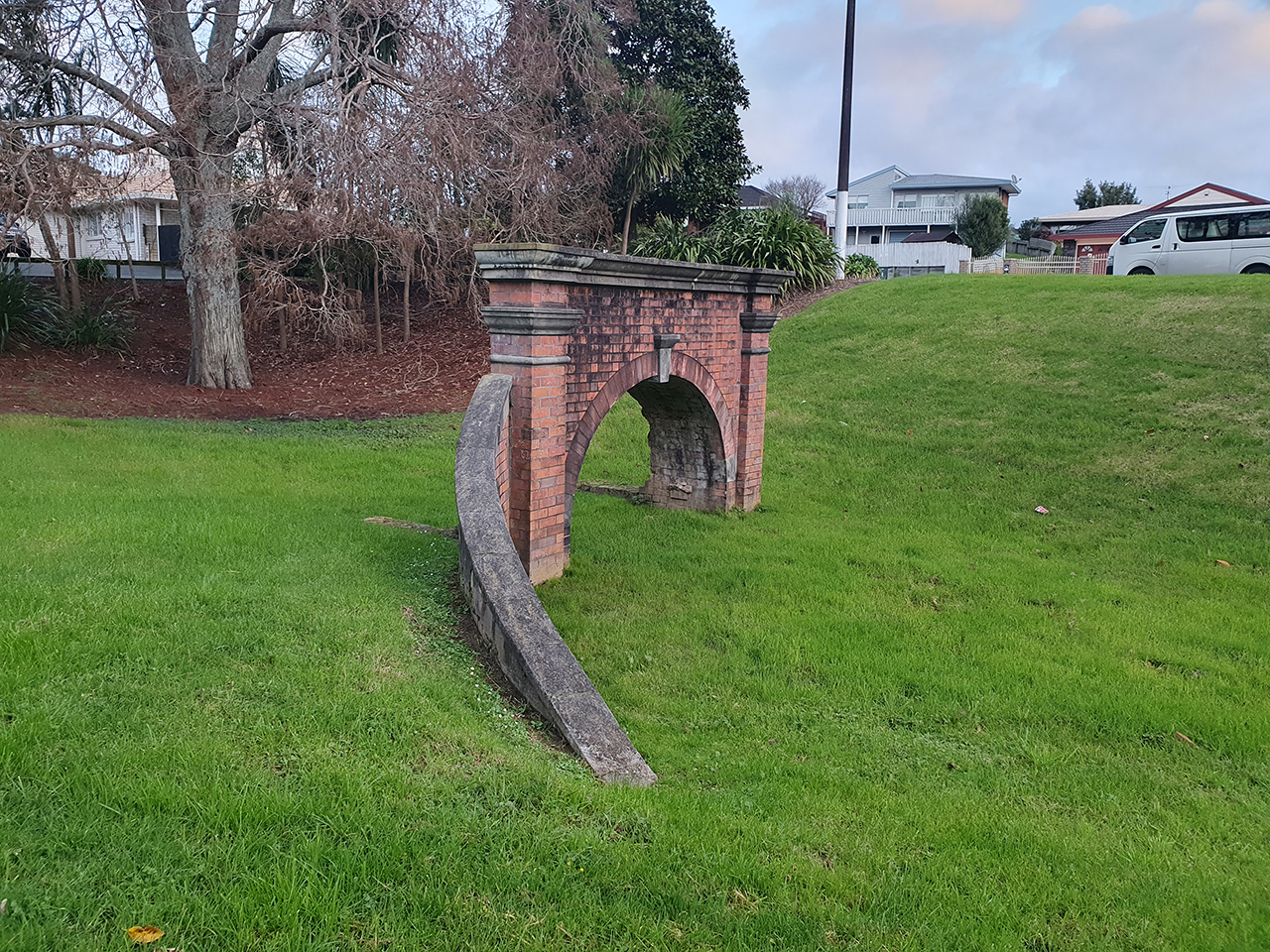
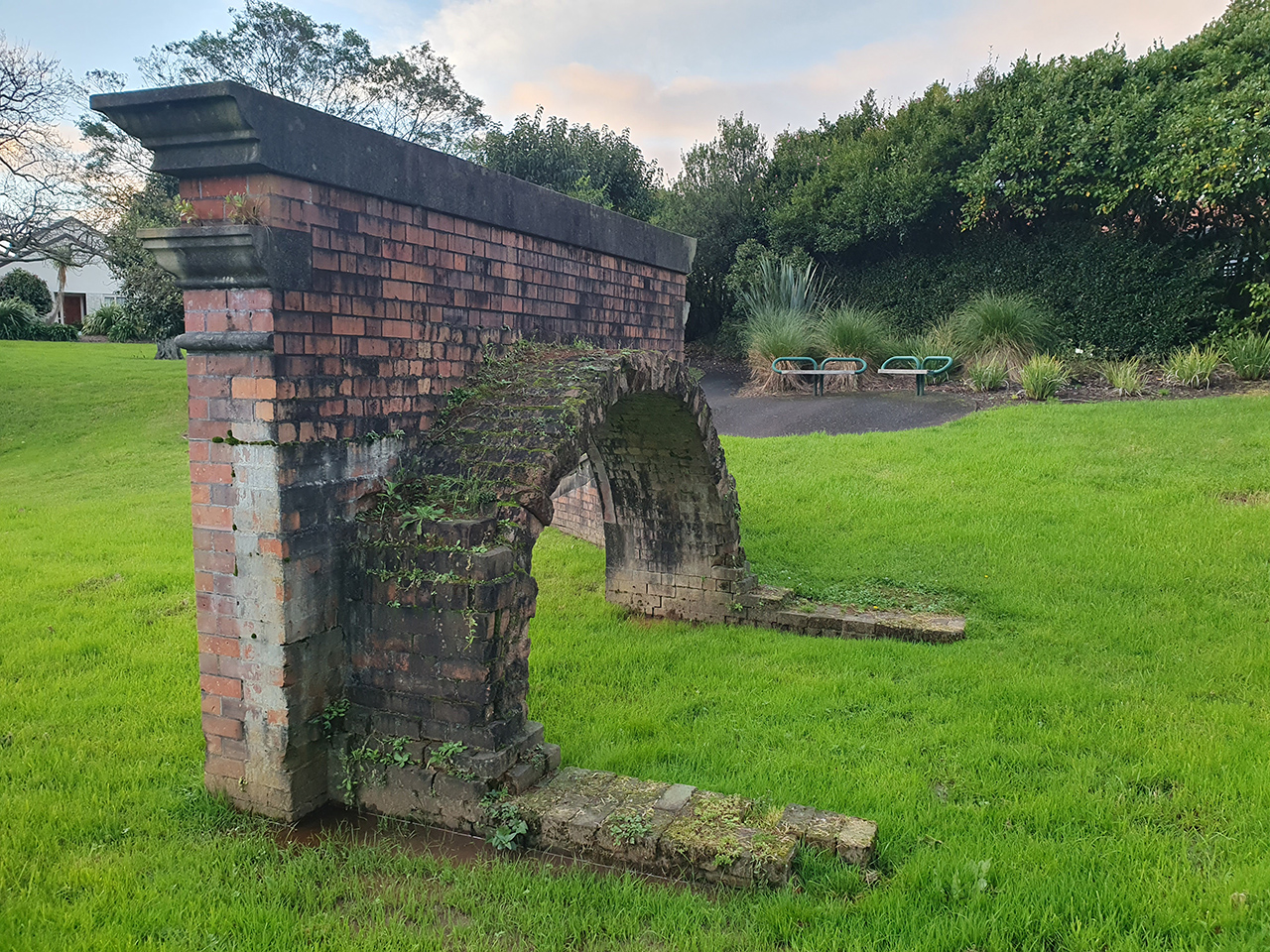
Swan's Arch, Henderson, Auckland. CC BY 4.0 Image courtesy of commons.wikimedia.org | Prosperosity | 25/07/2023 | Prosperosity - Wikimedia Commons
Swan's Arch, Henderson, Auckland. c.1920 A man is in a rowing boat alongside a brick arch structure on a tributary of the Henderson Creek near Henderson. Auckland Libraries Heritage Collections JTD-14J-05444-1 | Jack Diamond | No Known Copyright Restrictions
Swan's Arch, Henderson, Auckland. CC BY 4.0 Image courtesy of commons.wikimedia.org | Prosperosity | 25/07/2023 | Prosperosity - Wikimedia Commons
Swan's Arch, Henderson, Auckland. c.1920 A man is in a rowing boat alongside a brick arch structure on a tributary of the Henderson Creek near Henderson. Auckland Libraries Heritage Collections JTD-14J-05444-1 | Jack Diamond | No Known Copyright Restrictions

List Entry Information

Overview

Status
Listed

List Entry Status
Historic Place Category 2

Access
Able to Visit

List Number
5429

Date Entered
12th December 1991

Date of Effect
12th December 1991

City/District Council
Auckland Council

Region
Auckland Council

Legal description

Lot 39 DP 134558 (RT NA82C/63), North Auckland Land District

Detailed List Entry
Significance

Historic Significance

Historical Significance or Value Swan's arch is a structure of considerable interest in West Auckland. Its historical significance is to be found in its association with West Auckland recluse Henry Charles Swan who was, in earlier times, associated with the former Plumer Domain. Swan's chosen way of life, the aura of mystery surrounding him, and speculation as to the purpose of his arch adds a certain richness to local history.

Physical Significance

ARCHITECTURAL QUALITY: The structure does not appear to have been put to any use by subsequent land owners, ensuring that it has not been modified. The arch evidences skilled craftsmanship although the purpose for which it was built has been a matter of speculation. It is possible that the arch was built as a folly. If so, then it is a rare landscape feature in the New Zealand context, all the more so for its lack of association with other domestic buildings and a formally planned and ordered landscape. In many ways the structure typifies the individualism of many of the early settlers of the west. TOWNSCAPE/LANDMARK VALUE: Swan's arch now has a somewhat diminished landmark value as a feature of interest on Central Park Drive as it cannot now be seen from the water. Deprived of its original, water setting the arch now stands on a grassed reserve substantially below the level of the road, nevertheless it is an extraordinary landscape feature in a suburban environment.

Construction Details

Start Year

1901

Finish Year

1931

Type

Original Construction

Description

Precise date not known

Construction Materials

The arch and wing walls are of brick, laid in Flemish bond. The arch soffit is of header bond, and is currently braced by a timber framework.

Physical Description

ARCHITECT/ENGINEER/DESIGNER: Henry Charles SWAN (c.1856-1931) Henry Charles Swan is believed to have settled in New Zealand during the late 1890s. Originally from Newcastle, Swan brought land at Henderson late in 1898 and by 1905 had moved from Devonport to live there permanently. A solicitor by profession, Swan appears to have had no experience in architecture or building, although writer Paul Titchener suggests he had a series of labouring jobs in Canada prior to coming to New Zealand. There is suggestion from other quarters that Swan enjoyed bricklaying and built the arch purely as a hobby. The construction of both the arch and a nearby cellar suggest a high degree of skill and proficiency. ARCHITECTURAL DESCRIPTION: Swan's arch most closely resembles a stilted arch. The springing line is raised above the impost level which coincides with a splayed plinth. The plinth, clearly shown on early photographs, was originally just above high water mark but is now approximately 500mm below existing ground level. A beaded pointing has been used on the face of the arch at the extrados. All other brickwork on the facade has flush pointing. Detailing has been accomplished by means of shaped bricks, plastered, although the coping of the wing wall has a brick aggregate base. The configuration of the arch abutments and the wing walls gives the appearance of pilasters on the "public", northwestern side. The "pilasters" have simple plaster architrave and cornice with plain brick friezes. The cornice also extends along the parapet. The projecting, capped keystone at the crown, as well as the skewbacks at the ends of the arch face, have a plaster finish while the voussoirs are brick. Plaster utilised on the wing wall coping which also extends a short distance down the wall, has a pointed, ashlar marking. The top of the plinth and parapet cornice are marked in a similar manner. A set of six concrete steps originally provided access from water level to the stream bank at the end of the surviving wing wall. The depth of the arch is now somewhat reduced, evidenced by the ragged end of the arch soffit extending beyond the back surface of the arch haunches and spandrel. The absence of one of the wing walls suggests that it may never have been completed to sufficient height for a coping, leaving it exposed to weather, thus assisting deterioration. In the absence of substantive documentary evidence, the purpose for which the structure was built remains unknown. Notes on the back of photos from the Allely family describe it as brickwork erected as a hobby by Mr Swan, and also refer to it as a bridge. The arch has elements in common with older brick arch bridges; however, it stands comparatively taller and narrower, stressing the vertical rather than the horizontal aspect of its facade. The arch also invites comparison with the tunnel portals found on canals and railways in Britain. Arches also have had a place as features and entryways in gardens of grand scale. Whether by accident or design the arch suggests a facade, perhaps in the tradition of certain follies built in eighteenth and early nineteenth century Britain. Follies were often built for surprise, at secluded locations. Swan's arch lost in its bush setting, has always had the capacity to surprise, isolated for view as it originally was from Edmonton Road and from the small boats on Henderson Creek. MODIFICATION: Barring some deterioration the result of time, the structure is as built by Swan. The western wing wall is missing as are the concrete steps in the vicinity of the remaining wing wall. Changes in ground level occurring as the result of the construction of Central Park Drive, mask the full extent of the arch and its plinth. Now standing just under three metres high the arch was probably over four metres originally.

Reference

Information Sources

Archives New Zealand (Auck)

Archives New Zealand (Auckland)

Auckland Star

Auckland Star

Auckland Weekly News

Auckland Weekly News

Land Information New Zealand (LINZ)

Land Information New Zealand

New Zealand Gazette

New Zealand Gazette

New Zealand Herald

New Zealand Herald, 12 July 1932, p. 6; 28 September 1933, p. 6.

Fleming, 1980

John Fleming, Hugh Honour and N. Pevsner, Dictionary of Architecture, London, 1980 The Penguin Dictionary of Architecture, Third Edition, Harmondsworth 1980

Births Deaths and Marriages

Registrar of Births Deaths and Marriages

Jones, 1953

Follies and Grottoes, London 1953

Ruddock, 1979

T Ruddock, Arch Bridges and Their Builders 1735-1835, London, 1979.

Report Written By

This historic place was registered under the Historic Places Act 1980. This report includes the text from the original Building Classification Committee report considered by the NZHPT Board at the time of registration. Please note that entry on the New Zealand Heritage List/Rarangi Korero identifies only the heritage values of the property concerned, and should not be construed as advice on the state of the property, or as a comment of its soundness or safety, including in regard to earthquake risk, safety in the event of fire, or insanitary conditions.

Further Information

Current Usages

Former Usages

Themes

Web Links

Overview

Status

Listed

List Entry Status

Historic Place Category 2

Access

Able to Visit

List Number

5429

Date Entered

12th December 1991

Date of Effect

12th December 1991

City/District Council

Auckland Council

Region

Auckland Council

Legal description

Lot 39 DP 134558 (RT NA82C/63), North Auckland Land District

Status

Listed

List Entry Status

Historic Place Category 2

Access

Able to Visit

List Number

5429

Date Entered

12th December 1991

Date of Effect

12th December 1991

City/District Council

Auckland Council

Region

Auckland Council

Legal description

Lot 39 DP 134558 (RT NA82C/63), North Auckland Land District

Significance

Why is this place significant?

Historic Significance

Historical Significance or Value Swan's arch is a structure of considerable interest in West Auckland. Its historical significance is to be found in its association with West Auckland recluse Henry Charles Swan who was, in earlier times, associated with the former Plumer Domain. Swan's chosen way of life, the aura of mystery surrounding him, and speculation as to the purpose of his arch adds a certain richness to local history.

Physical Significance

ARCHITECTURAL QUALITY: The structure does not appear to have been put to any use by subsequent land owners, ensuring that it has not been modified. The arch evidences skilled craftsmanship although the purpose for which it was built has been a matter of speculation. It is possible that the arch was built as a folly. If so, then it is a rare landscape feature in the New Zealand context, all the more so for its lack of association with other domestic buildings and a formally planned and ordered landscape. In many ways the structure typifies the individualism of many of the early settlers of the west. TOWNSCAPE/LANDMARK VALUE: Swan's arch now has a somewhat diminished landmark value as a feature of interest on Central Park Drive as it cannot now be seen from the water. Deprived of its original, water setting the arch now stands on a grassed reserve substantially below the level of the road, nevertheless it is an extraordinary landscape feature in a suburban environment.

Why is this place significant?

Historic Significance

Historical Significance or Value Swan's arch is a structure of considerable interest in West Auckland. Its historical significance is to be found in its association with West Auckland recluse Henry Charles Swan who was, in earlier times, associated with the former Plumer Domain. Swan's chosen way of life, the aura of mystery surrounding him, and speculation as to the purpose of his arch adds a certain richness to local history.

Physical Significance

ARCHITECTURAL QUALITY: The structure does not appear to have been put to any use by subsequent land owners, ensuring that it has not been modified. The arch evidences skilled craftsmanship although the purpose for which it was built has been a matter of speculation. It is possible that the arch was built as a folly. If so, then it is a rare landscape feature in the New Zealand context, all the more so for its lack of association with other domestic buildings and a formally planned and ordered landscape. In many ways the structure typifies the individualism of many of the early settlers of the west. TOWNSCAPE/LANDMARK VALUE: Swan's arch now has a somewhat diminished landmark value as a feature of interest on Central Park Drive as it cannot now be seen from the water. Deprived of its original, water setting the arch now stands on a grassed reserve substantially below the level of the road, nevertheless it is an extraordinary landscape feature in a suburban environment.

Construction Information

Construction Details

Start Year

1901

startYearCirca

Finish Year

1931

finishYearCirca

Type

Original Construction

Description

Precise date not known

Construction Materials

The arch and wing walls are of brick, laid in Flemish bond. The arch soffit is of header bond, and is currently braced by a timber framework.

Construction Details

Start Year

1901

startYearCirca

Finish Year

1931

finishYearCirca

Type

Original Construction

Description

Precise date not known

Construction Materials

The arch and wing walls are of brick, laid in Flemish bond. The arch soffit is of header bond, and is currently braced by a timber framework.

Physical Description

ARCHITECT/ENGINEER/DESIGNER: Henry Charles SWAN (c.1856-1931) Henry Charles Swan is believed to have settled in New Zealand during the late 1890s. Originally from Newcastle, Swan brought land at Henderson late in 1898 and by 1905 had moved from Devonport to live there permanently. A solicitor by profession, Swan appears to have had no experience in architecture or building, although writer Paul Titchener suggests he had a series of labouring jobs in Canada prior to coming to New Zealand. There is suggestion from other quarters that Swan enjoyed bricklaying and built the arch purely as a hobby. The construction of both the arch and a nearby cellar suggest a high degree of skill and proficiency. ARCHITECTURAL DESCRIPTION: Swan's arch most closely resembles a stilted arch. The springing line is raised above the impost level which coincides with a splayed plinth. The plinth, clearly shown on early photographs, was originally just above high water mark but is now approximately 500mm below existing ground level. A beaded pointing has been used on the face of the arch at the extrados. All other brickwork on the facade has flush pointing. Detailing has been accomplished by means of shaped bricks, plastered, although the coping of the wing wall has a brick aggregate base. The configuration of the arch abutments and the wing walls gives the appearance of pilasters on the "public", northwestern side. The "pilasters" have simple plaster architrave and cornice with plain brick friezes. The cornice also extends along the parapet. The projecting, capped keystone at the crown, as well as the skewbacks at the ends of the arch face, have a plaster finish while the voussoirs are brick. Plaster utilised on the wing wall coping which also extends a short distance down the wall, has a pointed, ashlar marking. The top of the plinth and parapet cornice are marked in a similar manner. A set of six concrete steps originally provided access from water level to the stream bank at the end of the surviving wing wall. The depth of the arch is now somewhat reduced, evidenced by the ragged end of the arch soffit extending beyond the back surface of the arch haunches and spandrel. The absence of one of the wing walls suggests that it may never have been completed to sufficient height for a coping, leaving it exposed to weather, thus assisting deterioration. In the absence of substantive documentary evidence, the purpose for which the structure was built remains unknown. Notes on the back of photos from the Allely family describe it as brickwork erected as a hobby by Mr Swan, and also refer to it as a bridge. The arch has elements in common with older brick arch bridges; however, it stands comparatively taller and narrower, stressing the vertical rather than the horizontal aspect of its facade. The arch also invites comparison with the tunnel portals found on canals and railways in Britain. Arches also have had a place as features and entryways in gardens of grand scale. Whether by accident or design the arch suggests a facade, perhaps in the tradition of certain follies built in eighteenth and early nineteenth century Britain. Follies were often built for surprise, at secluded locations. Swan's arch lost in its bush setting, has always had the capacity to surprise, isolated for view as it originally was from Edmonton Road and from the small boats on Henderson Creek. MODIFICATION: Barring some deterioration the result of time, the structure is as built by Swan. The western wing wall is missing as are the concrete steps in the vicinity of the remaining wing wall. Changes in ground level occurring as the result of the construction of Central Park Drive, mask the full extent of the arch and its plinth. Now standing just under three metres high the arch was probably over four metres originally.

ARCHITECT/ENGINEER/DESIGNER: Henry Charles SWAN (c.1856-1931) Henry Charles Swan is believed to have settled in New Zealand during the late 1890s. Originally from Newcastle, Swan brought land at Henderson late in 1898 and by 1905 had moved from Devonport to live there permanently. A solicitor by profession, Swan appears to have had no experience in architecture or building, although writer Paul Titchener suggests he had a series of labouring jobs in Canada prior to coming to New Zealand. There is suggestion from other quarters that Swan enjoyed bricklaying and built the arch purely as a hobby. The construction of both the arch and a nearby cellar suggest a high degree of skill and proficiency. ARCHITECTURAL DESCRIPTION: Swan's arch most closely resembles a stilted arch. The springing line is raised above the impost level which coincides with a splayed plinth. The plinth, clearly shown on early photographs, was originally just above high water mark but is now approximately 500mm below existing ground level. A beaded pointing has been used on the face of the arch at the extrados. All other brickwork on the facade has flush pointing. Detailing has been accomplished by means of shaped bricks, plastered, although the coping of the wing wall has a brick aggregate base. The configuration of the arch abutments and the wing walls gives the appearance of pilasters on the "public", northwestern side. The "pilasters" have simple plaster architrave and cornice with plain brick friezes. The cornice also extends along the parapet. The projecting, capped keystone at the crown, as well as the skewbacks at the ends of the arch face, have a plaster finish while the voussoirs are brick. Plaster utilised on the wing wall coping which also extends a short distance down the wall, has a pointed, ashlar marking. The top of the plinth and parapet cornice are marked in a similar manner. A set of six concrete steps originally provided access from water level to the stream bank at the end of the surviving wing wall. The depth of the arch is now somewhat reduced, evidenced by the ragged end of the arch soffit extending beyond the back surface of the arch haunches and spandrel. The absence of one of the wing walls suggests that it may never have been completed to sufficient height for a coping, leaving it exposed to weather, thus assisting deterioration. In the absence of substantive documentary evidence, the purpose for which the structure was built remains unknown. Notes on the back of photos from the Allely family describe it as brickwork erected as a hobby by Mr Swan, and also refer to it as a bridge. The arch has elements in common with older brick arch bridges; however, it stands comparatively taller and narrower, stressing the vertical rather than the horizontal aspect of its facade. The arch also invites comparison with the tunnel portals found on canals and railways in Britain. Arches also have had a place as features and entryways in gardens of grand scale. Whether by accident or design the arch suggests a facade, perhaps in the tradition of certain follies built in eighteenth and early nineteenth century Britain. Follies were often built for surprise, at secluded locations. Swan's arch lost in its bush setting, has always had the capacity to surprise, isolated for view as it originally was from Edmonton Road and from the small boats on Henderson Creek. MODIFICATION: Barring some deterioration the result of time, the structure is as built by Swan. The western wing wall is missing as are the concrete steps in the vicinity of the remaining wing wall. Changes in ground level occurring as the result of the construction of Central Park Drive, mask the full extent of the arch and its plinth. Now standing just under three metres high the arch was probably over four metres originally.

Reference

Historical and Associated Iwi / Hapū / Whānau

Information Sources

Archives New Zealand (Auck)

Archives New Zealand (Auckland)

Auckland Star

Auckland Star

Auckland Weekly News

Auckland Weekly News

Land Information New Zealand (LINZ)

Land Information New Zealand

New Zealand Gazette

New Zealand Gazette

New Zealand Herald

New Zealand Herald, 12 July 1932, p. 6; 28 September 1933, p. 6.

Fleming, 1980

John Fleming, Hugh Honour and N. Pevsner, Dictionary of Architecture, London, 1980 The Penguin Dictionary of Architecture, Third Edition, Harmondsworth 1980

Births Deaths and Marriages

Registrar of Births Deaths and Marriages

Jones, 1953

Follies and Grottoes, London 1953

Ruddock, 1979

T Ruddock, Arch Bridges and Their Builders 1735-1835, London, 1979.

Other Information

This historic place was registered under the Historic Places Act 1980. This report includes the text from the original Building Classification Committee report considered by the NZHPT Board at the time of registration. Please note that entry on the New Zealand Heritage List/Rarangi Korero identifies only the heritage values of the property concerned, and should not be construed as advice on the state of the property, or as a comment of its soundness or safety, including in regard to earthquake risk, safety in the event of fire, or insanitary conditions.

Historical and Associated Iwi / Hapū / Whānau

Information Sources

Archives New Zealand (Auck)

Archives New Zealand (Auckland)

Auckland Star

Auckland Star

Auckland Weekly News

Auckland Weekly News

Land Information New Zealand (LINZ)

Land Information New Zealand

New Zealand Gazette

New Zealand Gazette

New Zealand Herald

New Zealand Herald, 12 July 1932, p. 6; 28 September 1933, p. 6.

Fleming, 1980

John Fleming, Hugh Honour and N. Pevsner, Dictionary of Architecture, London, 1980 The Penguin Dictionary of Architecture, Third Edition, Harmondsworth 1980

Births Deaths and Marriages

Registrar of Births Deaths and Marriages

Jones, 1953

Follies and Grottoes, London 1953

Ruddock, 1979

T Ruddock, Arch Bridges and Their Builders 1735-1835, London, 1979.

Other Information

This historic place was registered under the Historic Places Act 1980. This report includes the text from the original Building Classification Committee report considered by the NZHPT Board at the time of registration. Please note that entry on the New Zealand Heritage List/Rarangi Korero identifies only the heritage values of the property concerned, and should not be construed as advice on the state of the property, or as a comment of its soundness or safety, including in regard to earthquake risk, safety in the event of fire, or insanitary conditions.

Location

Loading
Stay up to date with Heritage this month