Quick links


Quick links
Quick links
Quick links
Quick links
Quick links
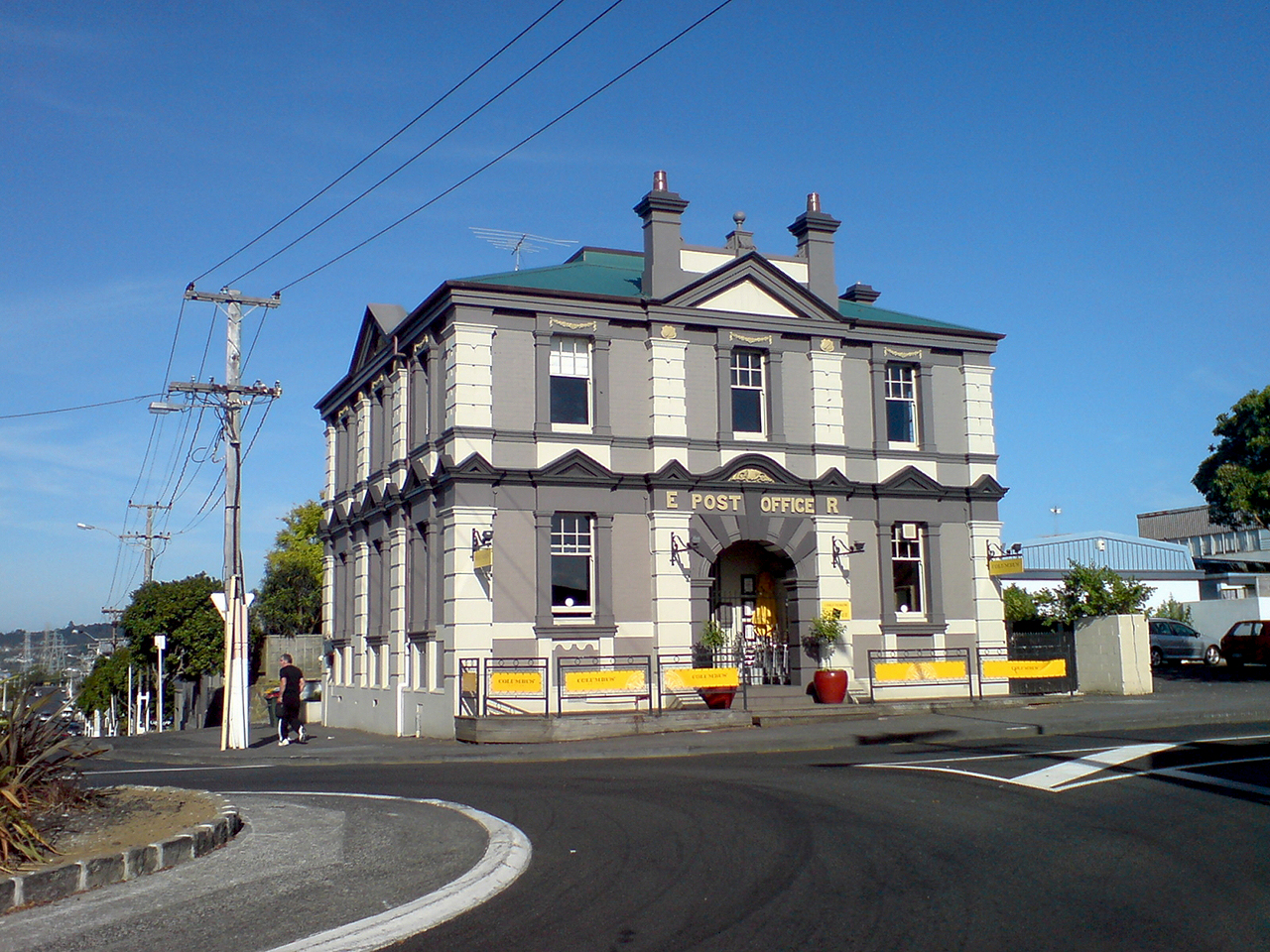
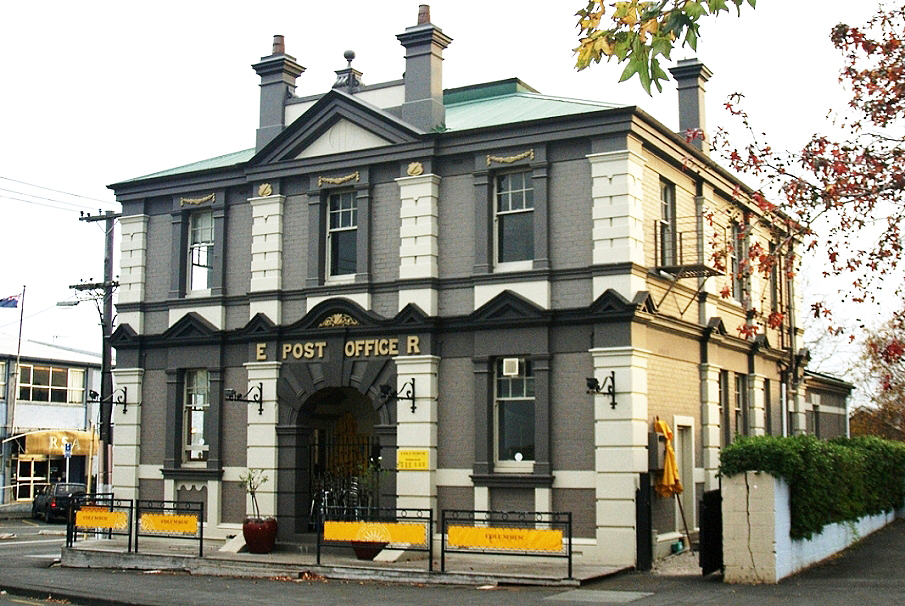
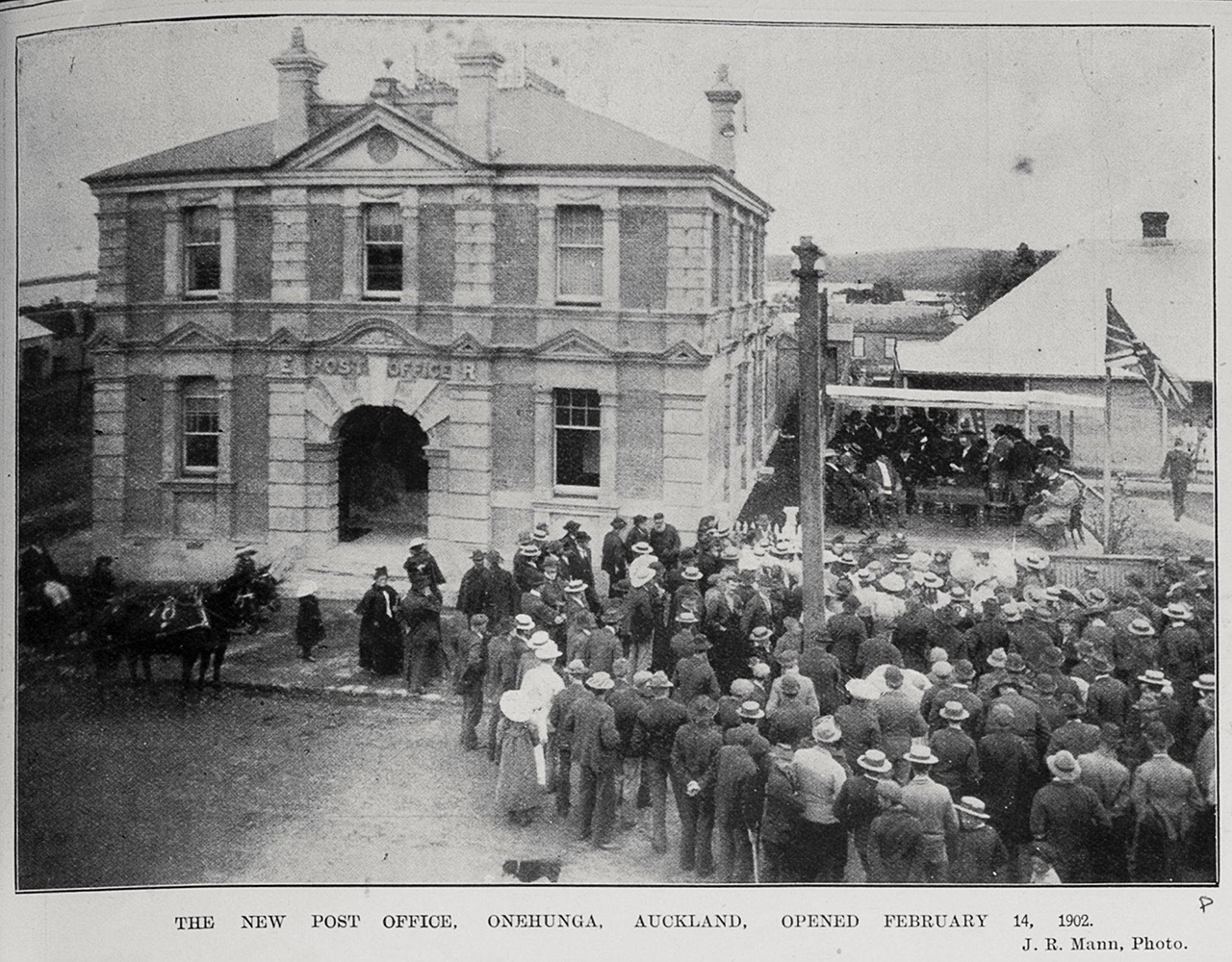
Onehunga Post Office (Former)
120 Onehunga Mall and Princes Street, Onehunga, AUCKLAND
Private
Historic Place Category 2
List No. 5473
Quick links:
List GalleryLocationDetails
120 Onehunga Mall and Princes Street, Onehunga, AUCKLAND
Private
Historic Place Category 2
List No. 5473
List Entry Information
Status
Listed
List Entry Status
Historic Place Category 2
Access
Private/No Public Access
List Number
5473
Date Entered
1st July 1993
Date of Effect
1st July 1993
City/District Council
Auckland Council
Region
Auckland Council
Extent of List Entry
Extent includes the land described as Allot 50 Sec 17 Village of Onehunga (RT NA52B/872), North Auckland Land District, and the buildings and structures known as Onehunga Post Office (Former) thereon, and their fittings and fixtures.
Legal description
Allot 50 Sec 17 Village of Onehunga (RT NA52B/872), North Auckland Land District
Status
Listed
List Entry Status
Historic Place Category 2
Access
Private/No Public Access
List Number
5473
Date Entered
1st July 1993
Date of Effect
1st July 1993
City/District Council
Auckland Council
Region
Auckland Council
Extent of List Entry
Extent includes the land described as Allot 50 Sec 17 Village of Onehunga (RT NA52B/872), North Auckland Land District, and the buildings and structures known as Onehunga Post Office (Former) thereon, and their fittings and fixtures.
Legal description
Allot 50 Sec 17 Village of Onehunga (RT NA52B/872), North Auckland Land District
Construction Professional
Name
Campbell, John
Type
Architect
Biography
John Campbell (1857-1942) served his articles under John Gordon (c1835-1912) in Glasgow. He arrived in Dunedin in 1882 and after a brief period as a draughtsman with Mason and Wales joined the Dunedin branch of the Public Works Department in 1883. His first known work, an unbuilt design for the Dunedin Railway Station, reveals an early interest in Baroque architecture. In November 1888 Campbell was transferred to Wellington where in 1889 he took up the position of draughtsman in charge of the Public Buildings Division of the Public Works Department. He remained in charge of the design of government buildings throughout New Zealand until his retirement in 1922, becoming in 1909 the first person to hold the position of Government Architect. Government architecture designed under his aegis evidences a change in style from Queen Anne to Edwardian Baroque. His best-known Queen Anne design is the Dunedin Police Station (1895-8), modelled on Richard Norman Shaw's New Scotland Yard (1887-90). Among his most exuberant Edwardian Baroque buildings is the Public Trust Office, Wellington (1905-09). Although Campbell designed the Dunedin Law Courts (1899-1902) in the Gothic style with a Scottish Baronial inflection, he established Edwardian Baroque as the government style for police stations, courthouses and post offices throughout New Zealand. In 1911 Campbell won the nation-wide architectural competition for the design of Parliament Buildings, Wellington. Although only partially completed, Parliament House is the crowning achievement of Campbell's career.
Construction Details
Start Year
1994
Type
Modification
Description
Refurbishment and modifications in main building, including removal of baby iron ceiling, reinstatement of living quarters on first floor, conversion of bedroom into kitchen and painting of exterior.
Start Year
1998
Type
Modification
Description
Car park at rear of property converted into outside seating area and landscaped. Minor internal modifications to main building
Start Year
1922
Finish Year
1929
Type
Addition
Description
One storey lean-to added to rear of single-storey section of main building, replacing timber lean-to porch. Removed at an unknown date after 1952
Start Year
1983
Finish Year
1994
Type
Demolished - Other
Description
Removal of internal walls
Start Year
1901
Finish Year
1902
Type
Original Construction
Description
Edwardian Baroque style
Construction Professional
Name
Campbell, John
Type
Architect
Biography
John Campbell (1857-1942) served his articles under John Gordon (c1835-1912) in Glasgow. He arrived in Dunedin in 1882 and after a brief period as a draughtsman with Mason and Wales joined the Dunedin branch of the Public Works Department in 1883. His first known work, an unbuilt design for the Dunedin Railway Station, reveals an early interest in Baroque architecture. In November 1888 Campbell was transferred to Wellington where in 1889 he took up the position of draughtsman in charge of the Public Buildings Division of the Public Works Department. He remained in charge of the design of government buildings throughout New Zealand until his retirement in 1922, becoming in 1909 the first person to hold the position of Government Architect. Government architecture designed under his aegis evidences a change in style from Queen Anne to Edwardian Baroque. His best-known Queen Anne design is the Dunedin Police Station (1895-8), modelled on Richard Norman Shaw's New Scotland Yard (1887-90). Among his most exuberant Edwardian Baroque buildings is the Public Trust Office, Wellington (1905-09). Although Campbell designed the Dunedin Law Courts (1899-1902) in the Gothic style with a Scottish Baronial inflection, he established Edwardian Baroque as the government style for police stations, courthouses and post offices throughout New Zealand. In 1911 Campbell won the nation-wide architectural competition for the design of Parliament Buildings, Wellington. Although only partially completed, Parliament House is the crowning achievement of Campbell's career.
Construction Details
Start Year
1994
Type
Modification
Description
Refurbishment and modifications in main building, including removal of baby iron ceiling, reinstatement of living quarters on first floor, conversion of bedroom into kitchen and painting of exterior.
Start Year
1998
Type
Modification
Description
Car park at rear of property converted into outside seating area and landscaped. Minor internal modifications to main building
Start Year
1922
Finish Year
1929
Type
Addition
Description
One storey lean-to added to rear of single-storey section of main building, replacing timber lean-to porch. Removed at an unknown date after 1952
Start Year
1983
Finish Year
1994
Type
Demolished - Other
Description
Removal of internal walls
Start Year
1901
Finish Year
1902
Type
Original Construction
Description
Edwardian Baroque style
Historical and Associated Iwi / Hapū / Whānau
Completion Date
11th June 2010
Report Written By
Lucy Mackintosh
Information Sources
Appendices to the Journals of the House of Representatives (AJHR)
Appendices to the Journals of the House of Representatives
Cyclopedia of New Zealand, 1902
Cyclopedia Company, Industrial, descriptive, historical, biographical facts, figures, illustrations, Wellington, N.Z, 1897-1908, Vol.2, Christchurch, 1902
Richardson, 1988
Peter Richardson, 'An Architecture of Empire: The Government Buildings of John Campbell in New Zealand', MA Thesis, University of Canterbury, 1988
Historic Places in New Zealand
Historic Places in New Zealand
Mogford, 1989
J. Mogford, The Onehunga Heritage, Wellington, 1989.
Other Information
This place was identified as significant under previous legislation with different information requirements. It remains significant under the current legislation. There is opportunity under our legislation and policies to add to this information. Further information about this place may be available from the Northern Regional Office of Heritage New Zealand Pouhere Taonga. A fully referenced registration report is available from the NZHPT Northern Regional office Please note that entry on the New Zealand Heritage List/Rarangi Korero identifies only the heritage values of the property concerned, and should not be construed as advice on the state of the property, or as a comment of its soundness or safety, including in regard to earthquake risk, safety in the event of fire, or insanitary conditions.
Historical and Associated Iwi / Hapū / Whānau
Completion Date
11th June 2010
Report Written By
Lucy Mackintosh
Information Sources
Appendices to the Journals of the House of Representatives (AJHR)
Appendices to the Journals of the House of Representatives
Cyclopedia of New Zealand, 1902
Cyclopedia Company, Industrial, descriptive, historical, biographical facts, figures, illustrations, Wellington, N.Z, 1897-1908, Vol.2, Christchurch, 1902
Richardson, 1988
Peter Richardson, 'An Architecture of Empire: The Government Buildings of John Campbell in New Zealand', MA Thesis, University of Canterbury, 1988
Historic Places in New Zealand
Historic Places in New Zealand
Mogford, 1989
J. Mogford, The Onehunga Heritage, Wellington, 1989.
Other Information
This place was identified as significant under previous legislation with different information requirements. It remains significant under the current legislation. There is opportunity under our legislation and policies to add to this information. Further information about this place may be available from the Northern Regional Office of Heritage New Zealand Pouhere Taonga. A fully referenced registration report is available from the NZHPT Northern Regional office Please note that entry on the New Zealand Heritage List/Rarangi Korero identifies only the heritage values of the property concerned, and should not be construed as advice on the state of the property, or as a comment of its soundness or safety, including in regard to earthquake risk, safety in the event of fire, or insanitary conditions.
Current Usages
Uses: Trade
Specific Usage: Cafe
Former Usages
General Usage: Communication
Specific Usage: Post Office
Current Usages
Uses: Trade
Specific Usage: Cafe
Former Usages
General Usage: Communication
Specific Usage: Post Office
Location
Get the latest heritage news, features and events delivered
straight to your inbox.
