DonateMembershipVisit Heritage
  • Tūrangawaewae
    Places
  • Tira Māori
    Māori Heritage
  • Poutairangahia
    Archaeology
  • Rauemi
    Resources
  • Mō Tātou
    About Us
  • New Zealand Heritage List
  • Nominate and submit
  • Explore the List
  • National Historic Landmarks
  • Plaques
  • Rainbow List Project
  • Lost heritage
  • Visit Heritage
  • Our properties
  • Turnbull House Project
  • Collections
  • Shop
  • Tohu Whenua
  • Tira Māori
  • Conserving Māori heritage
  • Marae built heritage
  • Māori heritage on the List
  • Hinemihi—Te Hokinga Mai
  • What is archaeology?
  • Is there a site on my property?
  • What are my legal requirements?
  • Affecting an archaeological site
  • Declaring an archaeological site
  • Archaeology FAQs
  • Archaeology Digital Library
  • Archaeology guidelines and templates
  • Resources
  • Funding
  • Publications
  • Sustainable management guides
  • Disaster recovery
  • Podcasts & digital resources
  • Education Hub
  • Conservation plans
  • About
  • Board
  • Māori Heritage Council
  • Senior Staff
  • Offices
  • Contact us
  • Careers
  • Covenants
  • Fast-track
  • Corporate documents
  • Currently consulting on
  • Our submissions
  • News
  • Covid-19 response
Quick links
Rārangi Kōrero | The List
Explore the List
National Historic Landmarks
Ngā Manawhenua o Aotearoa me ōna Kōrero Tūturu
Quick links
Tapuwae
A Vision for Places of Māori Heritage
Funding for Māori Heritage
Resources
Quick links
Archaeological Authority Portal
Applying for an archaeological authority
Archaeology FAQs
Browse the most frequently asked questions about archaeological authorities and the archaeological process.
Quick links
Quick links
News
News Keep up to date with Heritage New Zealand Pouhere Taonga
Membership
Membership Find out more and sign up today
DonateMembershipVisit Heritage
  • Tūrangawaewae
    Places
  • Tira Māori
    Māori Heritage
  • Poutairangahia
    Archaeology
  • Rauemi
    Resources
  • Mō Tātou
    About Us
  • New Zealand Heritage List
  • Nominate and submit
  • Explore the List
  • National Historic Landmarks
  • Plaques
  • Rainbow List Project
  • Lost heritage
  • Visit Heritage
  • Our properties
  • Turnbull House Project
  • Collections
  • Shop
  • Tohu Whenua
  • Tira Māori
  • Conserving Māori heritage
  • Marae built heritage
  • Māori heritage on the List
  • Hinemihi—Te Hokinga Mai
  • What is archaeology?
  • Is there a site on my property?
  • What are my legal requirements?
  • Affecting an archaeological site
  • Declaring an archaeological site
  • Archaeology FAQs
  • Archaeology Digital Library
  • Archaeology guidelines and templates
  • Resources
  • Funding
  • Publications
  • Sustainable management guides
  • Disaster recovery
  • Podcasts & digital resources
  • Education Hub
  • Conservation plans
  • About
  • Board
  • Māori Heritage Council
  • Senior Staff
  • Offices
  • Contact us
  • Careers
  • Covenants
  • Fast-track
  • Corporate documents
  • Currently consulting on
  • Our submissions
  • News
  • Covid-19 response
Quick links
Rārangi Kōrero | The List
Explore the List
National Historic Landmarks
Ngā Manawhenua o Aotearoa me ōna Kōrero Tūturu
Quick links
Tapuwae
A Vision for Places of Māori Heritage
Funding for Māori Heritage
Resources
Quick links
Archaeological Authority Portal
Applying for an archaeological authority
Archaeology FAQs
Browse the most frequently asked questions about archaeological authorities and the archaeological process.
Quick links
Quick links
News
News Keep up to date with Heritage New Zealand Pouhere Taonga
Membership
Membership Find out more and sign up today
  • Places
  • Nominate and submit
  • National Historic Landmarks
  • Places
  • Nominate and submit
  • National Historic Landmarks
  • Tira Māori
  • Conserving Māori heritage
  • Marae built heritage
  • Tira Māori
  • Conserving Māori heritage
  • Marae built heritage
  • Archaeological authorities
  • Archaeology Digital Library
  • Archaeological authorities
  • Archaeology Digital Library
  • All resources
  • Publications
  • Funding
  • All resources
  • Publications
  • Funding
  • FAQs
  • FAQs
Follow us on:
Places
  • Places
  • Nominate and submit
  • National Historic Landmarks
Tira Māori
  • Tira Māori
  • Conserving Māori heritage
  • Marae built heritage
Archaeology
  • Archaeological authorities
  • Archaeology Digital Library
Resources
  • All resources
  • Publications
  • Funding
FAQs
  • FAQs
Follow us on
HomePrivacyTerms and conditionsAbout this site
© Heritage New Zealand Pouhere Taonga 2026.
 
S.S Victory Wreck Site

-45.83592085, 170.72986696

Public

Historic Place Category 2

List No. 5712

Quick links:
List GalleryLocationDetails
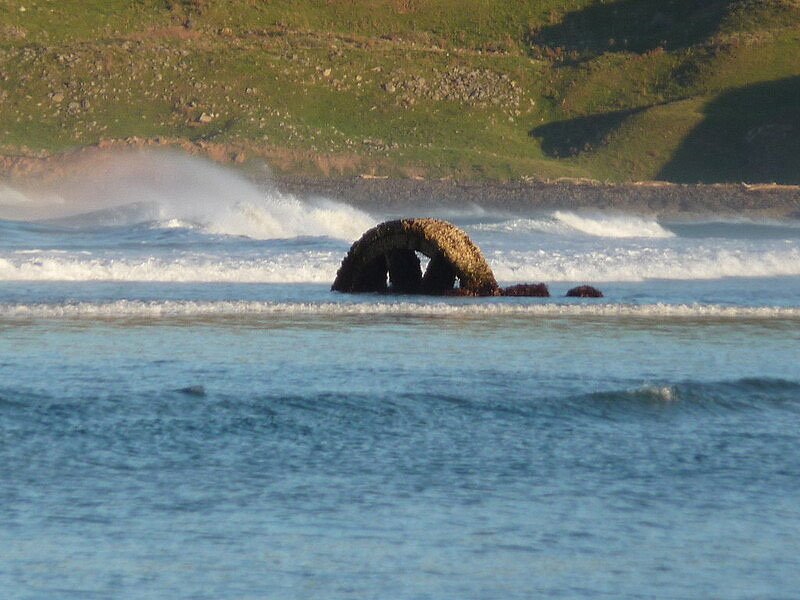
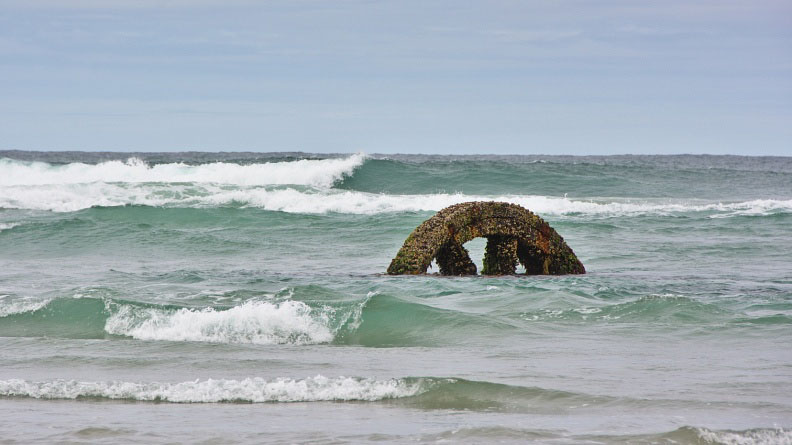
Visible at low tide amongst the breakers lying at the southern end of Victory Beach in Makahoe / Wickliffe Bay on Muaūpoko / Otago Peninsula lies the encrusted remains of the S.S. Victory. Victory wrecked shortly after leaving Port Chalmers enroute to Melbourne on 3 July 1861, the result of an intoxicated sailor being left in charge. Victory has historic and archaeological significance.

Victory Beach, named for the wreck, runs the length of Wickliffe Bay on the southeast coast of Otago Peninsula. Set back from the beach, Ōkia is a large flat area first populated by the Waitaha people, followed by Kāti Māmoe who settled at nearby Papanui Inlet, and later Kāi Tahu. The area is situated in what became the Taiaroa / Mount Charles Native Reserve, land retained after the Otago Purchase of 1844. Ownership of Block B was further eroded by compulsory acquisition for defence and public works but continued to acknowledge Taiaroa’s Private Road which ran the length of Victory Beach. A statutory acknowledgement exists for the Te Tai o Arai Te Uru (Otago Coastal Marine Area).

The Victory was built in Dumbarton, Scotland in 1849 by the company Denny Bros. Victory was a three masted frigate-built iron single screw steamer, she spent her early years with the North-West of Ireland Steam Packet Company conveying passengers and cargo. Victory was 146.4 ft (44.6 m) long, beam 25.7 ft. (7.8 m), depth 20.1 ft (6.1 m) with ‘[t]hree masts with yards crossed on the foremast. Figurehead and quarter galleries … Three windsails were carried for ventilating the holds. The galley had a steam range. The 40 cabin passengers were accommodated in the poop on bunks and on sofas … The vessel’s outfit included a complete set of Marryatt’s signal flags, a 4-pounder carronade and two binnacles with four compasses.’ The hull cost £7,800.9s.6d ($1,968,666). Victory was expected to become a model for future steamers.

In 1858 the Inter-Colonial Royal Mail Company was formed with four steam vessels to provide an ‘exclusive Monthly Mail Service between Sydney and the principal ports of the Colony of New Zealand…’. Victory had a major refit in 1860 in preparation to join the fleet, lengthened to 215 ft (65.5 m) and refitted with two steeple engines generating 350 HP. She had capacity for 1000 tons and could accommodate 46 saloon passengers and cargo in addition to ‘the Mails’. Victory was further fitted out with three saloons (two for women) and a patented condensing apparatus to provide fresh water. Victory’s interior was luxuriously decorated by Messers Wright and Dreyer with ‘rich crimson velvet’ seating and oil paintings of battle scenes – she was a ‘magnificent specimen of naval architecture’.

Victory sailed from Melbourne for Port Chalmers under the new service on 16 January 1861 arriving on 21 January. Commanded by Captain James Toogood, Victory ‘was the finest and fastest boat belonging to the company’. At 3.30pm on 3 July Victory left Port Chalmers for Melbourne with the homeward English mail. Captain Toogood set course and was relieved to take his dinner. Within 10 minutes the Victory had steamed straight onto the beach at the southern end of Wickliffe Bay and attempts to pull off were unsuccessful. To protect the boat, passengers and cargo, Toogood ran her further up on to the beach. The chief mate, George Hand who had relieved the third mate, Thomas Sampson so he could take his dinner, was drunk. Hand was sentenced to 3 months imprisonment with hard labour. Valued at £25 000 ($3,160,736) Victory and its cargo was sold to a syndicate for £570 ($72,064), and the rest of the cargo for £1900 ($24,021). The Steam Ship Victory Company was formed by R.B Martin and Co. to fund the floating of the Victory which, though stuck, remained undamaged.

While no plan was made to replace the Victory on the Royal Mail service, an ambitious plan to float the Victory in July 1862 was explored. Mr. Scott, an experienced engineer, arrived from Sydney with 12 hydraulic cylinders, ‘each capable of lifting 150 tons’. In September the Victory had successfully been ‘slewed round with her head to the sea’. Despite the dedicated efforts of the team, the mission to float the Victory was unsuccessful as, ‘A few days later the steamer was afloat, and steam was being got up when the chain cable snapped and she drifted ashore...’ Victory was then declared a total wreck and sold for £200 ($25,156) after £8000 ($1,011,435) was spent attempting to float her. The remains were auctioned over the following months. The only evidence remaining of the Victory today is the flywheel which is visible at very low tide, and the beach which bears its name.
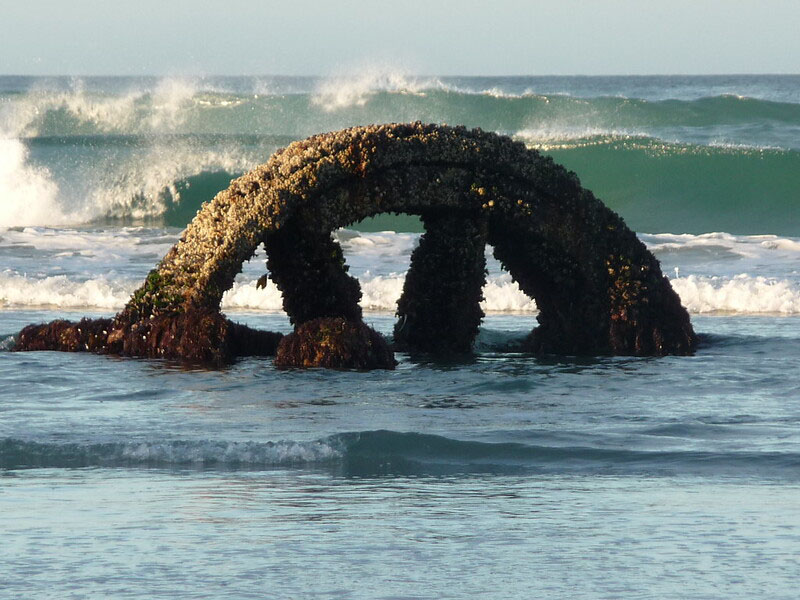
S.S Victory Wreck Site, Victory Beach, Otago. Image courtesy of www.flickr.com | Sue Overson | 05/04/2009 | Sue Overson
S.S Victory Wreck Site, Victory Beach, Otago. CC BY 2.0 coutesy of tomassobekphotography.co.nz | 24/07/2015 | Tomas Sobek Photography
S.S Victory Wreck Site, Victory Beach, Otago. Image courtesy of www.flickr.com | Sue Overson | 05/04/2009 | Sue Overson
S.S Victory Wreck Site, Victory Beach, Otago. CC BY 2.0 coutesy of tomassobekphotography.co.nz | 24/07/2015 | Tomas Sobek Photography

List Entry Information

Overview

Status
Listed

List Entry Status
Historic Place Category 2

Access
Able to Visit

List Number
5712

Date Entered
12th March 1985

Date of Effect
12th March 1985

City/District Council
Outside LA Boundaries

Region
Otago Region

Extent of List Entry

Extent includes the land contained within a 50 x 50 metre area described as Coastal Marine Area and the physical remnants of the S.S. Victory within that area.

Legal description

Coastal Marine Area

Detailed List Entry

Construction Professional

Name

Denny Bros.

Type

Shipbuilders

Biography

No biography is currently available for this construction professional

Name

Messres Pearson, Coleman and Co

Type

Shipbuilders

Construction Details

Start Year

1849

Type

Original Construction

Start Year

1860

Type

Structural upgrade

Description

Major refit

Start Year

1862

Type

Partial Demolition

Description

Salvage

Reference

Public NZAA Number

J44/88

Completion Date

12th November 2021

Report Written By

Sarah Gallagher

Information Sources

Diggle and Ingram, 2014

Diggle, Lynto and C. W. N. Ingram., Shipwrecks of New Zealand: companion to the 8th edition of New Zealand shipwrecks, Second edition. Auckland: Lynton Diggle 2014.

Farquhar, 1980

Farquhar, Ian., ‘How Victory Beach Got its Name’, Otago Daily Times, 28 June 1980, 20.

Lyon, 1974

Lyon, David John., The Denny List, National Maritime Museum, London, 1974-1975.

McLean, Gentry and Heath 2019

McLean, Gavin; Kynan Gentry; Eric Heath., Shipwrecked: New Zealand Maritime Disasters, Updated and redesigned editions. Oratia Books, Auckland, 2019.

Report Written By

This place was identified as significant under previous legislation with different information requirements. It remains significant under the current legislation. There is opportunity under our legislation and policies to add to this information. Further information about this place may be available from the Otago/Southland Office of Heritage New Zealand Pouhere Taonga. A fully referenced copy of the Upgrade Report is available upon request from the Otago/Southland Area Office of Heritage New Zealand Pouhere Taonga Please note that entry on the New Zealand Heritage List/Rarangi Karero identifies only the heritage values of the property concerned, and should not be construed as advice on the state of the property, or as a comment of its soundness or safety, including in regard to earthquake risk, safety in the event of fire, or insanitary conditions.

Further Information

Current Usages

Uses: Ruin

Specific Usage: Misc Archaeological

Uses: Transport

Specific Usage: Shipwreck

Former Usages

Themes

Of Significance to Maori

Web Links

Overview

Status

Listed

List Entry Status

Historic Place Category 2

Access

Able to Visit

List Number

5712

Date Entered

12th March 1985

Date of Effect

12th March 1985

City/District Council

Outside LA Boundaries

Region

Otago Region

Extent of List Entry

Extent includes the land contained within a 50 x 50 metre area described as Coastal Marine Area and the physical remnants of the S.S. Victory within that area.

Legal description

Coastal Marine Area

Status

Listed

List Entry Status

Historic Place Category 2

Access

Able to Visit

List Number

5712

Date Entered

12th March 1985

Date of Effect

12th March 1985

City/District Council

Outside LA Boundaries

Region

Otago Region

Extent of List Entry

Extent includes the land contained within a 50 x 50 metre area described as Coastal Marine Area and the physical remnants of the S.S. Victory within that area.

Legal description

Coastal Marine Area

Construction Information

Construction Professional

Name

Denny Bros.

Type

Shipbuilders

Biography

No biography is currently available for this construction professional

Name

Messres Pearson, Coleman and Co

Type

Shipbuilders

Biography

Construction Details

Start Year

1849

Type

Original Construction

Start Year

1860

Type

Structural upgrade

Description

Major refit

Start Year

1862

Type

Partial Demolition

Description

Salvage

Construction Professional

Name

Denny Bros.

Type

Shipbuilders

Biography

No biography is currently available for this construction professional

Name

Messres Pearson, Coleman and Co

Type

Shipbuilders

Biography

Construction Details

Start Year

1849

Type

Original Construction

Start Year

1860

Type

Structural upgrade

Description

Major refit

Start Year

1862

Type

Partial Demolition

Description

Salvage

Reference

Historical and Associated Iwi / Hapū / Whānau

Public NZAA Number

J44/88

Completion Date

12th November 2021

Report Written By

Sarah Gallagher

Information Sources

Diggle and Ingram, 2014

Diggle, Lynto and C. W. N. Ingram., Shipwrecks of New Zealand: companion to the 8th edition of New Zealand shipwrecks, Second edition. Auckland: Lynton Diggle 2014.

Farquhar, 1980

Farquhar, Ian., ‘How Victory Beach Got its Name’, Otago Daily Times, 28 June 1980, 20.

Lyon, 1974

Lyon, David John., The Denny List, National Maritime Museum, London, 1974-1975.

McLean, Gentry and Heath 2019

McLean, Gavin; Kynan Gentry; Eric Heath., Shipwrecked: New Zealand Maritime Disasters, Updated and redesigned editions. Oratia Books, Auckland, 2019.

Other Information

This place was identified as significant under previous legislation with different information requirements. It remains significant under the current legislation. There is opportunity under our legislation and policies to add to this information. Further information about this place may be available from the Otago/Southland Office of Heritage New Zealand Pouhere Taonga. A fully referenced copy of the Upgrade Report is available upon request from the Otago/Southland Area Office of Heritage New Zealand Pouhere Taonga Please note that entry on the New Zealand Heritage List/Rarangi Karero identifies only the heritage values of the property concerned, and should not be construed as advice on the state of the property, or as a comment of its soundness or safety, including in regard to earthquake risk, safety in the event of fire, or insanitary conditions.

Historical and Associated Iwi / Hapū / Whānau

Public NZAA Number

J44/88

Completion Date

12th November 2021

Report Written By

Sarah Gallagher

Information Sources

Diggle and Ingram, 2014

Diggle, Lynto and C. W. N. Ingram., Shipwrecks of New Zealand: companion to the 8th edition of New Zealand shipwrecks, Second edition. Auckland: Lynton Diggle 2014.

Farquhar, 1980

Farquhar, Ian., ‘How Victory Beach Got its Name’, Otago Daily Times, 28 June 1980, 20.

Lyon, 1974

Lyon, David John., The Denny List, National Maritime Museum, London, 1974-1975.

McLean, Gentry and Heath 2019

McLean, Gavin; Kynan Gentry; Eric Heath., Shipwrecked: New Zealand Maritime Disasters, Updated and redesigned editions. Oratia Books, Auckland, 2019.

Other Information

This place was identified as significant under previous legislation with different information requirements. It remains significant under the current legislation. There is opportunity under our legislation and policies to add to this information. Further information about this place may be available from the Otago/Southland Office of Heritage New Zealand Pouhere Taonga. A fully referenced copy of the Upgrade Report is available upon request from the Otago/Southland Area Office of Heritage New Zealand Pouhere Taonga Please note that entry on the New Zealand Heritage List/Rarangi Karero identifies only the heritage values of the property concerned, and should not be construed as advice on the state of the property, or as a comment of its soundness or safety, including in regard to earthquake risk, safety in the event of fire, or insanitary conditions.

Further Information

Current Usages

Uses: Ruin

Specific Usage: Misc Archaeological

Uses: Transport

Specific Usage: Shipwreck

Themes

Of Significance to Maori

Current Usages

Uses: Ruin

Specific Usage: Misc Archaeological

Uses: Transport

Specific Usage: Shipwreck

Themes

Of Significance to Maori

Location

Loading
Stay up to date with Heritage this month